CBSE Class 1  >  Class 1 Notes  >  EVS  >  Worksheet Solutions: Our Body - 2

Worksheet Solutions: Our Body - 2

Name the following.

(i) A part of our body that helps us to feel
Ans: 
Skin
The skin is the largest sense organ and helps us sense touch, temperature, and pain.

(ii) A part of our body that helps us to walk
Ans:
Legs
Our legs support our body and allow us to walk and move.
Name the following.

(iii) A part of our body that helps us to see
Ans: 
Eyes
The eyes are responsible for vision, enabling us to see the world around us.

Name the following.

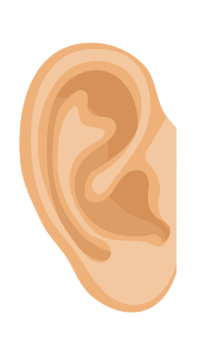
(iv) A part of our body that helps us to hear
Ans:
Ears
Ears are vital for hearing, helping us detect sounds in our environment.
Name the following.(v) A part of our body that helps us to eat
Ans:
Mouth
The mouth allows us to chew food, speak, and perform various activities related to eating.
Name the following.Fill in the blanks

(i) We have _______ sense organs.
Ans:
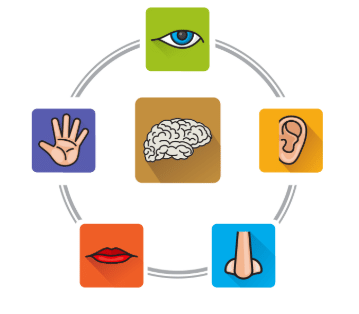
We have five sense organs. 
The five sense organs are sight, hearing, taste, smell, and touch.
Name the following.

(ii) We read books with our _______.
Ans:
We read books with our eyes.
The eyes are used to read and interpret visual information.

(iii) We run with our ________.
Ans: 
We run with our legs.
Our legs allow us to walk, run, and move effectively.

(iv) We hear anything with our ________.
Ans:
We hear anything with our ears.
The ears detect sound vibrations and help us hear.

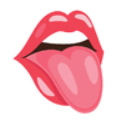
(v) We taste the food with our ________.
Ans:
We taste the food with our tongue.
The tongue helps in tasting different flavors of food.
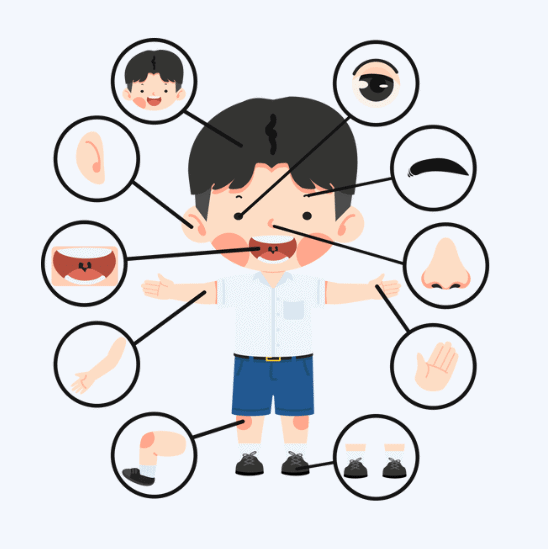
Name the following.Name body parts used for the following tasks.

(i) Taste
(ii) Smell
(iii) Feel
(iv) Run
(v) Grab

Ans:

i) Taste
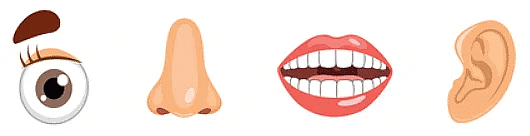
Ans: Tongue - The tongue is the sense organ responsible for tasting different flavors.

(ii) Smell
Ans: Nose - The nose is the organ used to detect and distinguish smells.

(iii) Feel
Ans: Skin - The skin allows us to feel sensations like touch, temperature, and pain.

(iv) Run
Ans: Legs - Our legs help us to run and support our movement.

(v) Grab
Ans: Hands - Hands are used for grabbing, holding, and manipulating objects.
Name the following.

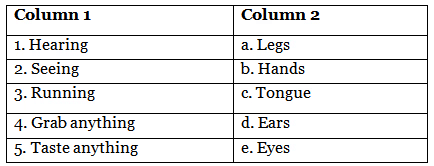
Match the following.

Match the following.

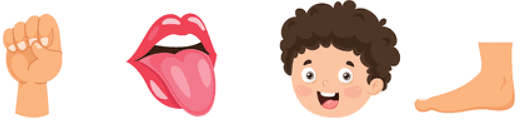
Ans:
1 - d
2 - e
3 - a
4 - b
5 - c
The document Worksheet Solutions: Our Body - 2 is a part of the Class 1 Course EVS for Class 1.
All you need of Class 1 at this link: Class 1

FAQs on Worksheet Solutions: Our Body - 2

1. What are the different body parts we learn about in Class 1 EVS and what do they do?
Ans. Class 1 EVS introduces basic body parts like the head, arms, legs, hands, feet, and torso, teaching students their primary functions. The head contains the brain and sensory organs; arms and hands help us hold and manipulate objects; legs and feet enable movement and balance. Understanding these external body parts forms the foundation for recognising how our body helps us perform daily activities like eating, playing, and walking.
2. How can I remember all the body parts and their functions for my worksheet answers?
Ans. Students can use flashcards and mind maps to organise body parts visually, grouping them by function-like movement parts (legs, feet) and sensing parts (eyes, ears, nose). Creating simple diagrams or referring to visual worksheets helps reinforce memory. Practising with MCQ tests and revision notes strengthens retention, making it easier to answer worksheet solutions accurately and confidently.
3. What's the difference between external body parts and internal organs in Class 1 EVS lessons?
Ans. External body parts like arms, legs, eyes, and nose are visible on the outside and directly interact with our environment. Internal organs like the heart, lungs, and stomach work inside the body to keep us alive but aren't visible from outside. Class 1 EVS focuses primarily on external body parts and their roles, with internal organs introduced gradually as students progress.
4. Why do we have five senses and which body parts help us sense things around us?
Ans. The five senses-sight, hearing, smell, taste, and touch-help us experience and understand our surroundings safely. Eyes enable vision, ears allow hearing, the nose detects smells, the tongue recognises tastes, and skin provides touch sensation. These sensory body parts work together to gather information about the world, protecting us from danger and helping us enjoy activities like playing and eating.
5. How should I prepare worksheet solutions on body parts for CBSE Class 1 EVS exams?
Ans. Review the original worksheet questions carefully, then refer to your textbook and chapter notes for accurate answers. Use detailed notes and PPTs available on EduRev to clarify concepts before attempting solutions. Practice writing short, clear answers using simple vocabulary, draw diagrams where helpful, and cross-check your responses against model answers to identify gaps in understanding.
Explore Courses for Class 1 exam
Get EduRev Notes directly in your Google search
Related Searches
shortcuts and tricks, Worksheet Solutions: Our Body - 2, Worksheet Solutions: Our Body - 2, Objective type Questions, MCQs, study material, past year papers, Viva Questions, pdf , Semester Notes, Worksheet Solutions: Our Body - 2, Exam, Extra Questions, Important questions, Previous Year Questions with Solutions, video lectures, Free, practice quizzes, ppt, Sample Paper, mock tests for examination, Summary;