Chapter Notes: Making 10 (Numbers 10 to 20)


Introduction
- Imagine you have a bunch of toys. How do you know how many you have? You count them-1, 2, 3, 4, 5! Counting helps us know how many things are around us.
- We count everything-apples in a basket, steps we take, balloons at a party, and stars in the sky! Numbers help us keep track of things, compare groups, and even solve puzzles.
- Let's explore counting and see how numbers help us in everyday life!
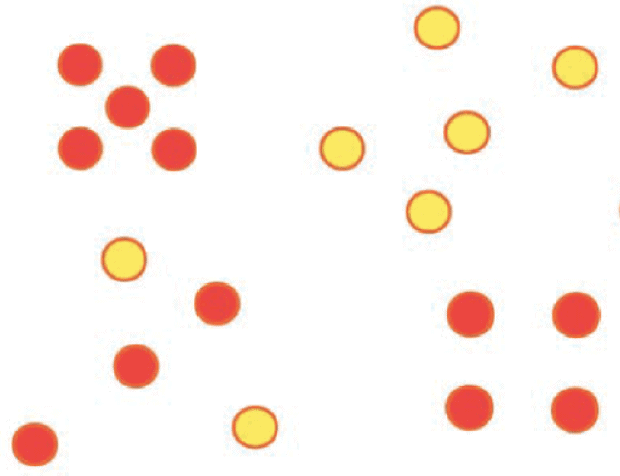
Try yourself: How many dots are there on the ladybug?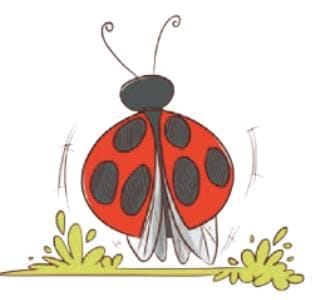
What is Zero?
- Imagine you have 3 chocolates and you eat them all. Now, how many are left? Zero! Zero means nothing or none. It shows that something is not there.
- We see zero everywhere! If there are zero apples in the basket, it means the basket is empty. When the countdown reaches zero, it means it's time to start!
- Zero is a special number that helps us in counting and math.
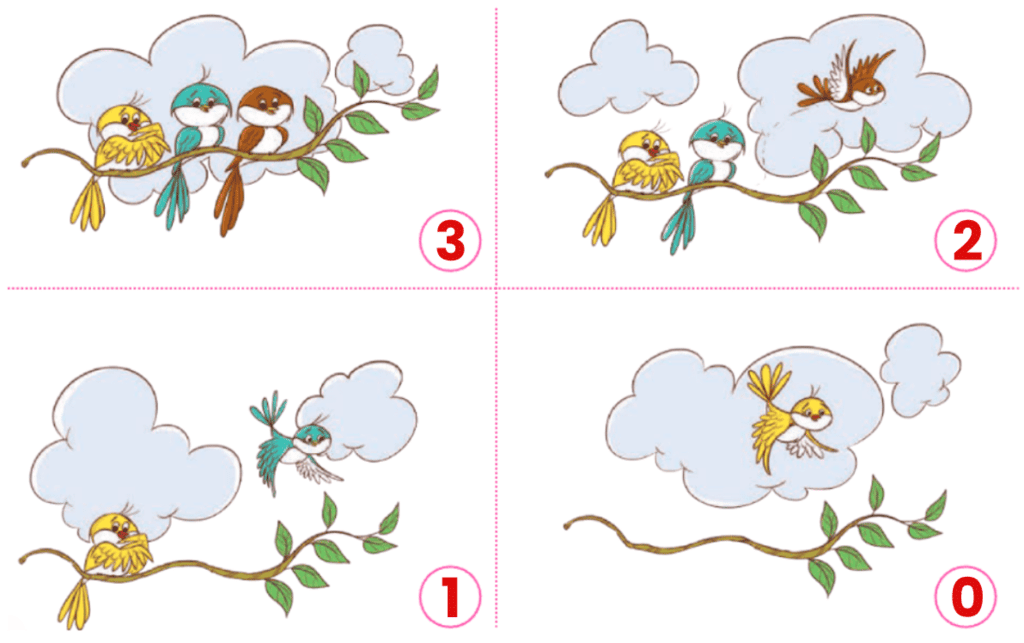
For example: Look at a tree. Three birds are sitting on a branch. One bird flies away-now, two are left. Another bird flies away-now, only one is left. When the last bird flies away, how many are left? Zero!
Bundle of Ten
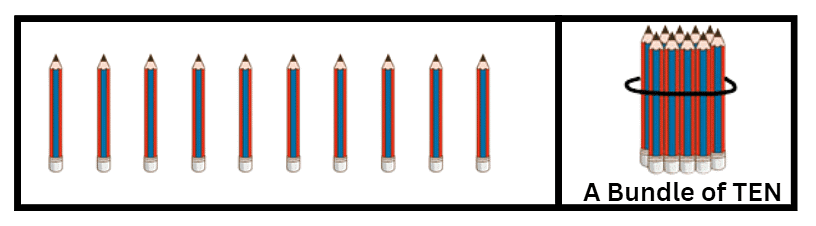
A bundle of ten is a group of ten things that are all together in one place.
Example: You have a bunch of pencils scattered around your desk, but you need to keep them all together so you don't lose them. What do you do? You gather them up and tie them together with a rubber band, creating a bundle of ten.
Make a Group of 10
Look at all those delicious ice creams! But did you know that we can make them even more fun by counting them and grouping them into bundles of 10?
Now, let's take these 10 ice creams and make a bundle.
- Group of 1 ten is 10.
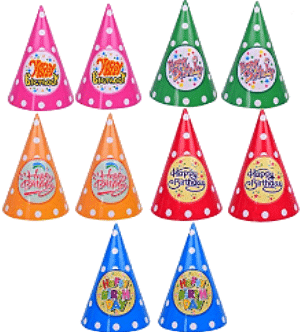 Group of 2 ten is 20.
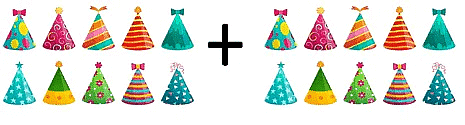
- Group of 2 ten is 20.
Making 10 with Number Pairs
Let's play a finger-counting game! Hold up all 10 fingers-that's 10 in total! Now, what happens if you fold some down?
- If you fold 5 fingers, how many are still up? 5! So, 5 + 5 = 10.
- If you fold 4 fingers, how many stay up? 6! That means 6 + 4 = 10.
- What if you fold 2 fingers? You still have 8 up, so 8 + 2 = 10!
There are so many ways to make 10 using two numbers!
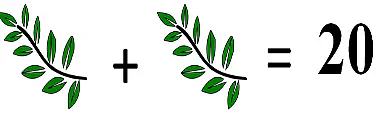
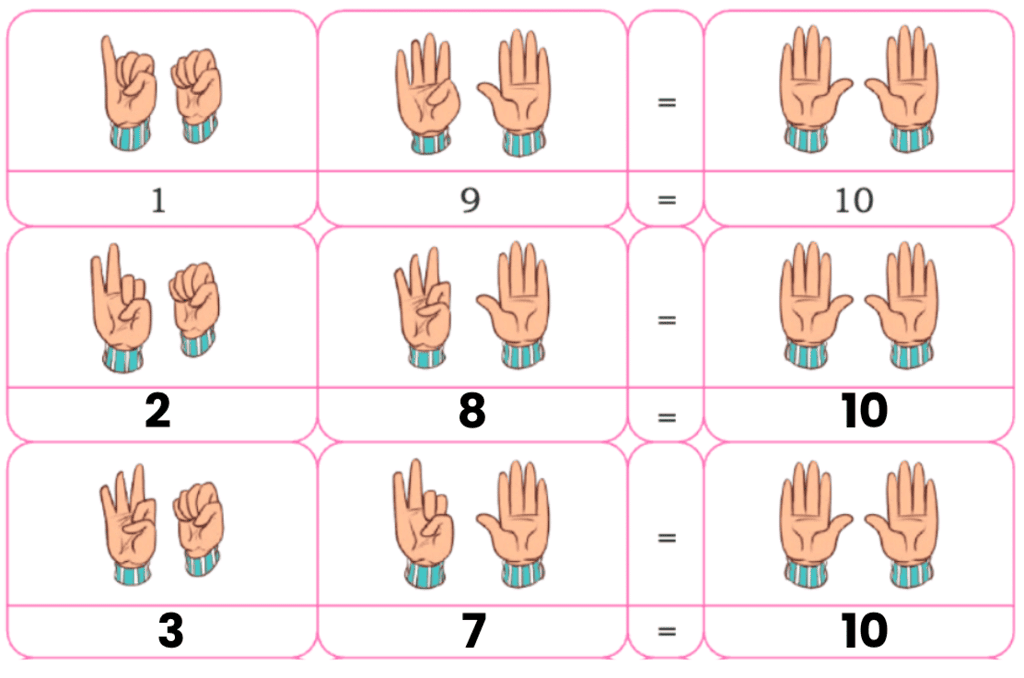
Question: Look at the images and write down the number pairs of 10.
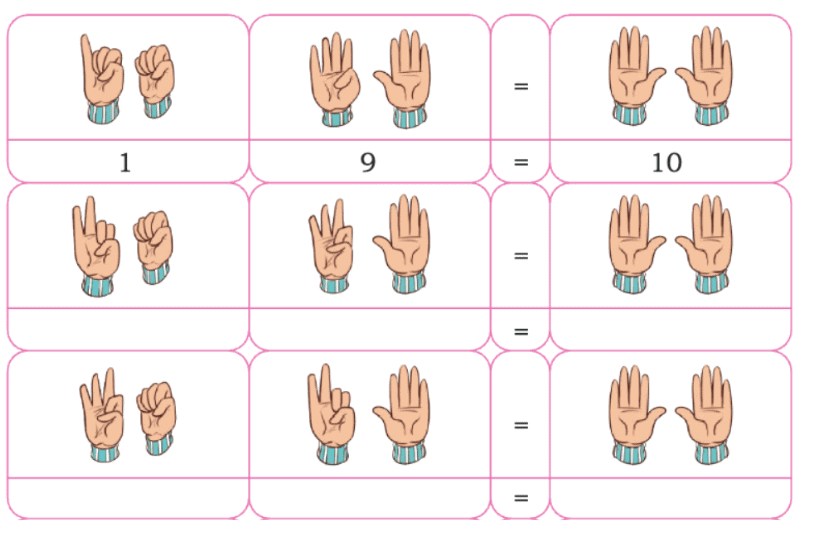
Ans:
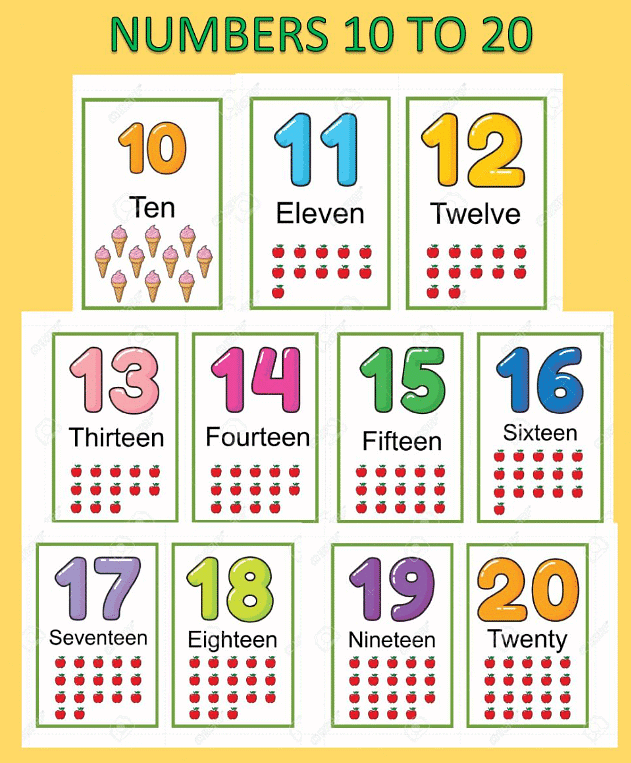
Counting from 10 to 20
Writing Numbers
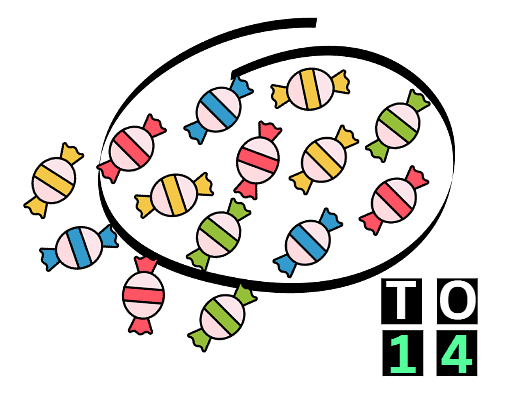
Do you see all those colourful and yummy toffees?
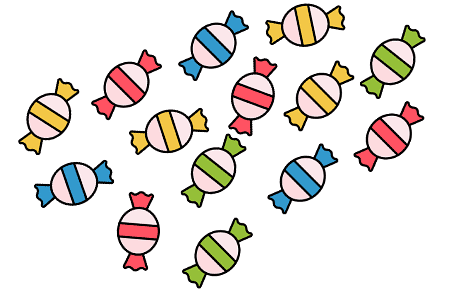
There are so many toffees. Let's make a group of 10 and write 1 in tens place. Now, how many toffees are left? We write down 4 in the ones place. And what does this mean? It means that we have a total of 14 toffees!
More or Less
- When we say "more", we mean that there is a bigger amount of something. For example, if you have 5 apples and your friend has 7 apples, then your friend has more apples than you.
- On the other hand, when we say "less", we mean that there is a smaller amount of something. For example, if you have 10 pencils and your friend has 6 pencils, then your friend has fewer pencils than you.
Example 1: Count the number of balloons and tick the group with more objects.
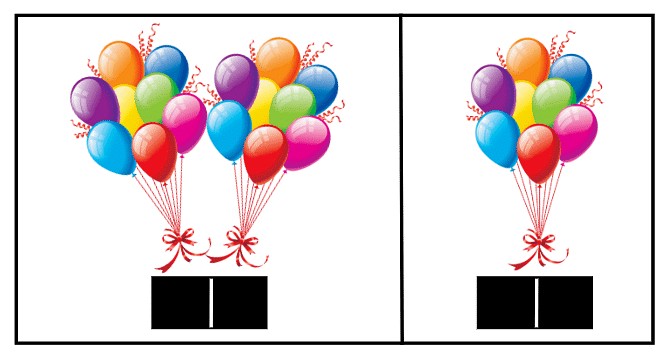
The number of balloons in the first box is 16 and in the other box is 8. So the left group has more balloons.
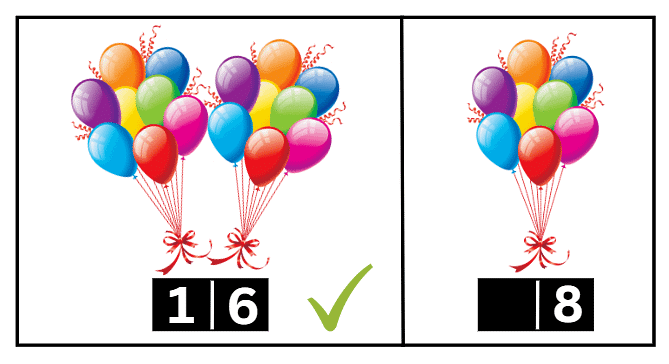
Example 2:

Ans:

Addition
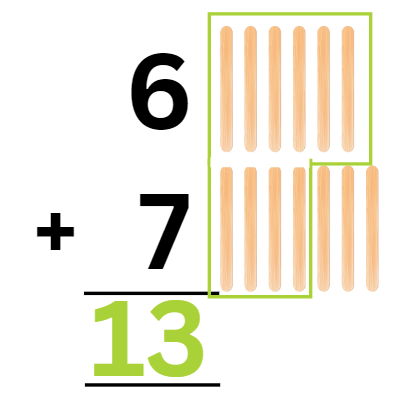
Example: Let's say we want to add 6 + 7.
To make it easier, we can imagine that we have two groups of sticks. We have 6 sticks in one group and 7 sticks in another group.
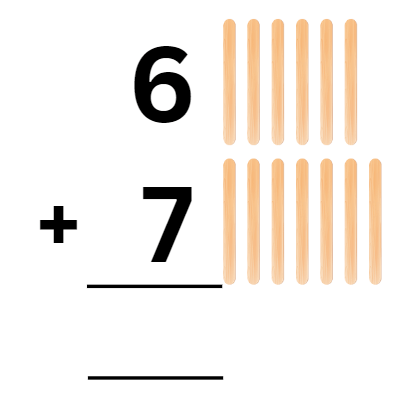
Now, we can bundle the sticks into a group of 10. We take 6 sticks and add 4 more to make a bundle of 10. We write down the number 1 in the tens place (the column on the left) to show that we have one bundle of 10. Then, we write down the number of sticks we have left in the ones place (the column on the right). In this case, we have 3 sticks left over.
Subtraction
FAQs on Chapter Notes: Making 10 (Numbers 10 to 20)
| 1. What is the concept of zero and why is it important in mathematics? |  |
| 2. How can I teach my child to make a group of ten with numbers? | |
| 3. What are some effective ways to help children count from 10 to 20? | |
| 4. How does making 10 with number pairs relate to addition and subtraction? | |
| 5. What strategies can be used to teach children about more or less in mathematical terms? | |