Short Notes: Conservation of Plants and Animals


Deforestation and its Causes
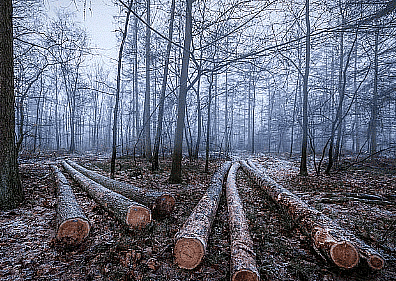 DeforestationDeforestation means clearing forests and using that land for other purposes. Trees in the forest are cut for some of the purposes mentioned below: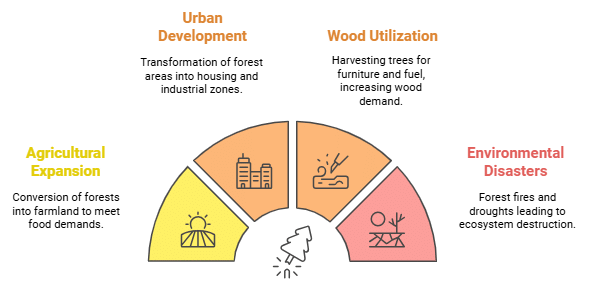
- Procuring land for cultivation: Procurement is done to meet the growing needs of food for the growing population. Forests lands are converted into agricultural lands by cutting off trees leading to Deforestation.
- Building houses and factories: As people move from rural to urban areas, the population increases in that particular area. In order to build structures for a growing population, urban developers convert surrounding forests into housing societies and large-scale industries for their operations.
- Making furniture or using wood as fuel: Forests are the only source to produce a tremendous amount of wood for furniture making. And the demand for wood is increasing rapidly; simultaneously, the area of forest lands is shrinking gradually. Besides, trees are also cut down to use as fuel for various purposes such as cooking, heating, etc.
- Forest fires and severe droughts: Deforestation due to forest fires and severe droughts have become a major problem. Forest fires and droughts destroy vast areas of forest land. These can destroy entire ecosystems, leaving behind nothing but barren land.MULTIPLE CHOICE QUESTION
Try yourself: What is one of the causes of deforestation mentioned in the text?
Consequences of Deforestation
Deforestation not only affects the wildlife quite severely but also affects the environment in various ways, such as
- Impact on Wildlife Deforestation not only severely affects wildlife but also has various environmental consequences.
- Greenhouse Effect One major consequence is the greenhouse effect caused by cutting countless trees annually, disrupting the balance of carbon dioxide and oxygen. This contributes to global warming.
- Soil Erosion Trees, which bind soil to prevent erosion, are crucial. Excessive deforestation globally has led to a higher rate of soil erosion.
- Imbalance in Water Cycle Deforestation significantly impacts the water cycle by reducing the regulation of water vapor in the atmosphere, leading to decreased precipitation.
- Acidification of Oceans Deforestation plays a role in ocean acidification as trees, when cut down, can no longer absorb carbon dioxide, contributing to carbonic acid formation in the ocean.
- Wildlife Impact Deforestation destroys habitats, depriving animals of food and water, leading to starvation and dehydration, and reducing certain animal species' populations.
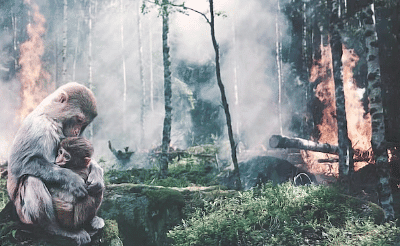 Impact on Wildlife of Deforestation
 - Floods and Droughts Deforestation can result in both floods and droughts due to fewer trees absorbing water, causing the ground to become drier and leading to water-related extremes.
- Desertification Removal of the top soil layer exposes hard, rocky layers, leading to less fertile soil and gradual conversion of fertile land into deserts, a process known as desertification.MULTIPLE CHOICE QUESTIONTry yourself: What is the purpose of a wildlife sanctuary?
Conservation of Forest and Wildlife
Apart from personal and societal efforts, government agencies play a crucial role in the preservation of forests and wildlife. They establish rules, methods, and policies to protect and conserve these resources. Various protected areas are designated for this purpose:
- Wildlife Sanctuary: Areas where animals are protected from any disturbance to them and their habitat.
- National Park: Areas reserved for wildlife where they can freely use the habitats and natural resources.
- Biosphere Reserve: Large areas of protected land for the conservation of wildlife, plant and animal resources, and the traditional life of the tribes living in the area.
 Biosphere Reserve
Biosphere Reserve
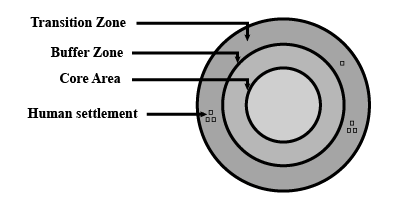 Biosphere Zone
- Biosphere reserves are the areas meant for the conservation of biodiversity.
- Biodiversity is the variety of plants, animals, and microorganisms generally found in an area.
- The biosphere reserves help to maintain the biodiversity and culture of that area.
- Example: Pachmarhi Biosphere Reserve. The Pachmarhi Biosphere Reserve consists of one national park named Satpura and two wildlife sanctuaries named Bori and Pachmarhi.
Flora and Fauna
Some animals and plants are naturally associated with specific regions. The term "flora" refers to the plants, while "fauna" denotes the animals found in a particular area. In the Pachmarhi Biosphere Reserve, examples of flora and fauna include:
- Flora: Sal, teak, mango, jamun, silver ferns, Arjun, etc.
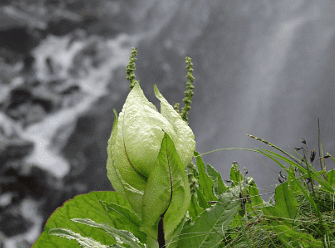 Flora
Flora - Fauna: Chinkara, blue-bull, barking deer, cheetah, leopard, wild dog, wolf, etc.
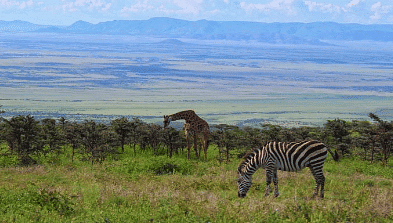 Fauna
Fauna
Endemic Species
Endemic species are those species of plants and animals that are found exclusively in a particular area. They are not naturally found anywhere else. A particular type of animal or plant may be endemic to a zone, a state, or a country.
- Sal and wild mango are two examples of the endemic flora of the Pachmarhi Biosphere Reserve.
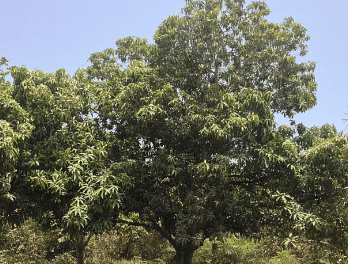 Wild Mango Tree
 - Bison, Indian giant squirrels, and flying squirrels are endemic fauna of this area.
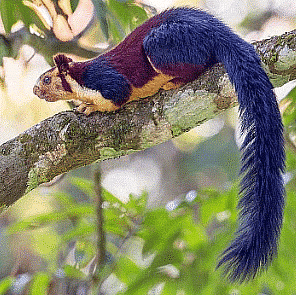 Indian Giant Squirrels
Wildlife Sanctuary
A wildlife sanctuary is an area where animal habitats and their surroundings are protected from any sort of disturbance.
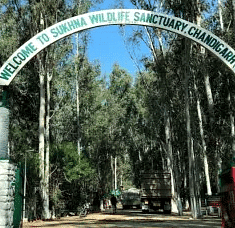 Wildlife Sanctuary Chandigarh
Role of Wildlife Sanctuaries in Animal Conservation
- Protection and Living Conditions: Wildlife sanctuaries, similar to reserve forests, provide protection and suitable living conditions for wild animals.
- Permitted Activities: Residents in wildlife sanctuaries are allowed certain activities, including grazing livestock and collecting medicinal plants and firewood.
- Strict Prohibitions: Killing (poaching) or capturing animals is strictly prohibited and punishable by law in all such areas.
- Preservation of Threatened Species: Endangered wild animals such as black buck, white-eyed buck, elephant, golden cat, pink-headed duck, gharial, marsh crocodile, python, rhinoceros, etc., are protected and preserved within these sanctuaries.
National Park
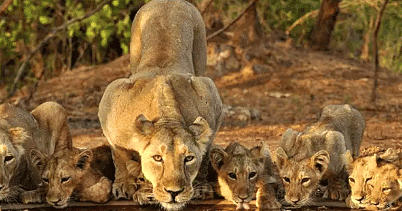 National ParkThese reserves are large and diverse enough to protect whole sets of ecosystems. They preserve the flora, fauna, landscape, and historic objects of an area. Satpura National Park is the first Reserve Forest in India. The finest Indian teak is found in this forest. There are more than one hundred National Parks in India.
Project Tiger: It was launched by the government to protect the tigers in the country. The objective of this project was to ensure the survival and maintenance of the tiger population in the country.
Red Data Book
Red Data Book is the sourcebook that keeps a record of all the endangered animals and plants. Red Data Book is maintained internationally by an organization. India also maintains Red Data Book for plants and animals found in India.
Migration
- The seasonal movement of animals or birds from one place to another place to avoid harsh climatic conditions is known as migration.
- Migratory birds fly to faraway areas every year during a particular time because of climatic changes.
- They fly for laying eggs as the weather in their natural habitat becomes very cold and inhospitable.
- Birds who cover long distances to reach another land are known as migratory birds.
Recycling of Paper
Paper recycling refers to the process of reprocessing waste paper for reuse. Waste papers are either obtained from paper mill paper scraps, discarded paper materials, and waste paper material discarded after consumer use. Examples of commonly known papers recycled are old newspapers and magazines.
Benefits:
- Not only save trees but also save energy and water needed for manufacturing paper.
- The amount of harmful chemicals used in paper making will also be reduced.
Reforestation
Reforestation involves restocking destroyed forests by planting new trees, usually of the same species originally found in that forest.
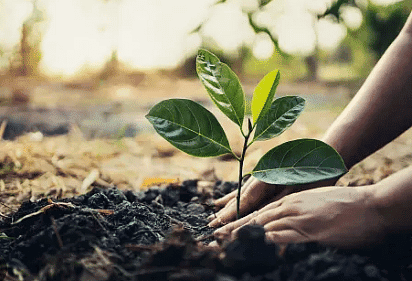
- Sustainability Principle: Planted trees should ideally match or exceed the number of trees cut, promoting a sustainable approach.
- Natural Reforestation: Deforested areas can undergo natural reforestation if left undisturbed, allowing the ecosystem to re-establish itself without human intervention.
- Human Role: In natural reforestation, there is no active role for human beings as the ecosystem undergoes a self-renewal process.
- Forest (Conservation) Act in India: India has the Forest (Conservation) Act, aimed at preserving and conserving natural forests while addressing the basic needs of people living in or near these forests.
FAQs on Short Notes: Conservation of Plants and Animals
| 1. What are the main causes of deforestation? |  |
| 2. What are the consequences of deforestation on the environment? | |
| 3. How do wildlife sanctuaries and national parks contribute to conservation? | |
| 4. What is the significance of the Red Data Book? | |
| 5. What are endemic species and why are they important? | |





