Grade 11 Exam > Grade 11 Notes > English Literature > Character Sketch: Ranga's Marriage
Character Sketch: Ranga's Marriage

Character Sketch of Ranga
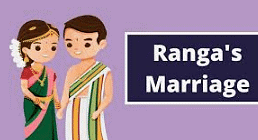
Ranga's Marriage Overview - The story revolves around Ranga, the accountant's son who got the opportunity to go out of the village to study. The narrator takes you through a journey where he changes Ranga's perception about marriage, how he staged their union with the help of a Shastri and what role English has played in their village. The entire story involves funny instances and references for the narrator has made sure your mind stays occupied with the story.
Character Sketch of Shyama
Shyama is the narrator of the story, "Ranga's Marriage" and also the central character. He is an old and experienced man, who has more faith in traditional beliefs than Ranga's modern notions. He is passionately in love with his village and the villagers and rambles incessantly while describing it. He manipulates Ranga in such a manner that he ends up marrying Ratna, an eleven year old girl, in spite of his notions about marriage. The manipulation is done in such a manner that Ranga marries Ratna out of his own free will. He means well and his intentions are good. Shyama is also an intelligent man, who has great knowledge of human nature and is almost a psychiatrist in his own right.
Character Sketch of Ratna
Ratna was Rama Rao's niece. She was just eleven years old. She lived in a big town and had come to live at his uncle's home in Hosahali after her parents' death. She was quite pretty and had many qualities. She could play the Veena and harmonium. She could also sing melodiously. Masti Venkatesha Iyengar planned to get Ranga married to Ratna. At the end he succeeded in his plan and Ratna was happily married to Ranga.
The document Character Sketch: Ranga's Marriage is a part of the Grade 11 Course English Literature for Grade 11.
All you need of Grade 11 at this link: Grade 11
FAQs on Character Sketch: Ranga's Marriage
| 1. Who is Ranga and what makes his character important in "Ranga's Marriage"? |  |
Ans. Ranga is the protagonist of the story-a young man from the village who returns after studying in Bangalore, embodying the conflict between modern urban values and traditional village customs. His character sketch reveals how education transforms him socially and intellectually, making him question conventional practices like child marriage and caste distinctions, which drives the entire narrative.
| 2. How does Ranga's personality change after he goes to Bangalore in the story? | |
Ans. Ranga transforms from a traditional village boy into a modern, independent thinker after his Bangalore education. He adopts progressive attitudes, rejects superstitions, and develops critical thinking about social practices. This character development illustrates the clash between westernised values and orthodox village traditions, making him fundamentally different from his peers and elders.
| 3. What are Ranga's views on marriage and why does he refuse the marriage proposal initially? | |
Ans. Ranga opposes child marriage and arranged marriages based on caste and tradition, viewing them as outdated social customs. His refusal stems from modern ideals about marriage being a partnership between equals rather than a family obligation. This stance on matrimonial practices reflects his progressive mindset acquired through urban education and exposure to contemporary thinking.
| 4. How does the author use irony in Ranga's character sketch to highlight social hypocrisy? | |
Ans. The narrative employs dramatic irony when Ranga, who rejects traditional marriage arrangements, ultimately agrees to marry Ratna through deception by the village elders. His character sketch demonstrates how social pressure and manipulation override individual principles, revealing the hypocrisy of conservative societies that suppress progressive thinking despite accepting modern education and its consequences.
| 5. What does Ranga's acceptance of marriage at the story's end reveal about his character development? | |
Ans. Ranga's eventual agreement to marry Ratna suggests compromise and maturity-he prioritises love and genuine compatibility over rigid ideology. This character arc reveals that personal relationships can reconcile modern values with tradition, indicating growth from stubborn idealism toward pragmatism. His transformation suggests acceptance of social realities while maintaining core ethical principles.
About this Document

4.73/5 Rating

Apr 30, 2026 Last updated
Related Exams
Document Description: Character Sketch: Ranga's Marriage for Grade 11 2026 is part of English Literature for Grade 11 preparation. The notes and questions for Character Sketch: Ranga's Marriage have been prepared according to the Grade 11 exam syllabus. Information about Character Sketch: Ranga's Marriage covers topics like and Character Sketch: Ranga's Marriage Example, for Grade 11 2026 Exam. Find important definitions, questions, notes, meanings, examples, exercises and tests below for Character Sketch: Ranga's Marriage.
Introduction of Character Sketch: Ranga's Marriage in English is available as part of our English Literature for Grade 11 for Grade 11 & Character Sketch: Ranga's Marriage in Hindi for English Literature for Grade 11 course. Download more important topics related with notes, lectures and mock test series for Grade 11 Exam by signing up for free. Grade 11: Character Sketch: Ranga's Marriage
Description
Character Sketch: Ranga's Marriage of English Literature covers all the important topics, helping you prepare for the Grade 11 exam on EduRev. Start for free!
Information about Character Sketch: Ranga's Marriage
In this doc you can find the meaning of Character Sketch: Ranga's Marriage defined & explained in the simplest way possible. Besides explaining types of Character Sketch: Ranga's Marriage theory, EduRev gives you an ample number of questions to practice Character Sketch: Ranga's Marriage tests, examples and also practice Grade 11 tests



Related Searches
study material, Exam, Viva Questions, Previous Year Questions with Solutions, Character Sketch: Ranga's Marriage, past year papers, Character Sketch: Ranga's Marriage, Character Sketch: Ranga's Marriage, Sample Paper, mock tests for examination, Semester Notes, ppt, video lectures, Objective type Questions, practice quizzes, Extra Questions, Summary, shortcuts and tricks, pdf , MCQs, Important questions, Free;