Humanities/Arts Exam > Humanities/Arts Notes > Chapter Notes for Humanities > Summary: Silk Road
Summary: Silk Road

Key Points of the Story
- Silk Road summary is about the author's journey which starts from slopes of Ravu to Mt. Kailash.
- This was to complete the kora.
- Thus, it gives us an account of the journey they experience.
- Moreover, the main aim of the journey was religious mostly.
- We see that the author wishes to complete the journey to Mt. Kailash.
- Thus, in order to embark on this pilgrimage journey, he chooses a tough one.
- Further, the author hires Tsetan and takes along Daniel as an acquaintance to chaperon him to Darchen.
- Consequently, we learn about his journey and his experience through the Silk Road.
- He mentions how the people in hilly areas are rather sensitive.
- The author goes on to witness the beauty of Lake Mansarovar and Darchen.
- Moreover, he faces a lot of difficulties but is able to complete his pilgrimage due to his undeterred faith.
Detailed Summary
The author, Nick Middleton, recounts his expedition to Mount Kailash along the Silk Road. To accomplish his Kora, he engages the services of Tsetan to drive him to the mountain. Before departing from Lhamo, he receives a sheepskin coat as a parting gift. Seeking companionship, he is joined by Daniel until Darchen.
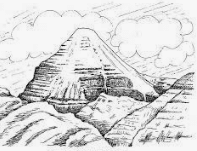 Tsetan takes a southwest shortcut, claiming it as the direct route to Mount Kailash, albeit involving high mountain passes. He assures them that the journey would be manageable due to the absence of snow. Along the way, they encounter gazelles, wild asses, and shepherds tending their flocks.Approaching a hill, they encounter nomadic tents guarded by Tibetan mastiffs. As they draw closer, the dogs chase their car. Upon entering a valley, they encounter snow-covered mountains and rivers. The ride becomes increasingly challenging, reaching an elevation of 5210 meters. Despite discomfort due to altitude, they press on, stopping for lunch at 2 o'clock.
In the late afternoon, they arrive at the small town of 'Hor.' The author briefly rests at a local café while Tsetan repairs the car, and Daniel departs for Lhasa. Unimpressed by Hor, they continue their journey, spending the night at a guest house in Darchen. The author struggles with altitude-related issues, seeking treatment from a Tibetan doctor and recovering after a five-day medication course.
Feeling better, he befriends another pilgrim named Norbu in Darchen, a place devoid of pilgrims. Relieved by this companionship, the author decides to complete his pilgrimage with Norbu. They hire yaks for their belongings, but Norbu, struggling and laughing, admits his inability to continue due to his large size.
Conclusion
To sum up the Silk Road summary, we learn about the author's journey through the silk road and the determination of pilgrims and the hardships they face.
Difficult Words
Word = Meaning
- Flawless = perfect, unblemished
- Extended = stretched, prolonged
- Farewell = goodbye, parting
- Sheepskin = leather, hide
- Shortcut = quicker route, bypass
- Likelihood = chance, probability
- Emerged = appeared, surfaced
- Glowed = shined, radiated
- Duck = bend down, stoop
- Assured = guaranteed, promised
- Rolling = undulating, moving
- Vast = huge, expansive
- Nibbling = biting softly, grazing
- Arid = dry, barren
- Bounding = leaping, jumping
- Void = emptiness, vacuum
- Stony = rocky, full of stones
- Manoeuvres = movements, operations
- Plumes = feather-like clouds, tufts
- Evasive = avoiding, dodging
- Mastiff = large dog breed, guard dog
- Beasts = animals, creatures
- Shaggy = hairy, bushy
- Swerve = turn suddenly, veer
- Frown = show displeasure, scowl
- Billowed = swelled out, puff up
- Solitary = alone, single
- Tending = caring for, looking after
- Collars = neckbands, necklace
- Furiously = angrily, violently
- Chase = pursue, follow
- Tribute = payment, gift
- Clogged = blocked, obstructed
- Meanders = winding paths, twists
- Encrusted = coated, covered
- Slither = slide, glide
- Sturdy = strong, robust
- Icy = frozen, very cold
- Blockage = obstruction, barrier
- Upslope = inclined surface, upward hill
- Swathe = strip, band
- Pitched in = helped, contributed
- Survey = examine, inspect
- Imperial = royal, majestic
- Horizon = skyline, where sky meets earth
- Glinting = shimmering, sparkling
- Gained height = ascended, went up
- Bank = side of river, edge
- Bumpier = more uneven, rougher
- Slope = incline, gradient
- Studded = dotted, adorned
- Lurching = staggering, stumbling
- Throb = pulse, beat
- Cairn = stone pile, marker
- Festooned = decorated, adorned
- Erected = set up, constructed
- Pockmarked = marked with pits, scarred
- Vestiges = remnants, traces
- Collision = crash, clash
- Glare = strong brightness, shine
- Puncture = tire hole, tire leak
- Liberally = freely, abundantly
- Refuse = garbage, trash
- Vegetation = plant life, flora
- Trade route = path for trading, commerce path
- Bade = said goodbye, parted
- Miserable = wretched, unhappy
- Venerated = revered, respected
- Cosmology = universe study, space theory
- Headwaters = river source, origin
- Striking distance = very close, nearby
- Forge ahead = progress, advance
- Draught = breeze, airflow
- Confinement = captivity, restraint
- Stark contrast = clear difference, opposition
- Sanctity = holiness, purity
- Hallowed = sacred, blessed
- Admitting = allowing, permitting
- Abruptly = suddenly, quickly
- Pinpoints = identifies, specifies
- Flanks = sides, edges
- Encounters = meetings, confrontations
- Moved = affected, touched
- Burst = explode, erupt
- Guesthouse = inn, lodge
- Rubbish dump = garbage pile, waste heap
- Solitary = alone, single
- Convinced = sure, certain
- Accustomed = used to, familiar with
- Disturbances = interruptions, disruptions
- Nostril = nose hole, nasal passage
- Strangely = oddly, unusually
- Nasal = nose-related, nostril
- Curious = odd, inquisitive
- Impulses = urges, drives
- Gasping = panting, choking
- Sinuses = cavities, spaces
- Medical college = hospital, clinic
- Monastery = shrine, temple
- Consulting room = clinic, chamber
- Paraphernalia = gear, tools
- Altitude = height, elevation
- Kora = circuit, path
- Envelope = wrapper, cover
- Cinnamon = spice, bark
- Pellets = balls, beads
- Sleepless = restless, insomniac
- Aversion = dislike, distaste
- Courtyard = patio, yard
- Symptoms = signs, indications
- Recover = heal, recuperate
- Lhasa = capital of Tibet, city
- Passed away = died, expired
- Rubble = debris, wreckage
- Refuse = trash, waste
- Rudimentary = basic, primitive
- Incongruous = out-of-place, unsuitable
- Brook = stream, creek
- Pilgrims = travelers, devotees
- Pondering = considering, reflecting
- Options = choices, alternatives
- Pilgrimage = religious journey, expedition
- Kora = circuit, path
- Blockage = obstruction, barrier
- Cavernous = spacious, vast
- Wreathed = surrounded, encircled
- Multi-coloured = colorful, varied
- Stripe = band, line
- Voluminous = large, bulky
- Export = shipment, send out
- Silk Road = ancient trade route
- Rickety = shaky, unsteady
- Windcheater = jacket, outerwear
- Academic = scholarly, educational
- Kora = circuit, path
- Buddhist = follower of Buddhism
- Enthusiasm = eagerness, passion
- Tibetan = from Tibet, native
- Devout = pious, dedicated
- Believer = follower, devotee
- Yaks = Himalayan animals, beasts
- Luggage = baggage, bags
- Prostrate = bow, kneel
- Hysterical = frantic, uncontrollable
The document Summary: Silk Road is a part of the Humanities/Arts Course Chapter Notes for Humanities.
All you need of Humanities/Arts at this link: Humanities/Arts
FAQs on Summary: Silk Road
| 1. What exactly was the Silk Road and how did it work as a trade network? |  |
Ans. The Silk Road was an extensive network of trade routes connecting East Asia with the Mediterranean, facilitating exchange of goods, ideas, and culture from roughly the 2nd century BCE onwards. Rather than a single path, it comprised multiple land and maritime routes where merchants transported silk, spices, ceramics, and precious metals across deserts, mountains, and oceans, with intermediaries trading goods at various stopping points.
| 2. Why was the Silk Road so important for connecting China and Europe during ancient times? | |
Ans. The Silk Road served as the primary conduit for economic and cultural exchange between distant civilisations, enabling unprecedented communication between East and West. Chinese silk, porcelain, and tea reached European markets while Western glass, wool, and metalwork travelled eastward, fostering trade partnerships that enriched both regions and shaped medieval commerce fundamentally.
| 3. What goods were actually traded on the Silk Road besides silk? | |
Ans. Beyond silk, merchants exchanged spices from India and Southeast Asia, precious stones, glassware, metalwork, ceramics, and tea. The Silk Road also facilitated intellectual trade-Buddhist texts, astronomical knowledge, and artistic techniques flowed between regions. Religious ideas, technologies, and innovations travelled alongside commodities, making it a vehicle for civilisational advancement beyond mere commercial transactions.
| 4. How did the Silk Road impact the spread of Buddhism and other religions across Asia? | |
Ans. Buddhist monks and merchants utilised Silk Road routes to spread Buddhism from India through Central Asia into China, Japan, and Southeast Asia from the 1st century CE onwards. The network enabled religious texts, missionaries, and pilgrims to traverse vast distances, facilitating conversions and establishment of monasteries. Similarly, Islam, Christianity, and other faiths expanded through these interconnected pathways of cultural diffusion.
| 5. What caused the decline of the Silk Road trade routes in history? | |
Ans. The Silk Road gradually declined due to multiple factors: maritime routes became more efficient alternatives after the 15th century, European colonial powers shifted trade patterns, political instability in Central Asia disrupted overland routes, and the rise of nation-states created new trade barriers. The development of faster ocean passages to Asia rendered traditional overland Silk Road commerce economically obsolete for many merchants.
About this Document

1.6K Views

4.68/5 Rating

Apr 19, 2026 Last updated
Related Exams
Document Description: Summary: Silk Road for Humanities/Arts 2026 is part of Chapter Notes for Humanities preparation. The notes and questions for Summary: Silk Road have been prepared according to the Humanities/Arts exam syllabus. Information about Summary: Silk Road covers topics like and Summary: Silk Road Example, for Humanities/Arts 2026 Exam. Find important definitions, questions, notes, meanings, examples, exercises and tests below for Summary: Silk Road.
Introduction of Summary: Silk Road in English is available as part of our Chapter Notes for Humanities for Humanities/Arts & Summary: Silk Road in Hindi for Chapter Notes for Humanities course. Download more important topics related with notes, lectures and mock test series for Humanities/Arts Exam by signing up for free. Humanities/Arts: Summary: Silk Road
Description
Summary: Silk Road of Chapter Notes - covers all the important topics from the book, explained in easy language for better understanding. Free PDF available for download.
Information about Summary: Silk Road
In this doc you can find the meaning of Summary: Silk Road defined & explained in the simplest way possible. Besides explaining types of Summary: Silk Road theory, EduRev gives you an ample number of questions to practice Summary: Silk Road tests, examples and also practice Humanities/Arts tests



Related Searches
Summary: Silk Road, ppt, Summary, Sample Paper, past year papers, Viva Questions, Semester Notes, Objective type Questions, shortcuts and tricks, Summary: Silk Road, practice quizzes, mock tests for examination, video lectures, Previous Year Questions with Solutions, study material, Free, Exam, pdf , Extra Questions, MCQs, Important questions, Summary: Silk Road;