Summary: Birth

Key Points of the Story
Starts with Andrew Manson, recently out of medical school who had an argument with her girlfriend. Also, his mood was very low while returning home. At home, he saw Joe Morgan who was persistently waiting for him. As her wife was expecting the birth of his first child after twenty years of marriage. Hence, a doctor was therefore necessary for the delivery. On reaching Joe's house he discovers her wife in labour pain. And all the member were eagerly waiting for the birth. However, Mrs Morgan was under anaesthesia, and at the break of dawn, a lifeless child was born. The child was pale and look like had witnessed suffocation. Therefore, Manson instantly recalls a similar case in medical school. So he started working on the child as family happiness depends on it. After half an hour of hard work, he manages to save the child.
Detailed Summary
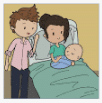
The story is an excerpt from "The Citadel," recounting the experience of a young medical graduate dealing with a challenging childbirth case. In a covert manner, he manages to revive a seemingly lifeless infant, relying on his medical expertise and instincts. The story also highlights the excitement of the doctor and his team.
At the outset, the narrative introduces Andrew Manson, a recent medical school graduate, who is returning home after a quarrel with his girlfriend, Christine. Upon reaching home, he is summoned by Joe Morgan to attend to Joe's wife, who is expecting her first child after 20 years. Despite the late hour, Andrew agrees to assist.
Arriving at Joe's house, Andrew finds a midwife attending to the seriously ill woman. Andrew observes Mrs. Morgan and realizes that the situation will require some time. While waiting, his thoughts wander to other individuals, such as Barnwell, who dedicated his life to a woman who betrayed him, and Edward Page, who unhappily lived separately from his ill-natured wife, Bowden. Andrew is then called to attend to the patient.
After a grueling hour-long struggle, a lifeless child is born at dawn, shocking Andrew. He is faced with a critical decision: attend to the mother, who is unconscious and needs immediate care, or the child.
Andrew chooses to care for the mother first, whose condition stabilizes. He then turns his attention to the baby. Inquiring with the midwife about the child, he discovers the infant placed under the bed, surrounded by soaked newspapers. Although Andrew initially does not recognize the cause of the child's lifelessness as asphyxia due to oxygen deprivation and excess carbon dioxide in the blood, he remains determined and provides the necessary treatment. Despite the midwife's repeated insistence that the child is stillborn, he persists with his efforts.
Towards the story's conclusion, a miraculous moment occurs. Andrew vigorously rubs the child with a towel, gently compresses the tiny chest with both hands, and attempts to breathe life into the limp body. After a brief, challenging struggle, the infant's chest makes a feeble movement, and the child begins to stir.
Finally, Andrew lets out a sigh of relief, handing the revived child to the nurse. He then shares the entire story with Joe, who is waiting outside, and walks down the street, deeply satisfied with his significant achievement.
Conclusion
Through birth summary, the writer highlights the efforts of doctors and wants to say that we should keep on trying.
Difficult Words
Word - Meaning
- excerpt- extract,
- surgery-hospital, clinic,
- burly-bulky, heavy,
- driller-miner,
- relief-comfort,
- missus-wife,Mrs,
- abruptly-suddenly,
- contemplation-deep thinking,
- usually- as a rule,
- perceptive-watchful,
- listless-unattentive,
- premonition-foreknowledge,
- drew up-stopped,
- strain-stress, tiredness,
- stout-strong. healthy,
- faintly-mildly,
- fret-irritate, vex,
- overwrought-exhausted, tired,
- snatch -get,
- queer-strange,
- lethargy-drowsiness, laziness,
- rustle-low sound,
- cinder-partly burnt coal,
- grate-fireplace,
- probing-searching, curious,
- muddled-confused,
- episode-event,
- obsessed-haunted, struck,
- morbidly-gloomily,
- sordidly-meanly, dishonestly,
- bound to-married to, linked with,
- shrewish-sharp-tongued,
- ill-natured,
- apart from-separately,
- dismal-sorrowful, sad,
- conclusion-feeling,
- wince-start back with sudden pain;
- idyllic state-pleasant situation,
- level-balanced,
- image-picture,
- resentful-angry,
- stretched out-spread forward,
- broodingly-thoughtfully,
- pursued-followed, taken,
- meditation-state of deep thinking,
- awful set upon-keen to have,
- anaesthetic-the fume or liquid that makes one insensitive to pain,
- perceived-noticed, realised,
- elapsed-passed,
- harsh-tough,
- streaks-signs,
- dawn-daybreak,
- edges-sides,
- still form-dead newborn baby,
- shiver of horror -fear,
- exertions-hard work,
- chilled-went cold and white,
- resuscitate-to bring to life again,
- obligation-duty,
- desperate-critical, hopeless, sinking,
- dilemma- difficult situation,
- instinctively-guided by natural impulse,
- ether-a liquid used to make patients unconscious before operation,
- frantic-mad, wild,
- ebbing-flowing away, diminishing,
- smash-break open,
- ampule-a small phial or container,
- flung down-threw away,
- unsparingly-feverishly,
- restore-bring back to life,
- flaccid-soft not firm,
- swing-turned,
- Sticking-clinging,
- frightened-terrified,
- gesture-indication, movement of hand,
- in a flash-at once,
- sodden-soaked,
- limp-not stiff,
- tallow-fat of animal,
- cord-the tube that passes from the foetus to the placenta. umbilical cord,
- slashed-cut,
- hastily-quickly,
- stein-the lower part of a tree,
- texture-tissue, web, structure,
- lolled-hung out or put lazily,
- haggard-tired, worried,
- frown-anger,
- asphyxia, pallida-suffocation or unconsciousness caused by lack of oxygen,
- basins-tubs,
- pallid-pale,
- respiration-giving oxygen through artificial breathing,
- ewer-a water jug,
- frantically-madly, swiftly,
- splashed-poured,
- crazy-whimsical,
- plunging-dipping, putting,
- pantingly-gasping for breath,
- lax-limp, not stiff,
- desperate-hopeless,
- raging-violent,
- stark-strong,
- consternation-alarm, anger,
- dashed-failed, broken,
- futile-wasted, in vain,
- draggled-made wet and dirty,
- stumbling-tripping,
- sopping-wet,
- despairing-feeling sad and disappointed,
- crushing-pressing down,
- releasing-freeing it to rise again,
- miracle-supernatural event, a wonder,
- pigmy-very small,
- convulsive-contraction of muscles,
- giddy-dizzy, inconstant,
- unavailing striving-wasted efforts,
- exquisite-lovely, pleasant,
- mucus-slippered liquid, cough,
- iridescent-shiny-bright changing colours,
- bubble-air-filled cavity in water,
- spineless-limp or lax, lifeless,
- blanched-pale,
- litter-broken, disorderly condition,
- hysterically-attack of hysteria,
- ewer-water jug,
- puddle-small muddy pool,
- huddled-in a haphazard state,
- wrung out-squeezed out water,
- scullery-a room for washing dishes,
- spent-tired,
- oblivious-unmindful, forgetful,
FAQs on Summary: Birth
| 1. What is birth? |  |
| 2. How does the process of birth occur? | |
| 3. What are the different methods of giving birth? | |
| 4. What are the stages of labor during birth? | |
| 5. What are some common complications that can occur during birth? | |

