Worksheet Solutions: Indian Economy On The Eve Of Independence- 1


Multiple Choice Questions
Q1: What was the main occupation of people in rural India on the eve of independence?
(a) Agriculture
(b) Manufacturing
(c) Services
(d) Mining
Ans: (a) Agriculture
Q2: Which sector contributed the most to the GDP of India in 1947?
(a) Agriculture
(b) Manufacturing
(c) Services
(d) Construction
Ans: (a) Agriculture
Q3: Which estimate of national income during the colonial period is considered most significant?
(a) Dadabhai Naoroji
(b) William Digby
(c) V.K.R.V. Rao
(d) R.C. Desai
Ans: (c) V.K.R.V. Rao
Q4: What was the literacy rate in India on the eve of independence?
(a) Less than 20%
(b) Around 40%
(c) Around 60%
(d) More than 80%
Ans: (a) Less than 20%
Q5: Which of the following was a major factor contributing to the low level of industrialization in India before independence?
(a) Lack of raw materials
(b) Skilled workforce
(c) Modern technology
(d) Capital shortage
Ans: (d) Capital shortage
True and False
Q1: Agriculture was the main source of livelihood for the majority of people in pre-independence India.
Ans: True
Q2: The industrial sector in India was highly developed before independence.
Ans: False
Q3: The British colonial rule significantly improved the economic conditions of the Indian population.
Ans: False
Q4: The primary occupation of people in urban areas was agriculture.
Ans: False
Q5: The economic policies of the British colonial government focused on promoting Indian industries.
Ans: False
Match the Following
Q1: Match the following leaders with their respective movements:

Ans: A-3, B-1, C-2, D-4
Q2: Match the following agricultural practices with their regions:
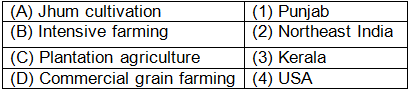
Ans: A-2, B-3, C-1, D-4
Q3: Match the following economic challenges with their solutions:

Ans: A-1, B-3, C-4, D-2
Very Short Answers
Q1: What was the impact of World War II on the Indian economy?
Ans: Disrupted trade and economic activities
Led to inflation and scarcity of essential goods
The impact of World War II on the Indian economy was significant. Disrupted trade and economic activities due to the war led to inflation and scarcity of essential goods.
Q2: Name one major cash crop grown in pre-independence India.
Ans: Cotton
One major cash crop grown in pre-independence India was cotton.
Q3: Who was the first Prime Minister of India?
Ans: Jawaharlal Nehru
The first Prime Minister of India was Jawaharlal Nehru.
Q4: What was the main objective behind British deindustrialisation of India?
Ans: The main objective behind British deindustrialisation of India was to make India a supplier of raw materials and a market for British-manufactured goods.
Q5: Which industry was known as the 'drain of wealth' during colonial rule?
Ans: Textile industry
Textile industry was known as the 'drain of wealth' during colonial rule.
Short Answers
Q1: Explain the impact of British colonial policies on Indian agriculture.
Ans: British colonial policies had a detrimental impact on Indian agriculture. Introduction of cash crops led to the decline of food crops. Heavy taxation and revenue policies impoverished farmers. Traditional industries suffered due to British imports.
- Introduction of cash crops led to the decline of food crops.
- Heavy taxation and revenue policies impoverished farmers.
- Traditional industries suffered due to British imports.
Q2: Explain why India's agricultural productivity remained low during colonial rule.
Ans: Agricultural productivity in India remained low during the colonial period due to several interrelated factors.
- The British introduced exploitative land revenue systems such as the zamindari system, where intermediaries collected rent without investing in agricultural improvement.
- Cultivators lacked security of tenure and incentives to invest in land.
- Agriculture suffered from low levels of technology, inadequate irrigation facilities, negligible use of fertilisers, and poor access to credit.
Though the cultivated area expanded, productivity stagnated, leading to widespread rural distress.
Q3: Discuss the challenges faced by the industrial sector in pre-independence India.
Ans: The industrial sector in pre-independence India faced challenges such as lack of capital and technology, limited market due to colonial policies, and competition from cheap British goods, which affected local industries.
- Lack of capital and technology hindered growth.
- Limited market due to colonial policies.
- Competition from cheap British goods affected local industries.
Q4: Explain the importance of the agricultural sector in the pre-independence Indian economy.
Ans: The agricultural sector in pre-independence India was vital, contributing significantly to GDP and serving as the main livelihood for the majority. However, traditional farming methods prevailed, limiting productivity.
- Main source of livelihood for the majority.
- Contributed significantly to GDP.
- Traditional farming methods prevailed, limiting productivity.
Q5: Describe the social challenges faced by India on the eve of independence.
Ans: On the eve of independence, India faced social challenges like caste-based discrimination, low literacy rates (especially among women), and limited access to healthcare and basic amenities.
- Caste-based discrimination prevailed.
- Low literacy rates, especially among women.
- Limited access to healthcare and basic amenities.
Long Answers
Q1: Discuss the reasons for the low literacy rate in pre-independence India.
Ans: The low literacy rate in pre-independence India was primarily due to the lack of educational institutions, social norms restricting education (especially for girls), and poverty and economic constraints hindering access to schooling.
- Lack of educational institutions.
- Social norms restricted education, especially for girls.
- Poverty and economic constraints hindered access to schooling.
Q2: Discuss the major economic challenges faced by India at the time of independence.
Ans: At the time of independence, India faced numerous economic challenges arising from nearly two centuries of British colonial rule.
- The agricultural sector was characterised by surplus labour, low productivity, and stagnation due to exploitative land revenue systems and lack of investment in irrigation and technology.
- The industrial sector was poorly developed, with the decline of traditional handicrafts and the absence of a strong modern industrial base, especially capital goods industries.
Foreign trade was structured to serve British interests, making India an exporter of primary products and an importer of finished goods, leading to a persistent drain of wealth. - Infrastructure such as railways and ports existed but primarily served colonial needs rather than domestic development.
- Demographic conditions were also alarming, marked by low literacy, high mortality rates, and widespread poverty.
Together, these challenges made economic reconstruction a critical task for independent India.
Q3: Describe the economic policies adopted by the Indian leaders after independence.
Ans: After independence, Indian leaders focused on industrialization through five-year plans, implemented land reforms to address agrarian issues, and promoted education and healthcare for social development.
- Focus on industrialization through five-year plans.
- Land reforms to address agrarian issues.
- Promotion of education and healthcare for social development.
Q4: Examine the role of women in the pre-independence Indian economy.
Ans: Women in pre-independence India had limited participation in the formal workforce, engaging mostly in household and agricultural activities. Social reforms and the independence movement contributed to their empowerment.
- Limited participation in the formal workforce.
- Engaged in household and agricultural activities.
- Social reforms and independence movement contributed to their empowerment.
Q5: Discuss the impact of the Green Revolution on Indian agriculture.
Ans: The Green Revolution significantly impacted Indian agriculture by increasing productivity through modern techniques. It reduced dependency on imports, making India self-sufficient in food grains. However, there were social and economic disparities due to the uneven distribution of benefits.
- Increased agricultural productivity through modern techniques.
- Reduced dependency on imports; made India self-sufficient in food grains.
- Social and economic disparities due to uneven distribution of benefits.
FAQs on Worksheet Solutions: Indian Economy On The Eve Of Independence- 1
| 1. What was the state of the Indian economy on the eve of independence? |  |
| 2. How did the Indian economy change after independence? | |
| 3. What were the main challenges faced by the Indian economy on the eve of independence? | |
| 4. How did the government promote industrialization in the Indian economy after independence? | |
| 5. What were the key objectives of the Indian government in shaping the post-independence economy? | |