Worksheet Solutions: Human Capital Formation in India- 1

Multiple Choice Questions
Q1: What is the primary purpose of Human Capital Formation in India?
(a) Increase in population
(b) Enhancing skills and knowledge of people
(c) Building infrastructure
(d) Promoting industrial growth
Ans: (b) Enhancing skills and knowledge of people
Explanation: Human capital formation focuses on improving the productive capabilities of people by increasing their knowledge, skills and competencies through education and training. While infrastructure and industrial growth are important for development, they are not the core aim of human capital formation; rather they complement it.
Q2: Which of the following is not a form of human capital?
(a) Education and training
(b) Healthcare facilities
(c) Physical fitness
(d) Job experience
Ans: (c) Physical fitness
Explanation: In economic usage, forms of human capital typically refer to investments that increase a person's productive capacity, such as education, training, healthcare and work experience. Physical fitness is an individual attribute related to health and well-being, but it is not usually listed as a separate form of human capital in standard classifications like education, health services and work experience.
Q3: Which agency in India is responsible for formulating policies and programs for human resource development?
(a) NITI Aayog
(b) Ministry of Human Resource Development
(c) Planning Commission
(d) Reserve Bank of India
Ans: (b) Ministry of Human Resource Development
Explanation: The Ministry of Human Resource Development (now Ministry of Education) is the central government department primarily responsible for policy formulation, planning and implementation of education and related human resource development programmes in India. Other agencies contribute in specific ways, but MHRD/Ministry of Education leads policy on education and skills.
Q4: What is the main objective of National Policy on Education (NPE), 1986?
(a) Universalization of education
(b) Promotion of private schools
(c) Elimination of technical education
(d) Reduction in government spending on education
Ans: (a) Universalization of education
Explanation: NPE 1986 aimed to expand access to and improve the quality of education with a strong emphasis on universalisation at all levels. It sought to remove disparities and ensure equal educational opportunity for all children.
Q5: What does 'Gross Enrollment Ratio' (GER) in education signify?
(a) Total number of students enrolled in different grades
(b) Number of teachers in schools
(c) Total number of schools in a region
(d) Ratio of enrolled students to eligible population in a specific age group
Ans: (d) Ratio of enrolled students to eligible population in a specific age group
Explanation: GER measures the total enrolment in a given level of education, regardless of age, as a percentage of the population in the official age group for that level. It is used to assess coverage and access; because it counts all enrolled students it can exceed 100% when over-age or under-age students are enrolled.
True and False
Q1: Human Capital refers to the stock of skill and productive knowledge embodied in people.
Ans: True
Explanation: Human capital is the accumulated skills, education, health and experience that make people productive. This definition matches the statement.
Q2: The literacy rate in India has remained stagnant over the years without any improvement.
Ans: False
Explanation: The literacy rate in India has shown improvement over decades due to expanded access to schooling and literacy programmes. While progress has been uneven across states and groups, it is not stagnant.
Q3: Vocational education is not a part of human capital formation.
Ans: False
Explanation: Vocational education provides practical skills and training that increase employability and productivity, and is therefore an important component of human capital formation.
Q4: Public expenditure on education is a crucial factor in promoting human capital formation.
Ans: True
Explanation: Public spending on schools, teacher training, scholarships and related services expands access and improves quality, which encourages skill formation and raises the stock of human capital.
Q5: Gender discrimination does not affect human capital formation in any way.
Ans: False
Explanation: Gender discrimination limits access to education and health services for girls and women, reducing their opportunities to acquire skills and thus diminishing overall human capital formation.
Match the Following
Q1: Match the following terms with their correct meanings:
Ans:

Q2: Match the following institutions with their roles:

Ans:

Q3: Match the following policies with their objectives:
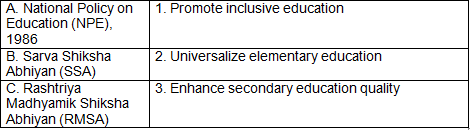
Ans:

Very Short Answers
Q1: Define Human Capital Formation.
Ans: Human Capital Formation is the process by which people acquire and increase their education, skills and health, thereby improving their capacity to contribute to economic and social development.
Q2: Mention any two government agencies responsible for educational planning in India.
Ans: Two government agencies responsible for educational planning in India are UGC (University Grants Commission) and AICTE (All India Council for Technical Education).
Q3: What is the role of private sector in human capital formation?
Ans: The private sector supports human capital formation by establishing educational institutions, offering vocational and skill training, providing scholarships and internships, and investing in research and development that improves skills and employability.
Q4: Briefly explain the concept of 'Brain Drain' and its impact on human capital.
Ans: Brain Drain is the emigration of skilled and educated individuals to other countries in search of better opportunities. It reduces the home country's stock of skilled labour and can slow development unless countered by policies that retain talent or attract returnees.
Q5: Name any two programs initiated by the government to promote skill development in India.
Ans: Two programmes initiated by the government to promote skill development in India are Skill India Mission and Pradhan Mantri Kaushal Vikas Yojana (PMKVY).
Short Answers
Q1: Explain the importance of healthcare in human capital formation.
Ans: Healthcare is essential because it:
• Ensures physical well-being, which reduces absenteeism and improves performance.
• Enables children to benefit fully from schooling by reducing disease and malnutrition.
• Helps adults remain productive and prolongs working life, thereby strengthening the stock of human capital.
Q2: Discuss the challenges faced by the education sector in India for human capital formation.
Ans: Major challenges include:
• Inadequate and uneven infrastructure, especially in rural areas.
• Shortage of well-trained and motivated teachers.
• Insufficient public funding and inefficient allocation of resources.
• Regional and social disparities that limit access for disadvantaged groups.
Q3: How does investment in education contribute to economic growth?
Ans: Investment in education raises the skill level of the workforce, which increases labour productivity. Skilled workers promote innovation, improve production techniques and support entrepreneurship, all of which contribute to higher economic growth and long-term development.
Q4: Describe the role of technical and vocational education in enhancing human capital.
Ans: Technical and vocational education provides practical and job-oriented skills that match industry needs. It improves employability, reduces skill gaps in the labour market and helps individuals move quickly into productive employment.
Q5: Explain the concept of 'National Skill Development Mission' and its objectives.
Ans: The National Skill Development Mission seeks to create a demand-driven, organised and certified skill ecosystem. Its objectives include enhancing employability, reducing skill shortages, promoting industry-linked training, and encouraging lifelong learning and entrepreneurship.
Long Answers
Q1: Discuss the impact of gender inequality on human capital formation in India.
Ans: Gender inequality negatively affects human capital formation in several ways:
• Reduced Access to Education: Girls in many regions face barriers to school enrolment and completion, resulting in lower female literacy and skill levels.
• Health Disparities: Women and girls may receive poorer healthcare and nutrition, which undermines cognitive development and overall productivity.
• Lower Labour Force Participation: Social norms and lack of opportunities limit women's participation in the workforce, wasting potential human capital.
To address these effects, policies must focus on improving girls' access to quality education, ensuring equal health services, offering incentives and scholarships, and promoting women's economic participation. Empowering women raises household well-being and contributes significantly to national development.
Q2: Explain the role of government policies in promoting inclusive education for human capital formation.
Ans: Government policies are crucial for inclusive education because they:
• Provide Legal and Institutional Frameworks: Programmes such as Sarva Shiksha Abhiyan (SSA) and Rashtriya Madhyamik Shiksha Abhiyan (RMSA) work to universalise elementary and secondary education.
• Increase Public Investment: Targeted funding builds schools, improves teacher training and supplies learning materials.
• Address Equity: Schemes for scholarships, mid-day meals and special support for disadvantaged groups reduce barriers to attendance.
• Monitor and Regulate Quality: Standards and assessments help maintain teaching quality and learning outcomes.
Such policies ensure that educational opportunities reach all sections of society and thereby strengthen overall human capital.
Q3: Analyze the relationship between education and economic development in India.
Ans: Education and economic development are mutually reinforcing:
• Education Improves Skills: A better-educated workforce is more productive, adaptable and innovative.
• Drives Structural Change: Education facilitates the shift from low-productivity agriculture to higher-productivity industry and services.
• Promotes Social Benefits: Education improves health, reduces fertility rates and raises civic participation, which support a stable environment for growth.
• Long-Run Growth: Investment in education raises human capital, which is a key determinant of sustained economic growth and improved living standards.
Q4: Discuss the measures to address the issue of child labor and its impact on human capital formation.
Ans: Child labour reduces educational attainment and future productivity. Effective measures include:
• Strict Enforcement of Laws: Implement and enforce laws that prohibit child labour and protect children's rights.
• Universal Schooling: Ensure free and compulsory education with appropriate facilities and incentives.
• Conditional Cash Transfers: Provide financial support to poor families conditional on children's school attendance.
• Rehabilitation and Training: Offer bridge education programmes and vocational training for rescued children.
These steps help remove children from work and integrate them into education, thereby protecting and building human capital.
Q5: Evaluate the challenges and prospects of online education in enhancing human capital in India.
Ans: Online education offers significant prospects but also faces challenges:
Prospects:
• Wide Reach: It can deliver quality content to remote areas and supplement classroom teaching.
• Flexible Learning: Learners can access courses at their own pace and expand skills quickly.
Challenges:
• Digital Divide: Lack of affordable internet access and devices excludes many disadvantaged learners.
• Quality and Credibility: Ensuring the standard of online courses and assessment is difficult without regulation.
To harness online education for human capital, policies should focus on improving digital infrastructure, subsidising access for the poor, developing recognised online curricula, and training teachers to use digital tools effectively.
FAQs on Worksheet Solutions: Human Capital Formation in India- 1
| 1. What is human capital formation in India? |  |
| 2. What are the key factors contributing to human capital formation in India? | |
| 3. How does human capital formation impact economic growth in India? | |
| 4. What are the challenges faced in human capital formation in India? | |
| 5. How can the government promote human capital formation in India? | |