CBSE Class 2  >  Class 2 Notes  >  Mathematics (Joyful-Mathematics)  >  Worksheet Solutions: Grouping and Sharing (Multiplication) - 2

Worksheet Solutions: Grouping and Sharing (Multiplication) - 2

Q1: Samantha has 3 bags, and in each bag, there are 4 candies. How many candies does Samantha have in total?
Ans: 
There are 3 bags and each bag has 4 candies.
Use multiplication: 3 × 4 = 12.
You can also add: 4 + 4 + 4 = 12.
So, Samantha has 12 candies in total.

Worksheet Solutions: Grouping and Sharing (Multiplication) - 2
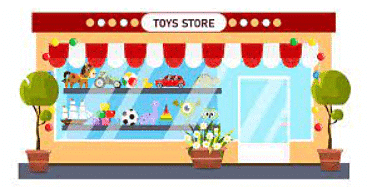
Q2: There are 5 toy cars in a toy store, and each car costs $7. How much money will you need to buy all 5 toy cars?
Ans: 
Each car costs $7 and there are 5 cars.

Use multiplication: 5 × $7 = $35.

So, you need $35 to buy all 5 toy cars.

Worksheet Solutions: Grouping and Sharing (Multiplication) - 2
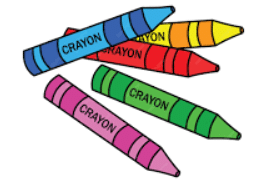
Q3: Tom has 4 boxes of crayons, and in each box, there are 8 crayons. How many crayons does Tom have?
Ans: 
There are 4 boxes and each box has 8 crayons.

Use multiplication: 4 × 8 = 32.

So, Tom has 32 crayons in total.

Worksheet Solutions: Grouping and Sharing (Multiplication) - 2
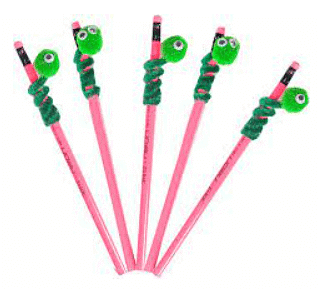
Q4: There are 6 students in a class, and each student has 10 pencils. How many pencils are there in the class?
Ans: 
There are 6 students and each student has 10 pencils.

Use multiplication: 6 × 10 = 60.

So, there are 60 pencils in the class.
Worksheet Solutions: Grouping and Sharing (Multiplication) - 2
Q5: Lisa wants to buy 9 ice creams, and each ice cream costs $2. How much money does Lisa need to buy all 9 ice creams?
Ans:
Each ice cream costs $2 and Lisa wants 9 ice creams.

Use multiplication: 9 × $2 = $18.

So, Lisa needs $18 to buy all 9 ice creams.


Worksheet Solutions: Grouping and Sharing (Multiplication) - 2
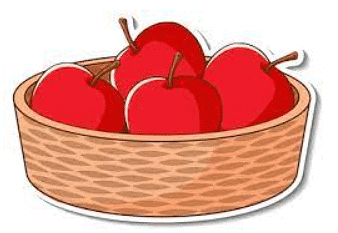
Q6: There are 7 baskets, and each basket has 5 apples. How many apples are there in all the baskets?
Ans: 
There are 7 baskets and each has 5 apples.

Use multiplication: 7 × 5 = 35.

So, there are 35 apples in all the baskets.

Worksheet Solutions: Grouping and Sharing (Multiplication) - 2
Q7: A box of chocolates contains 12 chocolates. How many chocolates are there in 8 such boxes?
Ans: 
One box has 12 chocolates and there are 8 boxes.

Use multiplication: 8 × 12 = 96.

So, there are 96 chocolates in 8 boxes.


Worksheet Solutions: Grouping and Sharing (Multiplication) - 2
Q8: There are 10 birds in a tree, and each bird has 3 eggs. How many eggs are there in the tree?
Ans: 
There are 10 birds and each bird has 3 eggs.

Use multiplication: 10 × 3 = 30.

So, there are 30 eggs in the tree.


Worksheet Solutions: Grouping and Sharing (Multiplication) - 2

The document Worksheet Solutions: Grouping and Sharing (Multiplication) - 2 is a part of the Class 2 Course Mathematics for Class 2 (Joyful-Mathematics).
All you need of Class 2 at this link: Class 2

FAQs on Worksheet Solutions: Grouping and Sharing (Multiplication) - 2

1. What is grouping in multiplication?
Ans. Grouping in multiplication refers to the method of arranging numbers into groups to make the multiplication process easier. For example, when multiplying 4 x 3, one can think of it as 4 groups of 3, which can be visualised as 3 + 3 + 3 + 3.
2. How can sharing help understand division?
Ans. Sharing is a practical way to understand division. It involves distributing a total amount evenly among a certain number of people or groups. For instance, if there are 12 apples and 4 friends, sharing means each friend would receive 3 apples, illustrating the concept of 12 ÷ 4 = 3.
3. What is the relationship between grouping and sharing?
Ans. Grouping and sharing are closely related concepts in multiplication and division. Grouping helps to visualise multiplication by forming sets, while sharing illustrates division by distributing equally. They represent two sides of the same mathematical operation, where grouping increases and sharing decreases.
4. How can we use arrays to understand multiplication?
Ans. Arrays are a visual representation of multiplication that arranges objects in rows and columns. For example, an array of 3 rows with 4 objects in each row represents the multiplication 3 x 4, which totals 12 objects. This helps students see the concept of multiplication as repeated addition.
5. Why is it important for students to learn about grouping and sharing?
Ans. Learning about grouping and sharing is crucial for students as it builds foundational skills in multiplication and division. These concepts help them understand more complex mathematical operations later on and develop problem-solving skills that are applicable in everyday situations.
Explore Courses for Class 2 exam
Get EduRev Notes directly in your Google search
Related Searches
Sample Paper, Summary, Important questions, Free, past year papers, MCQs, Worksheet Solutions: Grouping and Sharing (Multiplication) - 2, shortcuts and tricks, Semester Notes, Worksheet Solutions: Grouping and Sharing (Multiplication) - 2, practice quizzes, study material, Viva Questions, Exam, Objective type Questions, pdf , Extra Questions, Previous Year Questions with Solutions, video lectures, Worksheet Solutions: Grouping and Sharing (Multiplication) - 2, ppt, mock tests for examination;