Summary: What Lucy Found There

Key Points of the Story
- "The Lion, The Witch and the Wardrobe" is a magical tale written by C.S. Lewis.
- The story follows the adventures of four siblings - Peter, Susan, Edmund, and Lucy - who discover the enchanted land of Narnia through a wardrobe in an old house.
- In Narnia, they encounter talking animals, mythical creatures, and a battle between good and evil.
Detailed Summary
Lucy Pevensie stumbles into a magical land called Narnia through a wardrobe in her house. As she explores, she meets a Faun named Mr. Tumnus. The Faun is startled to see her and drops his parcels in surprise. Lucy greets him politely, but Mr. Tumnus is so flustered that he takes a moment to respond. When he finally does, he makes a small bow and introduces himself.
Mr. Tumnus is fascinated by Lucy and asks if she is a Daughter of Eve, which confuses her. After some conversation, it becomes clear that he is referring to humans, whom he has never seen before. Lucy confirms that she is a human girl, and Mr. Tumnus expresses his delight at meeting her.
He explains that they are in the land of Narnia, a magical place ruled by an evil White Witch who keeps it in a perpetual state of winter. Mr. Tumnus invites Lucy to his home for tea, offering her warmth and food. Although Lucy is hesitant at first, she agrees to go with him since it is just around the corner.
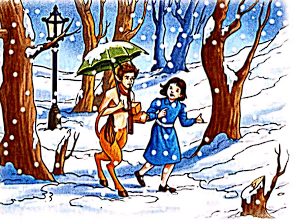
As they walk through the snowy woods, Mr. Tumnus holds an umbrella over them. They soon arrive at his cave, which is cozy and inviting with a warm fire and comfortable furnishings. Mr. Tumnus prepares a lovely tea with boiled eggs, sardines on toast, buttered toast, toast with honey, and a sugar-topped cake.
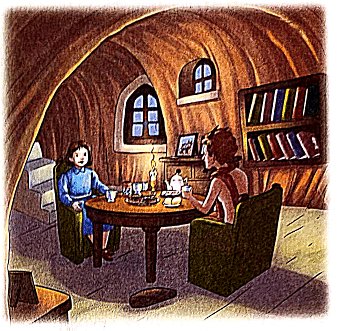
After tea, Mr. Tumnus entertains Lucy with stories of the forest, including midnight dances with Nymphs and Dryads, hunting for a magical stag, and feasts with Red Dwarfs. He also mentions times when the forest would celebrate for weeks with streams of wine.
However, Mr. Tumnus becomes gloomy when he remembers that it is always winter now. To cheer himself up, he plays a tune on a flute that makes Lucy feel a mix of emotions. Eventually, Lucy realizes she has stayed too long and insists she must go home. Mr. Tumnus becomes very upset and starts crying.
Lucy comforts him and asks why he is crying. Mr. Tumnus reveals that he has been working for the White Witch and had intended to kidnap Lucy and hand her over to the Witch. He explains that he had orders to capture any human he encountered in Narnia. However, after meeting Lucy and seeing how kind she is, he cannot bring himself to betray her.
Lucy assures Mr. Tumnus that he is not a bad Faun because he is truly sorry for what he planned to do. She encourages him to let her go, and he agrees, despite his fear of the Witch's punishment. Mr. Tumnus decides to escort Lucy back to the lamp-post where she first entered Narnia, so she can find her way home.
They set off together, and Mr. Tumnus promises to help Lucy return safely. Lucy is confident she can find her way back through the wardrobe once she reaches the lamp-post. With this plan, they begin their journey through the snowy woods, hoping to reach the lamp-post before the White Witch discovers what has happened.
Theme
At its core, the theme of "The Lion, The Witch and the Wardrobe" revolves around the struggle between good and evil, courage, sacrifice, and redemption. Through the characters' experiences in Narnia, the story explores the consequences of betrayal, the power of forgiveness, and the importance of standing up for what is right, even in the face of adversity. It highlights the transformative journey of the protagonists as they navigate through challenges, learn valuable lessons, and ultimately play significant roles in fulfilling the prophecy to defeat the White Witch and restore peace to Narnia.
Difficult Words
- Parcels - Packages or bundles of items.
- Inquisitive - Curious and eager to learn.
- Puzzled - Confused or uncertain.
- Melancholy - Feeling of sadness or gloominess.
- Dwarfs - Small, mythical creatures often depicted as skilled craftsmen or miners.
- Caverns - Large, underground caves or chambers.
- Jollification - Lively and joyful celebration or festivity.
- Mantelpiece - Shelf above a fireplace.
- Flute - Musical instrument played by blowing air across a hole.
- Groan - Low, mournful sound expressing pain or distress.
- Kidnapper - Person who abducts or captures someone against their will.
- Trembling - Shaking or quivering due to fear or excitement.
- Confess - Admit or acknowledge something, especially a wrongdoing.
- Betray - To go against or deceive someone's trust.
- Reassure - Comfort or calm someone who is anxious or worried.
FAQs on Summary: What Lucy Found There
| 1. Who is Lucy and what does she discover in the wardrobe in this chapter? |  |
| 2. What is the White Witch's kingdom like when Lucy first arrives in Narnia? | |
| 3. Why does Mr Tumnus help Lucy escape even though he works for the White Witch? | |
| 4. How does Lucy's experience in Narnia change her understanding of what is real? | |
| 5. What role does the symbolism of Turkish Delight play in the story's conflict? | |




