Summary: Guilty

Key Points of the Story
- "Guilty" is a one-act play that revolves around the suspenseful and emotional events triggered by a stolen diamond.
- The story takes place in the modest home of Ma Ryan and her son, Jim Ryan.
- As the play unfolds, Ma Ryan's loyalty and trust in her son are put to the test when she discovers a valuable diamond pendant in Jim's possession, soon after learning about a robbery at his workplace.
- The play intricately explores themes of trust, integrity, and the complexities of parent-child relationships in the face of uncertainty and doubt.

Detailed Summary
Act 1: Scene in Jim's Room
The play begins with Ma Ryan finishing making the bed in her son Jim's room. It is ten o'clock at night, and the lamps are lit. As she tidies up, Mrs. Moore, a neighbor, arrives and they start talking about their children and the difficulties they've faced. Ma Ryan mentions how hard it was for Jim to find a job after studying engineering, and how relieved she is that he now works as a night watchman.
Mrs. Moore brings up a recent scandal involving a young man named Larry Wilson who was sentenced to ten years in jail for stealing money from his company. They both express sympathy for Larry's mother.
Mrs. Moore then reads the newspaper and discovers that the Van King Warehouse, where Jim works, was robbed. The thieves stole valuable silks and a famous diamond pendant. Ma Ryan is shocked and worried when she finds the diamond pendant in Jim's sweater pocket.
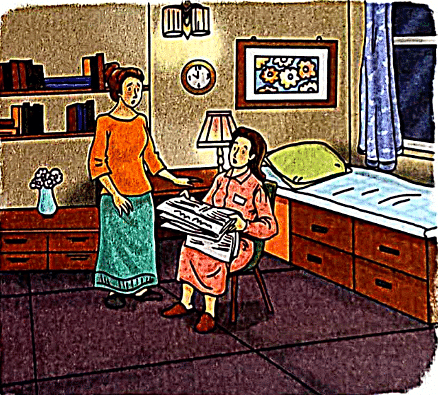
Act 2: Confrontation in Jim's Room
Ma Ryan calls the warehouse to speak to Jim, but the night watchman says he doesn't know anyone named Jim Ryan. She becomes more distressed. Jim and a stranger enter the room, and Jim begins looking for something in his sweater. Ma Ryan reveals the diamond pendant, and the stranger offers money for it, but she refuses.
The conversation is interrupted by a policeman, Michael, who stops by briefly. After he leaves, Ma Ryan becomes more agitated, fearing Jim might be involved in the theft. Jim explains that he found the diamond in a lunch car after two men dropped it and left in a car. Ma Ryan is skeptical but insists the diamond must be returned to Mr. Van King.
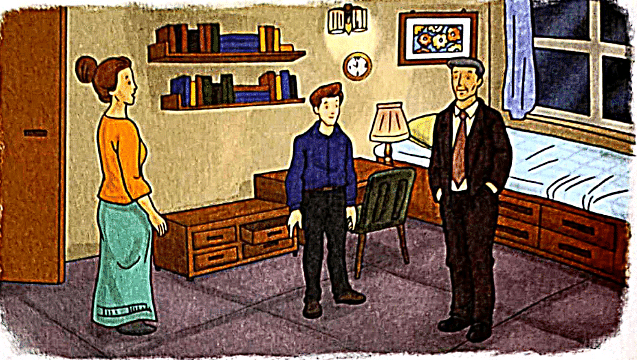
Act 3: The Truth Revealed
The stranger reveals himself to be Mr. Van King, the owner of the diamond. Jim confirms this, and Ma Ryan is relieved and ashamed for doubting her son. Mr. Van King gives them the reward money for returning the diamond. The play ends with Ma Ryan offering to make apple pie for everyone to celebrate.
Theme
The central theme of "Guilty" is trust and its fragility in the face of circumstantial evidence. The play examines how trust between a mother and her son is challenged when Ma Ryan finds a stolen diamond in Jim's sweater. Despite her initial faith in Jim's character, the overwhelming evidence and the recent theft lead her to doubt him. This theme is further explored through the societal pressures and judgments exemplified by the case of Larry Wilson, a young man who faced severe consequences for his actions. The play ultimately highlights the importance of believing in the goodness of loved ones and the value of open communication to resolve misunderstandings. Additionally, it underscores the moral implications of honesty and integrity, showcasing how quickly doubt can erode trust and how difficult it can be to restore it.

Difficult Words
- Bustling - Moving in an energetic and busy manner.
- Land sakes - An exclamation of surprise similar to "oh my lord" or "oh my goodness."
- Abed - In bed (old usage).
- Heirloom - A valuable object that has belonged to a family for several generations.
- Apparent - Clearly visible or understood; obvious.
- Gaily - In a cheerful or lighthearted way.
- Crumpled - Crushed to form creases and wrinkles.
- Pendant - A piece of jewelry that hangs from a chain worn around the neck.
- Tampering - Interfering with something in order to cause damage or make unauthorized alterations.
- Doctoring - Changing or tampering with something for a personal end.
- Jittery - Nervous or unable to relax.
- Pounced - Moved quickly and suddenly towards something.
- Instinctively - Acting on an inner feeling; done without conscious thought.
- Absently - In an inattentive or preoccupied manner.
- Cherry-faced - Having a red, cheerful face.
- Mused - Thought about something carefully or thoroughly.
- Muffled - Not loud because of being obstructed in some way; muted.
- Clenches - Closes tightly, especially with anger or determination.
- Distressed - Suffering from anxiety, sorrow, or pain.
- Sceptical - Not easily convinced; having doubts or reservations.
FAQs on Summary: Guilty
| 1. What is the main theme of "Guilty" in Class 7 English Oxford? |  |
| 2. Who is the protagonist in the "Guilty" summary and what drives their actions? | |
| 3. How does the guilt and confession develop throughout the "Guilty" story? | |
| 4. What are the key moral lessons students should understand from reading "Guilty"? | |
| 5. How can I prepare better answers on the "Guilty" summary for CBSE exams? | |