Posterior pituitary gland

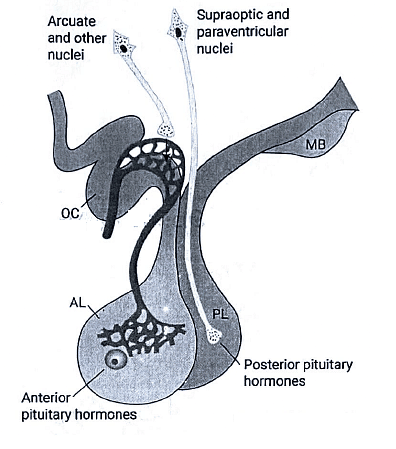
The hormones of the posterior pituitary gland are synthesized in the cell bodies of the magnocellular neurons in the supraoptic and paraventricular nuclei (NEURAL HORMONES) and transported down the axons of these neurons to their endings in the posterior lobe, where they are secreted in response to electrical activity in the endings.
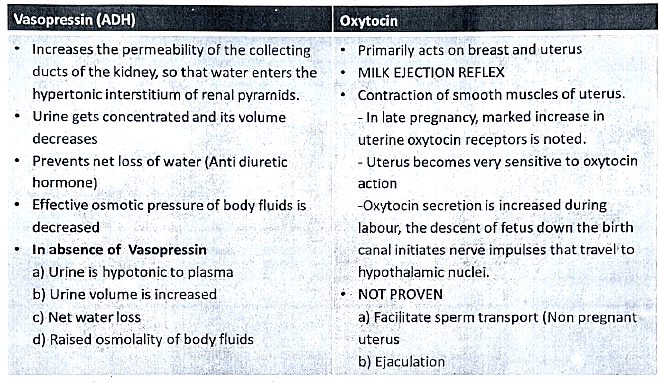
Vasopressin
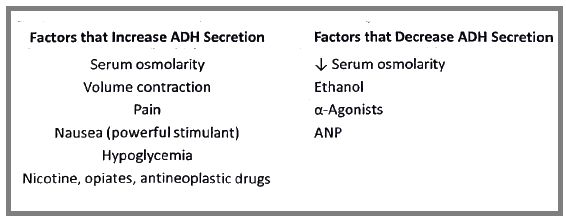
Actions of ADH
- ↑H2O permeability (aquaporin 2, AQP2) of the principal cells of the late distal tubule and collecting duct (via a V2 receptor and an adenylate cyclase-cAMP mechanism)
- Constriction of vascular smooth muscle (via a V1 receptor and an IP3/Ca2+mechanism)
SIADH
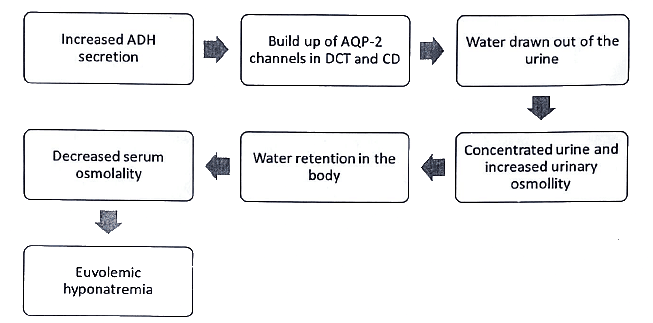
SIADH (Syndrome of Inappropriate Antidiuretic Hormone) - Causes:
Increased Pituitary ADH Secretion:
- Abnormal overproduction of antidiuretic hormone (ADH) by the pituitary gland.
Diseases of the Central Nervous System:
- Conditions such as stroke, bleeding, infection, or trauma affecting the central nervous system can lead to increased ADH secretion.
Pulmonary Disease:
- Respiratory conditions, including pneumonia and chronic obstructive pulmonary disease (COPD), can stimulate excessive ADH release.
Drugs:
- Certain medications can contribute to SIADH, including chlorpropamide, carbamazepine, cyclophosphamide, and selective serotonin reuptake inhibitors (SSRIs).
Endocrine Disorders:
- Deficiency in glucocorticoids, which are hormones produced by the adrenal glands, can result in increased ADH secretion.
Neurosurgery:
- Particularly after transsphenoidal pituitary surgery, there may be an abnormal release of ADH.
Ectopic Source of ADH Secretion:
- Paraneoplastic syndromes, especially associated with small cell lung carcinoma, can lead to the ectopic production of ADH by tumors.
Enhanced Stimulation of ADH Receptors in the Kidney:
- Hereditary factors, including mutations in the vasopressin-2 receptor gene, can lead to an increased response to ADH in the kidneys.
SIADH is characterized by the inappropriate retention of water by the kidneys, leading to dilutional hyponatremia and potential complications. Identifying and addressing the underlying causes are crucial for the management of this syndrome.
Role of hypothalamus
There are neural connections (hypothalamohypophyseal tract) between the hypothalamus and the posterior lobe of the pituitary gland and vascular connections (portal hypophyseal vessels) between the hypothalamus and the anterior lobe.
Pituitary gland-Repeats
Q1: List anterior pituitary hormones and their main actions in brief? What will happen in the deficiency of growth hormone (2004)?
Q2: Enumerate the hormones of posterior pituitary gland and describe their actions in the body. (2015)
Q3: Name the hormones secreted by pituitary gland. Describe the role of growth hormone in the body. (2016)
Q4: List growth promoting hormones. Explain their contribution to growth after birth. (2018)
Q5: Name the hormones of posterior pituitary and their function. What will happen in the deficiency of them (2006)?
Q6: What is the role of ADH in maintaining the plasma Osmolality and volume? What will happen in its deficiency? (2010)
FAQs on Posterior pituitary gland
| 1. What is the role of vasopressin in the body? |  |
| 2. What is SIADH and how does it relate to vasopressin? | |
| 3. What is the role of the hypothalamus in regulating vasopressin secretion? | |
| 4. How does vasopressin affect blood pressure? | |
| 5. How can abnormalities in vasopressin secretion lead to health problems? | |




