UPSC Daily Current Affairs- 27th December 2023


GS-II
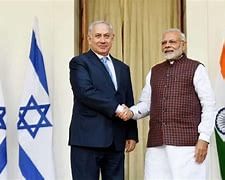
India- Israel Relations
Subject: International Relations
Why in News?
The Delhi Police has intensified its probe into a low-intensity blast that occurred near the Israel Embassy recently.
Background:-
- Areas around the Israel embassy and Jewish establishments in Delhi have been put under the watch of the security personnel.
Diplomatic Relations:-
- India had voted against partitioning Palestine at the UN, rejecting the notion of two nations based on religious criteria in 1947.
- India and Israel established diplomatic ties in
- India officially recognized Israel in 1950.
- In 1992 India established full diplomatic relations with Israel.
- In 2000, L K Advani became the first Indian minister to visit Israel.
- And in 2003, Ariel Sharon became the first Israeli Prime Minister to visit India.
- In 2017, Indian Prime Minister Narendra Modi visited Israel, becoming the first Indian prime minister to do so.
- The two countries have since elevated their ties to a strategic partnership.
Economic and trade Relations:-
- Bilateral merchandise trade surged from USD 200 million in 1992 to USD 6.35 billion (excluding defense) by 2022.
- India emerged as Israel's third-largest trade partner in Asia and seventh globally, with trade diversifying into pharmaceuticals, agriculture, IT, telecom, and homeland security.
Defense Relations:-
- India imports crucial defence technologies from Israel.
- India uses Israeli defence systems such as Phalcon AWACS, Heron drones, and Barak anti-missile defense systems.
Agricultural Relations:-
- A three-year joint work program was signed in 2021 to enhance agricultural cooperation, focusing on Centers of Excellence, value chains, and private investment.
- Israel's expertise and technologies have benefitted India in horticulture, irrigation, and dairy farming.
Relations in Science and Technology:
- The Joint Committee on Science and Technology, established in 1993.
- The India-Israel Industrial R&D and Technological Innovation Fund (I4F) supports joint industrial projects in specific sectors.
- In 2002, India and Israel signed a cooperative agreement promoting space collaboration.
- India has successfully launched TecSAR and RISAT-2 radar imaging satellites of Israel from PSLV of ISRO.
I2U2 Grouping:-
- It stands for India, Israel, the UAE, and the US.
- It aims to strengthen economic partnerships, identify areas of cooperation, and encourage joint investments six key sectors: water, energy, transportation, space, health, and food security.
Challenges in the relations:-
- Since 2010, the two countries have been talking about a free-trade deal for goods and services.
- To tap into the untapped potential, there is a need to increase bilateral trade and broaden the types of economic partnership.
- India's close relationships with the Arab world have always made it hard for the country to publicly work with Israel.
- The "two-state solution" and the fact that India voted in favour of the resolution to raise the Palestinian flag at the United Nations and signed on to BRICS declarations "opposing the continuous Israeli settlement activities in the Occupied Territories" show that India's support for Palestinians hasn't changed.
- India is worried about China's rise, but China is Israel's biggest trading partner in Asia and the two countries have strong links in science and investment.
Source: Frontline
Lakhpati Didi Scheme
Subject: Government Schemes
Why in News?
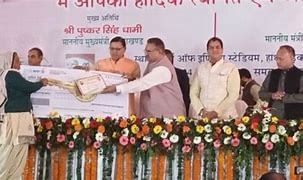
Recently, the President of India, Smt Droupadi Murmu graced the Lakhpati Didi Sammelan at Jaisalmer, Rajasthan.
Background:-
- Speaking on the occasion, the President said that she was happy to address this conference as the self-help groups are contributing significantly in making deprived and backward sections of the society, especially women, self-reliant.
About Lakhpati Didi Scheme:-
- Launched: 2023.
- It was announced by the Prime Minister in his Independence Day speech on August 15, 2023.
- Objective: to empower women in rural areas by encouraging them to start micro-enterprises and become economically self-sufficient.
- The Lakhpati Didi Scheme serves as a dynamic platform, designed to motivate and support women in establishing and operating micro-enterprises.
- The scheme envisions a transformative journey for 2 crore women in rural villages, empowering them through skill development initiatives.
- Under this scheme, women will be provided skill training so that they can earn over Rs 1 lakh per year.
- Skills covered: plumbing, LED bulb making, and operating and repairing drones, among others.
- This initiative aims to leverage technology to transform the agricultural landscape while empowering women in rural communities.
- Around 15,000 women's SHGs will be given training in operating and repairing drones.
Benefits:-
- This training will not only create new avenues for income generation but also equip women with cutting-edge skills.
Source: PIB
Pradhan Mantri Kisan Urja Suraksha evam Utthaan Mahabhiyan (PM-KUSUM)
Subject: Government Schemes
Why in News?
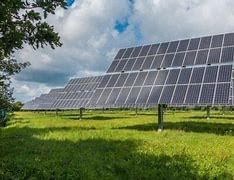
The Union Minister for New & Renewable Energy and Power has informed that the main objectives of the Pradhan Mantri Kisan Urja Suraksha evam Utthaan Mahabhiyan (PM-KUSUM) recently.
Background:-
- They include de-dieselisation of the farm sector, providing water and energy security to farmers, increasing the income of farmers, and curbing environmental pollution.
About Pradhan Mantri Kisan Urja Suraksha evam Utthaan Mahabhiyan (PM-KUSUM):-
- Launched: 2019.
- Ministry: Ministry of New and Renewable Energy (MNRE).
Objectives of PM KUSUM:-
- To subsidize farmers to install solar irrigation pumps for cultivation.
- To ensure energy security for farmers in India,
- To honour India's commitment to increase the share of installed capacity of electric power from non-fossil-fuel sources to 40% by 2030 as part of Intended Nationally Determined Contributions (INDCs).
- Intended Nationally Determined Contributions (INDCs): these are the intended reductions in greenhouse gas emissions under the United Nations Framework Convention on Climate Change (UNFCCC).
- Each farmer will receive a 60% subsidy to set up tube wells and pump sets.
- They will also get 30% of the total cost as a loan from the Government.
Benefits of PM KUSUM:-
For Discoms:-
- Electricity for agriculture is highly subsidized and is often termed as the main cause of the poor financial position of Discoms.
- This scheme will support the financial health of discoms by reducing the burden of subsidy to the agriculture sector.
For States:-
- The scheme will promote decentralized solar power production, and reduce transmission losses.
- For state governments, this is a potential way to reduce their subsidy outlay towards irrigation.
- It will also help States meet the RPOs (renewable purchase obligation) targets.
For Farmers:-
- If farmers are able to sell surplus power, they will be incentivized to save power.
- This will mean the reasonable and efficient use of groundwater.
- It will also provide water security to farmers.
For Environment:-
- The expansion of the irrigation cover by providing decentralized solar-based irrigation will help in moving away from polluting diesel.
- This will also fill the void in solar power production in the intermediate range between rooftops and large parks.
Source: PIB
GS-III
Dengue
Subject: Science and Technology
Why in News?
Recent studies show that El Nino effect may have caused the cases of dengue to have increased globally.
Background:-
- There has been a ten-fold increase in dengue cases between the years 2000 and 2019, according to an analysis by the World Health Organization (WHO).
About Dengue:-
- Dengue is a vector-borne disease.
- Caused by: dengue virus (DENV).
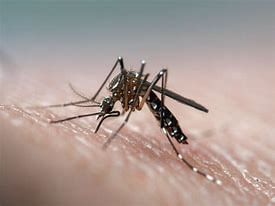
- Transmission: It is transmitted to humans through the bite of an infected female Aedes Aegypti mosquito.
- The mosquito becomes infected when it feeds on the blood of a person infected with the virus.
- There are 4 serotypes of the virus that cause dengue.
- These are known as DEN-1, DEN-2, DEN-3, and DEN-4.
- Dengue cannot be spread directly from person to person.
- It is more common in tropical and subtropical climates.
- It is mostly in urban and semi-urban areas.
Symptoms:-
- High fever (40°C/104°F)
- Severe headache
- Pain behind the eyes
- Muscle and joint pains
- Nausea
- Vomiting
- Swollen glands
Treatment:-
- Most cases of dengue fever can be treated at home with pain medicine.
Prevention:-
- Wear protective clothing.
- Use mosquito repellent.
- Reduce mosquito habitat.
DNA Vaccines:-
- DNA vaccines are often referred to as third-generation vaccines.
Source: Down To Earth
Chronic Wasting Disease (CWD)
Subject: Science and Technology

Why in News?
In a concerning development, scientists are sounding the alarm about the potential spread of a condition known as chronic wasting disease (CWD) from animals to humans.
- · CWD, also known as Zombie deer disease, is a neurological disorder affecting deer and other cervids (members of the deer family) caused by the abnormal growth of a misfolded protein called a prion.
- · This prion causes healthy brain proteins to become abnormal, leading to a range of symptoms.
- · CWD is contagious; it can be transmitted freely within and among cervid populations.
- · Transmission: CWD is transmitted directly through animal-to-animal contact and indirectly through contact with objects or environments contaminated with infectious material (including saliva, urine, feces, and carcasses of CWD-infected animals).
- · Symptoms: It may take over a year before an infected animal develops symptoms, which can include drastic weight loss (wasting), stumbling, listlessness, and other neurologic symptoms.
- · CWD is particularly concerning because it has the potential to affect both animals and humans, with the possibility of transmission through the consumption of infected meat.
- · CWD can affect animals of all ages, and some infected animals may die without ever developing the disease.
- · CWD is fatal to animals, and there are no treatments or vaccines.
Source: Indian Express
Black-necked Grebe
Subject: Environment and Ecology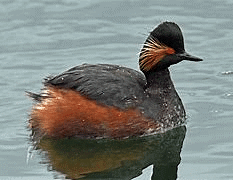
Why in News?
About Black-necked GrebeIn a significant environmental development, a Black-necked Grebe was recently sighted for the first time at Hokersar wetland.
- The black-necked grebe, or eared grebe, is a member of the grebe family of water birds.
- Scientific Name: Podiceps nigricollis
- Distribution: It has a widespread breeding area, with migratory populations covering an extensive range of Eurasia and North America, while a resident population is also found in subtropical Africa.
- Features:
- It usually measures between 28 and 34 centimetres in length and weighs 265 to 450 grams.
- It has a wingspan range of 20.5-21.6 in (52-55 cm).
- Its breeding plumage features a distinctive ochre-coloured plumage that extends behind its eye and over its ear coverts.
- The rest of the upper parts, including the head, neck, and breast, are coloured black to blackish brown.
- When in its non-breeding plumage, this bird has greyish-black upper parts.
- The legs are a dark greenish grey. The sexes are similar.
- It uses multiple foraging techniques. Insects, which make up the majority of this bird's diet, are caught either on the surface of the water or when they are in flight.
- Although it generally avoids flight, the black-necked grebe travels as far as 6,000 kilometres (3,700 mi) during migration.
- Conservation Status:
- IUCN: Least Concern
- Known as the 'Queen Wetland of Kashmir', Hokersar (also known as Hokera) is a designated Ramsar site is located in Srinagar, Jammu and Kashmir.
- It is spread over an area of 13.75 sq. km (1375 ha) in the northwest Himalayan Biogeographic province of Kashmir, in the backyard the snow draped Pir Panjal range with an altitude of 1584 m.
- It is a natural perennial wetland contiguous to the Jhelum basin.
- It gets water from the Doodhganga River (Tributary of Jhelum)
- It is the only site with remaining reed beds of Jammu and Kashmir.
- It is the abode of 68 waterfowl species like Large Egret, Great Crested Grebe, Little Cormorant, Common Shelduck, Tufted Duck and endangered White-eyed Pochard, coming from Siberia, China, Central Asia, and Northern Europe.
Source: Indian Express
INS Imphal
Subject: Defence and Security

Why in News?
INS Imphal (Pennant D68), the third ship of the Visakhapatnam class stealth-guided missile destroyers, is set to join the Indian Navy.
- Part of Project 15B, INS Imphal follows the lineage of the Delhi and Kolkata classes of indigenous destroyers.
| Details | |
| Ship Name | INS Imphal (Pennant D68) |
| Class | Visakhapatnam class stealth-guided missile destroyer (Project 15B) |
| Commissioning Date | Scheduled for December 26 |
| Builder | Mazagon Dock Shipbuilders Limited (MDSL) |
| Design | Indian Navy's Warship Design Bureau |
| Propulsion System | Combined gas and gas (COGAG) configuration with four gas turbines |
| Maximum Speed | 30 knots |
| Range | 4000 nautical miles |
| Armament |
|
| Helicopter Facilities |
|
| Strategic Features |
|
| Significance |
|
| Tribute to Northeast India |
|
Source: The Hindu
FAQs on UPSC Daily Current Affairs- 27th December 2023
| 1. What is the significance of the India-Israel relations? |  |
| 2. What is the Lakhpati Didi Scheme? | |
| 3. What is the Pradhan Mantri Kisan Urja Suraksha evam Utthaan Mahabhiyan (PM-KUSUM)? | |
| 4. What is Dengue? | |
| 5. What is Chronic Wasting Disease (CWD)? | |




