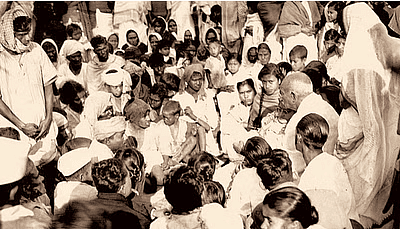
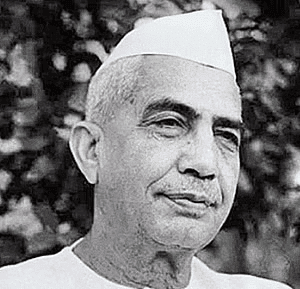
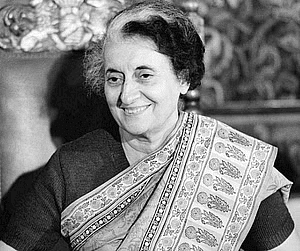
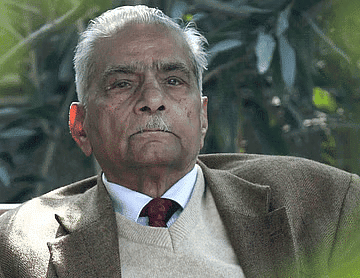
The dissatisfaction and resentment caused by Indira Gandhi's declaration of Emergency led various political parties to unite as a coalition for the general elections.
The Janata Party, represented by the 'chakra-haldhar' symbol , along with its allies, achieved a considerable majority in the 1977 elections.
First Non-Congress Government in India
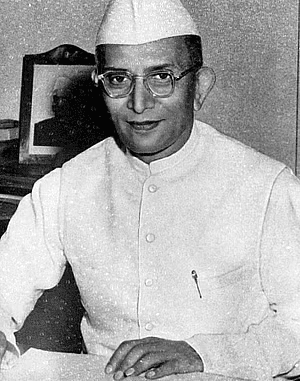
Three candidates competed for the prime minister role: Morarji Desai , Charan Singh , and Jagjivan Ram .
The choice of prime minister was given to Acharya Knpalani and Jayaprakash Narayan .
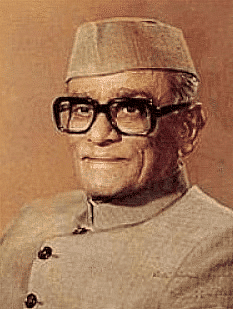
Morarji Desai was selected and took the oath as prime minister on March 23, 1977 .
Charan Singh , who first served as home minister and then as finance minister, was appointed as one of the deputy prime ministers.
Jagjivan Ram , who was the defense minister, was also made a deputy prime minister.
Fresh State Assembly Elections
The general discontent with the Congress party led to the decision to dissolve state assemblies where it had a majority.
New elections in June 1977 allowed the Janata Party to form governments in several important states, such as Uttar Pradesh , Bihar , Haryana , Orissa , Madhya Pradesh , Rajasthan , and Himachal Pradesh .
In Tamil Nadu, the AIADMK won the elections, with M.G. Ramachandran becoming the head of government. His government notably focused on maintaining a cooperative relationship with the central government and started the innovative mid-day meal scheme to encourage school attendance, particularly among girls.
MULTIPLE CHOICE QUESTION
Try yourself: Who emerged as the chosen candidate for the prime ministerial post in the 1977 general elections?
A
Charan Singh
B
Morarji Desai
C
Jagjivan Ram
D
Indira Gandhi
Correct Answer: B
- The 1977 general elections in India saw the Janata Party and its allies securing a significant majority. - Three contenders vied for the prime ministerial post: Morarji Desai, Charan Singh, and Jagjivan Ram. - The decision on the prime minister was entrusted to Acharya Kripalani and Jayaprakash Narayan. - Morarji Desai emerged as the chosen candidate and assumed office as the prime minister on March 23, 1977. - Charan Singh and Jagjivan Ram were appointed as deputy prime ministers. - Therefore, the correct answer is Option B: Morarji Desai.
Report a problem
Political Developments in West Bengal and Jammu & Kashmir
West Bengal
A coalition of left parties achieved a significant victory in West Bengal.
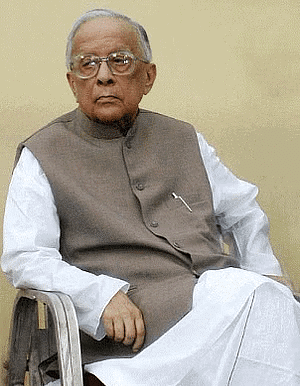
Jyoti Basu assumed the role of chief minister.
The government launched agrarian reforms that benefited many poor peasants.
Political Changes in Jammu and Kashmir
The Morarji Desai government dissolved the assembly, prompting new elections.
Sheikh Abdullah returned to lead the National Conference after his previous term.
His party secured a comfortable majority in the state's first genuinely fair elections since independence.
However, a noticeable divide emerged between the predominantly Muslim Valley and the mainly Hindu Jammu regions.
The National Conference encountered challenges in the Jammu region.
New President of India
In June 1977, the Janata Party, wielding significant influence over most states, successfully elected its candidate, Neelam Sanjiva Reddy, as the President of India. This election was necessitated by the unfortunate demise of Fakhruddin Ali Ahmed in January of the same year.
Decline of the Janata Party and the Ascendancy of Congress (I)
The Janata government faced internal strife due to deep ideological and political rifts, which ultimately led to its collapse.
The party's disintegration was exacerbated by leaders' obsession with avenging Indira Gandhi , diverting attention from governance.
Various commissions were formed to probe alleged wrongdoings by Indira Gandhi and her son, but most allegations were unproven, resulting in minimal convictions.
The Belchi incident in Bihar, where violence against Scheduled Castes occurred, was exploited by Indira Gandhi to depict the Janata government as neglectful of the poor, presenting herself as a defender of the marginalized.
Charan Singh 's relentless campaign against Indira Gandhi inadvertently benefited her, as her critical speeches gained traction.
In January 1978, the Congress party split, with Indira Gandhi leading the Congress-I faction, which subsequently won elections in Karnataka and Andhra Pradesh.
Political Events in India
Important Incidents
Indira Gandhi, despite being disqualified for misleading the House about the Maruti business, won a seat in Chikmagalur , gaining sympathy and popularity.
Internal conflicts within the Janata Party escalated, leading to the dismissal of Charan Singh and Raj Narain by Morarji Desai in mid-1978.
In response, Charan Singh organised a farmers' protest march to Delhi in December 1978.
Efforts to maintain peace led to Charan Singh's return to the cabinet in February 1979, but the divide continued to deepen.
The Socialists aligned with Charan Singh, while the Jana Sangh supported Desai, intensifying the conflict over 'dual membership' .
Eventually, the Socialists and Charan Singh's party left the coalition, leaving the government in a minority.
Despite attempts to gain support from factions within Congress , the Morarji Desai government resigned in July 1979.
MULTIPLE CHOICE QUESTION
Try yourself: Which amendment was implemented by the Janata Party government to counteract democracy-throttling measures of the Forty-second Amendment?
A
Forty-first Amendment
B
Forty-third Amendment
C
Forty-fourth Amendment
D
Forty-fifth Amendment
Correct Answer: B
- The Janata Party government implemented the Forty-third Amendment to counteract democracy-throttling measures of the Forty-second Amendment. - The Forty-third Amendment eliminated Article 31D, restored legislative powers to states for anti-national activities, ensured judicial power to invalidate laws, and empowered high courts to decide constitutional validity. - This amendment played a crucial role in restoring democratic rights and repairing the Constitution from the impact of the Emergency era.
Report a problem
Charan Singh: The Prime Minister Who Never Addressed Parliament
After some negotiations, Charan Singh, despite earlier disagreements, sought Indira Gandhi's support to lead a government.
With a support letter from the Congress party, Charan Singh persuaded the president that he could secure a majority in the Lok Sabha.
He was sworn in as prime minister in late July and was faced with a crucial vote of confidence in the House.
On Independence Day, Charan Singh gave a speech from the Red Fort. However, he never had the chance to address Parliament because Indira Gandhi withdrew her support just before the confidence vote.
Withdrawal of Support
The withdrawal of support was due to Charan Singh's refusal to disband the special courts established for prosecuting Indira Gandhi.
With no other options, Charan Singh had to resign, leading the president to consider other possibilities for forming a government, none of which were successful.
Eventually, the Lok Sabha was dissolved , and new elections were called.
Charan Singh continued as caretaker prime minister until the new elections could be held.
Lok Sabha Elections and the Fall of Janata Party Rule
The Lok Sabha elections were held in January 1980, featuring various significant parties vying for power.
The primary contenders included the Congress (I) , Congress (U) , Lok Dal , and the Socialists . At this point, the Janata Party was mainly composed of members from the Jana Sangh and former Congress leaders like Jagjivan Ram and Chandra Shekhar .
The CPM and CPI held considerable sway in West Bengal and Kerala , although they also participated in elections in other regions.
Indira Gandhi sought to present an image of a capable government, capitalizing on the public's discontent with the Janata Party's governance struggles and internal strife.
Election Results and Janata Party's Fragmentation
Frustrated by the issues during Janata rule and the ongoing internal conflicts, voters rallied behind the Congress (I) , solidifying its position as the legitimate successor to the Congress legacy.
Post-elections, the Janata Party fractured into various factions, including the Janata Dal , Bharatiya Janata Party (BJP) , and the Samajwadi Party , among others.
The Janata Party government marked a significant shift as the first non-Congress administration and the inaugural coalition government at the Centre. Despite its brief tenure, the government made noteworthy contributions to the Indian political landscape.
MULTIPLE CHOICE QUESTION
Try yourself: Which political party emerged as the majority in the 1977 general elections in India?
A
Congress (I)
B
Janata Party
C
Lok Dal
D
Samajwadi Party
Correct Answer: B
- The passage mentions that the Janata Party, along with its allies, secured a significant majority in the 1977 elections. - This means that the Janata Party emerged as the majority in the elections. - The passage also states that the Janata Party formed governments in several key states after the elections. - Therefore, the correct answer is Option B: Janata Party.
Report a problem
Restoration of Democratic Rights
Swift actions were taken by the Janata government to reverse harsh measures from the Emergency era.
Media censorship was lifted, and controversial executive decrees were repealed.
Under Law Minister Shanti Bhushan , amendments were made to counteract the democracy-restricting measures of the Forty-second Amendment.
The Forty-third Amendment in 1977 removed Article 31D , restoring legislative powers to states regarding anti-national activities, ensuring judicial power to invalidate laws, and empowering high courts to assess constitutional validity.
Economic Reforms
The Janata Party did not have a single ideology; it included members with varied backgrounds such as veteran socialists, trade unionists, and pro-business leaders.
The government introduced the Sixth Five-Year Plan to enhance agricultural production and rural industries.
Policies from the industries ministry, led by George Fernandes , focused on economic self-reliance and support for local industries.
Despite efforts in railways by Madhu Dandavate , no effective policy was developed to tackle pressing economic issues like inflation , unemployment, fuel shortages, and poverty.
Foreign Relations
Efforts were made to improve relations with the US under the Janata government, highlighted by a visit from President Jimmy Carter .
Genuine non-alignment was stressed, maintaining good relations with the USSR .
Vajpayee represented India at the UN conference on nuclear disarmament.
A significant foreign policy change was the attempt to normalise relations with China .
In 1979, Vajpayee became the highest-ranking Indian official to visit Beijing, leading to the restoration of diplomatic ties between India and China.
Social Changes and Movements
The late 1970s saw political and social unrest, with politicians favouring expediency over ideology, while various societal groups asserted their rights.
New social movements emerged, including feminist and environmental movements, alongside ongoing efforts in areas like trade unions, mines, equal wages, education, health, and safety.
The Other Backward Classes (OBCs), having gained economic strength and political influence, sought representation in the administrative system, resulting in the appointment of the Mandal Commission in January 1979 to examine OBC reservations in the central administrative system.
MULTIPLE CHOICE QUESTION
Try yourself: What notable foreign policy shift occurred during the Janata government?
A
Efforts to improve ties with the US
B
Emphasis on maintaining cordial relations with the USSR
C
Normalization of ties with China
D
Representation of India at the UN conference on nuclear disarmament
Correct Answer: C
- The Janata government made efforts to improve ties with various countries. - One notable foreign policy shift was the effort to normalize ties with China. - In 1979, Vajpayee became the highest-ranking Indian official to visit Beijing, which led to the re-establishment of diplomatic ties between India and China. - This shift in foreign policy was significant in improving relations between the two countries and opening up new avenues for cooperation. - It marked a milestone in India's diplomatic efforts and contributed to regional and global stability.
Report a problem
The document Spectrum Summary: The Janata Party Years (March 1977 – January 1980) is a part of the UPSC Course History for UPSC CSE.
FAQs on Spectrum Summary: The Janata Party Years (March 1977 – January 1980)
1. Who was Morarji Desai?
Ans. Morarji Desai was the first non-Congress Prime Minister of India. He served as the Prime Minister from 1977 to 1979. Desai was a prominent leader of the Janata Party and played a crucial role in the fight against the Congress party's dominance in Indian politics.
2. What was the significance of the fresh state assembly elections?
Ans. The fresh state assembly elections were significant as they marked a shift in the political landscape of India. The Janata Party, a coalition of opposition parties, was able to secure a majority in several state assemblies, indicating a growing discontent with the Congress party's rule and setting the stage for their victory in the subsequent Lok Sabha elections.
3. Who was the new President of India during this period?
Ans. The new President of India during this period was Neelam Sanjiva Reddy. He served as the President from 1977 to 1982. Reddy was a prominent leader of the Janata Party and his election as President further solidified the party's position in the country.
4. What led to the downfall of the Janata Party and the rise of Congress?
Ans. The downfall of the Janata Party can be attributed to various factors. Internal power struggles and differences among the coalition partners weakened the party's unity. Additionally, economic challenges and failure to fulfill electoral promises also contributed to the decline. On the other hand, the Congress party capitalized on the Janata Party's shortcomings and regained popularity among the voters, leading to their eventual rise to power.
5. Who was Charan Singh and why did he never face Parliament as Prime Minister?
Ans. Charan Singh was a prominent leader of the Janata Party and served as the Prime Minister of India for a brief period in 1979. However, he never faced Parliament as Prime Minister due to the withdrawal of support by the Congress party. This led to the dissolution of the Janata Party government and the subsequent formation of a new government under the leadership of Indira Gandhi.
Free, MCQs, mock tests for examination, Sample Paper, Semester Notes, ppt, past year papers, pdf , shortcuts and tricks, Important questions, Summary, Spectrum Summary: The Janata Party Years (March 1977 – January 1980), practice quizzes, Exam, Objective type Questions, Previous Year Questions with Solutions, Viva Questions, Spectrum Summary: The Janata Party Years (March 1977 – January 1980), Spectrum Summary: The Janata Party Years (March 1977 – January 1980), Extra Questions, video lectures, study material;