JEE Advanced Previous Year Questions (2018 - 2025): Application of Derivatives

2023
Q1: Let Q be the cube with the set of vertices {(x1, x2, x3) ∈ R3: x1, x2, x3 ∈ {0, 1}}. Let F be the set of all twelve lines containing the diagonals of the six faces of the cube Q. Let S be the set of all four lines containing the main diagonals of the cube Q; for instance, the line passing through the vertices (0, 0, 0) and (1, 1, 1) is in S. For lines ℓ1 and ℓ2, let d(ℓ1, ℓ2) denote the shortest distance between them. Then the maximum value of d(ℓ1, ℓ2), as ℓ1 varies over F and ℓ2 varies over S, is : [JEE Advanced 2023 Paper 1]
(a) 1√6
(b) 1√8
(c) 1√3
(d) 1√12
Ans: (a)
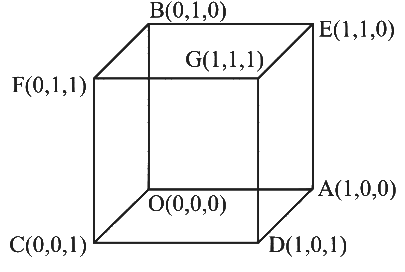
DR'S of OG = 1, 1, 1
DR'S of AF =-1, 1, 1
DR'S of CE = 1, 1, -1
DR'S of BD = 1, -1, 1
Equation OG 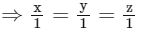
Equation of AB 
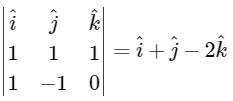
Normal to both the line's
= 
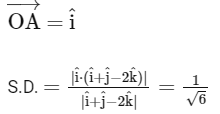
2022
Q1: Let
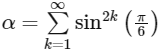 Let g : [0, 1] → R be the function defined by
Ans: (a), (b) & (c)
Given,
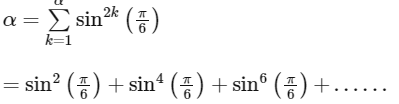
This is a infinite G.P.
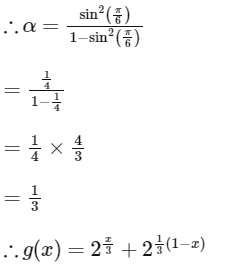
Given x ∈ [0, 1]
We know,
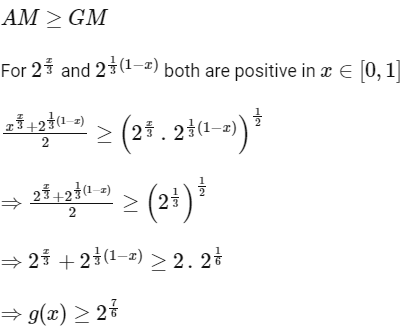
We know, AM = GM when terms are equal.
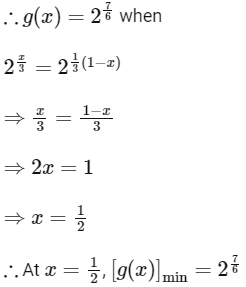
∴ Option (A) is correct
And option (D) is wrong as at only at a single point x = 1/2, g(x) is minimum.
Now, 
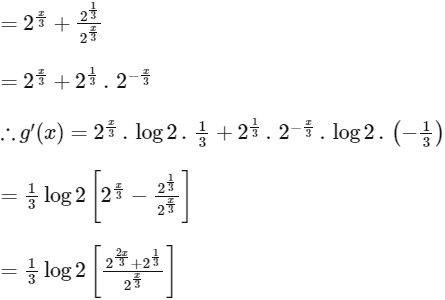
We already found that at x = 1/2 g(x) is minimum.
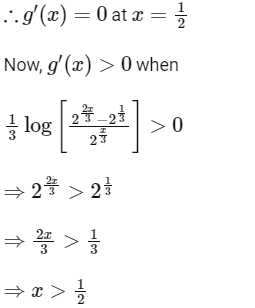
Similarly, g′(x) < 0 when x < 1/2
If we put it in number line we get this
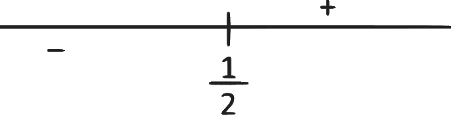
We know g′(x) represent slope of curve g(x) and it is negative when x < 1/2 and positive when x > 1/2 and zero when x = 1/2
∴ Graph of g(x) is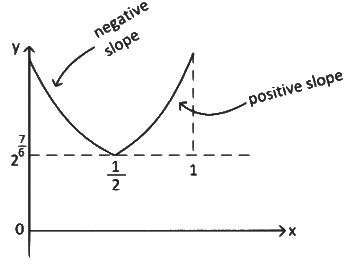
From graph you can see value of g(x) is maximum either at x = 0 or x = 1 in the range x ∈ [0, 1]. 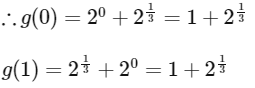
∴ We get maximum value at x = 0 and x = 1 both.
∴ B and C options are correct.
2020
Q1: Consider the rectangles lying the region

and having one side on the X-axis. The area of the rectangle which has the maximum perimeter among all such rectangles, is
(a) 3π / 2
(b) π
(c) 
(d)  [JEE Advanced 2020 Paper 1]
Ans: (c)
Given region is
 and
and 
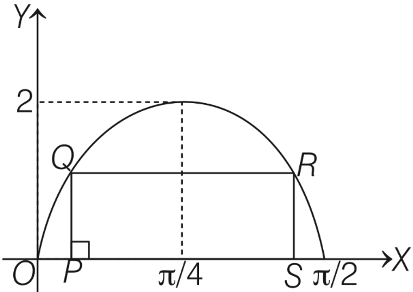
On drawing the diagram,
Let the side PS on the X-axis, such that P(x, 0), and Q(x, 2sin(2x)), so length of the sides  and PQ = RS = 2sin 2x.
∴ Perimeter of the rectangle

For maximum, dy / dx = 0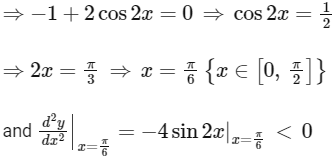
∴ At x = π/6, the rectangle PQRS have maximum perimeter.
So length of sides
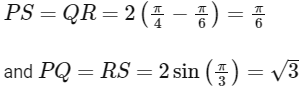
∴ Required area = π/6 x √3 = 
2019
Q1: Let f : R → R be given by f(x) = (x - 1)(x - 2)(x - 5). Define
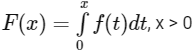
Then which of the following options is/are correct?
(a) F(x) ≠ 0 for all x ∈ (0, 5)
(b) F has a local maximum at x = 2
(c) F has two local maxima and one local minimum in (0, ∞)
(d) F has a local minimum at x = 1 [JEE Advanced 2019 Paper 2]
Ans: (a), (b) & (d)
Given, f : R → and
f(x) = (x - 1)(x - 2)(x - 5)
Since, 
So, 
According to wavy curve method
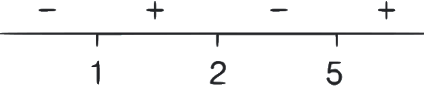
F'(x) changes, it's sign from negative to positive at x = 1 and 5, so F(x) has minima at x = 1 and 5 and as F'(x) changes, it's sign from positive to negative at x = 2, so F(x) has maxima at x = 2.
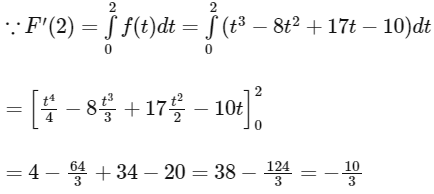
∵ AT the point of maxima x = 2, the functional value F(2), = -10/3, is negative for the interval, x ∈ (0, 5), so F(x) ≠ 0 for any value of x ∈(0, 5),
Hence, options (a), (b) and (d) are correct.
Q2: Let, 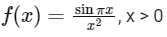
Let x1 < x2 < x3 < ... < xn < ... be all the points of local maximum of f and y1 < y2 < y3 < ... < yn < ... be all the points of local minimum of f.
Then which of the following options is/are correct?
(a) |xn - yn|>1
 for every n [JEE Advanced 2019 Paper 2]
Ans: (a), (b) & (d)
Given,
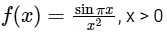
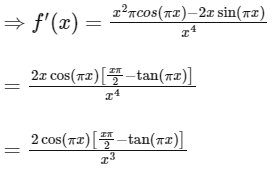
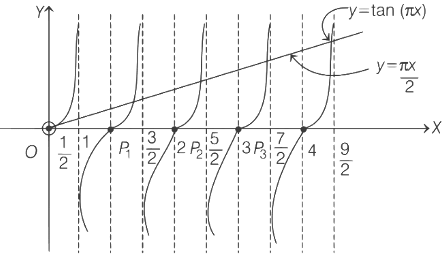
Since, for maxima and minima of f(x), f'(x) = 0
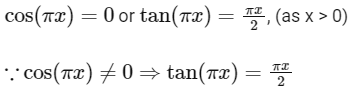
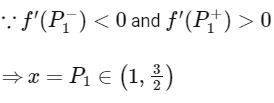
is point of local minimum.
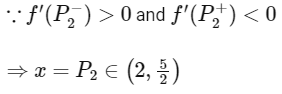
is point of local maximum.
From the graph, for points of maxima x1, x2, x3 .... it is clear that
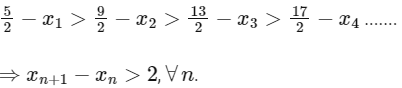
From the graph for points of minima y1, y2, y3 ....., it is clear that
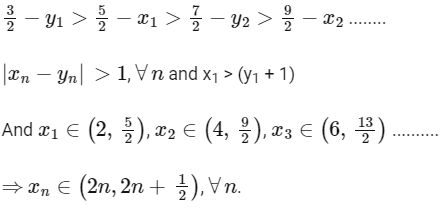
Hence, options (a), (b) and (d) are correct.
2018
Q1: For each positive integer n, let

For x ∈ R, let [x] be the greatest integer less than or equal to x. If
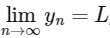 , then the value of [L] is _______. [JEE Advanced 2018 Paper 1]
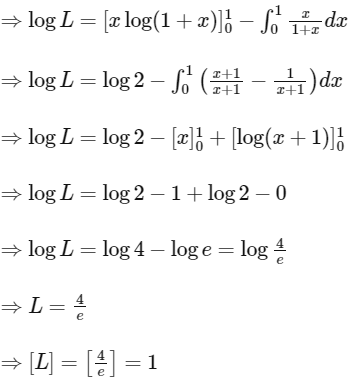
Ans: 1
We have,
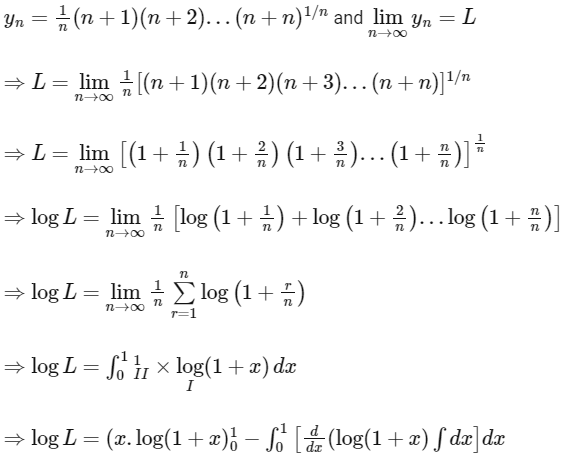
[by using integration by parts]
FAQs on JEE Advanced Previous Year Questions (2018 - 2025): Application of Derivatives
| 1. What is the importance of the application of derivatives in JEE Advanced? |  |
| 2. How can I effectively prepare for the application of derivatives section in JEE Advanced? | |
| 3. Are there any specific types of problems related to derivatives that frequently appear in JEE Advanced? | |
| 4. What are some common mistakes to avoid while solving application of derivatives problems in JEE Advanced? | |
| 5. How can I apply derivatives to solve real-world problems in JEE Advanced? | |




