Chapter Notes: Profit & Loss

Introduction
 , which he bought for ₹28000 and sold it to you for ₹31000. Did he make a profit or a loss?
 To answer this, we must understand two basic terms used in trading:
- Cost Price (C.P.): The price at which an item is purchased.
- Selling Price (S.P.): The price at which an item is sold.
Now compare the two prices for the example above.
C.P. = ₹ 28,000
S.P. = ₹ 31,000
Since S.P. > C.P., the seller made a profit.
How much was the profit?
Profit = Selling Price - Cost Price
= ₹ 31000 - ₹ 28000
= ₹ 3000
Therefore, the profit is ₹ 3000
Examples of Profit and Loss
Example 1: A shopkeeper bought a mobile phone for ₹ 28,000 and sold it for ₹ 31,000. How much money did he earn as profit?
Ans: Cost Price (C.P.) = ₹ 28,000 Selling Price (S.P.) = ₹ 31,000
Since S.P. > C.P., the shopkeeper made a profit.
Profit = S.P. - C.P.
Profit = ₹ 31,000 - ₹ 28,000 = ₹ 3,000
Example 2: Ms Shalini bought a bedsheet for ₹ 1,600 and sold it for ₹ 1,350. How much money did she lose?

Ans: Cost Price (C.P.) = ₹ 1,600 Selling Price (S.P.) = ₹ 1,350
Since S.P. < C.P., Ms. Shalini incurred a loss.
Loss = C.P. - S.P.
Loss = ₹ 1,600 - ₹ 1,350 = ₹ 250
Key Points to Remember
- When S.P. > C.P., there is a profit. Profit = S.P. - C.P.
- When S.P. < C.P., there is a loss. Loss = C.P. - S.P.
Try yourself: A shopkeeper bought a laptop for ₹ 35000 and sold it for ₹ 38000. Did he make a profit or a loss?
Example 3: A board game is bought for ₹ 853.25 and sold for ₹ 825.50. Find the profit or loss made.

Ans: To determine if there is a profit or loss, we compare the Cost Price (C.P.) and Selling Price (S.P.).
In this case, since C.P. ( ₹ 853.25 ) > S.P. ( ₹ 825.50 ), it indicates a loss.
To calculate the loss: Loss = C.P. - S.P.
Loss = ₹853.25 - ₹825.50 = ₹27.75
Example 4: A dealer bought 20 TV sets for ₹ 31,500 each, paid ₹ 3,600 as the cartage for all and sold these at ₹ 35,000 each. Find his total profit or loss.
Ans: The dealer sold each TV set for ₹35,000, resulting in a total selling price of ₹700,000 for all 20 sets.
Since the selling price ( ₹700,000 ) is greater than the cost price ( ₹633,600 ), the dealer made a profit.
To calculate the profit: Profit = Selling Price - Cost Price Profit = ₹700,000 - ₹633,600 = ₹66,400
Therefore, the dealer made a profit of ₹66,400 on the sale of the TV sets.
Note on Overheads
- Overheads such as repair costs, transportation charges, cartage, octroi, packing, etc., are part of the total cost of an item.
- Add these additional costs to the cost price when calculating the total cost for profit or loss computations.
To Calculate Selling Price or Cost Price
(i) To Determine Selling Price
Formula 1. When Cost Price and Profit are Given: Selling Price = Cost Price + Profit
Formula 2. When Cost Price and Loss are Given: Selling Price = Cost Price - Loss
Example 5: The cost price of a chair 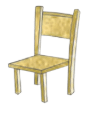 is ₹3120 and is sold by making a profit of ₹580. What is the selling price of the chair?
Ans: Cost Price = ₹ 3120, Profit = ₹ 580
Selling Price = Cost Price + Profit
= ₹ 3120 + ₹ 580 = ₹ 3700
Example 6: A book  is bought for ₹97.50 and sold by incurring a loss of ₹12.35. Find the selling price of the book.
Ans: Cost Price = ₹ 97.50, Loss = ₹ 12.35
Selling Price = Cost Price - Loss
= ₹ 97.50 - ₹ 12.35 = ₹ 85.15
(ii) To Determine Cost Price
Formula 1. When Selling Price and Profit are Given: Cost Price = Selling Price - Profit
Formula 2. When Selling Price and Loss are Given: Cost Price = Selling Price + Loss
Example 7: A bicycle is sold for ₹ 2140 with a profit of ₹ 153. What is the cost price of the bicycle?
Ans: Selling Price = ₹ 2140, Profit = ₹ 153
Cost Price = Selling Price - Profit
= ₹ 2140 - ₹ 153 = ₹ 1987
Example 8: Find the cost price of a pair of slippers sold at ₹ 345 with a loss of ₹ 25.
Ans: Selling Price = ₹ 345, Loss = ₹ 25
Cost Price = Selling Price + Loss
= ₹ 345 + ₹ 25 = ₹ 370
Try yourself: A pair of shoes is bought for ₹650 and sold for ₹720. What is the profit made on the sale of the shoes?
Calculating Profit or Loss Percentage
Example 9. A man buys decorated diyas  at ₹10 each and sells them at ₹12.50 each. Find his profit per cent on each diya.
Ans: Cost Price (C.P.) of each diya = ₹ 10
Selling Price (S.P.) of each diya = ₹ 12.50
Profit = S.P. - C.P. = ₹ 12.50 - ₹ 10 = ₹ 2.50
Profit Percentage. (Profit / C.P.) × 100 = (₹ 2.50 / ₹ 10) × 100% = 25%
Therefore, the man makes a profit of 25% on selling each diya.
Worked Methods and Helpful Tips
- Always compare S.P. and C.P. first to decide whether there is a profit, a loss, or neither.
- Put all additional expenses (transportation, packing, repairs) into the total Cost Price before finding profit or loss.
- When many identical items are bought and sold, calculate total C.P. and total S.P. by multiplying unit C.P. and S.P. by the quantity, then find total profit or loss.
- Use percentages to compare gains or losses across different transactions: percentages are always taken with reference to the Cost Price.
- Check units and currency symbols carefully when adding or subtracting money amounts (for example, do not mix rupees and paise without converting).
FAQs on Chapter Notes: Profit & Loss
| 1. How do I calculate profit and loss in math problems? |  |
| 2. What's the difference between profit percentage and loss percentage in Class 5 maths? | |
| 3. Why do shopkeepers use marked price and discount in profit and loss problems? | |
| 4. Can I lose money even if I sell something at a higher price than I bought it? | |
| 5. What does "cost price" actually mean in profit and loss questions? | |