APPSC (Andhra Pradesh) Exam > APPSC (Andhra Pradesh) Notes > APPSC State Specific Preparation Course > Introduction: Sri Sathyasai District
Introduction: Sri Sathyasai District

Historical Background
- Ananthapuramu derived its name from "Anantasagaram," a large tank meaning "Endless Ocean," built by Anantaras Chilkkavodeya, the minister of Bukka-I, a Vijayanagar ruler. Some sources suggest the tank was named after Bukka's queen, while others argue it was named after Anantarasa Chikkavodeya himself.
- Ananthapuramu District was established in 1882 after being separated from Bellary district in Karnataka. It later expanded by incorporating Revenue Mandals from Y.S.R Kadapa District in 1910.
- In 1956, additional Revenue Mandals from Bellary District were added to Ananthapuramu District, leading to the formation of five Revenue Divisions comprising a total of 63 Revenue Mandals.
- The re-structuring and formation of Sri Satya Sai District, with its headquarters in Puttaparthy, was announced in 2022. This new district includes three Revenue Divisions and 29 Mandals.
- The town of Puttaparthy, originally known as Gollapalli, was initially surrounded by anthills and snake pits along the Chitravathi River. Over time, it transformed into Puttaparthy, now renowned globally as the birthplace of Bhagawan Sri Satya Sai Baba, the Avatar of the Age.
- In 1950, Prasanthi Nilayam, the Highest Abode of Peace, was established by devoted followers, marking the inception of a new movement aimed at uplifting human society. This humble village has evolved into a modern township with essential amenities to accommodate its diverse and growing population, including an airport.
- Puttaparthy, previously a part of the Kadiri division, belonged to the Ananthapuramu District. Established in 1882 by separating from the Bellary district of Karnataka, the district witnessed subsequent expansions with the inclusion of various taluks and revenue mandals from neighboring regions. By 1910, Ananthapuramu District comprised five revenue divisions, encompassing a total of 63 revenue mandals.
- Recently, in line with the Gazette notification No.154 dated 01.02.2022, the Sri Satya Sai District Headquarters was established in Puttaparthy. This new district comprises three revenue divisions, housing a total of 29 mandals, including a significant realignment of territories from existing divisions.
Boundaries and Topography
- Sri Satya Sai District (Puttaparthy) is situated between 13°-40' and 14°-6' Northern Latitude and 76°-88' and 78°-30' Eastern Longitude.
- The district is bordered on the North by Ananthapuramu District, on the East by YSR Kadapa District & Chittoor District, and on the West and South West by Karnataka State.
- The district is divided into two natural divisions:
- Northern Mandals of Dharmavaram, Bathalapalli, Tadimarri, Mudigubba are mainly characterized by arid treeless expanses of poor red soils.
- High Level Land of Penukonda, Roddam, Somandepalli, Hindupur, Lepakshi, Chilamathur, Madakasira, Rolla, Gudibanda, and Agali, which connects with the Mysore plateau at higher elevations compared to the rest of the district. This area features average sandy red soils of normal productivity.
- This district's topography presents a diverse range of landscapes, from arid treeless regions with poor red soils to higher elevated areas with sandy red soils. Understanding the geographical boundaries and divisions of the district is crucial for appreciating its environmental and agricultural characteristics. For instance, the distinct soil types in different areas influence agricultural practices and land use, showcasing the importance of topographical features in shaping local economies and livelihoods.
MULTIPLE CHOICE QUESTIONTry yourself: What is the historical significance of Ananthapuramu district?
Places of Interest
Lepakshi
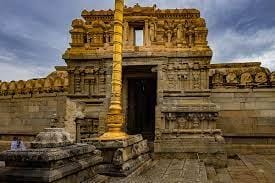
- Lepakshi, a village located 14 kilometers away from Hindupur Town in Lepakshi Mandal, is renowned for its Veerabhadra Temple and the enormous stone Nandi situated nearby.
- This area holds significance as a pilgrimage site and is connected with the travels of Lord Sri Ram.
- The temple stands as a remarkable example of intricate sculpture and architecture, attracting a large number of devotees during events like "SHIVARATHRI" and other saivite festival days.
Gutibayalu
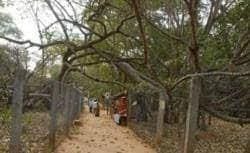
- Gutibayalu, situated approximately 21 kilometers southeast of Kadiri, features a colossal Banyan Tree, known as "Thimmamma Marrimanu," reputed to be one of the largest in the South.
- The tree's branches span nearly 5 acres. Legend has it that Thimmamma, in 1434 A.D., performed "Sati" at this location, giving rise to the growth of this remarkable Banyan Tree.
Puttapathy
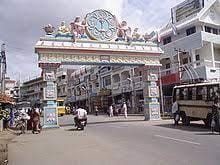
- This village, located on the banks of Chitravathi and about 29 km from Penukonda, is renowned as the residence of Puttaparthy Sri Sathya Sai Baba, attracting followers worldwide.
- Prasanthi Nilayam, an Ashram built by devotees, serves as a significant establishment in the area.
- Sri Sathya Sai Baba is recognized for his extraordinary abilities, drawing a large number of devotees, especially during festivals like Sivarathri and Dasara.
- A beautiful mantapa called "Poornachandra" hosts gatherings of Baba devotees for "Bhajana" on special occasions.
Penukonda
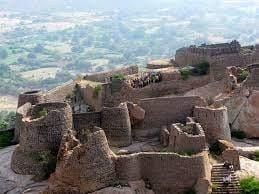
- Penukonda, an early capital of the Vijayanagara empire, boasts of an impregnable fort with historical significance.
- The fort features two prominent attractions - the "Gagan Mahal," a summer retreat for the kings, and the "Babayya Darga," symbolizing communal harmony.
- The Kumbakarna garden within the fort spans 5 acres and showcases a colossal statue of the sleeping Kumbakarna, measuring 142 feet in length and 32 feet in height. Visitors can enter the belly of the statue, where depicted asuras attempt to awaken the sleeping giant.
Hemavathi
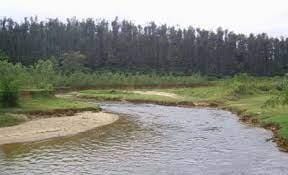
- Hemavathi is situated around 140 kilometers away from Anantapur. It gained prominence due to the construction of the Doddeswara Swamy temple during the Pallava Reign.
- The idols in the temple are crafted from a stone that produces a metallic sound when struck and boasts a remarkable level of polish.
- At the temple entrance, there is an imposing 8-foot-long and 4-foot-high Nandi sculpture made of black basalt granite.
- Inside the sanctum sanctorum, there is a 6-foot-tall Lingam, a symbol of Lord Shiva.
- The temple premises also host two other temples dedicated to Lord Shiva, known as the Siddeswara Swamy temple and Mallikarjuna Swamy temple.
- Additionally, there is a Museum on the site exhibiting rare idols of historical significance.
Dharmavaram
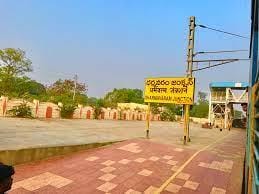
- The Sri Laxmi Chennakeshwara Temple in Dharmavaram is celebrated for its exceptional architecture and features a perennial waterspout and pillars that produce seven distinct musical notes when struck.
- Dharmavaram is renowned for its cotton and silk weaving industry, with its silk sarees enjoying popularity worldwide.
- The town is also known for its expertise in crafting leather puppets, showcasing a rich cultural heritage.
MULTIPLE CHOICE QUESTIONTry yourself: Which village is renowned for its Veerabhadra Temple and the enormous stone Nandi?
Sri Kadiri Laxmi Narasimha Swamy Temple
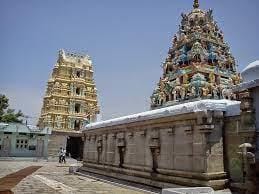
- Kadiri is a sacred place where Lord Vishnu placed his foot and entrusted the Utsavamoorthis to Brugu Maharshi for daily worship.
- Special Poojas are conducted during Dassera and Sakranthi festivals.
- The temple is associated with various holy thirthas.
Puttaparthi
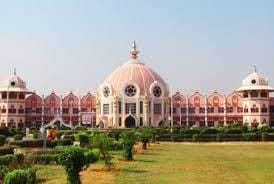
- Puttaparthi is renowned as the holy residence of Sathya Sai Baba, known as 'Prashanti Nilayam' or 'the abode of peace'.
- The Chaitanya Jyoti Museum in the Ashram showcases the life and teachings of Sai Baba through multimedia exhibits.
- The city is a blend of diverse architectural styles, combining Chinese roofs, Moorish Spires, Gothic arches, and Japanese and Thai influences.
- The Ashram features educational institutions, stadiums, museums, hospitals, and modern amenities, attracting visitors throughout the year.
- It can accommodate a large number of people and has specific rules for devotees to follow.
- The assembly hall in the Ashram is where Sathya Sai Baba meets his devotees, creating a serene and peaceful atmosphere.
- Puttaparthi is a bustling religious center with its own city-like infrastructure, offering a blend of devotion and spirituality through various institutions and organizations.
Nimmalakunta (Tholubommalata)
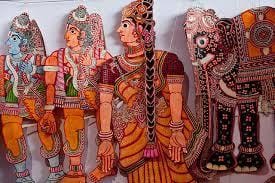
- The traditional art form of puppetry known as Tholu Bommalata, which translates to the dance of leather puppets, is a popular practice in Andhra Pradesh.
- These leather puppets, crafted from goat skin, stand at a height of 5-6 feet and are intricately designed with joints at various points like shoulders, elbows, and knees.
- Initially, natural vegetable dyes were used to color these puppets, but nowadays, readily available chemical dyes are also utilized for coloring purposes.
- Perforations are carefully made on the puppet figures as needed, with the eyes being painted as a final touch.
- To support the puppets vertically, a thin bamboo stick is attached to them, ensuring they stand upright when manipulated against a white screen.
- During performances, the audience witnesses the shadows or silhouettes of these puppets, creating a visually engaging experience.
- The themes depicted in the plays are often drawn from the rich narratives of the Ramayana, Mahabharata, or the tales of Lord Krishna.
Yogi VemanaSamadhi
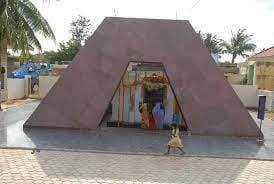
- Kattarupalli is a significant pilgrimage site, renowned for Yogi VemanaSamadhi, which is located 25 kilometers away from Kadiri on the way to Thimmama Marimanu.
- The journey to this destination provides breathtaking sights of rock formations in various intriguing shapes.
- Yogi Vemana, also known as the people's poet, is celebrated for his Telugu poems that are both simple and colloquial.
- His poems resonate with both literate and illiterate audiences, as they shed light on the realities of everyday life and societal issues.
- Vemana's literary works delve into themes such as yoga, wisdom, and morality, offering profound insights into these subjects.
- Vemana, referred to as the 'Praja Kavi,' meaning 'The Poet of the People,' was recognized for his ability to connect with a wide audience through his verses.
MULTIPLE CHOICE QUESTIONTry yourself: What is the significance of Puttaparthi?
The document Introduction: Sri Sathyasai District is a part of the APPSC (Andhra Pradesh) Course APPSC State Specific Preparation Course.
All you need of APPSC (Andhra Pradesh) at this link: APPSC (Andhra Pradesh)
FAQs on Introduction: Sri Sathyasai District
| 1. What is the historical background of Sri Sathyasai District? |  |
Ans. The historical background of Sri Sathyasai District dates back to the establishment of the district in Andhra Pradesh. The district has a rich history with various historical events and cultural influences shaping its development over the years.
| 2. What are the boundaries and topography of Sri Sathyasai District? | |
Ans. Sri Sathyasai District is bordered by [insert neighboring districts] and features diverse topography ranging from [mention major geographical features like mountains, rivers, plains, etc.]. The boundaries and topography play a significant role in the district's landscape and development.
| 3. What are some places of interest in Sri Sathyasai District? | |
Ans. Some popular places of interest in Sri Sathyasai District include [list famous landmarks, tourist attractions, historical sites, etc.]. These places offer visitors a glimpse into the rich cultural heritage and natural beauty of the district.
| 4. What is the significance of Sri Sathyasai District in the context of Andhra Pradesh? | |
Ans. Sri Sathyasai District holds a special significance in Andhra Pradesh due to its [mention unique features, contributions to the state's economy, cultural importance, etc.]. The district plays a crucial role in the overall development and identity of the state.
| 5. How can one explore Sri Sathyasai District and its attractions? | |
Ans. To explore Sri Sathyasai District and its attractions, visitors can [provide tips on transportation, accommodations, must-see places, local cuisine, etc.]. By planning a trip effectively, one can make the most of their experience in the district.
About this Document

4.93/5 Rating

Apr 21, 2026 Last updated
Related Exams
Document Description: Introduction: Sri Sathyasai District for APPSC (Andhra Pradesh) 2026 is part of APPSC State Specific Preparation Course preparation. The notes and questions for Introduction: Sri Sathyasai District have been prepared according to the APPSC (Andhra Pradesh) exam syllabus. Information about Introduction: Sri Sathyasai District covers topics like and Introduction: Sri Sathyasai District Example, for APPSC (Andhra Pradesh) 2026 Exam. Find important definitions, questions, notes, meanings, examples, exercises and tests below for Introduction: Sri Sathyasai District.
Introduction of Introduction: Sri Sathyasai District in English is available as part of our APPSC State Specific Preparation Course for APPSC (Andhra Pradesh) & Introduction: Sri Sathyasai District in Hindi for APPSC State Specific Preparation Course course. Download more important topics related with notes, lectures and mock test series for APPSC (Andhra Pradesh) Exam by signing up for free. APPSC (Andhra Pradesh): Introduction: Sri Sathyasai District
Description
Introduction: Sri Sathyasai District of APPSC State Specific Preparation Course covers all the important topics, helping you prepare for the APPSC (Andhra Pradesh) exam on EduRev.
Information about Introduction: Sri Sathyasai District
In this doc you can find the meaning of Introduction: Sri Sathyasai District defined & explained in the simplest way possible. Besides explaining types of Introduction: Sri Sathyasai District theory, EduRev gives you an ample number of questions to practice Introduction: Sri Sathyasai District tests, examples and also practice APPSC (Andhra Pradesh) tests



Related Searches
ppt, Introduction: Sri Sathyasai District, Introduction: Sri Sathyasai District, past year papers, video lectures, Introduction: Sri Sathyasai District, practice quizzes, mock tests for examination, Previous Year Questions with Solutions, Free, Objective type Questions, Summary, shortcuts and tricks, Exam, MCQs, Important questions, Sample Paper, Extra Questions, Viva Questions, study material, Semester Notes, pdf ;