Tourism in YSR District

ECO Tourism
Sidhout Fort
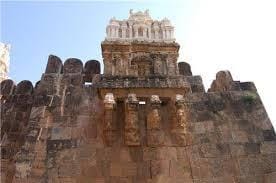
- Built in 1303 AD, Sidhout Fort is situated on the banks of the river Pennar, covering a sprawling area of 30 acres.
- The fort boasts grand gateways at both ends, adorned with ornate pillars and intricate carvings of Gajalakshmi at their summits.
- With 17 square bastions standing tall, the fort's defensive structures remain a remarkable sight, showcasing its historical significance.
- Noteworthy is an additional passage within the fort that allows entry when the main gates are shut, adding a unique architectural feature.
Religious Significance
- Sidhout Fort is often hailed as the gateway to Srisailam or Dakshina Kasi, reflecting its spiritual importance.
- Within its premises, the fort houses intricately sculpted temples including Siddheswara, Bala Brahma, Ranganayaka Swamy, and a Durga Temple.
- These temples attract a multitude of pilgrims, adding a religious dimension to the fort's cultural heritage.
Location
- Situated near Siddhavatam, approximately 25 kilometers from Cuddapah, Sidhout Fort is easily accessible for visitors.
Gandikota Fort
Description
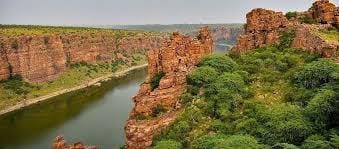
- Gandikota Fort, situated along the banks of the Pennar River, gets its name from Telugu words meaning Gorge and Fort. It stands as the 'Gorge Fort,' constructed on a hill. The fort is protected by a massive entrance gate standing 20 feet tall and features 101 bastions, each towering over 40 feet high.
- Even today, it remains a formidable structure. Constructed in the latter part of the 13th century A.D., Gandikota caught the attention of Tavernier, a French traveler, who compared it to the monumental architecture of Hampi Vijayanagara.
Noteworthy Sites
- Inside the fort, numerous captivating sites await exploration. The Ranganatha and Madhavaswamy temples, dating back to the 15th and 16th centuries, showcase intricate sculptures and architectural styles reminiscent of the Vijayanagara era.
- Adjacent to a vast granary, the Juma Masjid sprawls across a considerable area and served as a food storage facility during sieges. Additionally, visitors can marvel at the impressive Pigeon Tower and a palace adorned with elaborate plaster decorations.
Scenic Views
- Ascending to the fort's summit reveals a breathtaking panoramic vista of the surrounding forests and valleys. In close proximity lies the picturesque Mylavaram Dam, a favored spot for picnics due to its glistening waters, verdant foliage, and refreshing breezes, offering a perfect setting for relaxation.
Accessibility
- To access Gandikota Fort, travelers can journey 77 kilometers from Cuddapah or 15 kilometers from Jammalamadugu.
Forest Tourism
Lankamala Sanctuary
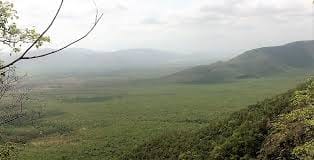
- Lankamala Sanctuary is situated in Kadapa district, covering an expanse of 464.42 sq. km.
- It is positioned approximately 60 km away from Kadapa town, with a trekking distance of 15 km.
- The sanctuary boasts deep gorges, steep slopes, and picturesque waterfalls.
Ecological Composition of the Sanctuary
- The sanctuary's vegetation primarily consists of dry deciduous thorn mixed forests and dry evergreen scrubs.
- It serves as the natural habitat for Red Sanders, a species unique to the region.
- Lankamala Sanctuary is a crucial refuge for the double-banded, a rare and endangered species.
Specialities at a glance
- Location: Kadapa District
- Area: Covering an expanse of 464.42 square kilometers
- Uniqueness: Home to the Jerdon's Courser, an extremely rare and endangered bird found nowhere else in the world
- Flora: Comprising dry deciduous mixed thorn forests characterized by deep gorges and steep slopes. Noteworthy presence of Red Sanders, a species native to the region
- Fauna: Diverse wildlife including Panthers, Sloth Bears, Cheetal, Sambars, Chowsinghas, Chinkaras, Nilgais, Wild Boars, Foxes, and the Jerdon's Courser
- Accessibility: Situated 60 kilometers by road from the Kadapa railway station
- Accommodation: Visitors can stay at the forest rest houses located in Siddavotam and Kadapa
- Season: Best time to visit is from October to March
How to reach this place
- By Road: The site is easily accessible, being 60 kilometers away from Kadapa and 420 kilometers away from Hyderabad
- By Train: The nearest railway station is Kadapa, located 60 kilometers away from the destination
- By Air: Closest airports include Tirupati (138 km), Chennai (253 km), and Bangalore (282 km) with major airports in Hyderabad, Chennai, Tirupati, and Bangalore providing convenient air travel options.
Religious Tourism
Vontimitta
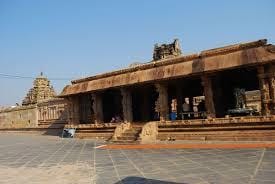
- Location: Vontimitta is renowned for the Kodanda Ramaswamy Temple, originally constructed by the Chola and Vijayanagara dynasties. The temple features impressive carvings of Rama, Lakshmana, and Sita on a single rock.
- Architecture: The temple showcases remarkable architecture, including a grand gateway, a beautifully sculpted Mandapam with intricately carved pillars, an inner chamber, and the sanctum sanctorum. Particularly noteworthy is the Madhya Ranga Mandapam with 32 pillars, leading to the inner chamber and sanctum, displaying exceptional architectural craftsmanship.
- Significance: Vontimitta is esteemed for its exquisite carvings and exceptional craftsmanship, drawing comparisons to some of the finest temples in India. The renowned French traveler Tavernier lauded it as one of the most magnificent pagodas in the country.
- Legend of Rama, Lakshmana, and Sita: According to local lore, Rama, Lakshmana, and Sita sought refuge in Vontimitta during their exile. In a well-known tale, Rama pierced the ground with an arrow to create a spring of sweet water for Sita's thirst. This act led to the formation of two small tanks, namely Ramathirtham and Lakshmanathirtham.
- Accessibility: Vontimitta is situated 25 kilometers away from Cuddapah city, along the state highway that leads to Tirupathi, making it easily reachable for visitors seeking to explore this historical and spiritual site.
Gandi - Anjaneya
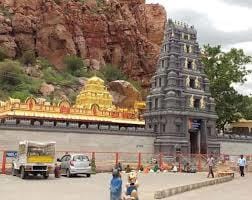
- Gandi Kshetram: The temple of Anjaneya Swamy is situated at the foot of a hill on the western side of the Papaghni River, surrounded by beautiful scenery. It is renowned as a Vayu Kshethra.
- Location: The Papaghni River flows from south to north between two hills at this site. Legend has it that Lord Rama visited this place on his way back from Lanka. To greet Rama, Vayu, Anjaneya's father, placed a garland of golden flowers across the gorge. Before departing, Rama carved Anjaneya's figure on a rock.
- Significance: Local beliefs suggest that the figure becomes visible to the pious as they near death. Sir Thomas Manro, a former British Governor, claimed to have seen it while passing by the ravine. The stone courtyard around the sanctum sanctorum was reportedly constructed by Tirupathi Seshanna in 1911. Devotees from distant places often visit the temple during the month of Sravana.
- Accessibility: Visitors can reach the temple, which is 55 km from Cuddapah city and 8 km from Vempalli on the Vempalli-Rayachoty route.
Brahmamgari Matham
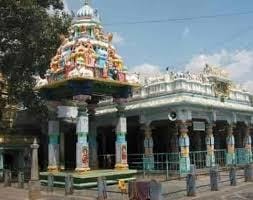
- Brahmamgari Matham was established in Kandimallayapalli following his passing. This location was where Sri Potuluri Veerabrahmam, renowned for his accurate predictions and insights into the future, resided.
- Veerabrahmam is recognized as the sole futurist from the East. He entered Jeeva Samadhi in 1693.
- The walls of Brahmamgari Matham are adorned with the teachings and prophecies of Veerabrahmam.
Noteworthy sites for tourists in and around the Matham include:
- Siddaiah Jeeva Samadhi
- Eswaramma Temple
- Poleramma Temple
- Veerabrahmam Reservoir (Telugu Ganga Project)
Places of Interest
- Siddaiah Jeeva Samadhi: This site holds historical significance and is a place of spiritual reverence.
- Eswaramma Temple: A sacred place dedicated to worship and prayer.
- Poleramma Temple: A temple known for its cultural and religious importance.
- Veerabrahmam Reservoir (Telugu Ganga Project): An essential water project contributing to the region's development.
Directions to Brahmamgari Matham: It is situated 60 kilometers from Cuddapah on the Cuddapah Porumamilla route.
Pushpagiri
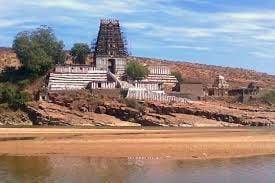
- Pushpagiri is located on the banks of the Pennar River, 16 kilometers away from Cuddapah City. It is renowned for its many temples.
- Vaishnavas refer to Pushpagiri as Madhya Ahobhilam, while Saivas call it Madhya Kailasam.
- The Amrita Sarovar, a sacred pool in Pushpagiri, is believed to have miraculous powers. Legend has it that a drop of nectar fell into the pool, turning it holy.
- An anecdote tells of an old farmer who, feeling despondent, jumped into the pool to end his life. Instead, he emerged transformed into a youthful man. Amazed, he persuaded his wife and oxen to also bathe in the pool, and they too regained their youth.
- Word of the pool's powers spread, drawing crowds seeking rejuvenation. This prompted Brahma to enlist the help of Lord Vishnu and Lord Siva. Anjaneya was tasked to close the pool, but his attempt failed as the dropped hill floated like a flower. Vishnu and Siva intervened, leaving their footprints on the hill, known as Rudrapada and Vishnupada.
- Pushpagiri, often referred to as the second Hampi, houses significant Advaitha Mutts founded by Sankaracharya. It is the sole location in Andhra Pradesh where Sankaracharya's holy Peetham is situated.
- The Chennakesava Temple, the largest and most renowned temple in Pushpagiri, dates back to 1298 A.D. Noteworthy art pieces within include the dancing Ganapati and Krishna imparting the teachings of the Bhagavad Gita to Arjuna.
Ameen Peer Dargha
- The annual temple festival in Kadapa is held for 10 days in March-April, showcasing communal harmony.
- Noteworthy temples in Kadapa include Trikuteswara, Durga, Shiva, Rudrapada, and Devi, known for their architectural beauty and intricate imagery.
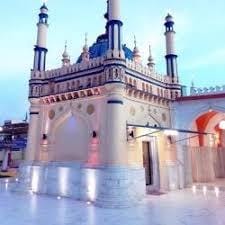
- Ameen Peer Dargah in Kadapa embodies communal harmony, attracting pilgrims of various faiths.
- Devotees believe that their wishes are granted at the shrine, fostering a diverse community of Hindus, Muslims, and followers of other faiths.
- Peerullah Hussaini, also known as Peerullah Malik, established the Aasthana in the 16th century, promoting peace and love.
- The saint's journey from Bidar to Kadapa, guided by spiritual encounters, reflects a message of unity and understanding.
The Miracle of Peerullah Malik
- Legend has it that people once challenged Peerullah Malik to show them a miracle to gain their trust.
- The Sufi performed a miraculous act by descending alive into the earth, achieving Jeeva Samadhi in 1716 AD.
- After three days, witnesses saw him praying at the same location.
Construction of the Mausoleum
- Following his passing, Nawab Abdul Hameed Khan Mayana oversaw the construction of Peerullah Malik's mausoleum.
- The tomb of Peerullah Malik is located east of the mosque, enclosed within a room with two entrances.
Annual Celebration - Urs of Peerullah Malik
- Every year, on the 10th day of the Muharram month, Peerullah Malik's Urs is celebrated.
Life and Contributions of Peerullah Malik
- Khwaja Peerullah Hussaini, also known as Peerullah Malik, was a devout Muslim hailing from Bidar, Karnataka.
- He established the Aasthana in the 16th century and was believed to be a descendant of Prophet Mohammed.
- Peerullah Malik visited the mausoleums of various Sufi saints across India, including Khwaja Moinuddin Chisti at Ajmer.
- He received guidance to relocate to the Kadapa region, where he influenced Nawab Nek Naam Khan to rename the town as Nek Naam Abaad, later known as Cuddapah.
- Peerullah Malik dedicated his life to spreading messages of peace, love, and communal harmony.
Peerullah's Mausoleum Complex
- Legend of the Miracle
- The Sufi performed a miraculous act by descending alive into the earth, achieving Jeeva Samadhi in 1716 AD.
- After his miraculous act, Nawab Abdul Hameed Khan Mayana constructed his mausoleum.
- Peerullah's Tomb
- Peerullah's tomb is located in a closed room east of the mosque with two entrances.
- Pilgrims feed flocks of pigeons that gather at the tomb complex.
- Peerullah's Urs is celebrated annually on the 10th day of Muharram.
- Hall of Tombs
- The mausoleum complex contains a hall with various tombs aligned east-west.
- The most prominent tomb's Urs is celebrated in Jamadi'ul Awwal of the Muslim calendar.
- This Urs is the largest in South India, known as Aasthana-e-Maqdoom'ullahi.
- Annual Urs Festivities
- The Urs attracts millions of pilgrims from across India.
- Key events include the sandal paste ceremony, Fateha offerings, and distribution of Tabarruk.
- Main Urs ceremony occurs on the second day with Chadar presentations and Qawwali performances.
- A national-level Mushaira is held on the third night featuring poetry programs.
- Masjid-e-Azam Mosque
- An impressive mosque with Persian inscriptions, dating back to AD 1691.
- The mosque was built during the reign of Aurangazeb.
Disciples of Hazrath Amin Peer Saab and Shah Meer Saab School of Thoughts
- Followers of Hazrath Amin Peer Saab and Shah Meer Saab's teachings are widespread in Rayalaseema and Coastal districts.
- They actively engage in welfare activities on a significant scale in these regions.
Significance of Ali Murad Saab
- During cholera outbreaks in Kadapa town, Ali Murad Saab was revered as a savior by the residents.
- Special prayers were conducted at his shrine during these times.
- Even today, albeit to a lesser extent, this tradition continues.
Hazrath Rafeeq Shah Vali Saab - Savior of Afflicted Individuals
- Hazrath Rafeeq Shah Vali Saab is believed to be a protector of individuals struggling with mental illness and evil spirits.
The Shrine in Kadapa
- The shrine stands out as one of the most tranquil and serene locations in Kadapa, shielded from disruptive noises.
- Visitors are encouraged to experience the profound silence at the shrine, which is truly magical.
Tourist Places
Gandikota
- Gandikota, situated in the Kadapa District of Andhra Pradesh, holds a rich historical background.
- The name "Gandikota" originates from the Telugu words 'Gandi' (gorge) and 'Kota' (fort).
- Its ancient fortress, dating back to 1123, stands approximately 100 meters high, offering a view of the Penna River gorge.
Gandikota through the Ages
- Throughout history, Gandikota has been under the rule of various dynasties like the Kakatiyas, Kayasthas, Kalyani Chalukya, Vijayanagara Empire, and more.
- The region's importance increased during the reign of the Kakatiyas and their subordinate Kayasthas.
Cultural Significance and Noteworthy Visitors
- Yogi Vemana, a renowned Telugu poet, is believed to have lived in the Gandikota region.
- Historical records indicate that diamonds were once extracted from this area.
- The French traveler Jean-Baptiste Tavernier praised Gandikota's grandeur, comparing it to the splendid Hampi Vijayanagara.
Encounters at Gandikota
- Jean-Baptiste Tavernier visited Gandikota in 1952 seeking approval from Mir Jumla, the prime minister of the Sultan of Golconda, for the gems he planned to sell.
- During his stay, Tavernier documented Mir Jumla's initiatives, such as road improvements, the construction of the Jama Masjid, and cannon-foundries.
Attractions inside Gandikota
- The Mini Charminar: Visible from the entrance enclosure, this tower showcases towering stone walls with square-shaped watchtowers and a notched upper edge. It is accessed through a series of defensive enclosures, leading to an arched gate. Nearby, you'll find the House of the Drums, a historic building that once signaled the king's arrivals and departures and alerted soldiers during attacks.
- Mini Charminar Tower: This triple-storeyed tower is a remnant of the Golconda sultanate. It has a square base, stands on four pillars, and features two storeys above with a fretted screen wall, possibly for pigeons, on either side. Four minarets with pointed circular domes emerge from the corner turrets, resembling the larger Charminar of Hyderabad.
- Old Jail Building: Adjacent to the Charminar, this building has entrances on the southern and northern sides, leading to a central hall. Cells line both sides of the floor, while the ceiling has a flat circular space with a single ventilation aperture.
Madhavaraya Temple
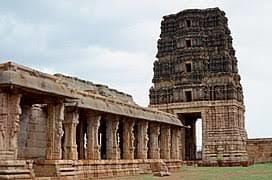
- Distinguished by its four-storeyed entrance tower (gopura), this temple features intricate carvings of deities and detailed pilasters on its steeply pyramidal structure.
- The gopura showcases detailed mouldings, densely arrayed wall pilasters, and figural carvings of Shalabhanjika on columns. The fallen sikhara adds to its historical charm.
Main Features of Temple Architecture
- The temple is positioned to face the east and is enclosed by a prakara, which is a pillared hall encompassing all sides, shaping a rectangular courtyard.
- The central temple is located within this courtyard, elevated on a platform known as Adhishthana.
- Carvings of various deities like Venugopala, Surya, Vishnu, Lakshmi, Ganapati, and Yoga Narasimha adorn the projections of the Adhishthana.
Layout of the Temple
- The temple's layout comprises a sequence of pillared halls, including Ardhamandapam, Mahamandapam, and Mukhamandapam, followed by Antaralaya and Garbhgriha.
Ardhamandapam
- Ardhamandapam extends eastward from Maha Mandapa, supported by four ornate pillars with intricate carvings.
- It has a width of 2.44 meters and a length of 10.15 meters.
Mahamandapam
- Mahamandapam comprises thirty-six pillars, with sixteen on the inner layer and twenty on the outer edge of the platform.
- It measures 18.29 meters east-west and 13.72 meters south-north.
- Features a central rectangular court at a lower level, surrounded by a raised platform on all sides.
Access to Central Court
- Access to the central court is through a narrow passage in the center from the east and a flight of steps connecting it to the eastern doorway of the Mukhamandapam.
Column Designs
- Interior columns are sculpted as rearing yalis with Vijayanagara style brackets.
- Outer pillars are embellished with figures of deities, decorative motifs, and animal figures.
The Mukhamandapam
- The Mukhamandapam is a structure with four interior pillars and a rectangular plan measuring 11.18m x 9.14m.
- It contains two porches, one in the north and one in the south, each supported by two outer columns and a central flight of stairs.
- Line drawings on the walls depict figures such as lions and lotus flowers.
- The garbhagriha, connected to the Mukhamandapam via Antaralaya, is square in plan, measuring 4.2m on each side.
Garbhagriha and Antaralaya
- The walls of the garbhagriha and Antaralaya are plain, lacking any superstructure above the garbhagriha.
Adjacent Structures
- Adjacent to the temple are a kitchen hall in the south-east corner, Kalyana Mandapam in the south-west corner, and Navagraha Mandapam in the north-east corner of the courtyard.
Jama Masjid
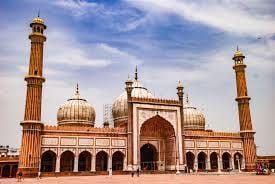
- Located north of Madhavaraya Temple, the Jama Masjid was built by Mir Jumla in 1650.
- Featuring two circular buttresses at the facade corners that extend into minarets, the mosque stands in a spacious quadrangle.
Interior Features
- The mosque's interior showcases vaulted ceilings supported by ribbed, pointed arches adorned with geometric patterns.
Exterior Design
- The facade boasts triple arches and a decorated parapet with arched openings.
Distinctive Elements
- The mosque's minarets are adorned with lotus petal capitals, arched circular galleries, and geometric patterns.
The Erra Koneru
- Opposite the Jumma Masjid is the Erra Koneru, also known as the Kathula Koneru or 'the pond of swords' where soldiers used to clean their swords after battles.
The Large Granary
- Located to the north of the mosque, the Granary features a vaulted roof and a spacious hall supported by two rows of twelve massive pillars.
- These pillars extend to a significant height, adding to the grandeur of the structure.
The Raghunatha Swamy Temple
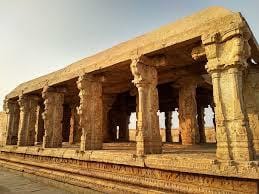
- Situated to the south of the Pennar gorge and north of the granary and Jama Masjid, the Raghunatha Swamy Temple is a significant historical structure.
- Constructed by the Pemmasani chiefs, the temple faces east and is built on high ground.
- The temple complex includes a rectangular courtyard, surrounded by a protective prakara wall, featuring decorative elements and carvings.
- The main temple comprises a mahamandapa, mukhamandapa, antarala, and garbhagriha, each adorned with detailed architectural elements and motifs.
- The Mukhamandapa showcases twenty-four pillars with vyala brackets, while the Kalyanamandapam is supported by sixteen elaborately carved pillars.
Architectural Details
- The temple's pillars and doorways are intricately embellished with lotus petals, floral designs, and other decorative motifs.
Idol and Museum
- The idol of Ranganayaka Swamy, originally housed in the temple, is now located in the Mylavaram Archaeological Museum near Gandikota.
Scenic View
- Visitors can enjoy a panoramic view of the Gandikota canyon from the Raghunatha Swamy temple.
Penna River Viewpoint
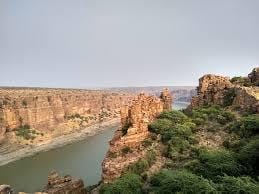
- The Gandikota viewpoint offers stunning panoramic vistas of the Penna river gorge nestled amidst the Erramala hills, with a width spanning approximately 200 meters. This gorge stands out as one of the most magnificent in South India.
- Visitors to Gandikota are treated to awe-inspiring sights of both sunrise and sunset, providing a harmonious blend of natural splendor and architectural grandeur.
- The terrain of Gandikota predominantly consists of sedimentary rocks known as Gandikota quartzite, adding to the area's unique geological charm.
FAQs on Tourism in YSR District
| 1. What is the religious significance of Sidhout Fort? |  |
| 2. Where is Sidhout Fort located? | |
| 3. How can one experience eco-tourism at Gandikota Fort? | |
| 4. What does YSR District in Andhra Pradesh offer in terms of eco-tourism? | |
| 5. How can tourists learn more about the history and significance of Sidhout Fort? | |