Chapter Notes: Output Devices


Monitor
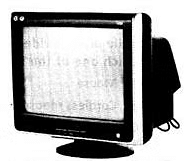
A monitor is an output device on which images, text and videos produced by the computer are displayed. The monitor receives signals from the computer's video adapter (also called a graphics card) through a cable and converts these signals into visible pictures.
Monitors have different screen types and features:
- Colour screens: These display many colours and are used for photographs, videos and graphical user interfaces. Colour screens typically display 256 colours from a selection of 256,000 choices.
- Monochrome screens: These show only one colour (for example, black and white, green, or amber). Monochrome monitors are used for simple text graphics and some special-purpose displays.
- Resolution: The clarity of the monitor image depends on its resolution, which is the number of pixels (picture elements) shown on the screen horizontally and vertically.
- Refresh rate: This is the number of times per second the screen image is redrawn. A higher refresh rate gives smoother motion on the screen.
Display Devices
Display devices are output devices that present information visually. They are used to show text, images and video to the user. Common display technologies include the following.
Liquid Crystal Display (LCD)
- Definition: An LCD uses liquid crystals and a backlight to produce images on the screen.
- Features: LCDs are energy-efficient and suitable for battery-powered devices such as digital watches and calculators because they consume very little power.
- Uses: Laptop screens, computer monitors, televisions, calculators and many portable devices use LCD technology.
Cathode Ray Tube (CRT)
- Definition: A CRT is a traditional display technology that produces images by directing an electron beam inside a vacuum tube onto a phosphor-coated screen.
- Features: CRTs are bulky and heavy but were widely used earlier in televisions and computer monitors.
- Working principle: An electron beam strikes the inside of the screen, causing the phosphor coating to glow and form pictures.
Thin Film Transistor (TFT)
- Definition: TFT is a form of LCD known as Active Matrix; each pixel is controlled by one or more transistors for faster response and better colour reproduction.
- Features: TFT displays give bright, sharp images and are used in modern monitors, smartphones and televisions.
Comparison and general notes
- Size and weight: CRTs are large and heavy; LCD/TFT screens are thin and lighter.
- Power consumption: LCD and TFT screens use less power than CRTs.
- Image quality: Modern TFT/LCD displays usually provide better sharpness and colour accuracy than older CRTs.
Printer
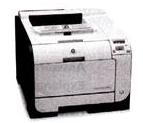
A printer is an output device that produces a hard copy (paper copy) of text or images stored on a computer. Printers are used to prepare documents, photographs, reports and many other printed materials.
Types of Printers
Impact Printers
- Definition: An impact printer creates text or images by physically striking an inked ribbon against paper.
- Explanation: The printing mechanism makes contact with the paper to form characters or dots, similar to how a typewriter works.
- Examples: Dot matrix printers and daisy wheel printers are common impact printers. Dot matrix printers form characters by striking pins through an inked ribbon to make patterns of dots on the paper.
- Uses and features: Impact printers can print through multi-part stationery (forms with carbon copies). They are noisy compared to non-impact printers but are useful where carbon copies are needed.
Non-Impact Printers
- Definition: A non-impact printer prints without striking the paper. It uses methods such as heat, ink droplets or laser electro-photography to form text and images.
- Explanation: Since they do not physically hit the paper, these printers are quieter and usually provide higher print quality than impact printers.
- Examples of non-impact printers: Inkjet printers, laser printers, thermal printers and electromagnetic printers.
- Laser printer (example): The first laser printer was introduced by Xerox Corporation in 1971. Laser printers use a laser beam and an electro-photographic drum to transfer toner (powdered ink) onto paper and then fuse it with heat to produce sharp, durable prints.
- Inkjet printer (example): Inkjet printers deposit tiny droplets of liquid ink onto paper to create images and text. Canon is one of the companies that developed inkjet printers. Ink droplets can be very small; typical dot diameters may be around 50 to 60 microns, which helps produce smooth images and gradients.
- Uses and features: Inkjet printers are good for high-quality colour photos and graphics; laser printers are fast and excellent for high-volume text printing. Thermal printers are used for receipts and labels.
Printer Characteristics to Know
- Resolution: Measured in dots per inch (dpi), resolution affects how sharp text and images appear on paper. Higher dpi gives finer detail.
- Speed: Printer speed is often measured in pages per minute (ppm); laser printers typically have higher ppm than inkjet printers for plain text documents.
- Colour capability: Some printers print only black and white, while colour printers use multiple inks or toners to reproduce a wide range of colours.
- Noise and maintenance: Impact printers are noisier and may require more mechanical maintenance; non-impact printers are quieter but may need ink or toner replacement and occasional cleaning.
Other Common Output Devices (Brief)
- Speakers and headphones: These output sound from the computer, such as music, voice and system sounds. They convert electrical signals into audio.
- Projectors: Projectors enlarge the computer display and project it onto a screen or wall for presentations and classrooms.
- Plotters: Plotters are used to print large-scale images such as engineering drawings and maps with high precision.
Care and Safety for Output Devices
- Keep screens and printer surfaces clean and dust-free using a soft, dry cloth.
- Switch off monitors and printers when not in use to save power and extend their life.
- Use the correct paper type and size recommended for your printer to avoid jams and damage.
- Avoid placing liquids near output devices to prevent spills that can cause short circuits.
Summary
Output devices such as monitors and printers convert the computer's digital information into forms that humans can see, hear or touch. Monitors (LCD, CRT, TFT) display visual information on screens while printers (impact and non-impact types like dot matrix, inkjet and laser) provide hard copies on paper. Other output devices like speakers, projectors and plotters serve specific needs. Understanding the features, advantages and proper care of these devices helps in choosing the right output device for any task.
FAQs on Chapter Notes: Output Devices
| 1. What are some examples of output devices? |  |
| 2. What is the difference between an impact printer and a non-impact printer? | |
| 3. How do display devices work as output devices? | |
| 4. Why are printers considered output devices? | |
| 5. Can output devices be used without input devices? | |