IGCSE Class 10 > Class 10 Notes > Biology for GCSE/ > Diet & Deficiencies
Diet & Deficiencies

Balanced Diet
- A balanced diet includes all necessary food groups in the correct proportions.
- Essential food groups encompass:
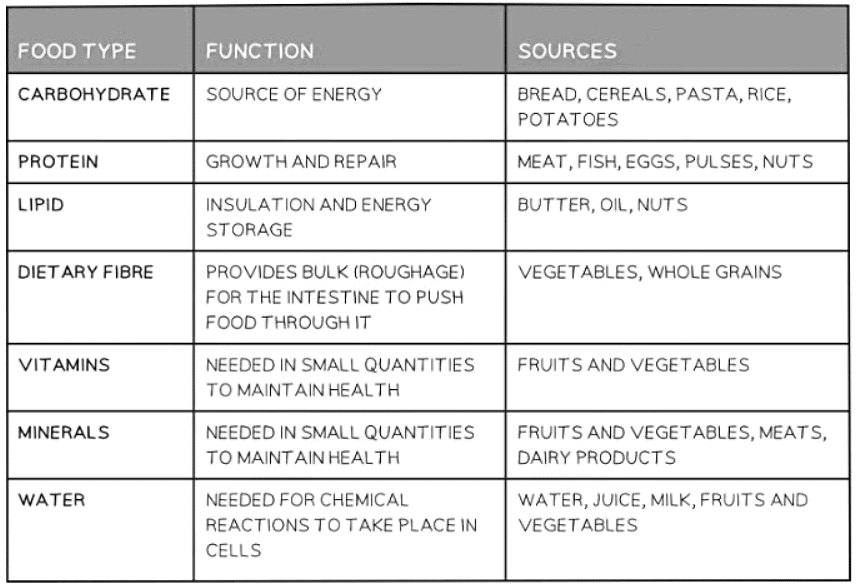
- Carbohydrates: Carbohydrates are a vital source of energy for the body, found in foods like bread, rice, and pasta.
- Proteins: Proteins are crucial for growth and repair of body tissues, sourced from foods like meat, fish, and legumes.
- Lipids: Lipids serve as a concentrated source of energy and are present in foods such as oils, butter, and nuts.
- Vitamins: Vitamins are essential for various bodily functions and can be obtained from fruits, vegetables, and supplements.
- Minerals: Minerals are important for body structure and function, derived from foods like dairy products, nuts, and seeds.
- Dietary Fibre: Dietary fibre aids in digestion and is found in foods like whole grains, fruits, and vegetables.
- Water: Water is crucial for various bodily functions, and individuals should ensure adequate daily intake for hydration.
Food Groups Table
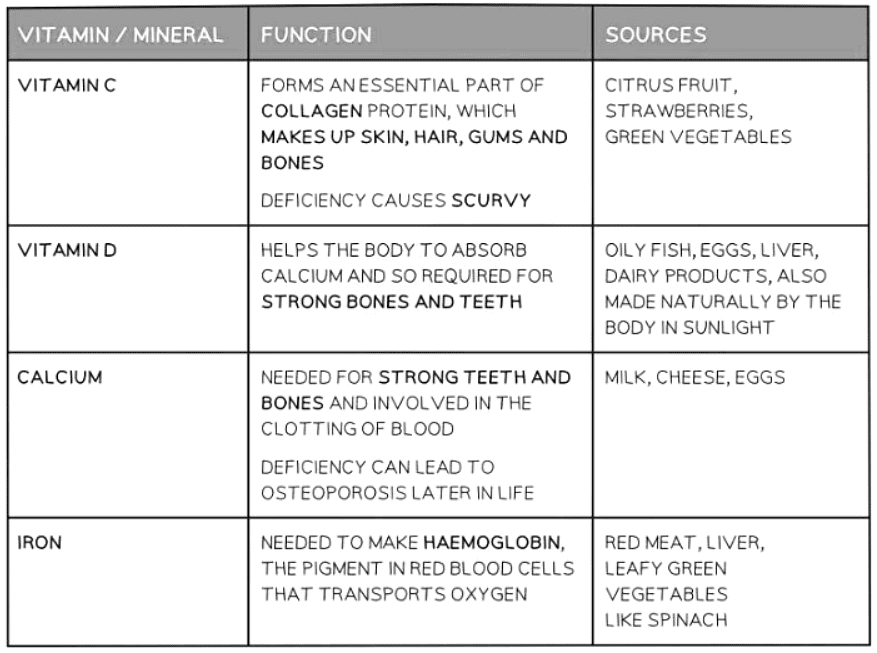
Vitamin and Mineral Requirements Table
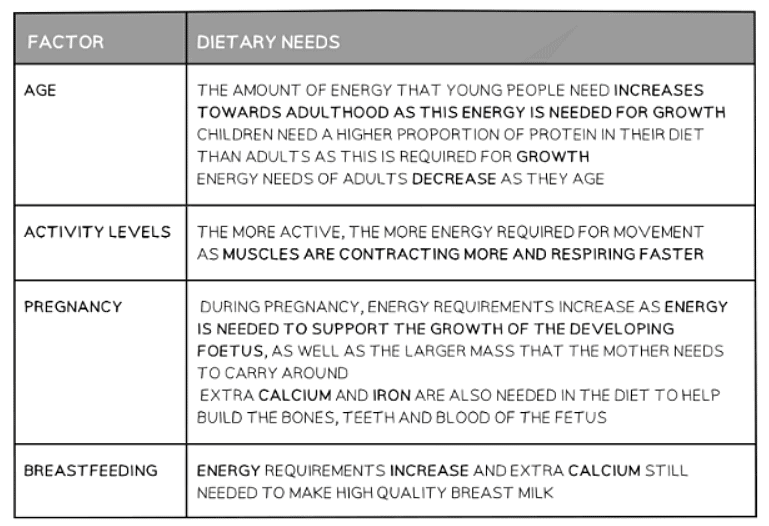
Varying Dietary Needs of Individuals Table
Scurvy
- Scurvy is a severe condition resulting from a significant deficiency in vitamin C.
- This deficiency typically arises due to an inadequate intake of vitamin C for a period exceeding three months.
- Common symptoms of scurvy include:
- Anemia
- Extreme fatigue (Exhaustion)
- Spontaneous bleeding
- Pain in the limbs
- Swelling
- Gum ulcerations
- Tooth loss
- Sailors during the 15th to 18th centuries frequently suffered from scurvy, primarily due to the challenges of obtaining fresh produce during long sea voyages.
- Treatment for scurvy typically involves the administration of vitamin C supplements, either orally or intravenously.
Rickets
- Rickets is a health condition primarily affecting children, leading to inadequate bone development.
Symptoms of Rickets
- Children with rickets may experience bone pain due to poor bone development.
- They may exhibit a lack of bone growth, resulting in potential deformities.
- Soft, weak bones are common in rickets cases, further contributing to possible skeletal issues.
Causes and Effects
- Rickets is primarily caused by a severe deficiency of vitamin D in the body.
- Vitamin D plays a crucial role in the absorption of calcium, a fundamental component for bone and teeth health.
- While sunlight exposure is a primary natural source of vitamin D, certain foods like fish, eggs, and butter also contain this essential vitamin.
Treatment Options
- Effective treatments for rickets involve increasing the intake of foods rich in calcium and vitamin D.
- In cases where dietary adjustments are insufficient, healthcare providers may recommend vitamin D supplements to address the deficiency.
MULTIPLE CHOICE QUESTIONTry yourself: Which food group provides a concentrated source of energy?
The document Diet & Deficiencies is a part of the Class 10 Course Biology for GCSE/IGCSE.
All you need of Class 10 at this link: Class 10
FAQs on Diet & Deficiencies
| 1. What are the main components of a balanced diet? |  |
Ans. A balanced diet should include a variety of foods from all food groups, such as fruits, vegetables, whole grains, lean proteins, and healthy fats.
| 2. How can a person prevent scurvy through their diet? | |
Ans. Scurvy can be prevented by consuming foods rich in vitamin C, such as citrus fruits, strawberries, bell peppers, and broccoli.
| 3. What are the symptoms of rickets caused by a poor diet? | |
Ans. Symptoms of rickets caused by a poor diet can include bone pain, muscle weakness, delayed growth, and skeletal deformities.
| 4. How can someone ensure they are getting enough nutrients in their diet to prevent deficiencies like scurvy and rickets? | |
Ans. It is important to eat a varied diet that includes plenty of fruits, vegetables, whole grains, and sources of vitamin D and calcium to prevent deficiencies like scurvy and rickets.
| 5. Can a balanced diet alone prevent all deficiencies related to diet? | |
Ans. While a balanced diet is essential for overall health, some deficiencies may still occur if certain nutrients are lacking. It is important to consult with a healthcare provider or dietitian to ensure all nutrient needs are met.
About this Document

4.68/5 Rating

Apr 29, 2026 Last updated
Related Exams
Document Description: Diet & Deficiencies for Class 10 2026 is part of Biology for GCSE/IGCSE preparation. The notes and questions for Diet & Deficiencies have been prepared according to the Class 10 exam syllabus. Information about Diet & Deficiencies covers topics like and Diet & Deficiencies Example, for Class 10 2026 Exam. Find important definitions, questions, notes, meanings, examples, exercises and tests below for Diet & Deficiencies.
Introduction of Diet & Deficiencies in English is available as part of our Biology for GCSE/IGCSE for Class 10 & Diet & Deficiencies in Hindi for Biology for GCSE/IGCSE course. Download more important topics related with notes, lectures and mock test series for Class 10 Exam by signing up for free. Class 10: Diet & Deficiencies
Description
Diet & Deficiencies of Biology covers all the important topics, helping you prepare for the Class 10 exam on EduRev. Start for free!
Information about Diet & Deficiencies
In this doc you can find the meaning of Diet & Deficiencies defined & explained in the simplest way possible. Besides explaining types of Diet & Deficiencies theory, EduRev gives you an ample number of questions to practice Diet & Deficiencies tests, examples and also practice Class 10 tests



Related Searches
Free, Exam, mock tests for examination, Sample Paper, Diet & Deficiencies, pdf , Viva Questions, Semester Notes, video lectures, past year papers, Diet & Deficiencies, Summary, shortcuts and tricks, Important questions, MCQs, ppt, practice quizzes, Previous Year Questions with Solutions, Extra Questions, Objective type Questions, study material, Diet & Deficiencies;