IGCSE Class 10 > Class 10 Notes > Biology for GCSE/ > Components of Blood
Components of Blood

Components of Blood
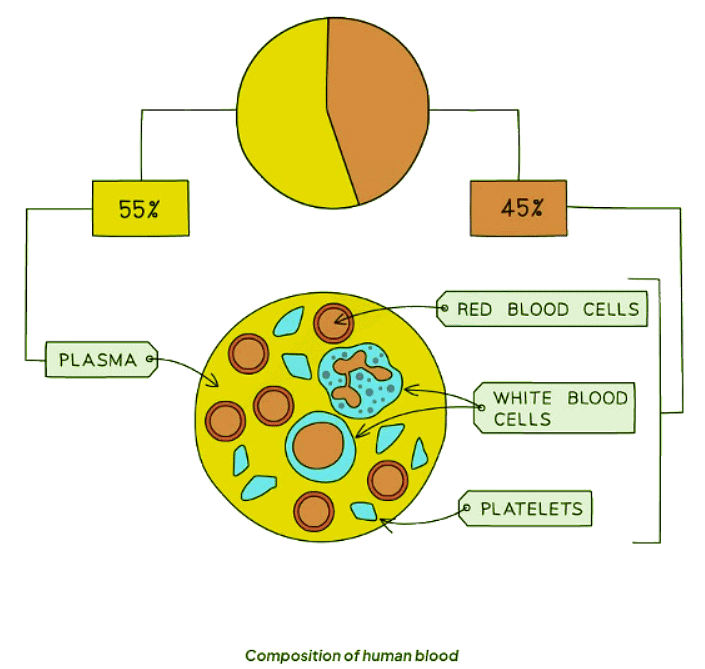
- Blood consists of red blood cells, white blood cells, platelets, and plasma
- Red blood cells carry oxygen to body tissues
- White blood cells fight infections and foreign substances
- Platelets aid in blood clotting to prevent excessive bleeding
- Plasma is the liquid component of blood that carries nutrients and waste products
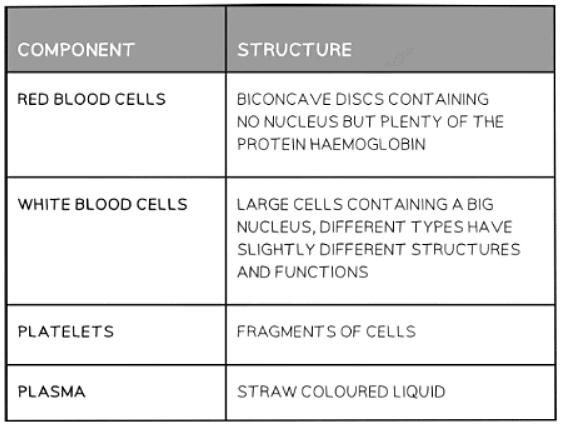
Components of the Blood Table
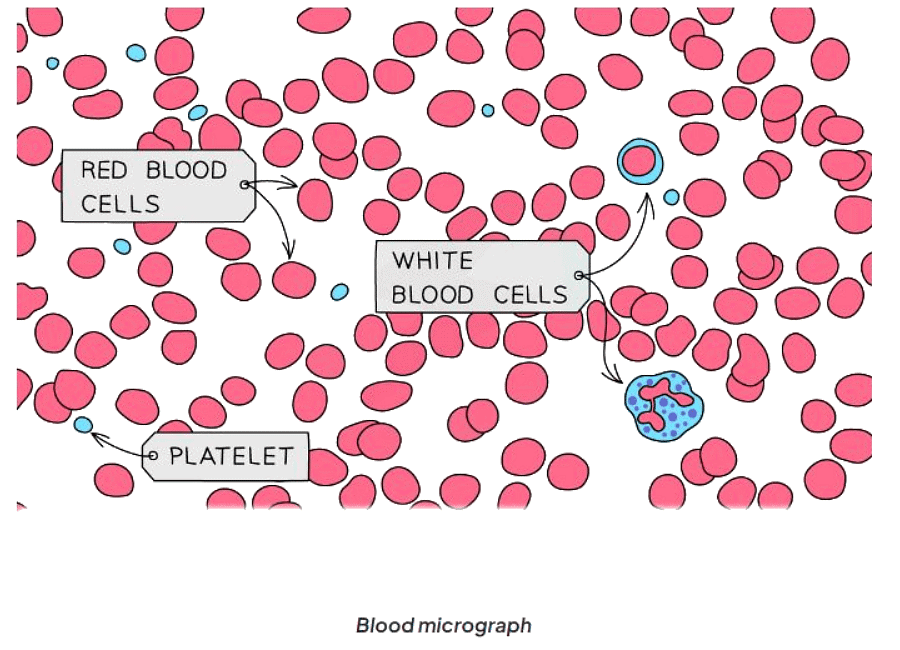
Identifying Red & White Blood Cells
- You should be able to recognize red and white blood cells in photomicrographs and diagrams.
- Red blood cells are characterized by their concave disc shape and the absence of a nucleus.
- White blood cells typically exhibit a round shape and possess a nucleus.
Components of Blood: Function
- Plasma plays a crucial role in transporting various substances such as carbon dioxide, digested nutrients, urea, mineral ions, hormones, and heat energy.
- Red blood cells are responsible for carrying oxygen from the lungs to cells in need of it for aerobic respiration. This oxygen is transported in the form of oxyhemoglobin.
- Oxygen is carried in the form of oxyhemoglobin by red blood cells.
- White blood cells protect the body from infections caused by pathogens through processes like phagocytosis and antibody production.
- Platelets aid in the clotting of blood, supporting the body's healing processes.
MULTIPLE CHOICE QUESTIONTry yourself: Which component of blood is responsible for carrying oxygen from the lungs to cells?
The document Components of Blood is a part of the Class 10 Course Biology for GCSE/IGCSE.
All you need of Class 10 at this link: Class 10
FAQs on Components of Blood
| 1. What are the main components of blood and their functions? |  |
Ans. The main components of blood are red blood cells, white blood cells, platelets, and plasma. Red blood cells carry oxygen, white blood cells help fight infections, platelets are responsible for blood clotting, and plasma carries nutrients, hormones, and waste products.
| 2. How can you identify red blood cells under a microscope? | |
Ans. Red blood cells can be identified under a microscope by their biconcave shape, lack of a nucleus, and red color due to the presence of hemoglobin.
| 3. What are the characteristics of white blood cells that differentiate them from red blood cells? | |
Ans. White blood cells have a larger size, a nucleus, and the ability to move on their own (amoeboid movement) compared to red blood cells. They also play a crucial role in the immune response.
| 4. How do red blood cells contribute to the body's oxygen transport system? | |
Ans. Red blood cells contain hemoglobin, a protein that binds to oxygen in the lungs and carries it to tissues throughout the body. This process is essential for cellular respiration and energy production.
| 5. What is the significance of platelets in blood clotting? | |
Ans. Platelets are essential for blood clotting as they help seal off damaged blood vessels by forming a plug. They release clotting factors that initiate the formation of a fibrin mesh, which stabilizes the clot and stops bleeding.
About this Document

4.66/5 Rating

Apr 19, 2026 Last updated
Related Exams
Document Description: Components of Blood for Class 10 2026 is part of Biology for GCSE/IGCSE preparation. The notes and questions for Components of Blood have been prepared according to the Class 10 exam syllabus. Information about Components of Blood covers topics like and Components of Blood Example, for Class 10 2026 Exam. Find important definitions, questions, notes, meanings, examples, exercises and tests below for Components of Blood.
Introduction of Components of Blood in English is available as part of our Biology for GCSE/IGCSE for Class 10 & Components of Blood in Hindi for Biology for GCSE/IGCSE course. Download more important topics related with notes, lectures and mock test series for Class 10 Exam by signing up for free. Class 10: Components of Blood
Description
Components of Blood of Biology covers all the important topics, helping you prepare for the Class 10 exam on EduRev. Start for free!
Information about Components of Blood
In this doc you can find the meaning of Components of Blood defined & explained in the simplest way possible. Besides explaining types of Components of Blood theory, EduRev gives you an ample number of questions to practice Components of Blood tests, examples and also practice Class 10 tests



Related Searches
shortcuts and tricks, video lectures, practice quizzes, Sample Paper, mock tests for examination, Extra Questions, Free, Summary, Previous Year Questions with Solutions, Objective type Questions, ppt, Components of Blood, Exam, MCQs, Semester Notes, Viva Questions, study material, pdf , Important questions, Components of Blood, past year papers, Components of Blood;