IGCSE Class 10 > Class 10 Notes > Biology for GCSE/ > Differences in Inspired & Expired Air
Differences in Inspired & Expired Air

Differences in Inspired & Expired Air
- The composition of inhaled and exhaled air differs due to gas exchanges in the alveoli.
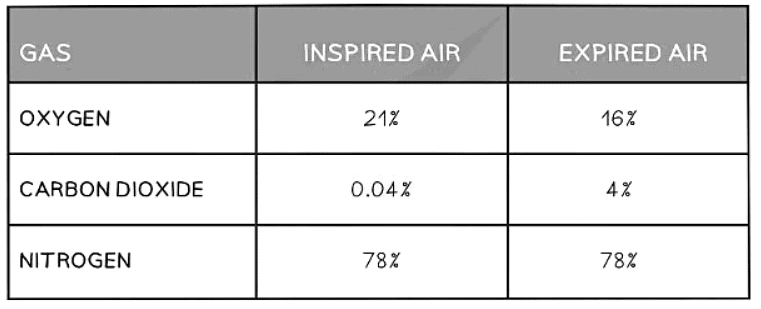
- Atmospheric air has about 20-21% oxygen; we absorb approximately 4-5%, exhaling air with around 16% oxygen.
- Normal air contains about 0.04% carbon dioxide; as it diffuses into the alveoli from the blood, we exhale air with about 4% carbon dioxide.
- Exhaled air has more water vapor and is warmer than inhaled air.
Composition of Air Table
MULTIPLE CHOICE QUESTIONTry yourself: How does the composition of inhaled and exhaled air differ?
The document Differences in Inspired & Expired Air is a part of the Class 10 Course Biology for GCSE/IGCSE.
All you need of Class 10 at this link: Class 10
FAQs on Differences in Inspired & Expired Air
| 1. What is the main difference between inspired and expired air? |  |
Ans. Inspired air contains a higher concentration of oxygen and a lower concentration of carbon dioxide compared to expired air.
| 2. How does the body utilize oxygen differently in inspired and expired air? | |
Ans. The body takes in oxygen from inspired air to be used in the process of cellular respiration, where it is converted into energy. The body then releases carbon dioxide into expired air as a waste product.
| 3. Do inspired and expired air have different temperatures? | |
Ans. Inspired air is typically warmer and more humid than expired air due to the body's respiratory system warming and moistening the air as it is breathed in.
| 4. Can the composition of inspired and expired air change based on physical activity? | |
Ans. Yes, during physical activity, the body may require more oxygen, leading to a higher oxygen concentration in inspired air and a higher carbon dioxide concentration in expired air.
| 5. How does the exchange of gases in the lungs occur between inspired and expired air? | |
Ans. The exchange of gases in the lungs occurs through diffusion, where oxygen moves from the alveoli in the lungs into the bloodstream during inspiration, and carbon dioxide moves from the bloodstream into the alveoli to be exhaled during expiration.
About this Document

4.70/5 Rating

Apr 29, 2026 Last updated
Related Exams
Document Description: Differences in Inspired & Expired Air for Class 10 2026 is part of Biology for GCSE/IGCSE preparation. The notes and questions for Differences in Inspired & Expired Air have been prepared according to the Class 10 exam syllabus. Information about Differences in Inspired & Expired Air covers topics like and Differences in Inspired & Expired Air Example, for Class 10 2026 Exam. Find important definitions, questions, notes, meanings, examples, exercises and tests below for Differences in Inspired & Expired Air.
Introduction of Differences in Inspired & Expired Air in English is available as part of our Biology for GCSE/IGCSE for Class 10 & Differences in Inspired & Expired Air in Hindi for Biology for GCSE/IGCSE course. Download more important topics related with notes, lectures and mock test series for Class 10 Exam by signing up for free. Class 10: Differences in Inspired & Expired Air
Description
Differences in Inspired & Expired Air of Biology covers all the important topics, helping you prepare for the Class 10 exam on EduRev. Start for free!
Information about Differences in Inspired & Expired Air
In this doc you can find the meaning of Differences in Inspired & Expired Air defined & explained in the simplest way possible. Besides explaining types of Differences in Inspired & Expired Air theory, EduRev gives you an ample number of questions to practice Differences in Inspired & Expired Air tests, examples and also practice Class 10 tests



Related Searches
Important questions, practice quizzes, video lectures, shortcuts and tricks, pdf , Sample Paper, ppt, Differences in Inspired & Expired Air, study material, mock tests for examination, Viva Questions, MCQs, Exam, Previous Year Questions with Solutions, Free, Extra Questions, Summary, Semester Notes, Differences in Inspired & Expired Air, Objective type Questions, past year papers, Differences in Inspired & Expired Air;