IGCSE Class 10 > Class 10 Notes > Biology for GCSE/ > Excretion in Humans
Excretion in Humans

Excretion of Carbon Dioxide & Urea
- Unlike plants, humans possess specialized organs for eliminating specific excretory products such as carbon dioxide and urea.
- These organs include the lungs and kidneys.
- The liver plays a crucial role in the process of excretion in humans.
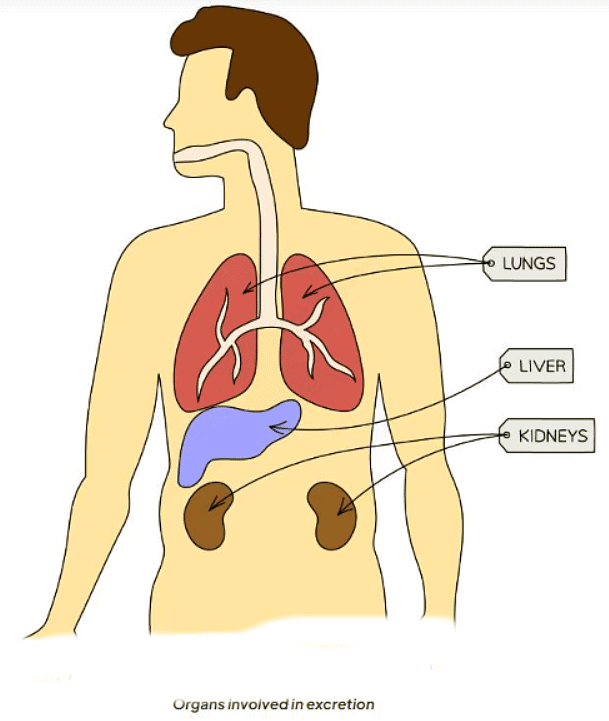
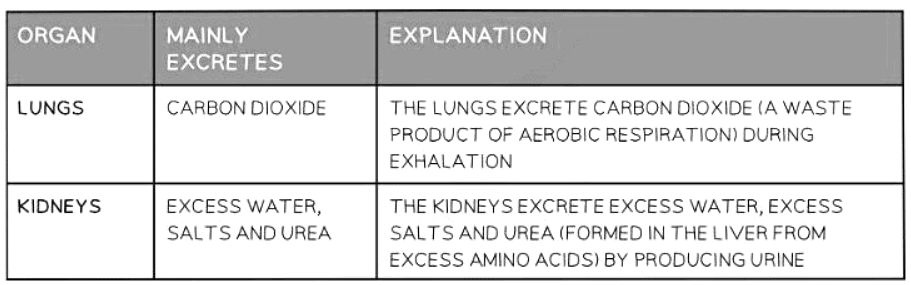
- Excretion involves eliminating waste substances produced by metabolic reactions, along with toxic materials and excess substances.
- Carbon dioxide needs to be excreted because it easily dissolves in water, forming an acidic solution that can lower the pH of cells.
- This pH imbalance can hinder enzyme activity, which is crucial for regulating metabolic reactions.
- An excess of carbon dioxide in the body is toxic due to its disruptive effects.
- Similarly, high concentrations of urea are also toxic and must be excreted to maintain proper bodily functions.
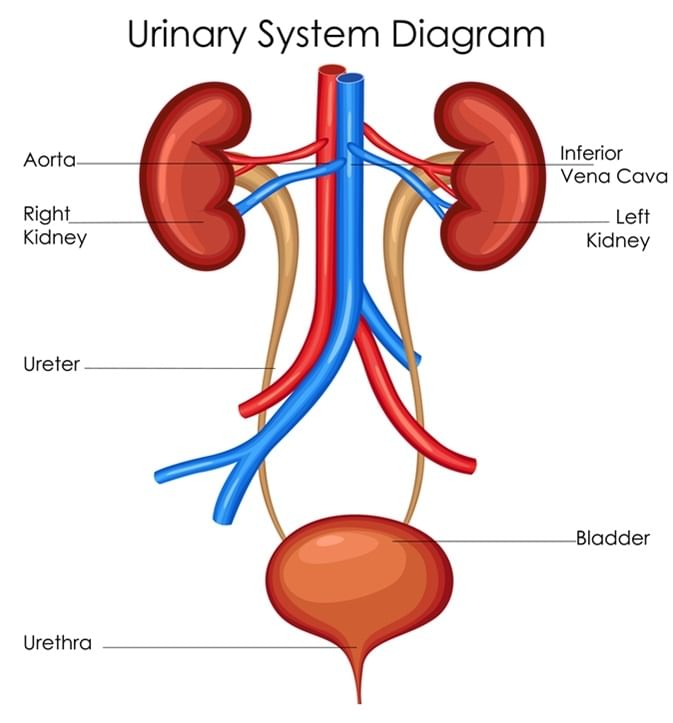
Main structures involved: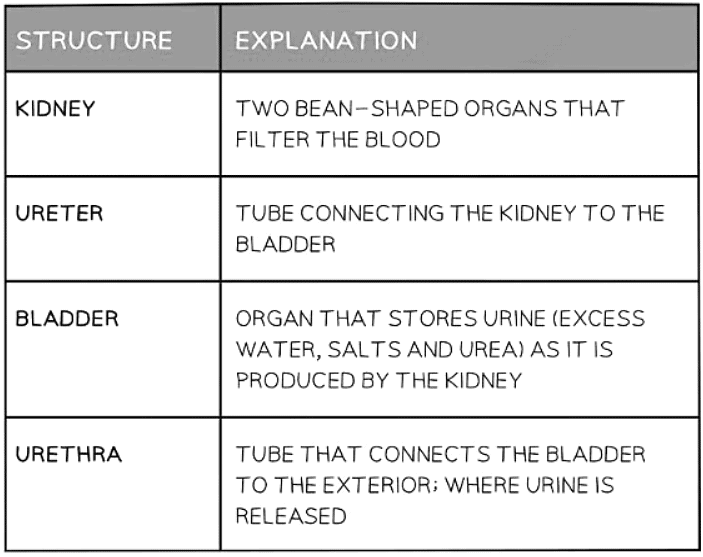
MULTIPLE CHOICE QUESTIONTry yourself: Which organs are involved in the excretion of carbon dioxide and urea in humans?
The document Excretion in Humans is a part of the Class 10 Course Biology for GCSE/IGCSE.
All you need of Class 10 at this link: Class 10
FAQs on Excretion in Humans
| 1. How is carbon dioxide excreted from the human body? |  |
Ans. Carbon dioxide is mainly excreted from the human body through the lungs during the process of respiration. When we breathe in oxygen, our body cells use it to produce energy and release carbon dioxide as a byproduct, which is then exhaled out of the body.
| 2. What is the role of the kidneys in excreting urea? | |
Ans. The kidneys play a crucial role in excreting urea from the human body. Urea is a waste product formed in the liver when proteins are broken down. The kidneys filter urea from the blood and excrete it in the form of urine.
| 3. How does the excretion of carbon dioxide differ from the excretion of urea in humans? | |
Ans. The excretion of carbon dioxide primarily occurs through the lungs during respiration, while the excretion of urea mainly occurs through the kidneys in the form of urine. Carbon dioxide is a waste product of cellular respiration, whereas urea is a waste product of protein metabolism.
| 4. Why is it important for the human body to excrete carbon dioxide and urea? | |
Ans. Excretion of carbon dioxide is important to maintain the pH balance in the body and prevent a buildup of this waste gas, which can lead to respiratory acidosis. Excretion of urea is vital to eliminate nitrogenous waste from protein metabolism and prevent toxicity in the body.
| 5. How do lifestyle factors such as diet and exercise affect the excretion of carbon dioxide and urea in humans? | |
Ans. A balanced diet and regular exercise can help improve the efficiency of the excretory system in eliminating carbon dioxide and urea from the body. Proper hydration, adequate protein intake, and physical activity can support the functioning of the lungs and kidneys in excreting these waste products effectively.
About this Document

4.96/5 Rating

Apr 21, 2026 Last updated
Related Exams
Document Description: Excretion in Humans for Class 10 2026 is part of Biology for GCSE/IGCSE preparation. The notes and questions for Excretion in Humans have been prepared according to the Class 10 exam syllabus. Information about Excretion in Humans covers topics like and Excretion in Humans Example, for Class 10 2026 Exam. Find important definitions, questions, notes, meanings, examples, exercises and tests below for Excretion in Humans.
Introduction of Excretion in Humans in English is available as part of our Biology for GCSE/IGCSE for Class 10 & Excretion in Humans in Hindi for Biology for GCSE/IGCSE course. Download more important topics related with notes, lectures and mock test series for Class 10 Exam by signing up for free. Class 10: Excretion in Humans
Description
Excretion in Humans of Biology covers all the important topics, helping you prepare for the Class 10 exam on EduRev. Start for free!
Information about Excretion in Humans
In this doc you can find the meaning of Excretion in Humans defined & explained in the simplest way possible. Besides explaining types of Excretion in Humans theory, EduRev gives you an ample number of questions to practice Excretion in Humans tests, examples and also practice Class 10 tests



Related Searches
Semester Notes, study material, Excretion in Humans, Objective type Questions, Excretion in Humans, ppt, practice quizzes, Important questions, Summary, Free, Extra Questions, Excretion in Humans, Viva Questions, shortcuts and tricks, Previous Year Questions with Solutions, MCQs, mock tests for examination, Exam, past year papers, video lectures, Sample Paper, pdf ;