IGCSE Year 10 > Year 10 Notes > Economics for GCSE/ > Costs & Revenue
Costs & Revenue

Different Types of Costs
In the process of preparing goods or services for sale, firms encounter various costs, which can be categorized into different types:
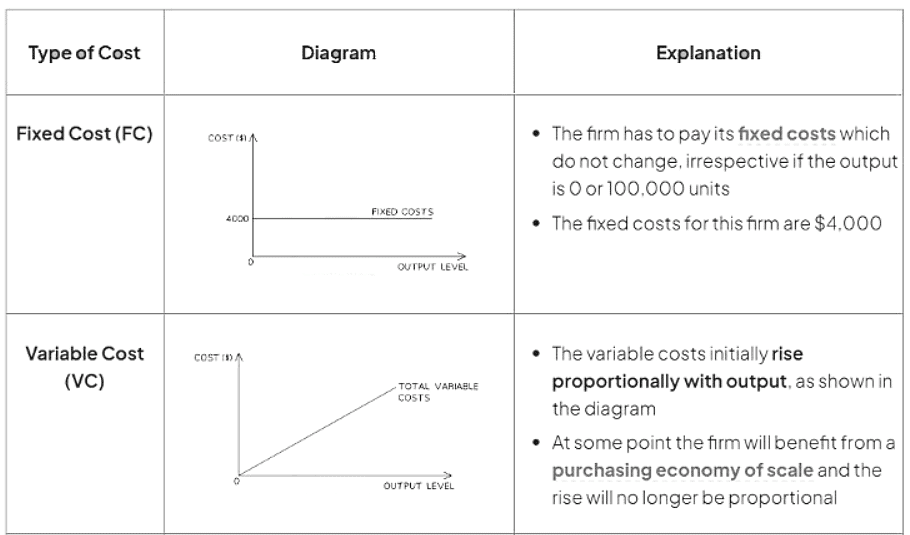
- Fixed costs (FC) remain constant regardless of the level of output. They must be paid irrespective of whether output is zero or at its maximum level. Examples include expenses like building rent, management salaries, insurance premiums, and bank loan repayments.
- Variable costs (VC) fluctuate in direct proportion to changes in output. These costs increase as output increases and decrease as output decreases. Examples encompass expenses such as raw material costs and wages of workers directly engaged in production.
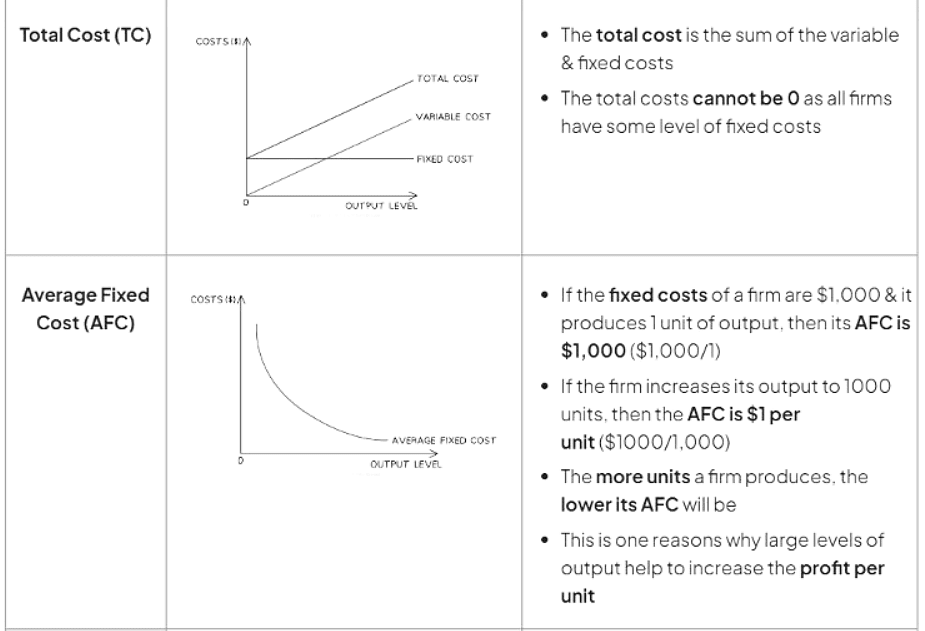
- Total costs (TC) represent the sum of fixed + total variable costs.
Cost Calculations
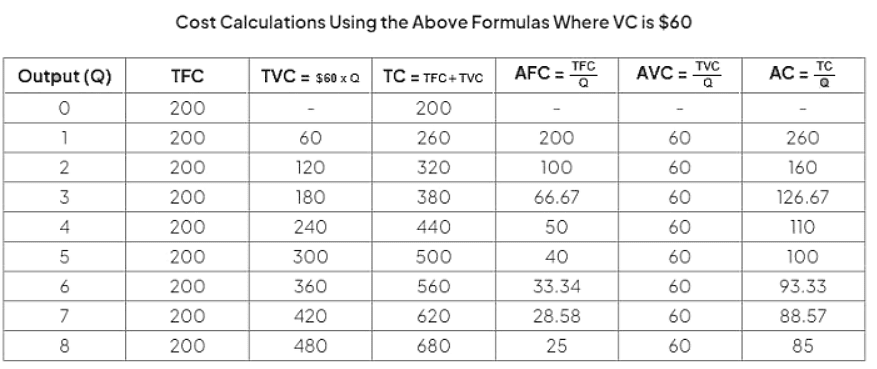
Cost calculations involve different types of costs such as variable and fixed costs:





Diagrammatic Representation Of Costs
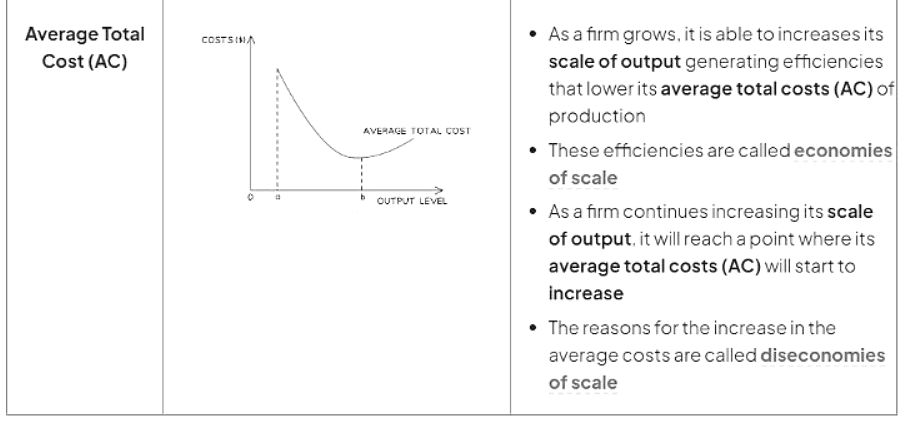
Sketches that illustrate the various costs incurred by a firm.
Different Types of Revenue
- Total revenue represents the overall value of all sales made by a firm.

- Average revenue signifies the revenue generated per unit.
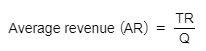
- An Example Of Revenue Calculations:
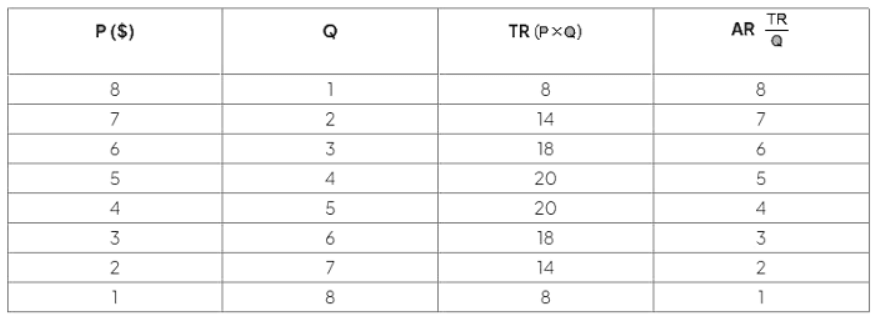
- Average revenue data is particularly valuable for firms dealing with diverse product lines, like supermarkets, or those offering the same product at various prices, such as rail tickets tailored for different types of commuters, like pensioners.
The document Costs & Revenue is a part of the Year 10 Course Economics for GCSE/IGCSE.
All you need of Year 10 at this link: Year 10
FAQs on Costs & Revenue
| 1. What are the different types of costs that businesses need to consider? |  |
Ans. Some of the different types of costs that businesses need to consider include fixed costs, variable costs, direct costs, indirect costs, and operating costs.
| 2. How are costs calculated in business operations? | |
Ans. Costs in business operations are calculated by adding up all the expenses incurred in producing goods or services, including both fixed and variable costs.
| 3. Can you provide a diagrammatic representation of costs to help understand the concept better? | |
Ans. A diagrammatic representation of costs typically shows the different types of costs on a graph or chart, highlighting the relationship between production levels and total costs.
| 4. What are some common types of revenue that businesses generate? | |
Ans. Some common types of revenue that businesses generate include sales revenue, service revenue, interest revenue, and rental revenue.
| 5. How do costs and revenue interact in determining a company's profitability? | |
Ans. Costs and revenue interact in determining a company's profitability by comparing the total revenue generated with the total costs incurred, with the aim of maximizing profits.
About this Document

4.76/5 Rating

Apr 29, 2026 Last updated
Related Exams
Document Description: Costs & Revenue for Year 10 2026 is part of Economics for GCSE/IGCSE preparation. The notes and questions for Costs & Revenue have been prepared according to the Year 10 exam syllabus. Information about Costs & Revenue covers topics like and Costs & Revenue Example, for Year 10 2026 Exam. Find important definitions, questions, notes, meanings, examples, exercises and tests below for Costs & Revenue.
Introduction of Costs & Revenue in English is available as part of our Economics for GCSE/IGCSE for Year 10 & Costs & Revenue in Hindi for Economics for GCSE/IGCSE course. Download more important topics related with notes, lectures and mock test series for Year 10 Exam by signing up for free. Year 10: Costs & Revenue
Description
Costs & Revenue of Economics covers all the important topics, helping you prepare for the Year 10 exam on EduRev. Start for free!
Information about Costs & Revenue
In this doc you can find the meaning of Costs & Revenue defined & explained in the simplest way possible. Besides explaining types of Costs & Revenue theory, EduRev gives you an ample number of questions to practice Costs & Revenue tests, examples and also practice Year 10 tests



Related Searches
Previous Year Questions with Solutions, pdf , Costs & Revenue, Objective type Questions, Semester Notes, ppt, Summary, Exam, video lectures, mock tests for examination, Costs & Revenue, past year papers, Sample Paper, practice quizzes, Costs & Revenue, shortcuts and tricks, Free, Viva Questions, MCQs, Important questions, study material, Extra Questions;