IGCSE Year 10 > Year 10 Notes > Economics for GCSE/ > Deficits & Surpluses
Deficits & Surpluses

Reasons for Deficits & Surpluses
- If a country has a current account deficit, it means that the value of its imports exceeds the value of its exports.
- On the other hand, if a country has a current account surplus, it indicates that the value of its exports is greater than the value of its imports.
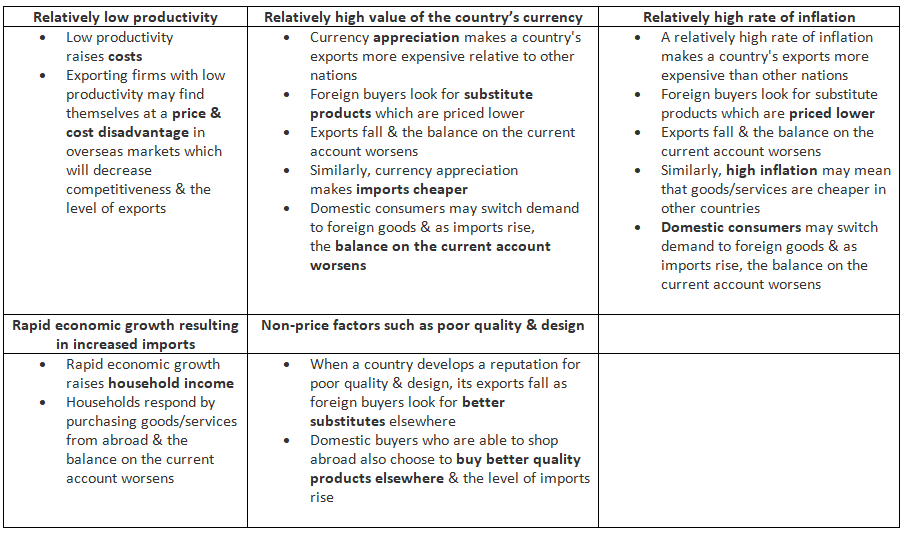
Causes Of Current Account Deficits
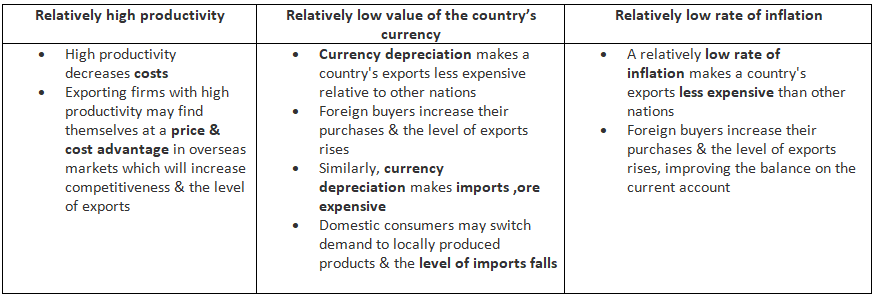
Causes Of Current Account Surpluses
Consequences of Deficits & Surpluses
- As global trade is a net sum game where the value of global exports equals global imports, if one country runs a current account surplus, another runs a deficit.
Consequences of current account deficits include
- Heightened unemployment emerges as local demand for goods/services diminishes, necessitating fewer workers and leading to increased joblessness.
- Economic growth slowdowns or recessions ensue, as exports constitute a significant portion of many countries' real GDP, and a decline in exports can substantially impede economic expansion.
- Deteriorating living standards often follow a downturn in economic growth, characterized by wage reductions and subsequent declines in living standards.
- Elevated borrowing levels may result from persistent import-driven deficits, indicating that imports are likely financed through increased borrowing.
- A depreciating exchange rate, while potentially aiding export recovery, simultaneously inflates the costs of imported goods/raw materials, potentially fueling cost-push inflation.
Consequences of current account surpluses include
- Enhanced employment opportunities emerge as local demand for goods/services rises, necessitating more workers and contributing to reduced unemployment rates.
- Economic growth accelerates, given that exports constitute a pivotal component of the real GDP of numerous countries, and an uptick in exports can markedly bolster economic expansion.
- Elevated standards of living typically follow an upswing in economic growth, characterized by wage increases that subsequently improve living standards.
- Demand-pull inflation may ensue, triggered by economic growth resulting from increased exports, which stirs up demand and contributes to inflationary pressures.
- An appreciating exchange rate manifests as exports rise, driving the currency's value higher and rendering imports cheaper, thus spurring increased demand for imported goods.
MULTIPLE CHOICE QUESTIONTry yourself: What are the consequences of a current account deficit?
The document Deficits & Surpluses is a part of the Year 10 Course Economics for GCSE/IGCSE.
All you need of Year 10 at this link: Year 10
FAQs on Deficits & Surpluses
| 1. What are some common reasons for deficits and surpluses in government budgets? |  |
Ans. Common reasons for deficits in government budgets include increased government spending, decreased tax revenue, economic recessions, and financial crises. Surpluses, on the other hand, can be a result of increased tax revenue, reduced government spending, and a strong economy.
| 2. What are the consequences of running a deficit in a government's budget? | |
Ans. Consequences of running a deficit in a government's budget can include increased national debt, higher interest payments, inflation, decreased investor confidence, and potential cuts to essential services and programs.
| 3. How do deficits and surpluses impact a country's economy? | |
Ans. Deficits can lead to inflation, increased borrowing costs, and decreased economic stability. Surpluses, on the other hand, can result in lower interest rates, increased investment, and overall economic growth.
| 4. What measures can governments take to address deficits and surpluses in their budgets? | |
Ans. Governments can address deficits by reducing spending, increasing taxes, implementing austerity measures, and stimulating economic growth. Surpluses can be managed through tax cuts, increased government spending, and investing in infrastructure and social programs.
| 5. How do deficits and surpluses affect the overall financial health of a country? | |
Ans. Deficits can weaken a country's financial health by increasing debt levels and interest payments, while surpluses can strengthen it by reducing debt and improving credit ratings. The overall impact depends on how effectively the government manages its budget and economic policies.
About this Document

4.91/5 Rating

Apr 29, 2026 Last updated
Related Exams
Document Description: Deficits & Surpluses for Year 10 2026 is part of Economics for GCSE/IGCSE preparation. The notes and questions for Deficits & Surpluses have been prepared according to the Year 10 exam syllabus. Information about Deficits & Surpluses covers topics like and Deficits & Surpluses Example, for Year 10 2026 Exam. Find important definitions, questions, notes, meanings, examples, exercises and tests below for Deficits & Surpluses.
Introduction of Deficits & Surpluses in English is available as part of our Economics for GCSE/IGCSE for Year 10 & Deficits & Surpluses in Hindi for Economics for GCSE/IGCSE course. Download more important topics related with notes, lectures and mock test series for Year 10 Exam by signing up for free. Year 10: Deficits & Surpluses
Description
Deficits & Surpluses of Economics covers all the important topics, helping you prepare for the Year 10 exam on EduRev. Start for free!
Information about Deficits & Surpluses
In this doc you can find the meaning of Deficits & Surpluses defined & explained in the simplest way possible. Besides explaining types of Deficits & Surpluses theory, EduRev gives you an ample number of questions to practice Deficits & Surpluses tests, examples and also practice Year 10 tests



Related Searches
mock tests for examination, Deficits & Surpluses, Deficits & Surpluses, shortcuts and tricks, Summary, Extra Questions, Free, Exam, video lectures, MCQs, Semester Notes, Previous Year Questions with Solutions, Important questions, practice quizzes, past year papers, Objective type Questions, ppt, Deficits & Surpluses, pdf , study material, Sample Paper, Viva Questions;