Specialised Animal Cells


Introduction
- Specialized animal cells possess unique components enabling them to fulfill specific functions.
- Examples of specialized animal cells include red blood cells, sperm, eggs, nerve cells, muscle cells, ciliated cells, and villi.
Red blood cells
- Red blood cells transport oxygen throughout the body, vital for respiration, a metabolic process occurring in cell mitochondria.
- These cells excel at their function due to their unique characteristics:
- They possess a high concentration of hemoglobin, a protein that binds oxygen efficiently.
- Red blood cells contain hemoglobin, a vital chemical that binds with oxygen in the lungs to transport it throughout the body.
- These cells lack a nucleus, providing more room to carry oxygen efficiently.
- They possess a biconcave shape, featuring dents on both sides, maximizing surface area for optimal oxygen absorption in the lungs.

Sperm Cells
- Sperm cells are the male sex cells produced in the testes after puberty, which is the time when a teenager becomes sexually mature and physically capable of reproduction.
- They unite with egg cells during fertilization to create an embryo, a cluster of cells that develops from a fertilized ovum and has the potential to grow into a new organism.
Features of Sperm Cells
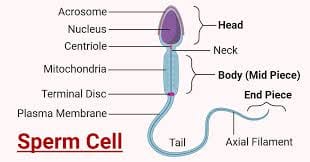
- A sperm cell's tail propels it towards an egg cell for the purpose of fertilization.
- Many mitochondria, tiny components within the cell's cytoplasm, derive energy from glucose obtained from food, enabling movement.
- The acrosome, situated at the head's tip of the sperm, secretes enzymes that aid in breaking down the egg membrane to facilitate fertilization.
- The nucleus of a sperm cell, which is haploid (containing half the typical chromosome count), holds the genetic material necessary for fertilization.
- Sperm cells are generated in large quantities to enhance the likelihood of successful fertilization.
Egg cell
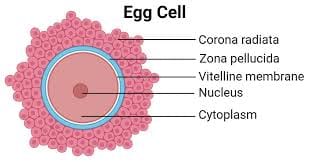
The egg cell, also known as the female sex cell, is produced in the ovaries before birth. Typically, ovulation results in the release of one egg each month, although this frequency can vary. When fertilized by a sperm cell, the egg develops into an embryo, initiating the creation of new life.
The egg cell is uniquely suited for this role due to the following characteristics:
- The cytoplasm of the egg cell provides essential nutrients for the early embryo's growth.
- The haploid nucleus contains genetic material necessary for fertilization to occur.
- Following fertilization by a single sperm cell, the cell membrane undergoes changes to prevent additional sperm from entering.
Nerve cells
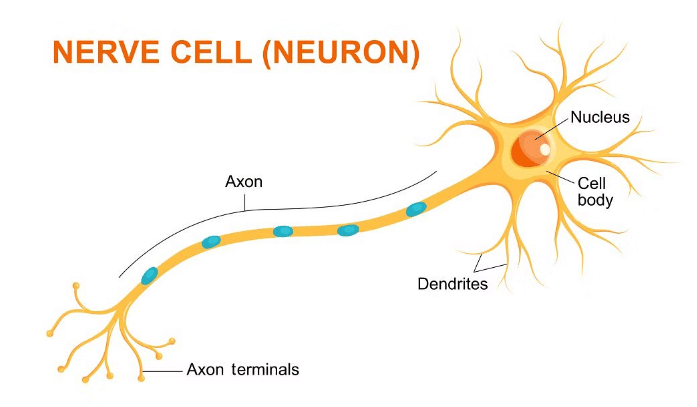
Nerve cells are specialized cells that transmit electrical signals within the nervous system, which comprises the brain, spinal cord, and nerves.
These cells are uniquely adapted to their function due to the following reasons:
- Nerve cells are elongated and can extend over a meter in length within the spinal cord, enabling rapid transmission of messages across long distances in the body.
- They possess branched connections at their ends, facilitating communication with other nerve cells and allowing the passage of messages throughout the body.
- A fatty sheath called myelin surrounds nerve cells, enhancing the speed at which signals can travel.
Muscle cells
Muscle cells are present in groups that form our muscles. These cells have the ability to contract (shorten) and relax (return to original length).
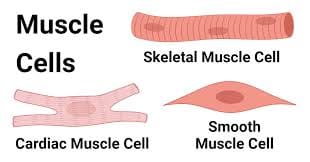
There exist various types of muscle cells, each specifically suited to its function:
- Cardiac (heart) muscle cells contract and relax continuously to circulate blood throughout our bodies tirelessly.
- Smooth muscle cells form thin muscle sheets, like those in the stomach lining, and can also be organized in bundles or rings, such as in the anus.
- Skeletal muscle attaches to bones, with its cells contracting to facilitate bone movements and joint flexibility.
Ciliated cells
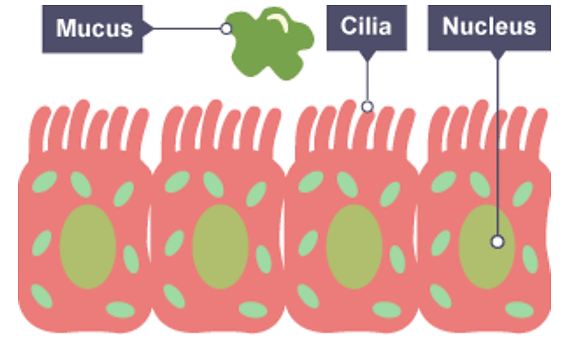
- Ciliated cells are specialized cells found in the airways. These cells are equipped with tiny hair-like structures known as cilia.
- The primary function of cilia on these cells is to rhythmically beat, facilitating the movement of mucus containing dust and other particles upwards and out of the airways.
- In the female reproductive system, ciliated cells are also present in the oviducts, which are the tubes connecting the ovaries to the uterus.
- Within the oviducts, the cilia on these cells play a crucial role in moving the egg from the ovaries towards the uterus for potential fertilization.
- The uterus, also known as the womb, is where a fertilized egg cell develops into an embryo and then a fetus.
Villi
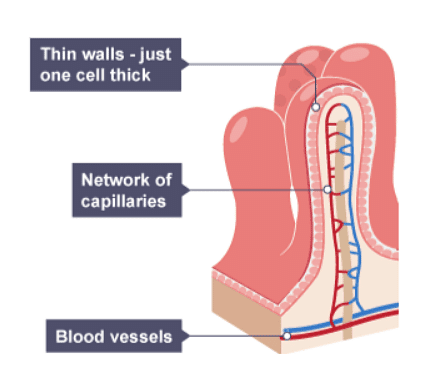
Villi are small finger-like projections found in the small and large intestines. They play a crucial role in the absorption of nutrients and water into the bloodstream.
- Villi possess a significant surface area, allowing for efficient absorption.
- The walls of villi are exceptionally thin, comprising just a single cell layer.
- The lining cells of villi are equipped with tiny hairs that enhance the absorption of nutrients and water.
FAQs on Specialised Animal Cells
| 1. What is the function of red blood cells in the body? |  |
| 2. How do sperm cells differ from egg cells in terms of structure and function? | |
| 3. What is the role of nerve cells in the body's nervous system? | |
| 4. How do muscle cells function in the body to enable movement? | |
| 5. What is the purpose of ciliated cells in the respiratory system? | |
