Grade 7 Exam > Grade 7 Notes > Science > Food Energy
Food Energy

Introduction
- Food serves as a source of energy that is passed from the food to the consumer.
- 'Food energy' is quantified in joules (J) or kilojoules (kJ).
- Various food types or groups contain differing energy levels.
- Energy requirements vary among individuals.
What is food energy?
- Food serves as a reservoir of chemical energy that gets passed on to the consumer-an organism, typically an animal or fungus, that acquires its energy by consuming other organisms.
- The stored energy in food is then transferred to the consuming animal, sustaining its vital functions and activities.
- Each individual's energy demands dictate the specific amount of food required for sustenance.
- This energy, sourced from both plants and animals, is pivotal in maintaining the consumer's life and enabling its daily functions.
MULTIPLE CHOICE QUESTIONTry yourself: What is the unit of measurement used to quantify food energy?
How much energy do you need?
- Energy is quantified in joules (J) or kilojoules (kJ). A previous unit for measuring food energy is the kilocalorie, often referred to as calories, where one calorie equals 4.2 J.
- Various animals require different energy quantities. For instance, an elephant needs approximately 200,000 kJ daily, while a cat requires about 800 kJ.
- The energy requirements of a human vary based on factors such as age and activity level. An elite athlete who trains regularly would necessitate significantly more energy compared to an average individual. During pregnancy, additional energy is essential to support the growth of the unborn baby. For example, a 13-year-old girl typically needs 9,000 kJ each day, while a boy of the same age requires around 10,000 kJ daily.
Different food groups
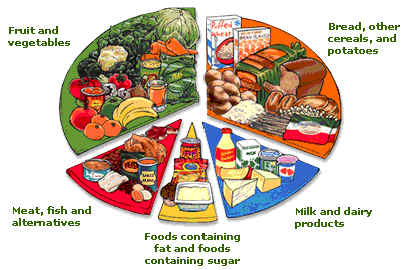
Each one of the five food groups is important. All food contains energy.
- Fruit and vegetables: Proteins build healthy muscles and allow the body to grow and repair.
- Proteins: Fats and oils act as an energy store.
- Fats and oils: Carbohydrates keep energy levels up.
- Carbohydrates: Dairy contains calcium for strong teeth and bones.
The document Food Energy is a part of the Grade 7 Course Science for Grade 7.
All you need of Grade 7 at this link: Grade 7
FAQs on Food Energy
| 1. What is food energy? |  |
Ans. Food energy refers to the amount of energy that can be obtained from consuming a particular food or drink. It is typically measured in calories or joules.
| 2. How much energy do you need? | |
Ans. The amount of energy a person needs varies depending on factors such as age, gender, weight, and activity level. It is recommended to consult a healthcare professional to determine individual energy requirements.
| 3. What factors influence energy requirements? | |
Ans. Factors such as age, gender, weight, height, activity level, and metabolic rate can influence an individual's energy requirements. Genetics and overall health also play a role in determining energy needs.
| 4. How can I ensure I am consuming enough energy? | |
Ans. To ensure you are consuming enough energy, it is important to eat a balanced diet that includes a variety of foods from different food groups. Monitoring portion sizes and listening to your body's hunger cues can also help you meet your energy needs.
| 5. Can consuming too much food energy be harmful? | |
Ans. Consuming an excessive amount of food energy on a regular basis can lead to weight gain and increase the risk of developing health issues such as obesity, heart disease, and diabetes. It is important to maintain a healthy balance and moderation in food intake.
About this Document

4.92/5 Rating

Apr 19, 2026 Last updated
Related Exams
Document Description: Food Energy for Grade 7 2026 is part of Science for Grade 7 preparation. The notes and questions for Food Energy have been prepared according to the Grade 7 exam syllabus. Information about Food Energy covers topics like and Food Energy Example, for Grade 7 2026 Exam. Find important definitions, questions, notes, meanings, examples, exercises and tests below for Food Energy.
Introduction of Food Energy in English is available as part of our Science for Grade 7 for Grade 7 & Food Energy in Hindi for Science for Grade 7 course. Download more important topics related with notes, lectures and mock test series for Grade 7 Exam by signing up for free. Grade 7: Food Energy
Description
Food Energy of Science covers all the important topics, helping you prepare for the Grade 7 exam on EduRev. Start for free!
Information about Food Energy
In this doc you can find the meaning of Food Energy defined & explained in the simplest way possible. Besides explaining types of Food Energy theory, EduRev gives you an ample number of questions to practice Food Energy tests, examples and also practice Grade 7 tests



Related Searches
Summary, Food Energy, Important questions, Exam, Food Energy, study material, MCQs, Semester Notes, Viva Questions, Food Energy, video lectures, mock tests for examination, Previous Year Questions with Solutions, shortcuts and tricks, past year papers, pdf , Free, practice quizzes, Sample Paper, Extra Questions, ppt, Objective type Questions;