Year 7 Exam > Year 7 Notes > Electromagnetism
Electromagnetism

Introduction
- An electromagnet harnesses an electric current to create a magnetic field.
- There are three methods to enhance an electromagnet:
- Increasing the current flowing through it
- Augmenting the number of turns in its coil
- Introducing an iron core
- An electromagnet combined with a permanent magnet finds utility in constructing motors and loudspeakers.
Electromagnetism
- Understanding Electromagnetism: When an electric current flows through a wire, it generates a magnetic field around it. This magnetic field is essentially an area surrounding the wire where a force can be detected.
- Strength of Magnetic Fields: The strength of a magnetic field is directly related to the proximity to the current-carrying wire. Field lines are closer together near the wire, indicating a stronger magnetic field in these regions.
- Solenoids: Coils of Wires: A coil of wire with multiple turns, known as a solenoid, exhibits magnetic properties similar to those of a bar magnet. This configuration creates a magnetic field pattern resembling that of a bar magnet.
- Electromagnets: An electromagnet is formed when a magnetic field becomes sufficiently strong to be practically useful. These electromagnets find applications in various devices and technologies.
MULTIPLE CHOICE QUESTIONTry yourself: What are the three methods to enhance an electromagnet?
Electromagnets
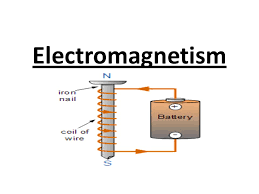
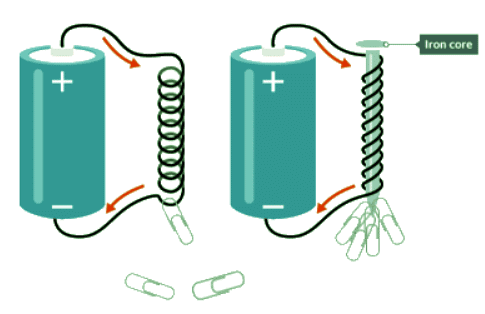
- A basic electromagnet is created by coiling wire around a soft iron core. The term "soft iron core" indicates that this material is easily magnetized and demagnetized.
- Applications of electromagnets include automatic door locks, headphones, scrap yard cranes, and magnetic levitation trains.
- Electromagnets have the property of being able to be turned on and off. They exhibit magnetic properties only when an electric current flows through the coil.
- The strength of an electromagnet can be adjusted by controlling the amount of current flowing through the coil.
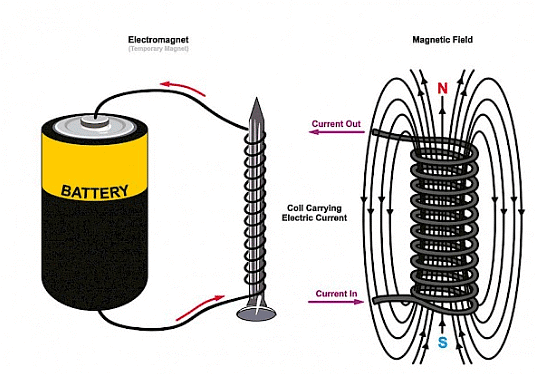
Increasing the Strength of the Electromagnet
- Using More Turns on the Coil of Wire: Increasing the number of turns on the coil of wire will enhance the magnetic field's strength. For instance, coiling a longer piece of wire with more turns amplifies the magnetic field generated by each turn.
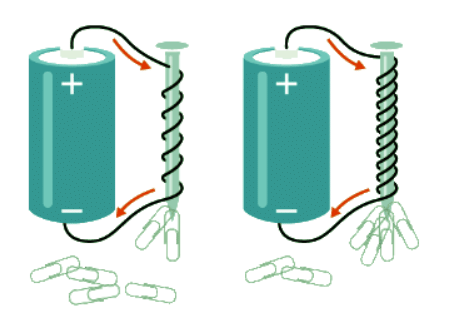
- Increasing the Current: Augmenting the current flowing through the coil will result in a stronger magnetic field. For example, a higher current will enable the electromagnet to pick up more paperclips, showcasing the increased strength of the magnetic field.
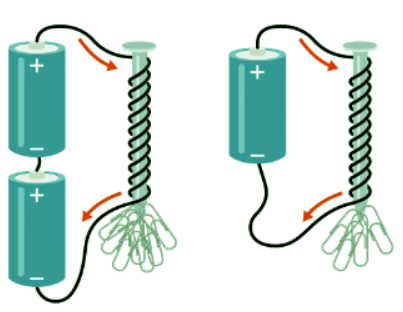
- Adding a Soft Iron Core: Introducing a soft iron core within the solenoid significantly boosts the electromagnet's strength. This core, being a magnetic material, enhances magnetization when the electromagnet is activated. Consequently, the overall strength of the electromagnet is increased.
The motor effect
- When two opposite poles (north with south) are brought near, they attract each other. This attraction occurs because unlike poles attract each other.
- For instance, if you bring a north pole and a south pole close together, you will observe a force pulling them towards each other. This attraction is due to the opposite poles attracting each other.

Find additional information about magnetism in the comprehensive Magnets and Magnetic Fields guide.
Electric Motor Working Principle
Magnetic Forces in Action
- When forces attract objects towards each other, they are said to be under the influence of attraction.
- Similarly, when forces push objects away from each other, they are experiencing repulsion.
Application in Electric Motors
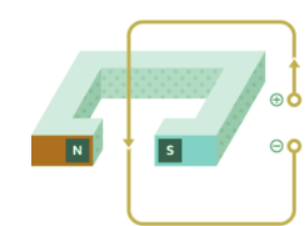
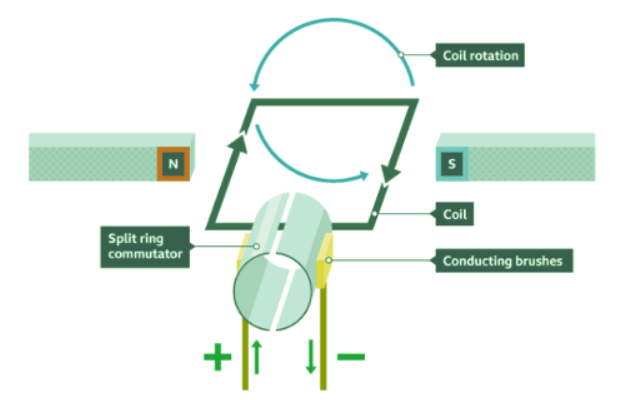
- Electric motors operate based on the interaction between permanent magnets and current-carrying wires.
- Both magnets and wires generate magnetic fields that exert forces on each other.
- When a current-carrying wire is near a permanent magnet, the resulting force causes the wire to move.
Electromagnets in headphones and loudspeakers
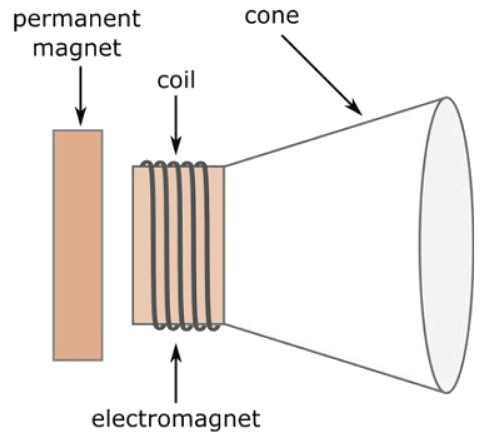
- A coil of wire attached to a cone in headphones or loudspeakers is pushed forward or pulled backwards when an electrical signal is supplied, causing the cone to vibrate and produce sound waves that travel to our ears.
- The vibrations are generated by the current in the coil repeatedly changing direction, resulting in the movement of the cone and the production of sound.
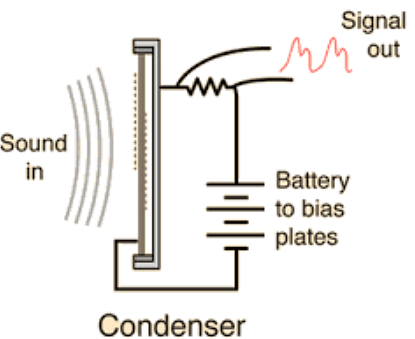
Electromagnets in microphones
- Microphones function similarly to speakers, with both having a coil of wire that can move near a permanent magnet.
- In a microphone, incoming sound causes the diaphragm to vibrate rapidly, moving the attached coil of wire and producing an electrical output.
- The movement of the wire near the magnet induces an electrical output, creating an effect opposite to the motor effect experienced when a current-carrying wire in a magnetic field encounters a force.
FAQs on Electromagnetism
| 1. What is electromagnetism? |  |
Ans. Electromagnetism is a branch of physics that deals with the interactions between electric currents and magnetic fields.
| 2. How do electromagnets work? | |
Ans. Electromagnets work by creating a magnetic field when an electric current flows through a coil of wire wrapped around a core material, such as iron.
| 3. How can the strength of an electromagnet be increased? | |
Ans. The strength of an electromagnet can be increased by increasing the number of coils in the wire, increasing the current flow, or using a core material with high magnetic permeability.
| 4. What is the motor effect in electromagnetism? | |
Ans. The motor effect in electromagnetism refers to the phenomenon where a current-carrying conductor placed in a magnetic field experiences a force that causes it to move.
| 5. What are some practical applications of electromagnets? | |
Ans. Electromagnets are used in various applications such as electric motors, generators, speakers, MRI machines, and magnetic levitation trains.
About this Document

4.9/5 Rating

Apr 18, 2026 Last updated
Related Exams
Document Description: Electromagnetism for Year 7 2026 is part of Year 7 preparation. The notes and questions for Electromagnetism have been prepared according to the Year 7 exam syllabus. Information about Electromagnetism covers topics like and Electromagnetism Example, for Year 7 2026 Exam. Find important definitions, questions, notes, meanings, examples, exercises and tests below for Electromagnetism.
Description
Electromagnetism of covers all the important topics, helping you prepare for the Year 7 exam on EduRev. Start for free!
Information about Electromagnetism
In this doc you can find the meaning of Electromagnetism defined & explained in the simplest way possible. Besides explaining types of Electromagnetism theory, EduRev gives you an ample number of questions to practice Electromagnetism tests, examples and also practice Year 7 tests.
Related Searches
pdf , Electromagnetism, MCQs, study material, video lectures, ppt, Objective type Questions, Important questions, Summary, Electromagnetism, Free, past year papers, Semester Notes, Previous Year Questions with Solutions, Exam, Viva Questions, practice quizzes, mock tests for examination, Sample Paper, Electromagnetism, Extra Questions, shortcuts and tricks;