Achievements of Indians in Science & Technology-2

Contributions made by Ancient Indians to the world of Science and Technology
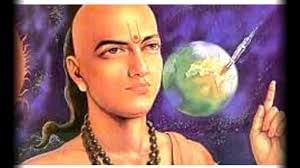
The idea of zero and the decimal (place-value) system
The concepts of zero and the decimal (base-10) place-value system were consolidated in ancient Indian mathematics and became a foundation for modern arithmetic. The place-value system uses digits 0-9 where a digit's value depends on its position; this made arithmetic algorithms for addition, subtraction, multiplication and division systematic and simple to apply at scale.
Key contributors and points:
- Aryabhata (5th-6th century CE) described rules of numerical representation and used a positional system in his work Aryabhatiya, aiding computations in astronomy and mathematics.
- Brahmagupta (7th century CE) provided explicit rules for arithmetic involving zero and negative numbers, formalising operations that are central to modern algebra.
- The combined development of zero and place-value notation transformed calculation, record keeping, engineering computations and later scientific advances worldwide after transmission via Islamic scholars to Europe.
Numeral notations and early work on sequences
Indian numeral forms and combinatorial thinking influenced later global mathematics.
- Indian numeral notations were adopted and adapted by Arab and later European mathematicians; these numerals (often termed Indo-Arabic) simplified written calculation and bookkeeping.
- The sequence known in the West as the Fibonacci sequence appears earlier in Indian combinatorial works under names such as mātrāmeru or references by authors like Virahanka and Hemachandra. These treatises studied patterns that correspond to the sequence and its combinatorial interpretations (for example, counts of rhythmic patterns or compositions).
Binary ideas and metrology (rulers and measurement)
Two sets of developments are noteworthy: early binary ideas in prosody and precise measurement standards in ancient urban societies.
- Pingala (author of the Chandahśāstra) described patterns of long and short syllables which can be mapped to binary representations; such combinatorial models are recognised as precursors to binary enumeration used in information theory and computing.
- Excavated rulers and measuring rods from Harappan sites demonstrate standardised units and high workmanship tolerance; such metrological consistency supported urban planning, civil works and architecture across the Indus civilisation and influenced later construction practices in the subcontinent.
Early atomic ideas and astronomical models
Ancient Indian thinkers proposed early models for matter and discussed planetary motions with computational techniques:
- Kanāda (Kanad) of the Vaiśeṣika school formulated an early atomic hypothesis describing indivisible particles (anu) and their combinations; this philosophical atomicism predates similar modern atomic thinking and influenced subsequent natural philosophy.
- Aryabhata advanced astronomical calculation methods; he asserted that the Earth rotates on its axis and provided algorithms for planetary positions, eclipses and trigonometric tables in the Aryabhatiya. His work introduced computational techniques that were important in later mathematical astronomy.
Metallurgy: Wootz steel and zinc smelting
India made important metallurgical contributions with long-lasting industrial and technological impact.
- Wootz steel - produced in South India (associated with regions including those ruled by the Chera dynasty) - was a high-carbon crucible steel known for its fine microstructure and edge retention. Wootz ingots were exported and later associated with so-called Damascus steels in West Asia; the production involved controlled carburisation and forging techniques.
- Zinc smelting in India used distillation methods at sites such as Zawar (Rajasthan). These centres practised retort-based distillation to extract zinc metal, representing some of the earliest known large-scale zinc production technologies.
Surgery, medicine and Ayurveda
Ancient Indian medical texts combined surgical technique, clinical observation and holistic treatment systems.
- Sushruta, author of the Sushruta Saṃhitā, described detailed surgical procedures including techniques of rhinoplasty (reconstruction using skin flaps), cataract couching, wound care and the use of surgical instruments; his descriptions show practical anatomy and operative method typical of an advanced surgical tradition.
- Charaka, associated with the Charaka Saṃhitā, systematised internal medicine (āyurveda), discussing digestion, metabolism, diagnosis, and principles of therapy and preventive care. The Charaka tradition emphasised patient assessment, diet, and lifestyle in maintaining health.
Rockets, military technology and broader heritage
Late-medieval and early modern India contributed to rocketry and other technologies.
- Iron-cased rockets were developed and deployed by the Kingdom of Mysore under commanders who served Tipu Sultan and his predecessors in the late 18th century. These rockets used iron casings to contain propellant, improving range and stability, and influenced later European military rocketry after British forces encountered them.
- The catalogue of Indian scientific and technological achievements is wide, spanning agriculture, gemology (including therapeutic uses), civil engineering, urban planning, and literary traditions; the recorded tradition extends over millennia and shows both local innovation and long-distance transmission.
Contributions made by Indians to Space Technology
The modern Indian space programme, led by the Indian Space Research Organisation (ISRO), has combined indigenous development with cost-effective engineering to achieve notable milestones in Earth observation, satellite communication, launch vehicles and planetary exploration. The following list summarises major achievements and their technical significance.
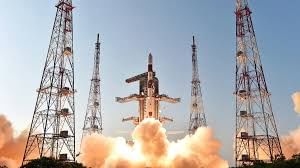
- Chandrayaan-2 and Chandrayaan-3: Chandrayaan-2 (2019) placed an orbiter around the Moon that continues to return scientific data; the lander experienced a hard-landing during the descent phase. Chandrayaan-3 (2023) successfully achieved a soft landing near the lunar south pole, demonstrating precise guidance, navigation and control for a targeted soft-landing mission.
- INSAT series: The Indian National Satellite System (INSAT) is a family of geostationary satellites providing telecommunications, broadcasting and meteorological services across the region; these satellites support weather forecasting, television broadcasting and disaster management.
- Polar Satellite Launch Vehicle (PSLV): The PSLV is a reliable and versatile launch vehicle used for placing satellites into polar and sun-synchronous orbits; its operational reliability and cost effectiveness allowed ISRO to provide commercial launch services to other nations.
- Chandrayaan-1 and Mangalyaan (Mars Orbiter Mission): Chandrayaan-1 (2008) was India's first lunar probe and helped confirm water molecules on the Moon. The Mars Orbiter Mission (Mangalyaan) (2013) inserted an Indian spacecraft into Martian orbit on its first attempt, demonstrating mission planning, deep-space navigation and propulsion management at economical cost.
- ASTROSAT: Launched in 2015, ASTROSAT is India's first dedicated multi-wavelength space observatory for astronomy, enabling simultaneous observations in UV, visible and X-ray bands and contributing to astrophysics research.
- Scramjet and RLV-TD: ISRO's work on air-breathing propulsion (scramjet) and the Reusable Launch Vehicle-Technology Demonstrator (RLV-TD) explores technologies for lowering launch costs through reusability and advanced propulsion.
- Record satellite deployment: ISRO demonstrated ability to deploy large numbers of satellites efficiently in a single mission, highlighting payload integration, orbital injection and mission planning capabilities.
- Crew Escape Module tests and Gaganyaan: ISRO has tested crew escape and abort systems and undertaken precursor missions as part of the Gaganyaan human spaceflight programme, progressing towards planned crewed missions.
- International collaboration and regional systems: Projects such as NAVIC (Indian Regional Navigation Satellite System) and the South Asia Satellite illustrate ISRO's regional cooperation in navigation, communication and remote sensing services.
- XPoSat and reusable launch vehicle demonstrations: ISRO has expanded astrophysics missions like XPoSat and continued demonstrator work for reusable launchers, aiming to develop advanced scientific payloads and cost-effective access to space.
- Aditya-L1: A solar observatory placed at the Earth-Sun L1 point to study the Sun's atmosphere and solar wind; such missions contribute to space weather understanding and long-term scientific observation.
These missions combine satellite design, payload development, mission-level systems engineering, telemetry and ground segment infrastructure. ISRO's approach emphasises incremental capability building, low cost per mission, and strong systems integration across software, structures, propulsion and electronics.
Contribution to Socio-economic Development
The applications of space technology in India have had measurable socio-economic benefits across agriculture, environment, disaster management, communication and commercial services. The following sections outline key application areas and representative programmes or tools.

Agricultural sector
- FASAL (Forecasting Agriculture output using Space, Agrometeorology and Land-based observations): Uses satellite imagery, meteorology and ground observations to estimate acreage and production for principal crops, providing inputs for policy and market decisions.
- Precision farming: Satellite positioning systems (for example, regional navigation systems such as NAVIC) enable site-specific management (soil mapping, variable rate application, controlled irrigation) to raise productivity and conserve inputs.
- AGROMET towers: Agro-meteorological measurement towers collect local weather and soil data (temperature, moisture, radiation, wind, pressure and humidity) for crop advisories and micro-climate based decision support.
Environmental conservation and natural resource management
- Wasteland mapping and watershed development: Remote sensing supports identification of degraded land, monitoring land use change, prioritising watershed planning and targeting restoration efforts.
- Fisheries and Potential Fishing Zones (PFZ): Satellite-based ocean colour and sea-surface temperature data help identify PFZs and support fisherfolk with timely advisories, increasing catch efficiency and safety.
- Mineral and resource surveys: Satellite data and geophysical techniques assist in mapping mineral occurrences, groundwater potential and land use patterns for planning and exploration.
Disaster management and meteorological services
- Space-based weather and remote sensing systems enable cyclone warnings, flood mapping, drought monitoring and post-disaster damage assessment, improving preparedness and response.
- Search and rescue services use satellite distress alerting systems to locate ships, aircraft and persons in distress, supporting maritime and aviation safety.
Communication, education and public services
- Geostationary and LEO communication satellites extend telecommunication coverage to remote and underserved areas, facilitating telemedicine, distance education (for example via dedicated educational satellites) and rural connectivity programmes.
- Commercialisation through entities such as ANTRIX has allowed export of space services, technology transfer and partnerships with industry, contributing to economic activity and technology incubation.
Economic growth and institutional benefits
- Satellite data and services improve the efficiency of sectors such as agriculture, fisheries, transportation and urban planning, thereby contributing to productivity increases and economic growth.
- Space technology strengthens institutional capacities in mapping, monitoring, governance and policy formulation by providing objective, repeatable data at national and regional scales.
Conclusion
India's scientific tradition combines a long historical record of technical and theoretical contributions with a modern, application-oriented space and engineering programme. Ancient advances in numeration, surgery, metallurgy and astronomy provided conceptual tools that influenced global knowledge systems. Contemporary institutions, led by ISRO, have translated engineering competence into affordable space services that support socio-economic development across agriculture, disaster management, communication and scientific research. Together these strands illustrate a sustained emphasis on practical problem solving, systems engineering and knowledge transmission.
FAQs on Achievements of Indians in Science & Technology-2
| 1. What are some of the key contributions made by Ancient Indians to the world of Science and Technology? |  |
| 2. How have Indians contributed to Space Technology? | |
| 3. What role have Indians played in Socio-economic Development? | |
| 4. What are some notable achievements of Indians in Science & Technology? | |
| 5. How have Indians contributed to the field of medicine and healthcare? | |




