Worksheet Solutions: Neem Baba

Multiple Choice Questions (MCQs)
Q1: What is the common name for the neem tree in different cultures?
(a) Mahogany
(b) Neem
(c) Oak
(d) Pine
Ans: (b)
Explanation: Neem is the widely used common name for Azadirachta indica in many cultures. Mahogany, oak and pine refer to different tree species and are not names for neem.
Q2: Which part of the neem tree is NOT mentioned as having medicinal properties?
(a) Leaves
(b) Bark
(c) Roots
(d) Trunk
Ans: (d)
Explanation: Leaves, bark and roots are commonly used for medicinal purposes. The trunk (main stem) is primarily structural and is not usually cited for medicinal use in this context.
Q3: Neem Baba describes the tree as originating from which regions?
(a) North America
(b) South America
(c) North India or Myanmar
(d) Africa
Ans: (c)
Explanation: Neem Baba mentions North India or Myanmar as the tree's regions of origin, which matches historical records of the neem's native range in South and Southeast Asia.
Q4: Which of the following is NOT a benefit of the neem tree?
(a) Repelling pests
(b) Increasing crop yield
(c) Producing coal
(d) Medicinal uses
Ans: (c)
Explanation: Neem is known for repelling pests, supporting agriculture and many medicinal uses. Producing coal is not a benefit associated with neem.
Q5: What did Neem Baba encourage Amber to do at the end of their conversation?
(a) Forget about neem
(b) Explore more about neem's qualities
(c) Cut down the tree
(d) Move to another place
Ans: (b)
Explanation: Neem Baba urged Amber to learn more about the neem tree and its qualities rather than ignore or harm it.
Fill in the Blanks
Q1: The neem tree is known for its __________ properties.
Ans: medicinal
Q2: Amber referred to the neem tree as __________ Baba.
Ans: Neem
Q3: Neem wood is valued for its __________-resistant properties.
Ans: termite
Q4: Neem Baba explained that it had different names in various __________.
Ans: languages
Q5: Amber learned that neem can purify _________.
Ans: air
True or False
Q1: The neem tree is only used for medicinal purposes.
Ans: False
Explanation: Neem has many uses beyond medicine, including pest control, timber, and agricultural applications.
Q2: Neem Baba recognised Amber from her childhood.
Ans: True
Explanation: Neem Baba indicates familiarity with Amber from earlier times, showing recognition from her childhood.
Q3: Neem tree bark can be used to treat respiratory issues.
Ans: True
Explanation: Neem tree bark have been used traditionally to help with some respiratory problems; they are part of the tree's medicinal uses.
Q4: Neem Baba has no agricultural benefits.
Ans: False
Explanation: Neem provides agricultural benefits such as natural pest control and supports healthier crops.
Q5: Amber was uninterested in learning about neem.
Ans: False
Explanation: Amber showed curiosity and engaged in conversation to learn about the neem tree.
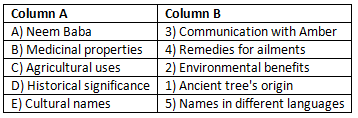
Match the Following
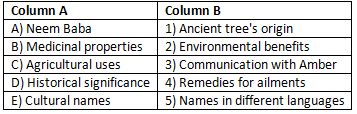
Ans:
FAQs on Worksheet Solutions: Neem Baba
| 1. Who is Neem Baba and what is he famous for in the story? |  |
| 2. What are the main lessons students should learn from Neem Baba's character? | |
| 3. How does the Neem Baba story connect to real-world environmental problems? | |
| 4. What vocabulary and literary devices are used in the Neem Baba worksheet solutions? | |
| 5. How should students answer comprehension questions about Neem Baba for their CBSE exams? | |