NCERT Solutions: Celebrating Festivals

Discuss (Page 35)
Q1: Have you ever travelled in a bus? If yes, share the experience with your classmates.
Ans: Yes, I travelled in a bus during a school trip. It was fun with friends, singing songs, and enjoying the beautiful scenery of fields and a river.
Q2: What types of trees and flowers did you see during your trip?
Ans: I saw oak, pine, and mango trees, and flowers like roses, marigolds, sunflowers, and tulips.
Q3: What safety measures should you take while travelling?
Ans: Wear a seatbelt, follow instructions, keep belongings secure, avoid leaning out, stay aware, and carry a first-aid kit.
Q4: What safety measures should you take while riding a bicycle and while walking on the road?
Ans:
- Bicycle: Wear a helmet, use hand signals, stay in bike lanes, avoid busy roads, and ensure your bike is in good condition.
- Walking: Use sidewalks, cross at pedestrian crossings, look both ways, avoid distractions, and wear reflective clothing in low light.
Activity 1 (Page 36)
Q1: Match the Column A signboards with their meanings in Column B. 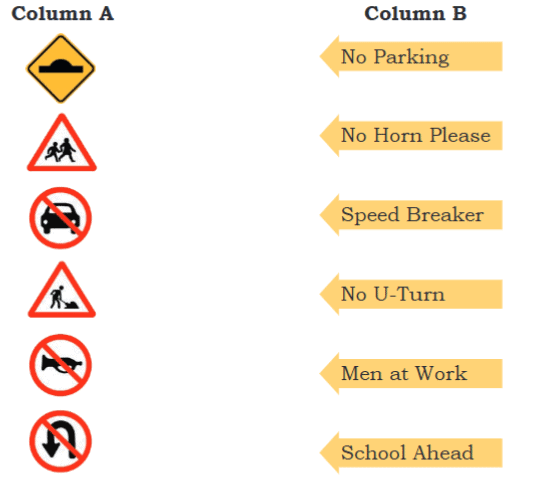 Ans:
Ans: 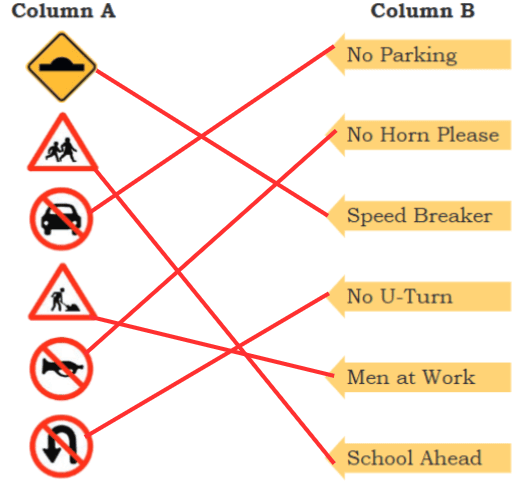
Q2: You might have seen many signboards while traveling on the road. Draw and label any three road signboards that are different from the ones shown above.
Ans:

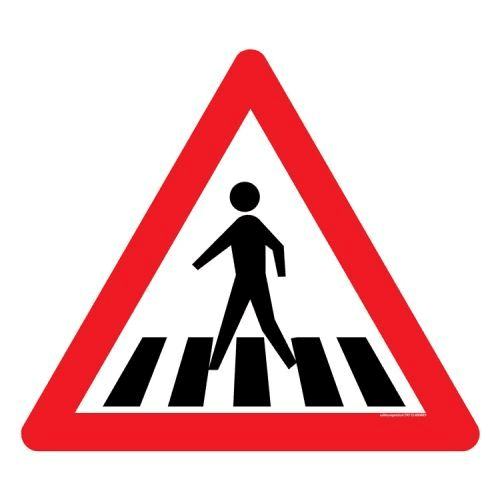

1. Pedestrian crossing sign
2. Stop Sign
3. One-way traffic sign
Write (Page 40)
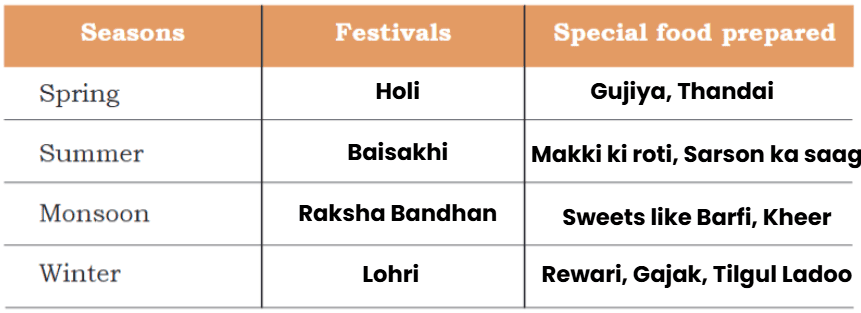
Q1: Ask your elders about the names of festivals celebrated in your locality for each of the seasons given below.
Q2: Make a list of the special food prepared during these festivals.
Ans: 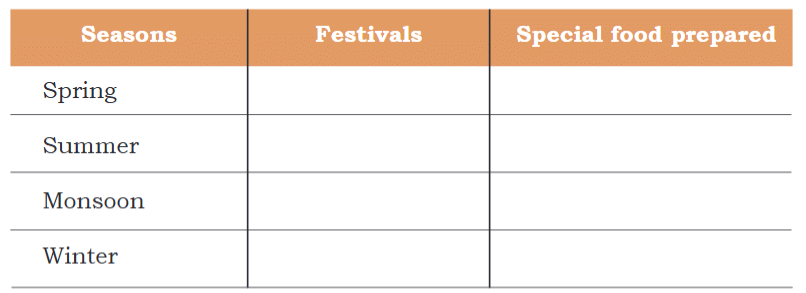
Q3: What special dresses do you wear during festivals?
Ans: During festivals, I wear traditional dresses such as kurta-pajama, saree, lehenga, and salwar-kameez.
Activity 3 (Page 41)
Q: Match the name of the food with the festival from the list given below. 
Ans: 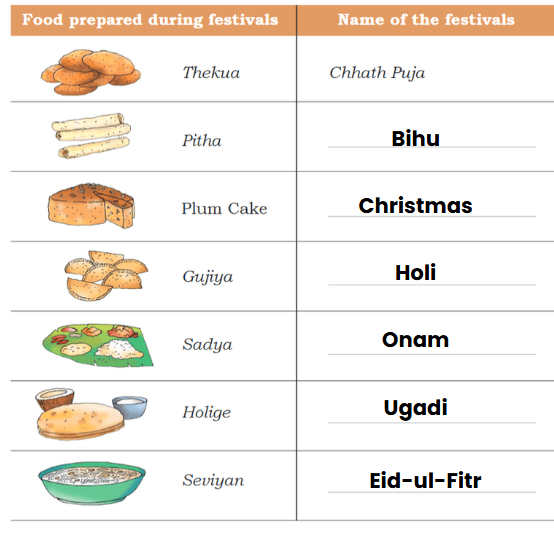
Let us reflect (Page 42)
A. Discuss
Q1: What are the different modes of transport used during travel?
Ans: The different modes of transport used during travel include cars, buses, trains, airplanes, bicycles, and boats.
Q2: How can one be safe during travels?
Ans: One can be safe during travels by wearing seatbelts, following traffic rules, not distracting the driver, keeping valuables secure, and being aware of the surroundings.
Q3: What special foods are prepared during festivals?
Ans: Special foods prepared during festivals include sweets like laddoos and jalebis, savory dishes like biryani and pulao, and regional specialties like sadya, thekua, and pitha.
Q4: How do festivals and celebrations bring us together?
Ans: Festivals and celebrations bring us together by providing opportunities to spend time with family and friends, share meals, participate in cultural and traditional activities, and foster a sense of community and belonging.
Q5: Do you feel happy spending time in nature? What about nature makes you feel happy?
Ans: Yes, spending time in nature makes me feel happy because it is peaceful and beautiful. The fresh air, greenery, and sounds of birds and animals create a relaxing environment.
B. Write
Q1: Name any two relatives you have visited recently.
Ans: I have recently visited my grandparents and my uncle.
Q2: How do you spend time with your cousins and relatives?
Ans: I spend time with my cousins and relatives by playing games, watching movies, sharing stories, and enjoying meals together.
Fill in the blanks
Q1: Chiya and Nonikaa live in a small village near the ____.
Ans: mountains.
Q2: The bus went along the ____ roads where the hills were covered with colourful flowers.
Ans: hairpin.
Q3: Rishi and his family walked to his Mama's house through a narrow ____ road.
Ans: mud.
Q4: The red flowers that bloom in spring are called ____.
Ans: buransh.
Q5: ____ is a kind of leafy vegetable eaten with hot rice.
Ans: Haakh.
C. Draw
Take a chart paper and draw signboards for the following. You can use any image and colour of your choice for creating the sign boards. Explain what you have created.
- School library
- Toilet
- Assembly
- Drinking water point
- Playground
- My classroom
- Stairs
Ans: 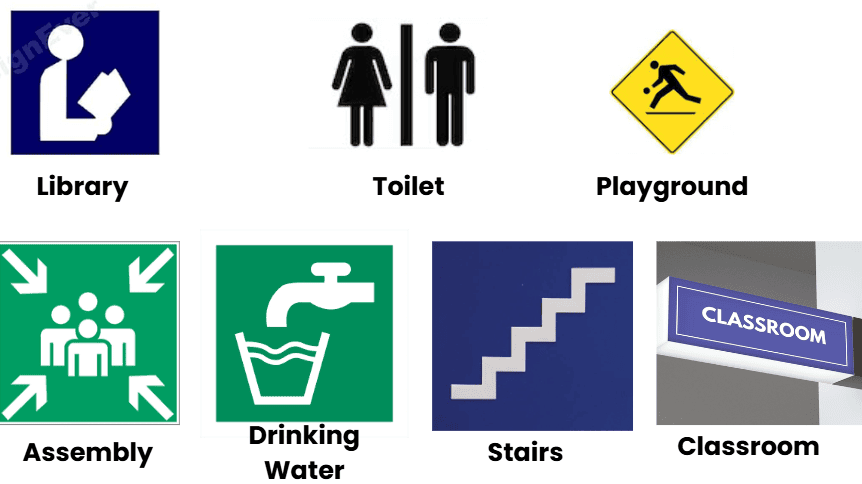
FAQs on NCERT Solutions: Celebrating Festivals
| 1. What are the different festivals celebrated in India and why do we celebrate them? |  |
| 2. How do families prepare for festivals and what activities happen during celebrations? | |
| 3. Why is it important to celebrate festivals in schools and communities? | |
| 4. What foods and decorations are special during different Indian festivals? | |
| 5. How do festivals teach us about nature, seasons, and agricultural practices in India? | |