Chapter Notes: Going to the Mela

Introduction
Have you ever visited the mela? Did you went with your family or with friends? Today we will study the chapter"Going to the Mela." The chapter is about Nita, Radha, their family, and their friends as they prepare for the mela. They all are very excited for the mela(fair). 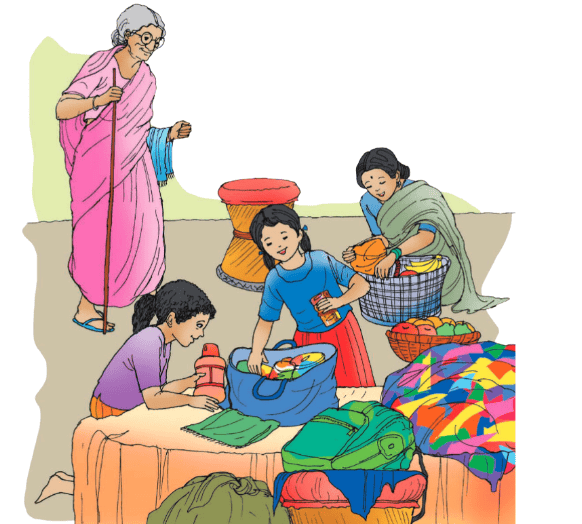 The chapter shows the joy and fun of children and adults as they go to the mela, talk with family and neighbours, and explore the fun-filled activities at the fair.
Explanation
Preparing for the Mela
Nita and Radha are filled with excitement as they get ready for the mela, a fair has come to their town. Since the mela is far from their home, they decide to take a bus to reach there. They ask theirDadiji (grandmother) to join them, but she hesitates at first due to her leg pain.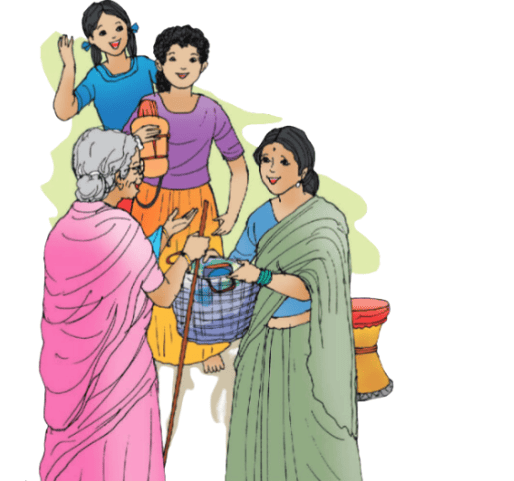 Nita's father reassures her saying that they will take care of her. Dadiji asked, "Have you filled your water bottles?". To which Nita replied "Yes, Dadiji! Our special bag is ready too ." Their neighbours Sneha and Rohit are also invited. Nita's father reminded their neighbours to be ready on time.
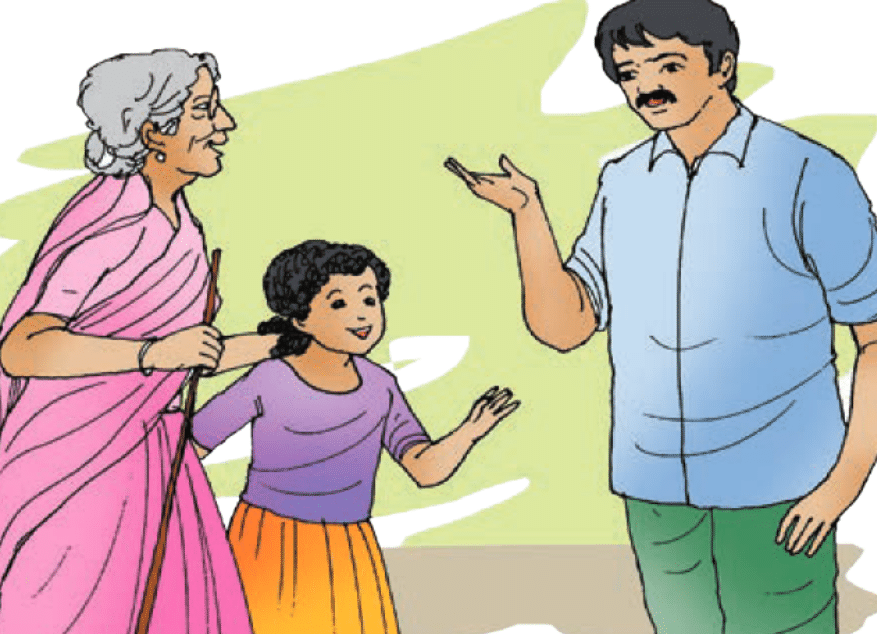
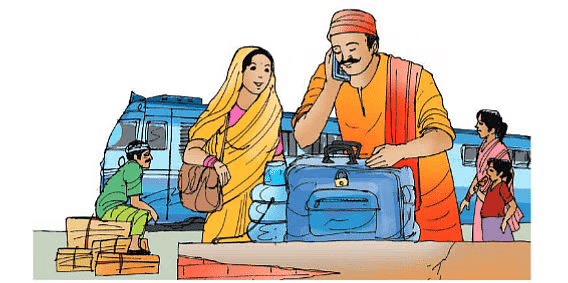
Mohan Chacha (their paternal uncle) and his family are arriving by train to join them at the mela. Everyone is excited and prepares by packing water bottles and a special bag, ready for a day full of enjoyment. Mohan Chacha tells them they will meet directly at the mela and take a city bus and an autorickshaw.
On the way to the Mela
Sneha and Rohit, who are not only Nita's neighbours but also her close friends, are getting ready to go to the mela as well.
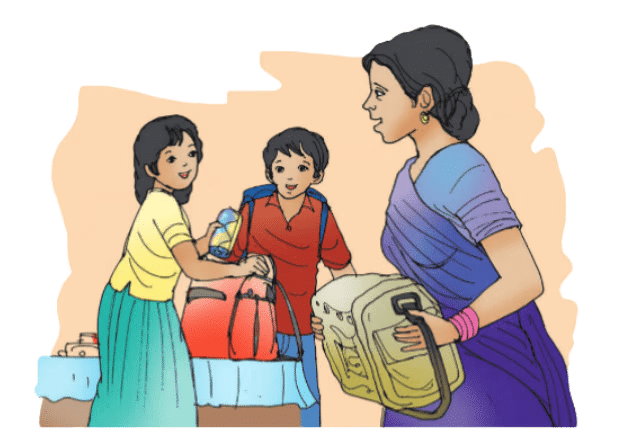
Nita took her grandmother's hand and carefully led her to the bus stop, watching for traffic. They all meet at the bus stop where Bus number 401 arrives to take them to their destination. Since Dadiji is travelling with them, Nita's father and the bus conductor carefully help her board the bus, ensuring she is comfortable. There is a seat reserved for older people, where Dadiji sits comfortably.
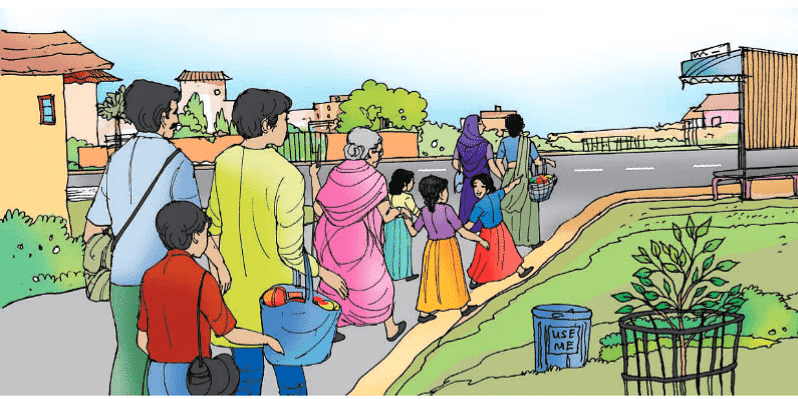
Once everyone is seated, Rohit's father buys tickets for the whole group, including five full tickets for the adults and four half tickets for the children. The children are reminded to sit properly and avoid putting their hands or heads out of the window. After passing the city streets, the bus finally reaches the large parade ground where the mela is being held.
At the Mela
When both families arrive at the mela, they see the large crowd there. Mohan Chacha and his family also joined them, as they arrived by an autorickshaw. 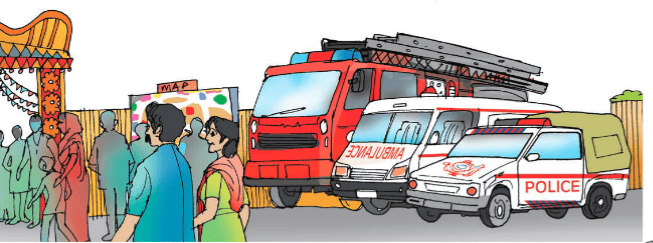 At the entry, a large map shows the layout of the mela, with various stalls for toys, games, and food, as well as safety services like the Lost and Found booth.
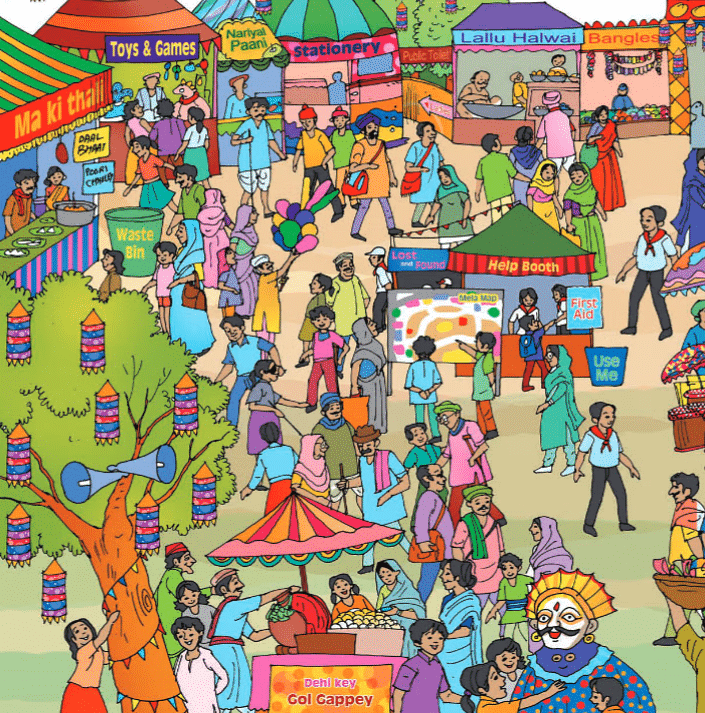
Near the entry, an ambulance, police jeep, and fire engine are parked, ensuring everyone's safety. Dadiji is provided with a wheelchair to help her move comfortably. The children are exicted as they explore the colorful stalls filled with spinning tops, puppets, and dolls. They also take rides on the merry-go-round and the giant wheel, laughing and enjoying themselves. 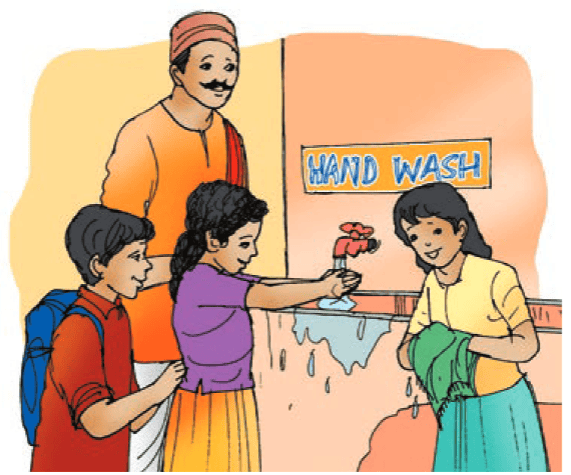
Sneha and Radha bought bangles. They also watched magic show. Mohan Chacha called out the children and asked them to wash their hands and ate tasty snacks like gol gappas, chaat, and jalebis.
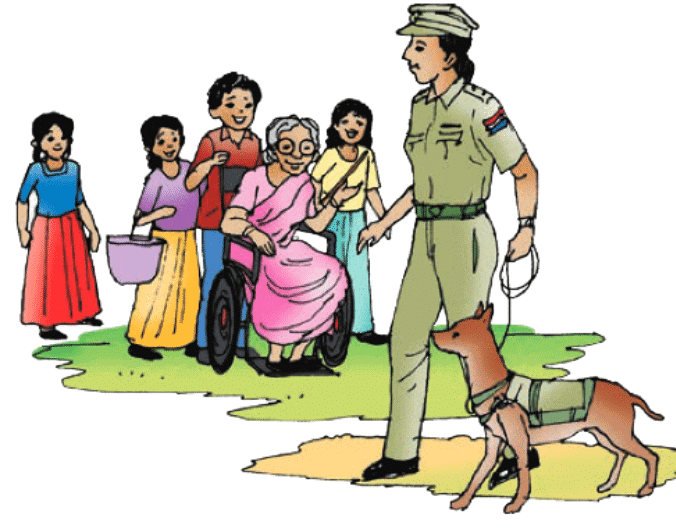
As the day comes, they notice a police officer with a police dog, which catches the children's attention and adds a fun surprise to their memorable day at the mela. Dadiji points it out, and the children excitedly shout, "Dadiji, it is a police dog!"
Points to Remember
- Family Bonding -Spending time together as a family during going out.
- Travel Safety -The children should follow safety rules while travelling in a bus, like sitting properly and not putting their hands outside.
- Environmental Awareness -After eating, the children clean up and throw waste in the dustbin, teaching the importance of keeping the surroundings clean.
- Health and Hygiene -The importance of washing hands before eating is highlighted to promote good hygiene.
Difficult Words
- Mela -A fair or festival.
- Conductor -The person responsible for issuing tickets on a bus.
- Kumbh Mela -The largest festival in the world, where millions gather by the rivers once every 12 years.
- Autorickshaw -A three-wheeled motor vehicle used for transportation.
- Wheelchair -A chair fitted with wheels for people who cannot walk.
- Parade Ground -A large open area where fairs or parades are held.
- Phirki -A spinning top, a traditional toy.
- Merry-go-round -A rotating amusement ride with seats for children.
- Gol Gappa -A popular Indian street snack.
FAQs on Chapter Notes: Going to the Mela
| 1. What is a mela and what activities can be found there? |  |
| 2. Why do people enjoy going to melas? | |
| 3. How do melas contribute to local culture? | |
| 4. What should one remember while visiting a mela? | |
| 5. What are some popular foods typically found at a mela? | |