NCERT Solutions: Taking Charge of Waste


Discuss (Page 150)
Q1: What are the children and the teacher doing in the picture?
Ans: The children and the teacher are cleaning the park.
Q2: Why are they cleaning the park?
Ans: They are cleaning the park to make it clean and safe for everyone to use and to protect the environment.
Q3: Have you ever seen piles of waste lying around your home or school?
Ans: Yes, I have seen piles of waste lying around my home and school.
Q4: Have you ever thought about how this waste is created?
Ans: Yes, this waste is created from various activities such as eating packaged food, using plastic items, and throwing away things we no longer need.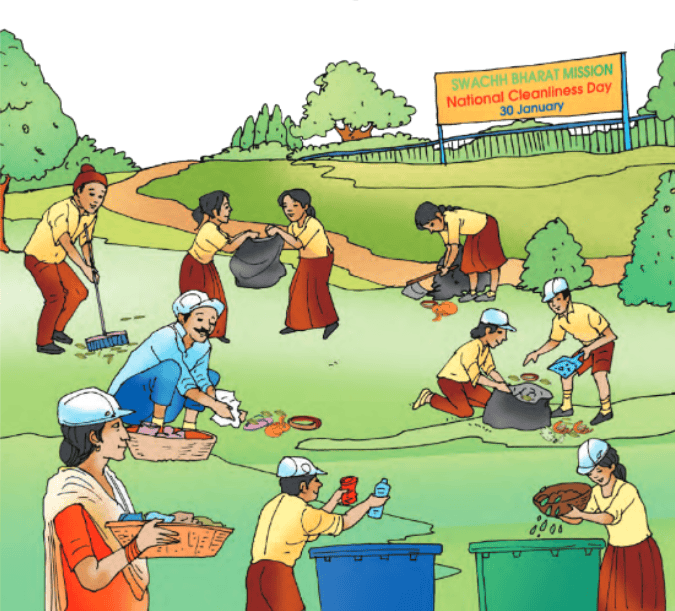
Activity (Page 150)
Q: Recall different activities that you and your elders do during the day. How do these activities create waste? Finally, what do we do with the waste? Share your findings with your classmates.Ans: Students are encouraged to attempt this on their own.
Discuss (Page 152)
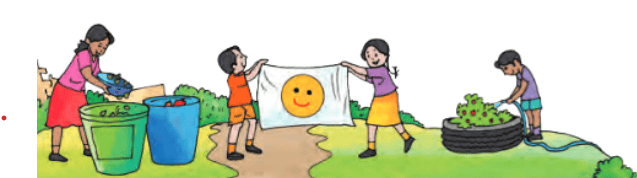
Observe your Surroundings.
Q: How clean are the surroundings of your school?
Ans: The cleanliness of the surroundings of my school can vary. Sometimes it is very clean, but occasionally there is litter around.
Q: Do you find waste lying in or outside your classrooms or on the school grounds?
Ans: Yes, sometimes I find waste lying around both inside and outside the classrooms and on the school grounds.
Draw (Page 153)
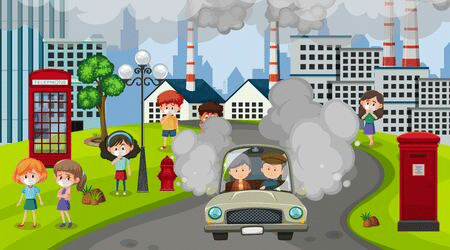
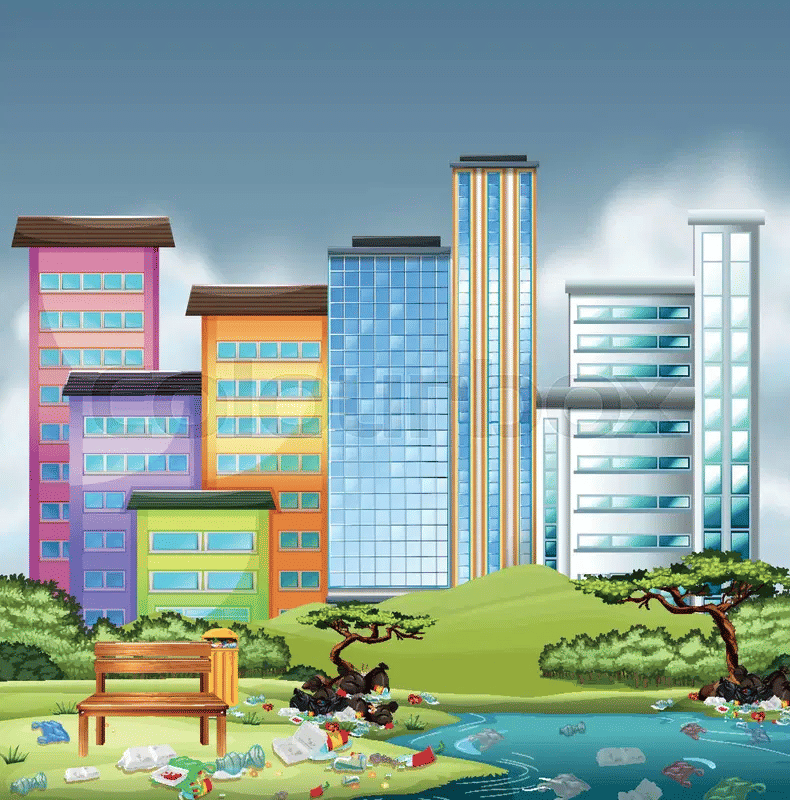
Draw or paste a picture of a locality. Identify the places where there is garbage or wastewater or smoke by circling them in red. Try to find out how the waste gets there.
Ans: Students are encouraged to attempt this on their own.
If you belong to a place that manages its waste well, ask the elders how it is done. Share your findings in the class.
Now let us talk about those people who manage waste well.
Ans: Students are encouraged to attempt this on their own.
Activity (Page 153)
How can you help in reducing waste?
Be a part of the Cleanliness Drive by sharing your old toys and books with those who need them but cannot afford to buy them. In what other ways can you help? The more things we buy, the more things we throw away and the more waste gets created. We should try to buy things that we need and use them until they are not usable anymore. We can try to create as little waste as possible.
Ans: We can help reduce waste by sharing old toys and books with those who need them. Additionally, we should only buy things we truly need and use them until they are no longer usable. By reusing items and creating less waste, we can make a big difference.
Activity 4 (Page 155)
How can you Reuse things to reduce waste ?
You can reuse paper that has been used on one side for rough work. Instead of buying a water bottle, reuse a bottle made of a safe material like steel or copper by refilling it.
You can make toys or decorative things using old newspapers, old calendars, bottles, boxes, etc. Here is one such idea. All you need is some newspaper. No scissors! No glue! Just paper!
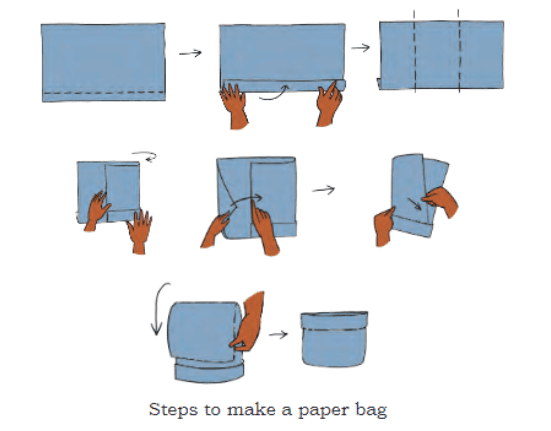
Ans: Students are encouraged to attempt this on their own.
Activity 5 (Page 156)
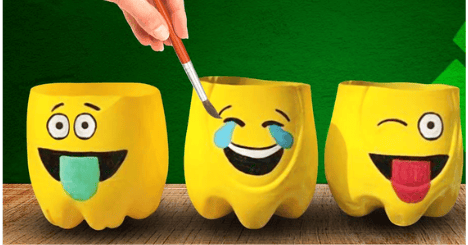
Create an item using waste material that you can give as a gift to someone.
Ans: Students are encouraged to attempt this on their own.
Activity 6 (Page 159)
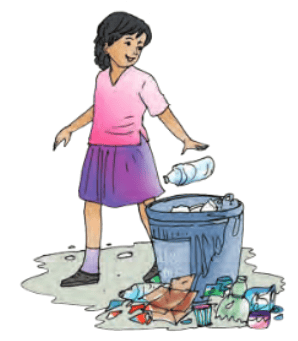
Separate Your Waste
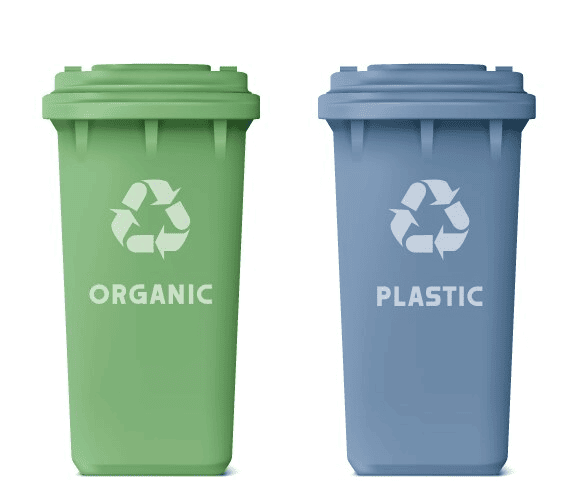
Two dustbins are drawn below. Write the names of the waste material which will go into each of them.
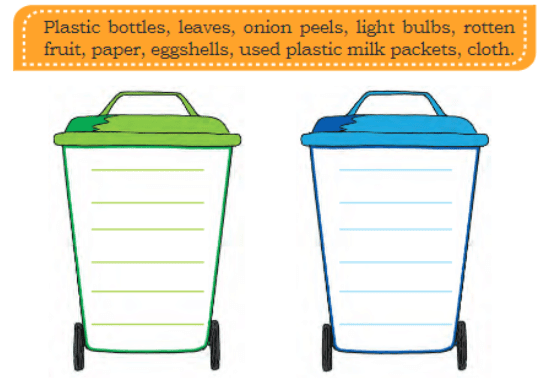
Ans: 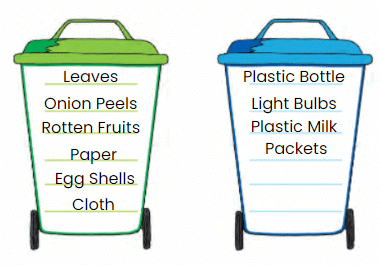
Write (Page 160)
Q: List the things that you can do to keep your home and classroom clean? Ans:
- I can keep my room tidy.
- I can throw trash in the dustbin.
- I can clean up after eating.
- I can organize my desk and books.
- I can help sweep the floor.
Q: Make a list of tools you have seen being used in your school or neighbourhood for cleaning. Ans:
- Broom
- Dustpan
- Mop
- Bucket
- Trash picker
Q: Have you ever observed the tools that are used in your home for cleaning? Make a list of these tools. Ans:
- Broom
- Dustpan
- Mop
- Vacuum cleaner
- Cleaning cloths
Draw (Page 160)
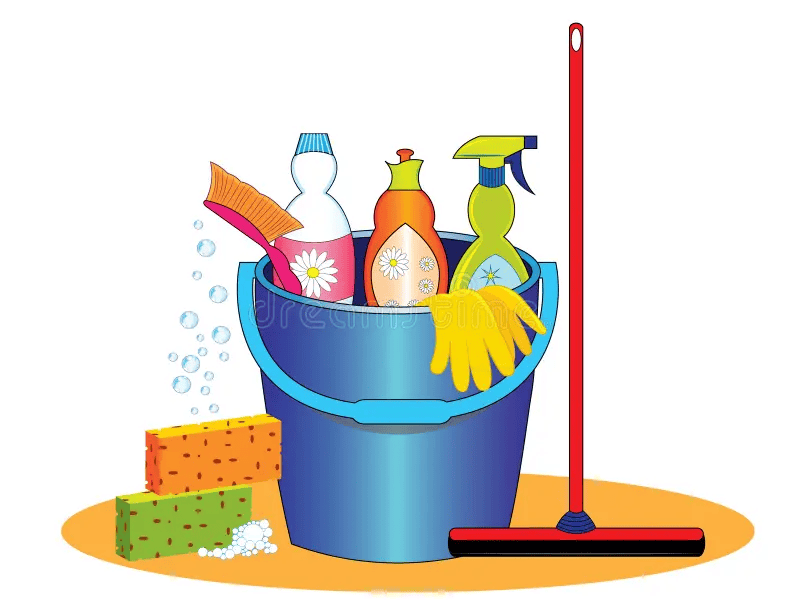
Draw pictures of these tools in the box given below.
Let us Reflect (Page 161)
A. Discuss
Q1: How is waste created?
Ans: Waste is created from various activities in our daily lives, such as using packaged products, discarding old clothes, and peeling vegetables and fruits. It also comes from using plastic wrappers, paper, tins, and other items that we throw away.
Q2: How can we manage waste?
Ans: We can manage waste by reducing, reusing, and recycling. Reducing means creating less waste by avoiding single-use items. Reusing involves finding new uses for old items instead of throwing them away. Recycling means processing used materials to make new products.
B. Write
Q1: To avoid the use of plastic bags and bottles, look at your home and school closely. List all the items of plastic material and write how these could be replaced by other safe materials.
Ans:
- Plastic Bags: Replace with cloth or jute bags.
- Plastic Bottles: Replace with metal or glass bottles.
- Plastic Containers: Replace with glass or metal containers.
- Plastic Wrap: Replace with beeswax wrap or reusable silicone wraps.
Q2: Name three things in your school and home that you would put in the green dustbin and three things that you would put in the blue dustbin.
Ans:
- Green Dustbin: Fruit peels, vegetable waste, eggshells.
- Blue Dustbin: Paper, plastic bottles, metal cans.
C. Draw in your notebook
Q1: Make a poster to show a village or town that is managing its waste well. Give your poster a suitable title.
Ans: Students are encouraged to attempt it on their own.
D. Enact in pairs
Q1: You can be a clean town and your partner a dirty town. Engage in a short conversation talking about how you feel about being the way you are.
Ans: Students are encouraged to attempt it on their own.
E. Think, Reflect and Share
Q1: Imagine you are having a birthday party at your home. What are some of the ways in which you can try to have a zero-waste birthday party? For this, first think about what kind of waste may be created in the birthday party and how you can avoid or reduce it.
Ans: To have a zero-waste birthday party:
- Use reusable plates, cups, and cutlery instead of disposable ones.
- Avoid using balloons and plastic decorations; use paper or fabric decorations.
- Serve homemade snacks and drinks instead of packaged ones.
- Use cloth napkins instead of paper napkins.
- Encourage guests to bring reusable bags for gifts.
Q2: Have you seen waste in nature? What do you think happens to the waste of animals, dried leaves, and so on in a forest?
Ans: Yes, I have seen waste in nature. In a forest, the waste from animals and dried leaves decomposes naturally. This waste breaks down and turns into nutrients that enrich the soil, supporting plant growth and maintaining the ecosystem.
FAQs on NCERT Solutions: Taking Charge of Waste
| 1. What are the different types of waste we should separate at home for Class 3? |  |
| 2. How can we reduce waste in our daily life as kids? | |
| 3. What's the difference between biodegradable and non-biodegradable waste for CBSE Class 3? | |
| 4. Why is composting an effective way to manage waste at home? | |
| 5. What can we do with plastic waste instead of throwing it in the bin? | |