NCERT Solutions: Grassroots Democracy — Part 3: Local Government in Urban Areas

The Big Questions
Q1: What are urban local bodies and what are their functions?
Ans: Urban local bodies are decentralised units of local government that look after the everyday needs of people living in towns and cities. They include Municipal Corporations, Municipal Councils and Nagar Panchayats. Their main functions are:
- Maintaining and repairing public infrastructure such as roads, streetlights and drains.
- Collecting and disposing of garbage and managing sanitation.
- Supplying safe drinking water and maintaining water pipes and tanks.
- Providing basic public health services, including immunisation and local clinics.
- Implementing government welfare schemes at the local level.
- Planning for local economic and social development, including markets and small businesses.
- Issuing licences and certificates (for example, birth and death certificates, trade licences) and collecting local taxes and fees.
Q2: Why are they important in governance and democracy?
Ans: Urban local bodies are important because they bring governance close to the people and make it easier to solve local problems quickly. They allow residents to take part in decision-making and hold elected representatives accountable. They help in delivering everyday services such as water, roads and waste collection that directly affect quality of life. Local governments also plan and manage local development, making sure that city services meet the needs of different neighbourhoods and communities.
Let's Explore
Page 174
Q1: Why is a city like Kolkata, Chennai or Mumbai more complex and diverse than a village or a town?
Ans: Cities such as Kolkata, Chennai and Mumbai are more complex and diverse because they have much larger and denser populations and many different kinds of jobs and activities. They attract people from different parts of the country, so there are many languages, religions and cultures living together. Cities have complicated systems for transport, water supply, sewage, markets and industries that must be planned and managed. This variety of people and activities makes city life more varied but also creates more challenges for providing services and keeping the city running smoothly.
Q2: With your classmates, make a list of diverse communities residing in any city that you are familiar with. How many were you able to list? What else do you observe in the list?
Ans: When you list communities in a city you know, think of groups by language, region, religion and occupation. For example, in Mumbai you might list Maharashtrians, Gujaratis, South Indians, North Indians, Parsis and Muslims. From such a list you can observe that each community brings its own festivals, food, clothing and customs. You will also notice that city neighbourhoods may show economic variety - some areas are residential, others are commercial or industrial. Despite differences, these communities often interact at work, in schools and markets, which makes city life lively and culturally rich.
Page 175
Q:
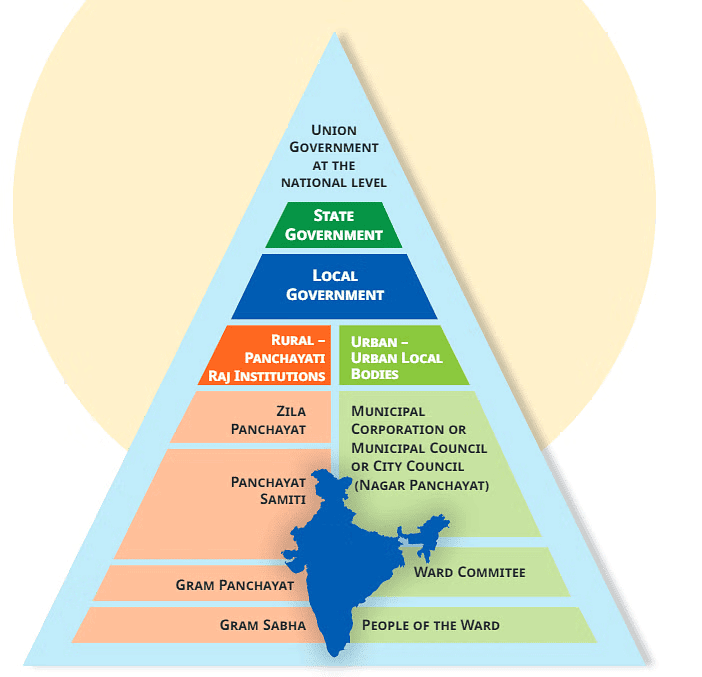
In Fig. 12.2 above, what similarities and differences do you notice between the Panchayati Raj system and the urban local government?
Ans:
Similarities:
- Three-tier Structure: Both systems often have more than one level so that local problems can be handled nearby while larger issues are managed at a higher level. This helps in organising services for small areas as well as for larger regions.
- Local Participation: Both encourage people who live in the area to take part in decision-making - for example through gram sabhas in villages or ward meetings in towns.
- Decentralisation: Both transfer power and responsibilities from the state government to local bodies so that decisions are taken closer to the people affected by them.
Differences:
- Geographic Focus: The Panchayati Raj system is meant for rural areas, while urban local governments operate in towns and cities.
- Nomenclature and Structure: Rural bodies use names like Gram Panchayat, Panchayat Samiti and Zila Panchayat. Urban bodies use names such as Ward Committees, Municipal Councils and Municipal Corporations.
- Functions and Challenges: Rural bodies concentrate more on agriculture, irrigation and rural development activities. Urban bodies face problems typical of cities, such as traffic management, complex sanitation systems, pollution control and housing for many people.
Page 177
Q: Can you think of four or five more actions that responsible citizens might take to help their area of the city?
Ans: Here are five simple ways responsible citizens can help their city:
- Report Safety Hazards: Tell the municipal office or use a helpline to report problems like broken streetlights, potholes or open manholes so they can be fixed quickly.
- Join Clean-up Drives: Take part in or organise local clean-up activities to keep streets, parks and drains free of litter.
- Support Local Businesses: Buy from small shops and markets in your area so that neighbourhood economies stay strong.
- Volunteer for Local Projects: Help plant trees, run awareness campaigns, or assist in community centres and libraries to improve the area.
- Promote Environmental Care: Reduce, reuse and recycle; save water; and avoid single-use plastics to protect local surroundings and public health.
These actions improve daily life, keep public spaces pleasant and show how people working together can make a difference.
Think About It
Page 179
Q: Indore in Madhya Pradesh has been awarded the cleanest city in India under the Swachh Survekshan government scheme for seven years in a row. What could have been the role of Indore citizens in this achievement?
Ans: The citizens of Indore likely played a strong and active role in achieving this award. Their contributions may have included:
- Segregating waste at source into wet and dry waste so that it can be recycled or composted more easily.
- Taking part in door-to-door waste collection and following the schedule, which helps the municipal services work smoothly.
- Joining clean-up drives and keeping public places like markets and parks tidy.
- Not littering and encouraging others to use dustbins and public toilets.
- Reporting sanitation problems quickly to the municipality so that repairs and cleaning can happen on time.
- Practising simple habits such as composting kitchen waste, saving water, and educating neighbours and children about cleanliness.
Combined with good municipal planning and services, these citizen actions helped Indore become a model for urban cleanliness.
Page 179
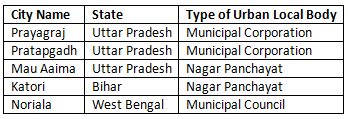
Q1: Select a few cities, from your State and from a few neighbouring States. These may include the city you live in or the city nearest to your town or village. How will you find out if they have a Nagar Panchayat, Municipal Council or Municipal Corporation? Draw a table with the names of the cities and the type of urban local body each of them has.
Ans: To find out if a city has a Nagar Panchayat, Municipal Council, or Municipal Corporation, you can:
- Check Government Websites: Visit the state government's urban development or municipal affairs website where city classifications are usually listed.
- Visit the City's Municipal Office: Ask at the local municipal office or help desk for the official status of the town or city.
- Look at Local Government Reports: Read annual reports, gazette notifications or the census data which often state whether a place is a Nagar Panchayat, Municipal Council or Municipal Corporation.
- Use Online Maps or Databases: Google Maps, state portals and civic portals sometimes mention the municipal body managing a city.
Here's an example table:
Q2: How do urban local bodies fund their activities? (Hint: Look carefully at the pictures of the functions performed by Indore Municipal Corporation in Figure 12.4 on page 178.) Are some of them paid services?
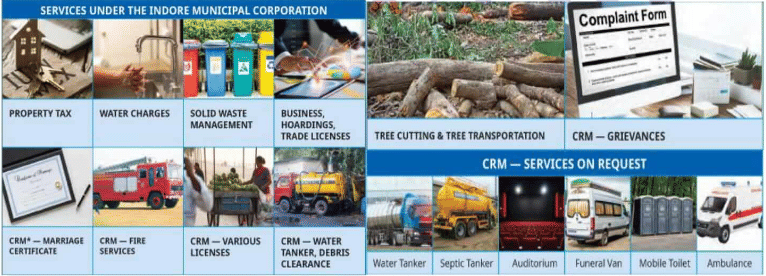
Ans: Urban local bodies get their funds from several sources, including:
- Local Taxes and Fees: These include property tax, water charges, trade and profession taxes, and fees for markets or parking.
- Paid Services: Certain services are charged for, for example issuing licences and certificates, providing water tankers, renting markets or community halls, and collection of bulk waste from builders.
- Government Grants: State and central governments give grants and funds for specific schemes such as road building, sanitation or health programmes.
- Loans and Bonds: For large projects, urban bodies may borrow money from banks or raise funds through bonds or special urban schemes.
These combined sources allow municipalities to pay staff, run services and build or maintain local infrastructure.
Questions, Activities and Projects
Page 181-182
Q1: On your way to school, you and your friends notice that a water pipe is leaking. A lot of water is being wasted on account of the leak. What would you and your friends do in such a situation?
Ans:
- If we notice a leaking water pipe, we would immediately report it to the local municipal office or the ward office so that the repair team can be sent.
- We would use any available helpline number or mobile app of the municipality, or ask a nearby adult to call the water department.
- If it is safe and possible, we might place a temporary marker or barrier around the leak to warn pedestrians and avoid accidents.
- We would note the exact location (landmark, house number or street) so that officials can find the leak quickly.
- We would avoid attempting any repair ourselves and keep away from electrical equipment near the leak to stay safe.
Q2: Invite a member of an urban local body near you to your class. Discuss with them their role and responsibilities. Prepare a set of questions to ask them so that the meeting is fruitful.
Ans: To make the meeting useful, prepare clear questions such as:
- What are your main responsibilities and duties as a member of the local body?
- How do you receive and respond to citizens' complaints in your ward?
- Which projects are currently being planned or implemented in our area?
- How can students and young people help improve cleanliness, safety and the environment in the locality?
- What are the biggest challenges you face in delivering services, and how can citizens support you?
Also plan to welcome the visitor, take notes during the talk, and thank them afterwards for their time.
Q3: Discuss with adult members of your family and neighborhood, and make a list of their expectations from the urban local bodies.
Ans: From discussions with adults in our family and neighbourhood, we noted these common expectations from urban local bodies:
- Regular maintenance of roads, pavements and streetlights so travel is safe.
- Efficient garbage collection and proper waste management to keep the area clean.
- Access to clean and safe drinking water without long interruptions.
- Effective public health services and good sanitation facilities.
- Prompt responses to civic complaints such as leaks, broken drains or stray animals.
- Development and upkeep of parks and recreational places for children and families.
- Measures for safety and security, such as street lighting and community policing.
Q4: Make a list of characteristics of a good urban local body.
Ans: An effective urban local body should have the following characteristics:
- Transparency: Clear information about budgets, plans and decisions so citizens know how money is spent.
- Accountability: Officials and elected members should answer to citizens for their actions and decisions.
- Efficient service delivery: Regular and timely provision of basic services like water, sanitation and road repair.
- Active citizen participation: Encouraging residents to take part in meetings and decisions affecting their area.
- Responsiveness: Quick action on complaints and changing needs of different neighbourhoods.
- Equitable distribution: Fair allocation of resources so all areas and groups benefit, including the poor and marginalised.
- Good planning and implementation: Careful planning of development projects and honest execution to avoid waste.
- Strong leadership and management: Skilled officers and elected representatives who can coordinate work and solve problems.
Q5: What are the similarities and differences between the Panchayati Raj system in rural areas and the urban local bodies?
Ans:
Similarities:
- Both have elected representatives who manage local affairs and decide on local needs.
- They aim to bring governance closer to the people so residents can take part in decision-making.
- Each system has multiple levels of administration to deal with local and wider issues effectively.
Differences:
- The Panchayati Raj system operates in rural areas and focuses on agriculture, rural roads and irrigation; urban local bodies work in towns and cities and focus on city services like sanitation, water supply, transport and street lighting.
- Panchayati Raj includes Gram Panchayats, Panchayat Samitis and Zila Parishads, while urban local bodies consist of Municipal Corporations, Municipal Councils and Nagar Panchayats.
- The problems and priorities differ: rural bodies handle village needs and farming issues; urban bodies deal with dense population concerns such as traffic, housing and waste management.
FAQs on NCERT Solutions: Grassroots Democracy — Part 3: Local Government in Urban Areas
| 1. What is the role of municipal corporations in urban local government for Class 6 Social Studies? |  |
| 2. How does the ward system work in urban areas under grassroots democracy? | |
| 3. What's the difference between municipal corporations and municipal councils in CBSE Class 6? | |
| 4. Why do we need elected representatives in urban local government instead of appointed officials? | |
| 5. What are the main functions and responsibilities of a mayor in urban local governance? | |