Chapter Notes: Local Government in Rural Areas

How Does Local Governance Work in India's Villages?
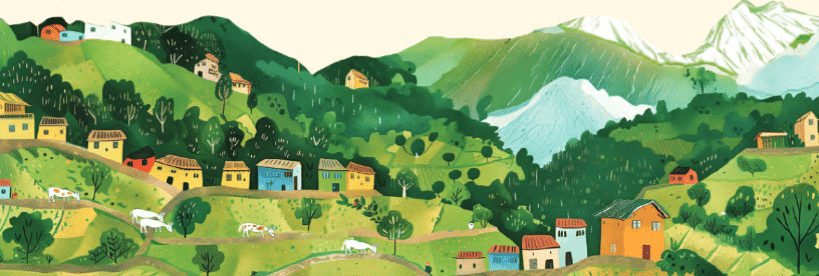
India is a diverse country with around 600,000 villages, 8,000 towns and over 4,000 cities. About two-thirds of the population lives in rural areas. For example, Lakshmanpur, a small village in the Himalayas, has around 200 houses and 700 people, mainly farmers. Some villagers serve in the armed forces, while others move to cities for better jobs. Local government in villages helps people take part in decisions that affect their daily life and development.
Panchayati Raj System
The Panchayati Raj is the system of rural local self-government in India. A Panchayat is a village council that helps govern and manage local affairs. The system is designed so that people at the grassroots level can participate directly and through their elected representatives in local decision-making and development.
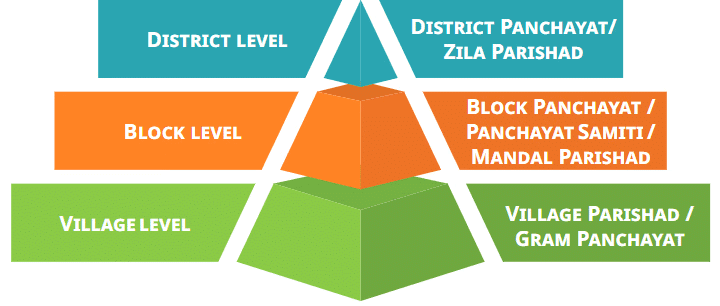
The Panchayati Raj typically operates as a three-tier system covering:
- Gram Panchayat at the village level.
- Panchayat Samiti (also called Block or Mandal Panchayat) at the block level.
- Zila Parishad at the district level.
Constitutional provisions introduced by the 73rd Amendment (1992) strengthened Panchayati Raj by giving Panchayats a clear place in the Constitution, requiring regular elections, and providing for reservation of seats for women and disadvantaged groups. Different states have their own rules within this framework, but the aim is the same: local self-government, local planning and development, and greater participation of communities.
Responsibilities of Panchayati Raj
Panchayati Raj institutions work on many aspects of village life. Their responsibilities include:
- Agriculture: Supporting farmers with local agricultural needs and services.
- Housing: Facilitating basic housing facilities and infrastructure.
- Road Maintenance: Building and maintaining village roads and pathways.
- Water Supply: Ensuring drinking water and irrigation facilities.
- Education: Overseeing local schools and promoting literacy and enrolment.
- Healthcare: Ensuring access to primary health services and sanitation.
- Social Welfare: Implementing welfare programmes and supporting vulnerable people.
- Cultural Activities: Promoting and organising local cultural events.
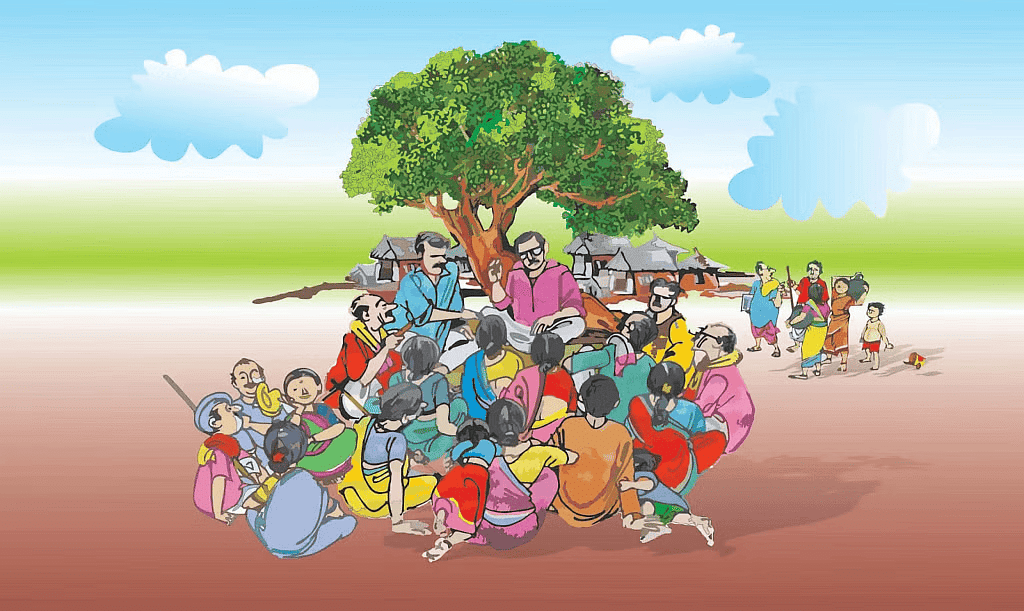
Active participation from villagers and their elected representatives is crucial. Villagers can raise problems, suggest solutions and help prepare development plans that reflect local needs.
Participation and Development
- The Panchayati Raj system encourages active participation by villagers in decision-making and planning for development.
- It helps ensure that the benefits of government schemes reach people at the grassroots level, promoting equity and local development.
Gram Panchayat
The Gram Panchayat is the basic unit of local government in a village or a group of small villages. It is the nearest government body to people in rural areas and works to solve village-level problems.
- The Gram Panchayat is the basic unit of rural local government.
- It is the nearest government body to the people in villages.
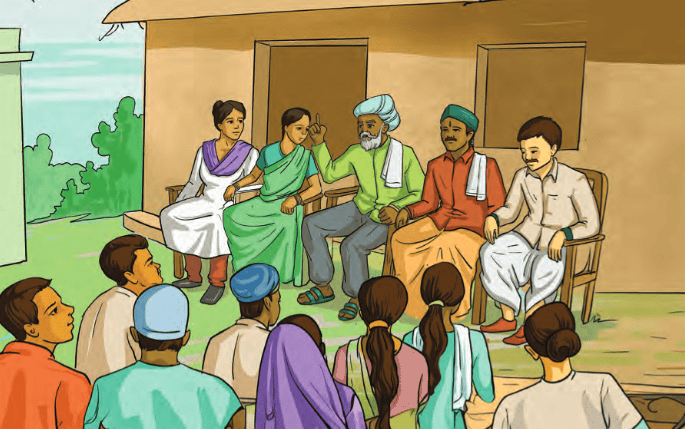
- Members of the Gram Panchayat are elected directly by the Gram Sabha.
- The Gram Sabha consists of all adults from a village or group of villages who are registered voters.
- In the Gram Sabha, both women and men discuss local issues and decide on village matters.
- Each Gram Panchayat elects a head known as the Sarpanch or Pradhan.
- There has been a steady increase in the number of women becoming Sarpanchs, showing improved gender representation in local leadership.
Role of Panchayat Secretary
- The Panchayat Secretary assists the Gram Panchayat in administrative work.
- Typical duties include organising meetings, maintaining records, preparing minutes, and helping implement Panchayat decisions.
Role of Patwari
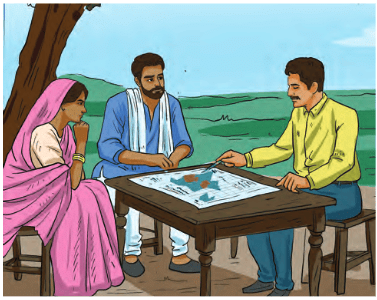
Many Gram Panchayats are supported by a local officer called a Patwari. The Patwari is usually responsible for keeping land and revenue records for the village. In some places Patwaris also maintain old maps and provide information about land ownership and boundaries.
Exemplary Sarpanchs
The Sarpanch can play a vital role in promoting development and resolving community issues. Some notable examples include:
- Dnyaneshwar Kamble, a transgender individual, became the Sarpanch of Tarangfal village in Maharashtra's Solapur district in 2017. His motto, "Seva to the village is seva to the public," shows his dedication to public service. He won against six other candidates.
- Vandana Bahadur Maida, from the Bhil community of Khankhandvi village in Madhya Pradesh, became her village's first female Sarpanch. She encouraged women to participate in Sabha meetings and worked on education and sanitation, helping transform local attitudes.
- Hiware Bazar in Ahmednagar district, Maharashtra, faced drought and low agricultural output. Under the leadership of Popatrao Baguji Pawar as Sarpanch, the village adopted methods such as rainwater harvesting, watershed management and tree planting (based on Anna Hazare's model). These steps improved groundwater and agriculture, turning Hiware Bazar into a greener, more prosperous village. In recognition of his work, Shri Popatrao Pawar was awarded the Padma Shri.
Child-Friendly Panchayat Initiative
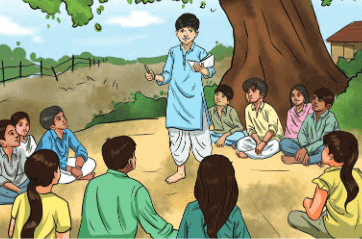
- Panchayats are expected to listen to everyone, including children. The Child-Friendly Panchayat Initiative helps children share their views on matters that affect them.
- Many states involve children through Bal Sabhas and Bal Panchayats, where village elders try to address issues raised by children.
- For example, in Maharashtra, Bal Panchayats have worked to reduce child labour and child marriage, urging parents to send children back to school and delay early marriages.
- Some Gram Panchayats have been recognised for child-friendly work. For example, Sikkim's Sangkhu Radhu Khandu Gram Panchayat has focused on children's needs by building compound walls around schools for safety and constructing kitchens to provide hygienic midday meals.
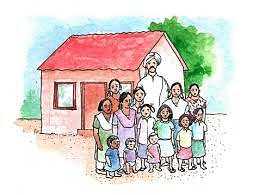
- In Rajasthan, the Children's Parliament initiative, part of Bunker Roy's Barefoot College programme, empowers disadvantaged children through education and democratic participation. Children aged 8 to 14 learn about democracy and social responsibility, attend night schools, and hold parliament-like elections where they form a Cabinet to oversee school management and community issues.
- The Children's Parliament has received awards, including the World's Children's Honorary Award in 2001, for promoting community development and social awareness.
Panchayat Samiti and Zila Parishad
Does the Panchayat Samiti function at the block level?
Yes. The Panchayat Samiti functions at the block level and acts as a link between the Gram Panchayat (village level) and the Zila Parishad (district level). It coordinates development programmes across villages in a block.
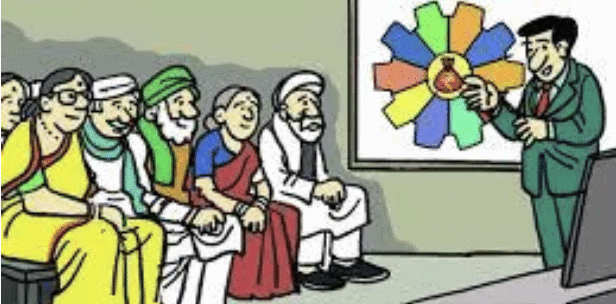
- Panchayat Samiti and Zila Parishad are local government bodies at the block and district levels, respectively, overseeing areas above the village level.
- The Panchayat Samiti connects Gram Panchayats to the Zila Parishad and helps coordinate plans and schemes across villages in a block.
- Members of these bodies are generally elected by local citizens, and may include local representatives such as Sarpanchs and members of the State Legislative Assembly.
- The structure and names of Panchayat Samitis vary from state to state, but their role in increasing local participation is common.
- They compile development plans from Gram Panchayats and present consolidated plans for district- or state-level funding. This helps secure funds for projects and implement central and state schemes, for example the Pradhan Mantri Gram Sadak Yojana which builds rural roads.
- At all three tiers, special provisions exist to ensure disadvantaged groups are heard, including the reservation of one-third of seats for women.
- The main objective of Panchayati Raj institutions is to allow villagers to take active part in managing and developing their local communities.
The Arthashästra: Ancient Wisdom on Governance
The Arthashästra is an ancient treatise on statecraft and administration written by Kautilya (also known as Chanakya) around 2,300 years ago. It discusses how to organise administration, strengthen the economy, and manage the affairs of a state from the village level to regional centres.
- Kautilya described how to organise administration according to the number of villages: Sangrahana for every 10 villages, Kärvatika for every 100 villages, Dronamukha for every 400 villages, and Sthännya for every 800 villages.
- The Arthashästra shows that ideas of local administration and planning have a long history in the subcontinent.
Conclusion
Local government through the Panchayati Raj gives villages the power to plan and manage their development. By involving ordinary citizens in the Gram Sabha and electing representatives to the Gram Panchayat, Panchayat Samiti and Zila Parishad, communities can identify local problems, prepare plans, and use government schemes and funds more effectively. Participation, representation (including reservations for women and disadvantaged groups) and regular elections help make rural governance more democratic and responsive to the needs of people in villages like Lakshmanpur.
FAQs on Chapter Notes: Local Government in Rural Areas
| 1. What is a panchayat and how does it work in rural areas? |  |
| 2. What are the main functions and responsibilities of a gram panchayat? | |
| 3. How are panchayat members elected and who can become a sarpanch? | |
| 4. What's the difference between a gram panchayat and a block development administration? | |
| 5. Why is women's participation important in village panchayats according to CBSE Class 6 curriculum? | |