CBSE Class 6  >  Class 6 Notes  >  Science  >  Very Short Question Answers: Living Creatures: Exploring their Characteristics

Very Short Question Answers: Living Creatures: Exploring their Characteristics

Q1: What distinguishes living things from non-living things?
Ans: 
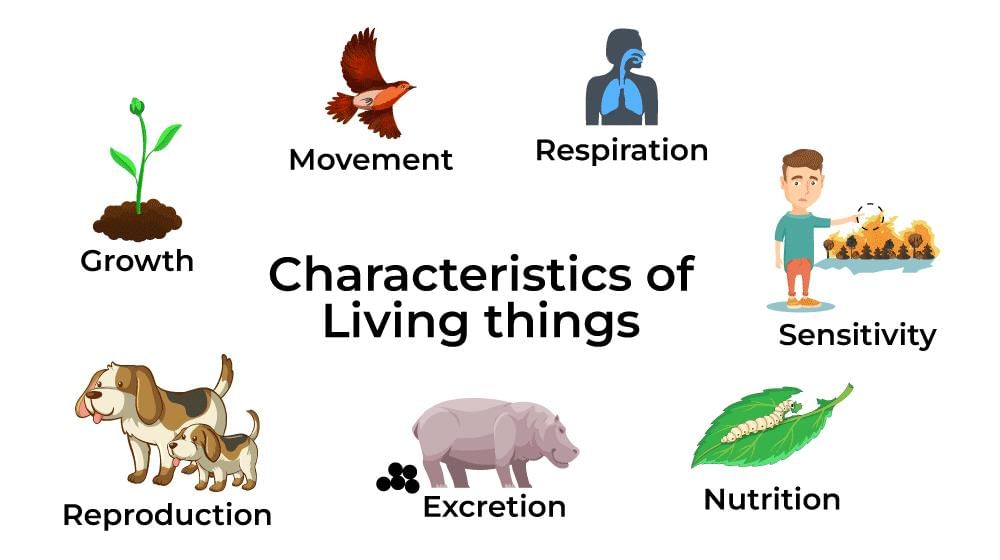
Living things grow, move, breathe, reproduce, and need food; non-living things do not.


Q2: Can plants move from one place to another?
Ans: 
No, plants do not move location but can exhibit movements like opening flowers.


Q3: What is growth in living beings?
Ans: 
Growth is an increase in size, complexity, and development over time.Very Short Question Answers: Living Creatures: Exploring their Characteristics
Q4: Why do living beings need food?
Ans: 
Food provides energy for growth, repair, and maintenance of body functions.


Q5: What is the difference between breathing and respiration?
Ans: 
Breathing is inhaling and exhaling air; respiration uses oxygen to release energy from food.


Q6: What is Excretion?
Ans: 
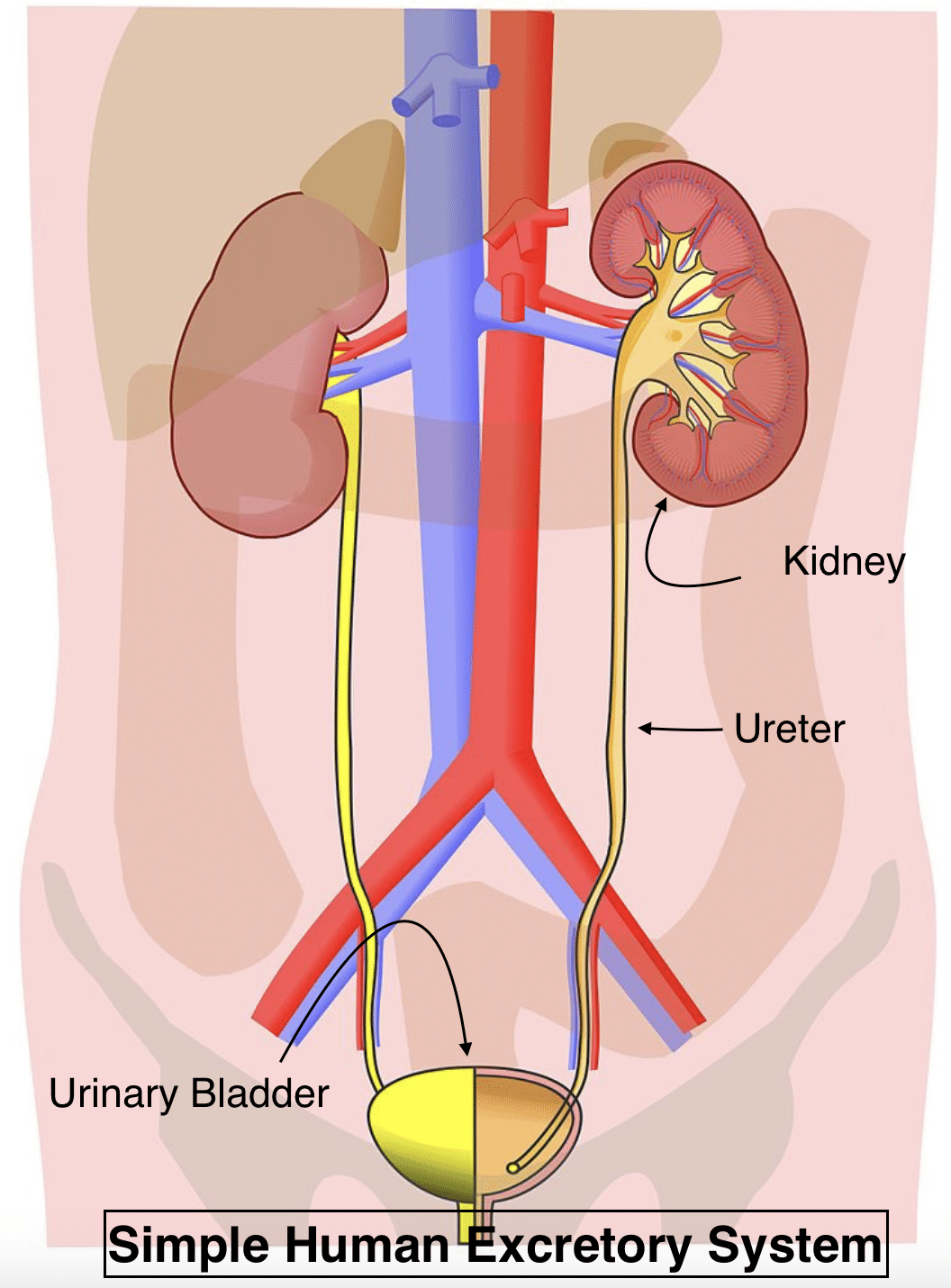
Excretion is the process of removing waste products from the body.Very Short Question Answers: Living Creatures: Exploring their Characteristics
Q7: How do animals excrete waste?
Ans:
Animals excrete waste through organs like kidneys, which produce urine.


Q8: How do plants excrete waste?
Ans: 
Plants excrete waste mainly in the form of carbon dioxide, oxygen (as a byproduct of photosynthesis), and other metabolic wastes through leaves, stems, and roots.


Q9: What is a stimulus?
Ans:
A stimulus is anything that causes a living being to react or respond.


Q10: What is reproduction?
Ans: 
Reproduction is the process by which living beings produce new individuals of their kind.


Q11: When is a living being considered dead?
Ans: 
A living being is dead when it can no longer exhibit life characteristics like movement and growth.


Q12: Why is water essential for seed germination?
Ans:
Water activates enzymes that start the growth process within the seed.Very Short Question Answers: Living Creatures: Exploring their Characteristics

Q13: What conditions are necessary for seed germination?
Ans:
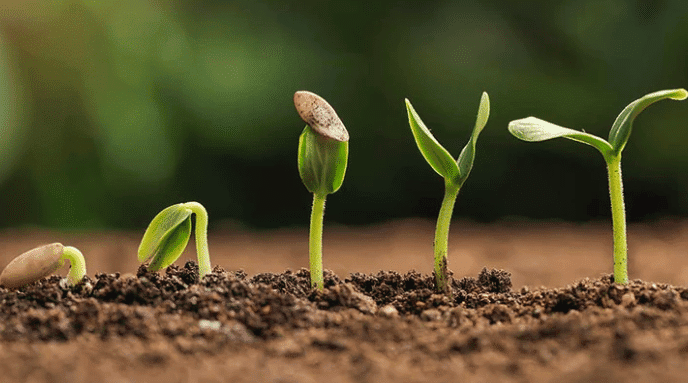
Water, air, and suitable light or dark conditions are essential for seed germination.


Q14: Do all seeds require light to germinate?
Ans: 
No, some seeds need light while others require darkness to germinate.


Q15: What happens during the life cycle of a plant?
Ans: 
A plant grows from a seed to maturity, produces flowers and fruit, and generates new seeds.


Q16: What stages are involved in a mosquito's life cycle?
Ans: 
The stages are egg, larva, pupa, and adult.


Q17: How do frogs develop through their life cycle?
Ans:
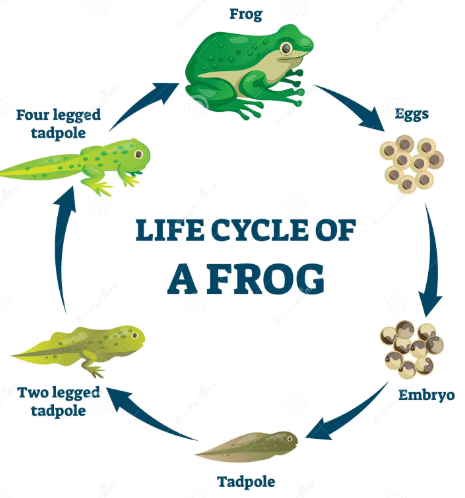
Frogs develop from eggs to tadpoles, then to froglets, and finally to adult frogs.Very Short Question Answers: Living Creatures: Exploring their Characteristics
Q18: What is phototropism in plants?
Ans: 
Phototropism is the growth of a plant toward light.


Q19: What is the role of air in seed germination?
Ans: 
Air provides oxygen necessary for respiration during germination.


Q20: What is a characteristic of living beings related to stimuli?
Ans: 
Living beings respond to stimuli to adapt and protect themselves.

The document Very Short Question Answers: Living Creatures: Exploring their Characteristics is a part of the Class 6 Course Science for Class 6.
All you need of Class 6 at this link: Class 6

FAQs on Very Short Question Answers: Living Creatures: Exploring their Characteristics

1. What are the main characteristics that make something a living creature?
Ans. Living creatures possess seven key characteristics: nutrition, respiration, growth, movement, reproduction, excretion, and sensitivity to their environment. These features distinguish living organisms from non-living things. All living creatures, whether plants, animals, or microorganisms, display these life processes in some form, making them fundamental to understanding what defines life itself in CBSE Class 6 Science.
2. How do plants and animals differ in their basic characteristics as living organisms?
Ans. Plants are autotrophic, producing their own food through photosynthesis, while animals are heterotrophic, consuming other organisms for nutrition. Animals possess voluntary movement and nervous systems enabling rapid responses, whereas most plants show slower growth responses and are rooted. Both reproduce and respire, but plants store starch and animals store glycogen. These differences reflect adaptations to their distinct environments and lifestyles.
3. Why do we need to classify living creatures into different groups and categories?
Ans. Classification organises the enormous diversity of living organisms into manageable categories based on shared characteristics and evolutionary relationships. This system helps students identify and study organisms systematically, understand biodiversity patterns, and recognise how different creatures are related. Scientific classification also aids in predicting characteristics of unfamiliar species and studying their ecological roles within ecosystems.
4. What exactly is meant by respiration in living creatures, and is it the same as breathing?
Ans. Respiration is a metabolic process where living organisms break down glucose to release energy for survival, distinct from breathing-the physical movement of air. All creatures respire, including plants and single-celled organisms that don't breathe. Aerobic respiration uses oxygen; anaerobic respiration occurs without it. This energy release powers all life activities, from movement to growth and reproduction.
5. Can you explain how sensitivity and response work in different types of living creatures?
Ans. Sensitivity refers to a living creature's ability to detect changes in its environment through stimuli like light, sound, or temperature. Living organisms respond to these stimuli through movement, growth changes, or behavioural adjustments. Animals respond rapidly via nervous systems; plants respond slowly through hormonal changes. This characteristic enables creatures to survive by adapting to environmental challenges and finding resources essential for life processes.
Explore Courses for Class 6 exam
Get EduRev Notes directly in your Google search
Related Searches
Free, video lectures, study material, Sample Paper, Semester Notes, Very Short Question Answers: Living Creatures: Exploring their Characteristics, past year papers, Exam, ppt, Extra Questions, shortcuts and tricks, Very Short Question Answers: Living Creatures: Exploring their Characteristics, mock tests for examination, practice quizzes, MCQs, Objective type Questions, Viva Questions, pdf , Very Short Question Answers: Living Creatures: Exploring their Characteristics, Important questions, Previous Year Questions with Solutions, Summary;