Globalisation and it's Drivers


Globalization Overview
Globalization refers to the growing interconnectedness and interdependence among countries, businesses, people and ideas across the world. It manifests through increasing flows of goods, services, capital, technology, information and culture. Over time, activities that were once local or national have become global, affecting production, consumption, finance, governance and social interactions.
Global Company Definition

A global firm (or transnational corporation) is a business that operates across multiple countries and coordinates its activities on an international scale. Such firms combine production, marketing, research and distribution across national borders to exploit global markets, resources and efficiencies.
- Toyota: A Japanese automaker that designs and manufactures vehicles for over 170 countries. Toyota coordinates production and engineering across many countries and manages an extensive global supply chain to meet diverse market needs.
- Walmart: Originally a U.S. retailer, Walmart is described here as the world's largest company by revenue, operating over 11,500 stores in 27 countries and employing more than 2 million people. Its global presence depends on extensive international sourcing and large-scale logistics and retail operations.
- Coca‐Cola: An American beverage company offering over 3,500 products in more than 200 countries. Coca‐Cola maintains global production, marketing and distribution systems with a significant share of revenue coming from foreign markets.
Economic Globalization
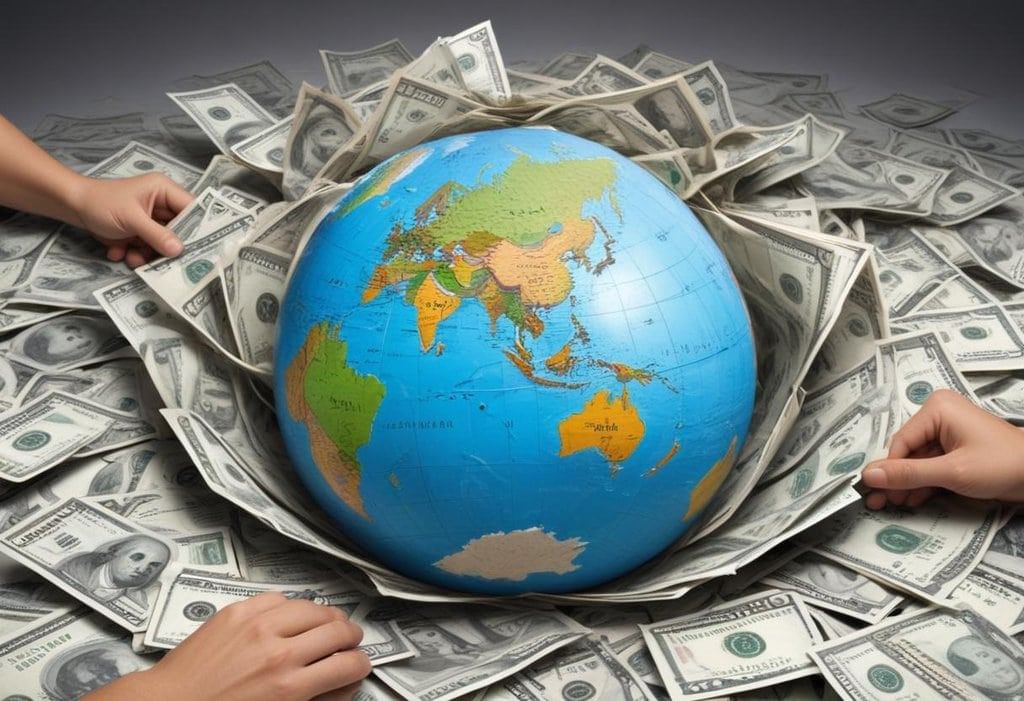
Economic globalization is the process by which national economies become integrated into the global economy. It is driven by trade liberalisation, cross-border investment, global production networks and the spread of technology and information. Economic globalization increases the movement of goods, services, capital, technology and skilled labour across borders and leads to greater interdependence among national economies.
Key mechanisms include trade in goods and services, foreign direct investment (FDI), cross-border portfolio flows, and global value chains (GVCs) where production stages are distributed across countries to exploit comparative advantages.
Example of a Global Company: Apple Inc.
Apple Inc., founded in 1976 in California, exemplifies a modern global technology firm. Apple designs, markets and sells devices such as the iPhone, iPad, Mac and Apple Watch, alongside software and services. The company operates across multiple regions (Americas, Europe, Greater China, Japan, Asia Pacific) and uses a mix of company-owned retail stores, online platforms and third‐party resellers. Apple's global supply chain, design centres, manufacturing partnerships and international marketing contribute to its large market value and revenue.
Drivers of Globalization
Globalization is propelled by multiple interacting drivers. These drivers lower costs, reduce barriers, create incentives and enable technologies that make international coordination and exchange feasible at scale.
- Technological advances: Innovations in information and communication technology (ICT)-the internet, mobile communications, cloud computing, and data analytics-have drastically lowered the cost and time of communicating, coordinating and transacting internationally. Digital platforms enable global marketplaces and services.
- Transport and logistics improvements: Advances in shipping (including containerisation), air freight, and logistics systems have reduced the time and cost of moving goods globally. Containerisation, developed in the mid‐20th century, revolutionised cargo handling and global trade.
- Trade liberalisation and multilateral institutions: Reductions in tariffs, quotas and other trade barriers-as well as the growth of trade agreements and institutions such as the World Trade Organization (WTO)-have encouraged cross‐border trade and investment by providing rules and dispute‐resolution mechanisms.
- Liberalisation of capital flows and financial integration: Financial deregulation, international banking, and cross‐border portfolio investment allow capital to move more freely, funding global projects, FDI and multinational expansion.
- Search for lower costs: Firms offshore and outsource production, services and back‐office functions to countries with lower labour or input costs to reduce unit costs and increase competitiveness.
- Market‐seeking motives and rising global demand: Growing incomes in emerging markets (for example, China, India, Brazil) create new consumer bases. Firms expand internationally to access larger markets and diversify demand.
- Access to skills, technology and resources: Globalisation enables firms to tap specialised skills, R&D, natural resources and technologies that are not available or are more costly domestically.
- Scale economies and efficiency: Standardising products and centralising some activities can deliver economies of scale in production, marketing and R&D.
- Competitive and strategic drivers: Global competitors and the need to follow customers or suppliers across borders prompt firms to internationalise to protect market share and strategic position.
- Standardisation and convergence of business practices: International standards for product quality, safety, technology and accounting facilitate cross‐border business by reducing transaction costs and uncertainty.
- Policy reforms and privatisation: Deregulation, privatisation and pro‐investment policies adopted by many countries attract multinational firms and increase cross‐border economic activity.
- Global institutions and networks: International organisations (e.g., WTO, IMF, World Bank), regional economic blocs, and global professional networks support integration through policy frameworks, finance, technical assistance and cooperation.
International Business Environment
The international business environment comprises external forces and conditions that affect firms operating across national borders. Understanding this environment helps firms make strategic decisions about entry, operations and risk management.
- Political environment: Government stability, foreign policy, trade policy, taxation and political risk influence market entry, contract enforcement and operational continuity.
- Economic environment: Macroeconomic indicators (GDP growth, inflation, exchange rates), market size, income distribution and trade policies determine demand and profitability.
- Socio‐cultural environment: Language, values, customs, consumer preferences and demographic trends affect product design, marketing and human resource practices.
- Technological environment: Infrastructure, digital readiness and the pace of technological innovation shape opportunities for production, distribution and services.
- Legal and regulatory environment: Laws on trade, competition, employment, taxation and intellectual property protection vary across countries and influence compliance and strategy.
- Environmental and ecological factors: Sustainability regulations, resource availability and environmental concerns increasingly affect global operations and supply chains.
- Institutional environment: The role of multilateral agreements, regional blocs, standards bodies and rating agencies in shaping market access, incentives and risks.
These external forces present both opportunities (new markets, resources, innovation) and challenges (exchange‐rate volatility, political risk, cultural adaptation, regulatory compliance). Firms must adapt their strategies-through localisation, risk mitigation, hedging and compliance-to succeed internationally.
Importance of International Business
- Access to new markets: International expansion opens additional revenue opportunities and customer segments beyond domestic markets.
- Economies of scale: Serving larger markets allows firms to spread fixed costs and lower per‐unit costs through larger production and distribution runs.
- Diversification of risk: Operating across multiple countries reduces dependence on a single market and spreads business risk.
- Access to resources: Firms gain access to raw materials, specialised labour, technologies and inputs that improve competitiveness.
- Potential for higher profits: Global markets can provide higher growth rates and margins through premium pricing, cost advantages or expanded sales.
- Competitive advantage: International presence may be necessary to keep pace with multinational rivals, maintain brand strength and secure global supply chains.
- Spurring innovation: Exposure to diverse markets, customers and talent fosters new ideas, product development and process improvements.
- National economic benefits: Exports, inbound FDI, job creation and tax revenues from international business contribute to national economic growth.
Causes of Globalization

While drivers and causes overlap, the major causes of globalization include the following factors that have jointly reduced the cost of distance and increased incentives for cross‐border integration.
- Technological progress: Faster communication, lower transaction costs and digital platforms make global coordination feasible and economical.
- Trade liberalisation: Bilateral, regional and multilateral agreements have reduced tariffs and non‐tariff barriers, expanding the scope for international trade.
- Transport innovations: Container shipping, improved road/rail links and expanded air cargo capacity reduce freight costs and transit times, enabling just‐in‐time production and long supply chains.
- Multinational enterprises: The growth of MNCs that internalise international transactions through FDI has integrated local economies into global networks.
- Growth of services: Digitisation and the liberalisation of service trade have globalised finance, IT, professional services and tourism.
- Rise of outsourcing and offshoring: Fragmentation of production across borders to exploit cost and capability differences embeds firms in global supply chains.
- Standardisation: International standards in product quality, safety and technology reduce transaction costs and support global product strategies.
- Economic growth in emerging markets: Rapid industrialisation and rising incomes in large economies have enlarged global demand and supply capabilities.
Advantages of Globalization
- Economic growth: Enhanced trade and investment can stimulate output, productivity and overall economic expansion.
- Increased competition: Competition from foreign firms pressures domestic firms to innovate, cut costs and increase efficiency.
- Access to capital: Firms and governments can tap global capital markets to finance investment and development projects.
- Access to resources: Companies gain raw materials, specialised inputs and technologies from global suppliers.
- Lower prices for consumers: Imported goods and competitive sourcing can reduce consumer prices and increase choice.
- Expanded trade: Greater trade volumes and market integration facilitate specialisation according to comparative advantage.
- Technology transfer: Cross‐border investment and collaboration promote diffusion of technology and managerial practices.
- Cultural exchange: Global flows of media, ideas and people enrich cultural diversity and understanding.
- Employment opportunities: Global firms and export sectors can generate jobs and skill development in host countries.
Disadvantages of Globalization
- Job displacement: Production shifts and outsourcing can lead to job losses in sectors or regions unable to compete with lower‐cost producers.
- Rising inequality: Gains from globalization are often unevenly distributed, benefiting capital owners and skilled workers more than low‐skilled labour.
- Economic volatility: Integrated financial markets can transmit crises rapidly across borders, amplifying shocks.
- Loss of policy autonomy: National governments may face constraints in pursuing independent economic policies due to global market pressures.
- Threats to local cultures: Global cultural products and brands can erode indigenous traditions and local diversity.
- Environmental harm: Expanded production and transport raise concerns about pollution, resource depletion and climate change.
- Risk of exploitation: Weak regulation in parts of global supply chains can permit poor labour standards and environmental negligence.
- Health risks: Increased cross‐border movement of people and goods can accelerate the spread of infectious diseases.
- Tax avoidance: Multinational structures allow profit shifting and base erosion, reducing tax revenues for some countries.
Effects of Globalization
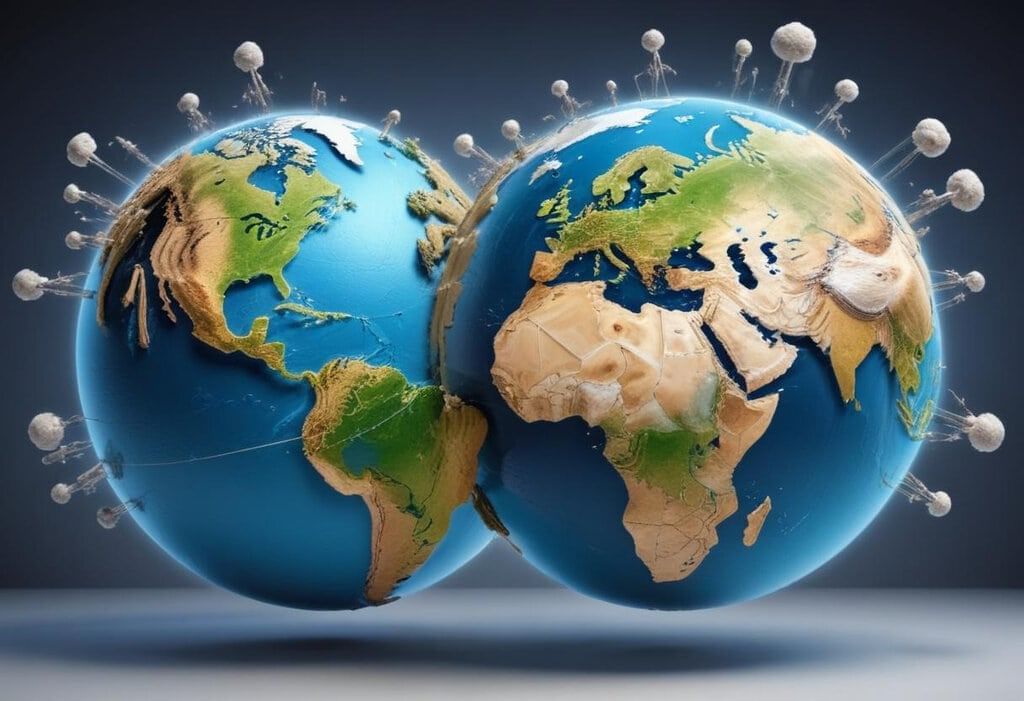
Globalization affects firms, consumers and nations in multiple ways. Some of the principal effects are:
- Increased trade and investment: Higher volumes of cross‐border trade and FDI integrate national markets into the global economy.
- Access to cheaper and wider range of goods: Consumers benefit from greater choice and lower prices due to imports and global sourcing.
- Economic growth and structural change: Many countries experience higher growth, industrialisation and shifts from agriculture to manufacturing and services, though benefits vary.
- Spread of technology and knowledge: Cross‐border collaboration accelerates innovation diffusion and managerial best practices.
- Expansion of outsourcing and offshoring: Production and services are increasingly organised across multiple countries.
- Transfer of human capital and skills: Movement of professionals and students promotes knowledge flows and skill accumulation.
- Greater competitiveness: Firms face global rivals, leading to improved quality, efficiency and innovation.
- Job dislocation in certain sectors: Some domestic industries and occupations may shrink due to global competition.
- Widening income gaps: Globalisation can contribute to greater inequality between and within countries depending on policy responses and institutional capacity.
Top Multinational Companies
Leading multinationals hold broad international footprints and are influential in shaping global trade and investment patterns. Examples cited here include:
- Walmart: Described earlier as the world's largest company by revenue with extensive store networks and international operations; a significant portion of its revenue is generated outside the U.S.
- Amazon: One of the world's largest online retailers and cloud service providers, operating in numerous countries and offering retail services, Amazon Web Services (AWS) and a large logistics and fulfilment network.
Types of International Marketing
Firms choose different international marketing approaches depending on strategy, resources and target markets. Common types include:
- Export marketing: Producing in the home country and selling in foreign markets through exports; the simplest entry mode.
- International marketing: Tailoring marketing strategies for each foreign market, adapting the 4Ps (product, price, place, promotion) to local conditions.
- Multinational marketing: A decentralised approach where subsidiaries in each country have autonomy to adapt strategies to local markets.
- Global marketing: A standardised marketing mix applied across major markets to achieve economies of scale and a consistent brand image.
- Transnational marketing: A hybrid approach combining global integration with local responsiveness-some products are standardised while others are adapted.
- Cross‐cultural marketing: Customising campaigns to reflect cultural values, languages and preferences to enhance local acceptance.
- Grey market marketing: Sales through unofficial channels without authorised distribution agreements, often resulting in parallel imports and discounted pricing.
Conclusion
Globalization has reshaped the business environment by enabling firms to operate, compete and source resources across borders. It presents substantial opportunities-market expansion, cost savings, technology transfer and innovation-but also creates challenges such as job displacement, inequality, regulatory complexity and environmental pressures. Successful international strategy requires understanding the drivers of globalization, adapting to diverse external environments, managing risks and aligning global capabilities with local responsiveness.
FAQs on Globalisation and it's Drivers
| 1. What are the main drivers of globalization? |  |
| 2. How does economic globalization impact developing countries? | |
| 3. What are some of the key causes of globalization? | |
| 4. How do top multinational companies contribute to economic globalization? | |
| 5. What are some of the effects of globalization on local economies? | |