Citizenship


Citizenship in India
Citizenship is the legal status by which a person is recognised under law as a member of a sovereign state and entitled to the rights and duties that membership carries. In India, the Constitution and statute law together determine who is a citizen and how citizenship may be acquired or lost.
Constitutional and Statutory Basis
In India, Articles 5-11 of the Constitution (Part II) set out the initial rules about citizenship at the commencement of the Constitution (26 January 1950) and vest Parliament with power to regulate citizenship by law. Parliament exercised that power by enacting the Citizenship Act, 1955 (as amended, notably in 1986, 2003, 2005, 2015 and 2019), which provides detailed rules for acquisition and termination of Indian citizenship.
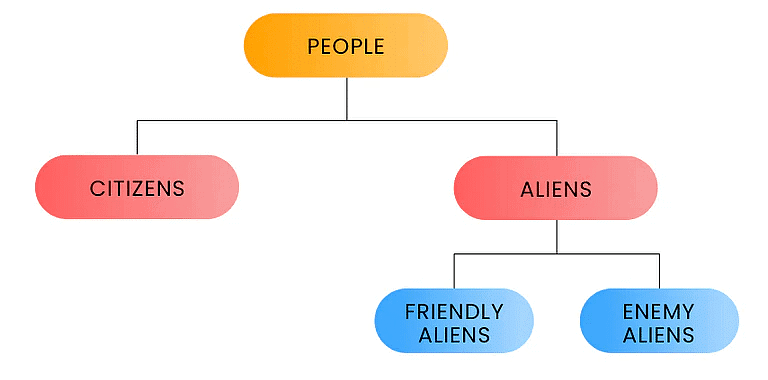
- The population of a state is divided into citizens and aliens. Aliens may be friendly or enemy aliens.
- Citizens enjoy the full set of civil and political rights under the Constitution; aliens do not. Enemy aliens may be further deprived of certain protections (for example, special rules under clauses (1)-(2) of Article 22 concerning arrest and detention).
- Some Fundamental Rights specifically apply only to citizens (for example, Article 15 - prohibition of discrimination, Article 16 - equality of opportunity in public employment, and Article 19 - certain freedoms of speech, movement, residence, etc.).
Single Citizenship
Although India is a federal polity in structure, the Constitution adopts the principle of single citizenship - every person recognised as a citizen is a citizen of the whole of India rather than of a constituent state alone. This is different from some federal countries (for example, the United States and Switzerland) where a person may have both state (or canton) citizenship and national citizenship.
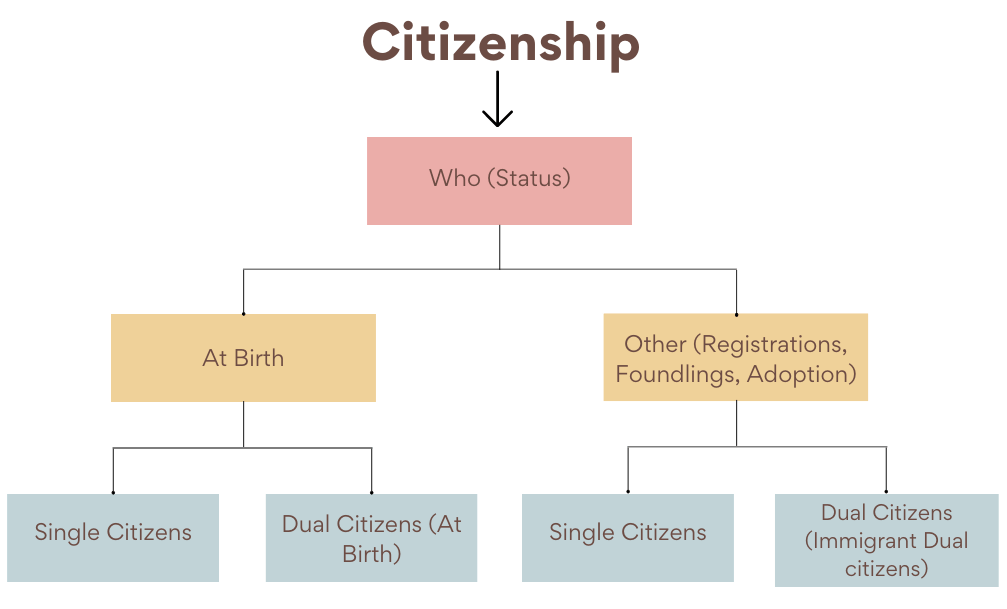
- The Constitution does not provide for dual citizenship; only Indian citizenship exists within the domestic constitutional scheme.
Citizenship as Status: Constitutional and Statutory Interaction
Part II of the Constitution describes who were to be citizens at commencement; it does not purport to be a permanent and exhaustive code. Article 11 expressly recognises Parliament's power to make laws about acquisition and termination of citizenship. The Citizenship Act, 1955 therefore governs citizenship after commencement and provides five principal modes of acquisition: birth, descent, registration, naturalisation and incorporation of territories.
Citizens' Rights (distinct from aliens)
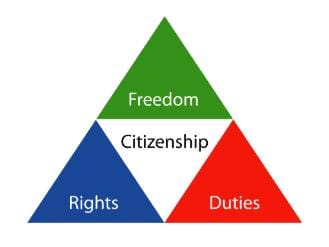
- Some Fundamental Rights are reserved for citizens only (Articles 15, 16, 19).
- Only citizens are eligible for certain high offices: President, Vice-President, Members of Parliament and State Legislatures, and certain constitutional appointments (for example, judges of High Courts and the Supreme Court are Indian citizens by qualification).
- The right to vote and the eligibility to be elected to Parliament or State Legislatures are confined to citizens.
- All the rights above are denied to aliens (both friendly and enemy), and enemy aliens face special disabilities in addition.
Articles 5-11 - Key Provisions
Articles 5-11 set out transitional provisions about who would be citizens at the commencement and empower Parliament to regulate citizenship thereafter. The principal contents are summarised under individual Articles.
Article 5 - Citizenship at the commencement of the Constitution
At the commencement, a person domiciled in the territory of India is a citizen of India if:
- he or she was born in the territory of India; or
- either of whose parents was born in the territory of India; or
- he or she has been ordinarily resident in India for not less than five years immediately preceding the commencement.
Article 6 - Rights of citizenship of certain persons who migrated to India from Pakistan
Persons who migrated to India from the territory now included in Pakistan are deemed citizens at commencement if they satisfy prescribed conditions:
- He or either of his parents or any of his grandparents was born in India as defined in the Government of India Act, 1935 (as originally enacted).
- In the case where such person has so migrated before the nineteenth day of July 1948, he has been ordinarily resident in the territory of India since the date of his migration.
- In the case where such person has so migrated on or after the nineteenth day of July 1948, he has been registered as a citizen of India by an officer appointed on that behalf by the Government of the Dominion of India on an application made by him therefore to such officer before the commencement of this Constitution in the form and manner prescribed by that Government: Provided that no person shall be so registered unless he has been resident in the territory of India for at least six months immediately preceding the date of his application.
Article 7 - Rights of persons who migrated to Pakistan
Persons who migrated from India to Pakistan after 1 March 1947 are not deemed to be citizens of India, subject to exceptions:
Provided that nothing in this article shall apply to a person who, after having so migrated to the territory now included in Pakistan, has returned to the territory of India under a permit for resettlement or permanent return issued by or under the authority of any law and every such person shall for the purposes of clause (b) of Article 6 be deemed to have migrated to the territory of India after the nineteenth day of July 1948.
Article 8 - Persons of Indian origin residing outside India
- Notwithstanding anything in article 5, any person who or either of whose parents or any of whose grandparents was born in India as defined in the Government of India Act, 1935 (as originally enacted), and who is ordinarily residing in any country outside India as so defined shall be deemed to be a citizen of India.
- if he has been registered as a citizen of India by the diplomatic or consular representative of India in the country where he is for the time being residing on an application made by him therefore to such diplomatic or consular representative, whether before or after the commencement of this Constitution, in the form and manner prescribed by the Government of the Dominion of India or the Government of India.
Article 9 - Persons voluntarily acquiring citizenship of a foreign State
- No person shall be a citizen of India by virtue of article 5 or be deemed to be a citizen of India by virtue of article 6 or article 8 if he has voluntarily acquired the citizenship of any foreign State.
Article 10 - Continuance of the rights of citizenship
Every person who is or is deemed to be a citizen of India under the foregoing provisions continues to be a citizen subject to any law made by Parliament.
Article 11 - Parliamentary power to regulate citizenship
- Nothing in the foregoing provisions of this Part shall derogate from the power of Parliament to make any provision with respect to the acquisition and termination of citizenship and all other matters relating to citizenship.
Try yourself: Who is considered a citizen of India at the commencement of the Constitution?
Part II and the Citizenship Act, 1955
Part II of the Constitution describes classes of persons who were to be citizens on 26 January 1950 and leaves the detailed law to Parliament. In exercise of Article 11, Parliament enacted the Citizenship Act, 1955, subsequently amended. The Act sets out modes of acquisition of citizenship after commencement and the modes by which citizenship may be lost.
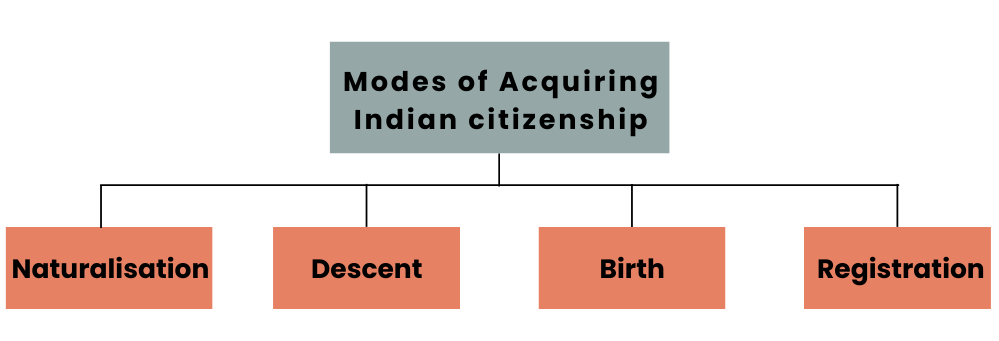
Acquisition of Indian Citizenship under the Citizenship Act, 1955
By Birth
A person is a citizen of India by birth only as per the date-wise rules below:
Born between 26 January 1950 and 1 July 1987: Every person born in India during this period is a citizen of India by birth, regardless of the nationality of parents.
Born between 1 July 1987 and 3 December 2004: A person born in India during this period is a citizen of India only if at least one parent is a citizen of India at the time of birth.
Born on or after 3 December 2004: A person born in India on or after this date is a citizen of India only if:
At least one parent is a citizen of India, and
The other parent is not an illegal migrant at the time of birth.
Exceptions (for all periods): A child born in India is not a citizen by birth if:
Either parent is a diplomatic officer of a foreign State in India; or
Either parent is an enemy alien and the birth occurs in a place under enemy occupation.
By Descent
- A person born outside India on or after 26 January 1950 is a citizen of India by jus sanguinis (law of the blood) if either parent is a citizen of India at the time of that person's birth; statutory provisions prescribe formalities and registration requirements for later births.
By Registration
The prescribed authority may register as a citizen of India any person who is not a citizen by the Constitution or the Act on application where the applicant falls within categories specified by law. Typical categories include:
- Persons of Indian origin who have been ordinarily resident in India for five years immediately before application.
- Persons of Indian origin ordinarily resident outside India (subject to prescribed conditions).
- Women married to Indian citizens (subject to statutory conditions).
By Naturalisation
Citizenship by naturalisation is by statutory grant after an application and satisfaction of qualifying conditions. Typical qualifications include:
- He must be a person of full age and capacity.
- He must not be a citizen of a country where Indian citizens are prevented from becoming a citizen by naturalization.
- He has renounced the citizenship of the other country.
- He has either resided in India or has been in Government service for 12 months before the date of making the application for naturalization, or during 7 years prior to these 12 months, he has resided or has been in the Government service for not less than four years
- He must take an oath of allegiance.
- He is of a good character.
- He has adequate knowledge of a language recognized by the Constitution.
By Incorporation of Territory
- If a new territory becomes part of India, the Government of India may, by notification, specify persons of that territory who shall be citizens of India.
Termination of Citizenship
The Citizenship Act, 1955 recognises three primary modes by which an Indian citizen may cease to be one: renunciation, termination and deprivation.
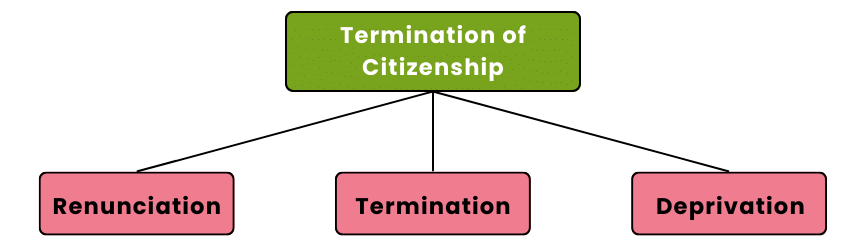
Renunciation
- Voluntary renunciation is an act by which a person who intends to obtain the citizenship of another country gives up Indian citizenship by a declaration in the prescribed manner, subject to statutory conditions.
Termination
- Termination occurs by operation of law when an Indian citizen voluntarily acquires the citizenship of another country; the person automatically ceases to be an Indian citizen.
Deprivation
- Deprivation is compulsory termination by the Government where citizenship was acquired by registration or naturalisation by fraudulent means or if other statutory grounds for deprivation are established.
Overseas Citizenship of India (OCI)
The concept of Overseas Citizenship of India (OCI) was introduced through the Citizenship (Amendment) Act, 2005 and related rules beginning in the early 2000s to provide certain long-term residency and other benefits to persons of Indian origin who hold foreign citizenship. OCI is not dual citizenship; it is a form of long-term visa and status that confers specified privileges but not political rights.
Background and Legislative History
- A High Level Committee on the Indian Diaspora was constituted in September 2000 under L. M. Singhvi to study the global Indian diaspora and recommend measures to strengthen links with India.
- The Citizenship (Amendment) Act, 2003 initially provided for OCI for persons of Indian origin from certain countries; later amendments expanded scope.
- The Citizenship (Amendment) Act, 2005 broadened OCI grant to persons of Indian origin from all countries except Pakistan, Bangladesh or any other country notified by the Central Government.
- The Citizenship (Amendment) Act, 2015 merged the Person of Indian Origin (PIO) card scheme into the OCI scheme, creating a single OCI cardholder scheme and cancelling the separate PIO card scheme (PIO cards were rescinded on 9 January 2015; existing PIO cardholders were deemed OCI cardholders).
- OCI remains distinct from Indian citizenship and does not amount to dual nationality (prohibited by Article 9 of the Constitution).
Concept and Eligibility
- An OCI cardholder is a person who is a citizen of another country but whose ancestors were citizens of India, or who belonged to territory that became part of India after 15 August 1947, and who satisfies statutory eligibility criteria.
- OCI registration confers a multiple-entry, lifelong visa for visiting India and exemption from registration with the Foreigners Regional Registration Officer (FRRO) or Foreigners Registration Officer (FRO) for any length of stay.
- OCI cardholders are not entitled to political rights and certain public employment rights; they are, however, given parity with Non-Resident Indians (NRIs) in many economic, financial and educational matters, subject to statutory exceptions (for example, acquisition of agricultural property is restricted).
Important Provisions
I. OCI - Registration- The Central Government may register as an overseas citizen of India cardholder:
- any person of full age and capacity,
- who is a citizen of another country, but was a citizen of India at the time of, or at any time after, the commencement of the Constitution;
- who is a citizen of another country, but was eligible to become a citizen of India at the time of, or at any time after, the commencement of the Constitution; or
- who is a citizen of another country but was born in a territory that became a part of India after August 15, 1947; or
- a person who is a minor child of a person mentioned in clause (a); or
- a person who is a minor child and whose both parents are citizens of India or one of the parents is a citizen of India; or
- spouse of a citizen of India or spouse of an Overseas Citizen of India Cardholder, whose marriage has been registered and subsisted for a continuous period of not less than two years immediately preceding the submission of the application.
- any person of full age and capacity,
- No person shall be eligible for registration as an Overseas Citizen of India Cardholder if he or she, or either of his or her parents, grandparents, or great grandparents, is or was a citizen of Pakistan, Bangladesh, or any other country specified by the Central Government.
- The Central Government may specify the date as of which existing persons of Indian origin cardholders will be considered overseas citizens of India cardholders.
- Notwithstanding anything in point (1), the Central Government may, if it is satisfied that special circumstances exist, register a person as an Overseas Citizen of India Cardholder after recording the circumstances in writing.
II. OCI - Conferment of Rights
- An overseas citizen of India cardholder is entitled to the rights specified by the Central Government in this regard.
- A cardholder who is an overseas citizen of India is not entitled to the following rights (which are conferred on a citizen of India)-
- He shall not be entitled to the right to equal opportunity in public employment.
- He is ineligible for election as President.
- He is ineligible for election as Vice President.
- He is ineligible for appointment as a Supreme Court Judge.
- He shall be ineligible for appointment as a High Court Judge.
- He is not eligible for voter registration.
- He shall be ineligible to serve in the House of People or the Council of States.
- He is ineligible to serve in the State Legislative Assembly or the State Legislative Council.
- He shall be ineligible for appointment to public services and posts in connection with Union or State affairs, except in such services and posts as the Central Government may specify.
OCI rights are subject to Central Government notification (2021 Rules).
III. OCI - Renunciation
- If any overseas citizen of India cardholder makes a declaration in the prescribed manner renouncing the card registering him as an overseas citizen of India cardholder.
- the declaration shall be registered by the Central Government, and that person shall cease to be an overseas citizen of India cardholder upon such registration.
- When a person ceases to be an overseas citizen of India cardholder,
- the spouse of that person of foreign origin and each minor child of that person registered as an OCI card holder ceases to be an overseas citizen of India cardholder.
IV. OCI - Cancellation of Registration
The Central Government may cancel a person's registration as an overseas citizen of India cardholder if the Central Government is satisfied that-
- the registration as an overseas citizen of India cardholder was obtained through fraud, false representation, or concealment of any material fact;
- the overseas citizen of India cardholder has shown disaffection towards the Indian Constitution; or
- the overseas citizen of India cardholder unlawfully traded or communicated with an enemy during any war in which India may be engaged;
- the overseas citizen of India cardholder has been sentenced to imprisonment for a term of not less than two years within five years of registration;
- it is necessary to do so in the interests of India's sovereignty and integrity, security, friendly relations with any foreign country, or in the interests of the general public; or
- the marriage of an overseas citizen of India cardholder-
- has been dissolved by a competent court of law or otherwise; or
- has not been dissolved but he has solemnised marriage with any other person during the subsistence of such marriage.
Benefits and Practical Significance
- OCI provides multiple-entry lifelong visa for visits to India for any purpose (subject to restrictions such as special permission for research work).
- OCI cardholders are exempt from FRRO/FRO registration for any length of stay in India.
- They have parity with NRIs for most economic, financial and educational facilities except where restricted (notably agricultural/plantation property acquisition).
- OCI cardholders may use special immigration counters at airports and can open certain types of bank accounts; they can also obtain PAN and other documents for financial transactions.
- OCI does not grant political rights; it is not dual citizenship but a long-term beneficial status.
Citizenship (Amendment) Acts and Bills - Key Points
Citizenship (Amendment) Act, 2003 and 2005
- The 2003 amendment initially provided for OCI acquisition by PIOs of specified countries; it also removed provisions recognising Commonwealth citizenship.
- The 2005 amendment expanded OCI eligibility to PIOs of all countries except Pakistan and Bangladesh (subject to certain conditions and reciprocity considerations).
Citizenship (Amendment) Act, 2015
- Merged the PIO card scheme with the OCI card scheme, creating a single OCI Cardholder category.
- Cancelled the separate PIO scheme (PIO scheme rescinded on 9 January 2015) and deemed existing PIO cardholders to be OCI cardholders.
- Made other modifications to the OCI scheme to streamline registration and status.Citizenship (Amendment) Act, 2019 (Rules notified in 2024) (summary of proposals)
- The Bill proposed to provide a route to citizenship for members of six religious communities - Hindus, Sikhs, Buddhists, Jains, Parsis and Christians - from Pakistan, Bangladesh and Afghanistan who entered India before 14 December 2014.
- It proposed to reduce the residence requirement for naturalisation-related citizenship from 11 years to 5 years for these eligible communities.
- The Bill and related notifications also proposed exemptions from certain provisions of the Passport Act and the Foreigners Act for qualifying migrants.
- The legislation was controversial in regions such as Assam, where concerns about demographic change and illegal immigration have long political salience.
Citizenship (Amendment) Act, 2019 (CAA)
The Citizenship (Amendment) Act, 2019 amends the Citizenship Act, 1955 to provide a special and accelerated route to Indian citizenship for certain persecuted religious minorities from neighbouring countries.
Key Provisions
1. Eligible Communities
The Act applies to persons belonging to the following six religious communities:
- Hindus
- Sikhs
- Buddhists
- Jains
- Parsis
- Christians
2. Eligible Countries
Such persons must have migrated from:
- Pakistan
- Bangladesh
- Afghanistan
3. Cut-off Date
Eligibility is available only to those who entered India on or before 31 December 2014.
4. Reduced Residence Requirement
For eligible persons, the minimum residency requirement for Indian citizenship by naturalisation has been reduced from 11 years to 5 years.
5. Legal Protection
Eligible migrants are exempted from:
- Proceedings under the Foreigners Act, 1946
- Penalties under the Passport (Entry into India) Act, 1920
6. Areas Where CAA Does NOT Apply
The Act is not applicable in:
- Tribal areas under the Sixth Schedule of the Constitution
- States operating under the Inner Line Permit (ILP)system:
- Assam
- Nagaland
- Mizoram
- Manipur
7. Nature of the Law
The CAA is:
- An inclusion law (grants citizenship)
- Does not cancel citizenship of any Indian citizen
- Does not make NRC mandatory
8. Implementation Status
- CAA was enacted in December 2019
- Rules were notified in March 2024
Different Scenario in Assam - Historical Context and Section 6A
- Assam experienced large-scale migration from erstwhile East Pakistan and, post-1971, from Bangladesh. This gave rise to the Assam Movement (1979-1985) demanding detection and deportation of illegal migrants.
- The Assam Accord (1985) arose from that movement and set a cut-off date of 25 March 1971 for detection and deportation of migrants in Assam.
- Because the constitutional and original statutory cut-off dates (Articles 5-6) related to 19 July 1948 (and other transitional provisions), Parliament introduced Section 6A into the Citizenship Act to provide special rules applicable only to Assam.
Section 6A - Key features
- Section 6A was made applicable only to Assam.
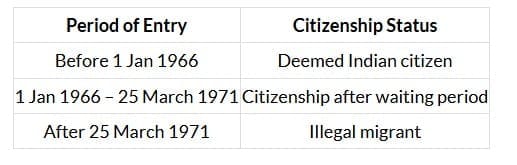
- It provided that persons of Indian origin who entered Assam before 1 January 1966 and have been ordinarily resident there will be deemed Indian citizens.
- Persons who entered after 1 January 1966 but before 25 March 1971 and who have been ordinarily resident would obtain citizenship after a specified period (including an interim period during which they could obtain passports but not voting rights).
- Section 6A set a different cut-off for Assam (1971) in contrast to the constitutional cut-off dates applicable elsewhere (19 July 1948 for certain provisions). The constitutionality of Section 6A and the validity of the different cut-off date have been challenged and pending before Supreme Court; no final verdict (as of 2024) (for example, in matters brought by groups such as the Assam Sanmilita Mahasangha).
- A five-judge bench of the Supreme Court was required to examine whether Section 6A is constitutional and valid for the purpose of the National Register of Citizens (NRC) and related processes; the issue engages complex questions about parliamentary competence, equality and federal considerations.
FAQs on Citizenship
| 1. What is the concept of single citizenship in India? |  |
| 2. What are the main provisions related to citizenship mentioned in Articles 5 to 11 of the Indian Constitution? | |
| 3. How can Indian citizenship be terminated? | |
| 4. What is Overseas Citizenship of India (OCI) and its significance? | |
| 5. What are the key features of the Citizenship (Amendment) Act of 2005 and the Citizenship (Amendment) Bill 2019? | |