Note: The questions provided in this document are similar to the questions that were asked in the actual Olympiad exam. So, we recommend you study these for your Olympiad preparation.
Logical Reasoning
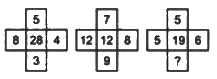
Q1: Find the missing number, if the same rule is followed in all the three figures.
(a) 11 (b) 2 (c) 4 (d) 1
Solution:
Ans: (d) The rule followed is, (8×5)-(4×3)=40-12=28 (7×12)-(8×9)=84-72=12 ∴ (5×5)-(6 × missing number) = 19 ⇒ 6 × Missing number = 25-19 = 6 ⇒ Missing number = 1
Q2: Find the missing number if a certain rule is followed row-wise or column-wise.
(a) 100 (b) 140 (c) 136 (d) 125
Solution:
Ans: (a) The rule followed is, (3×3)+(4×4)=9+16=25 (7×7)+(8×8)=49+64=113 ∴(6×6)+(8×8)=36+64=100
Q3: Some letters are numbered 1, 2, 3, 4, 5, and 6 as given. Arrange the letters to form a meaningful English word and select the correct option: E A M G D A (1 2 3 4 5 6) (a) 5, 2, 3, 4, 1, 6 (b) 5, 6, 3, 2, 4, 1 (c) 6, 1, 3, 4, 2, 5 (d) 2, 1, 3, 5, 6, 4
Solution:
Ans: (b)
To solve this, we need to rearrange the letters E, A, M, G, D, A.
The correct arrangement that forms a meaningful word is "GAMADA".
By following the order in option (b) which is 5, 6, 3, 2, 4, 1, we get the letters in the sequence: D, A, M, E, G, A.
This sequence spells "GAMADA", which is a valid word.
Q4: Which of the following options will continue the same series as established by the Problem Figures?
(a) (b) (c) (d)
Solution:
Ans: (a) The pattern repeats itself after every 4th figure.
Q5: Find the missing number which will complete the given number pattern: 9, 23, 51, 107, ?, 443 (a) 219 (b) 175 (c) 231 (d) 305
Solution:
Ans: (a)
The pattern involves a sequence where each number is derived from the previous one by a specific rule.
To find the missing number, we can observe the differences between consecutive numbers: 23 - 9 = 14, 51 - 23 = 28, 107 - 51 = 56.
The differences themselves are doubling: 14, 28 (14*2), 56 (28*2).
Continuing this pattern, the next difference should be 56 * 2 = 112, so 107 + 112 = 219.
Thus, the missing number is 219, which fits perfectly into the sequence.
Q6: Select the odd one out: (a) GHJ (b) KLN (c) TVW (d) MNP
Solution:
Ans: (c)
The question asks to identify the odd one out among the given options.
Each group of letters consists of three letters, but they follow different patterns.
In options (a), (b), and (d), the letters are in consecutive alphabetical order (G-H-I, K-L-M, M-N-O), while option (c) (T-V-W) skips a letter (U).
Thus, option (c) is the odd one out because it does not follow the same pattern of consecutive letters.
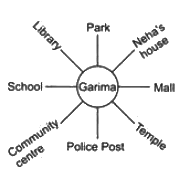
Q7: Garima is facing the community centre. What will she be facing if she turns 270∘ clockwise?
(a) mall (b) school (c) temple (d) park
Solution:
Ans: (c)
Q8: If the first and sixth letters in the word 'COMPROMISE' were interchanged, also the second and seventh letters are interchanged and so on, which letter will be seventh letter from the right? (a) I (b) S (c) E (d) R
Solution:
Ans: B The new word formed is, OMISECOMPR So, seventh letter from the right end is S.
Q9: Select the odd one out. (a) (b) (c) (d)
Solution:
Ans: (b)
Q10: If the first and sixth letters in the word 'COMPROMISE' were interchanged, also the second and seventh letters are interchanged and so on, which letter will be the seventh letter from the right?
(a) I (b) S (c) E (d) R
Solution:
Correct Answer: (b) Solution: The new word formed is OMISECOMPR. So, the seventh letter from the right end is S.
Science
Q11: When nitrogen and sulfur oxides interact with water vapor in the atmosphere, they lead to __________. (a) Ozone depletion (b) Global warming (c) Acid rain (d) Water pollution
Solution:
Ans: (c)
Oxides of nitrogen and sulfur are pollutants that can form when fossil fuels are burned.
When these oxides mix with water vapor in the air, they create acidic compounds.
This process results in acid rain, which can harm ecosystems, buildings, and water sources.
Acid rain is a significant environmental issue, affecting both natural and human-made structures.
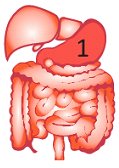
Q12: Study the given picture of human digestive system. The food after being chewed into the mouth, passes from the food pipe and enters 1. From 1, it enters the intestines where it further gets digested and ultimately leaves the body as waste. Identify 1.
(a) Food pipe (b) Mouth (c) Intestine (d) Stomach
Solution:
Ans: (d) 1 is stomach. The food from the food pipe enters stomach and gets digested in small intestine.
Q13: The nerves which bring messages from the sense organs to the brain are called: (a) Mixed nerves (b) Motor nerves (c) Sensory nerves (d) Both (a) and (c)
Solution:
Ans: (a) Sensory nerves pass through the spinal cord and carry messages of the body to the brain while motor nerves carry messages back from the brain to the body
Q14: Select the option where the odd one is incorrectly highlighted: (a) Silk, Rayon, Nylon (b) Linen, Cotton, Jute (c) Shorts, Frock, Cardigan (d) Cotton, Wool, Fur
Solution:
Ans: (b)
The correct answer is (b) Linen, Cotton, Jute because these are all natural fibers, while Silk, Rayon, and Nylon in option (a) are different types of fibers. Linen, Cotton, and Jute are all derived from plants, making them similar, while the others are not.
In option (c), Shorts, Frock, and Cardigan are all types of clothing, and in option (d), Cotton, Wool, and Fur are all materials used in textiles.
Thus, option (b) stands out as it contains fibers from different sources, making it the odd one out.
Q15: Select the option that accurately describes the elements of a glucose solution. (a) Water (Solute), Glucose (Solvent) (b) Glucose (Solvent), Glucose (Solute) (c) Glucose (Solute), Water (Solvent) (d) Juice (Solvent), Sugar (Solute)
Solution:
Ans: (c)
The correct answer is Glucose (Solute), Water (Solvent). In a glucose solution, glucose is the substance that is dissolved, making it the solute, while water is the liquid that dissolves the solute, making it the solvent.
This means that when you mix glucose with water, the glucose particles spread out in the water, creating a solution.
Understanding the roles of solute and solvent is essential in chemistry, as it helps in identifying how substances interact in solutions.
In this case, glucose is the main ingredient that provides the sweet taste, while water is the medium that carries it.
Q16: Oxygen is needed in which process? I. Respiration II. Burning III. Photosynthesis (a) I and III (b) II and III (c) I and II (d) All of these
Solution:
Ans: (c) Oxygen is needed for respiration and burning. Carbon dioxide is required by plants for the process of photosynthesis.
Q17: Select the correct match: (a) Eid-ul-Fitr - Crescent Moon (b) Diwali - New Moon (c) Karva Chauth - Full Moon (d) Both A and B
Solution:
Ans:(d)
The question asks for the correct match between festivals and their associated moon phases.
Eid-ul-Fitr is celebrated on the sighting of the Crescent Moon, while Diwali is linked to the New Moon.
Karva Chauth is celebrated on the Full Moon, which is not correct in this context.
Thus, the correct answer is Both A and B, as both Eid-ul-Fitr and Diwali are correctly matched with their respective moon phases.
Q18: Which of the following pairs of liquids are immiscible with each other? (a) Water and mango juice (b) Water and milk (c) Water and vinegar (d) Water and refined oil
Solution:
Ans: (d)
Immiscible liquids are those that do not mix together. In this case, water and refined oil do not combine, forming separate layers instead.
On the other hand, water and mango juice, water and milk, and water and vinegar can mix well, creating a uniform solution.
This property is due to the different polarities of the liquids; water is polar, while refined oil is non-polar.
Thus, the correct answer is (d) Water and refined oil, as they are the only pair that remains separate.
Q19: Astronauts use radio to communicate, this is because (a) sound travels at very high speed in vacuum. (b) sound does not travel in vacuum. (c) sound energy in the vacuum may burst the eardrums. (d) sound energy turns into light in vacuum.
Solution:
Ans: (b) Astronauts use radios to communicate because sound does not travel in vacuum.
Q20: Match the columns and select the correct option:
Solution:
Ans: (c)
Electric fan converts electrical energy into mechanical energy, which helps it to rotate and provide airflow.
Battery changes chemical energy into electrical energy to power devices.
Television transforms electrical energy into light and sound energy to display images and produce sound.
Photosynthesis is the process where light energy is converted into chemical energy by plants.
Q21: The presence of undesirable substances in water is called (a) water cycle (b) Water pollution (c) Water vapour (d) None of these
Solution:
Ans: (b) The presence of undesirable substances in water is called water pollution.
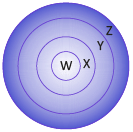
Q22: Choose the correct option regarding the structure of earth. (a) W and X are liquid layers. (b) Surface of Y is called crust. (c) Layer Z makes up most of the total Earth's volume. (d) All of these
Solution:
Ans: (b) W is inner core, X is outer core, Y is mantle and Z is crust. Surface of Y is called crust, W is a solid layer while X is a liquid layer. Layer Y makes up most of the total Earth's volume.
Q23: Select the correct statement: (a) Night blindness is caused due to lack of potassium in our diet. (b) Digestion of food gets completed in the small intestine. (c) There are total 12 molars in the mouth of an adult human. (d) Polio is caused by viruses.
Solution:
Ans: (b)
Digestion of food primarily occurs in the small intestine, where nutrients are absorbed into the bloodstream.
The other options are incorrect: night blindness is related to a lack of vitamin A, not potassium.
Adults typically have 12 molars, not 8, and polio is caused by a virus, not bacteria.
Thus, option (b) is the only correct statement regarding the digestion process.
Q24: Complete the given analogy and select the option that correctly identifies X: Floating plant : Duckweed :: Submerged plant : X (a) Water hyacinth (b) Water lily (c) Tape grass (d) Pistia
Solution:
Ans: (c)
The analogy compares a floating plant with Duckweed, which is a type of floating plant.
We need to find a submerged plant that corresponds to the analogy.
Tape grass is a well-known submerged plant, while the other options are not primarily submerged.
Thus, the correct answer is Tape grass, which fits the analogy perfectly.
Q25: Identify the part of head labeled as S, X, Y, Z (a) S - Skull, X - Cerebrum, Y Cerebellum, Z - Spinal cord (b) S - Spinal cord, X - Cerebrum, Y - Cerebellum, Z - Skull (c) S - Spinal cord, X - Cerebellum, Y - Cerebrum, Z - Skull (d) S - Skull, X - Cerebellum, Y - Cerebrum, Z - Spinal cord
Solution:
Ans: (a) The part labeled as S is Skull, X is cerebrum, Y is cerebellum, and Z is spinal cord.
Ans: (b) Diseases which can spread from one person to another are known as communicable diseases while diseases which don't spread from one person to another person is known as noncommunicable diseases.
Q27: Your body needs vitamins and minerals because.................. . (a) They give the body energy (b) They help carry out metabolic reactions (c) They insulate the body's organs (d) They withdraw heat from the body
Solution:
Ans: (b) Vitamins and minerals help the body to carry out metabolic reactions.
Q28: Read the given statement and select the option which on unscrambling correctly identifies X: X is the part of the leaf that attaches it to the stem. (a) PAXE (b) LTSAK (c) IRIMDB (d) LABED
Solution:
Ans: (b)
The question asks for the part of the leaf that connects it to the stem, known as the petiole.
When we unscramble the letters in option (b) LTSAK, we get STALK, which is another term for the petiole.
Options (a), (c), and (d) do not unscramble to any relevant term related to the leaf structure.
Thus, the correct answer is (b) LTSAK, as it correctly identifies the part of the leaf that attaches to the stem.
Q29: Read the following statements about various human body parts and identify the one that is incorrect: (a) The cornea consists of light-sensitive receptors and transmits signals to the brain via the optic nerve. (b) The cerebrum is the largest section of the brain. (c) The midbrain, pons, and medulla are components of the brainstem. (d) The outer ear gathers sound and channels it to the eardrum.
Solution:
Ans: (a)
Explanation: The statement about the cornea is incorrect because the cornea is not a layer of light-sensitive receptors; it is a transparent layer that covers the front of the eye. It helps to focus light but does not contain receptors that send messages to the brain. The light-sensitive receptors are actually located in the retina, which is at the back of the eye.
The other statements about the cerebrum, brainstem parts, and outer ear are accurate.
Q30: Select the option that accurately represents the path of food through the digestive system: (a) Mouth → Stomach → Oesophagus → Small intestine → Large intestine → Anus (b) Mouth → Oesophagus → Stomach → Liver → Small intestine → Anus (c) Mouth → Stomach → Large intestine → Gall bladder → Pancreas → Anus (d) Mouth → Oesophagus → Stomach → Small intestine → Large intestine → Anus
Solution:
Ans: (d)
The digestive process begins in the Mouth, where food is chewed and mixed with saliva.
Next, food travels down the Oesophagus to reach the Stomach, where it is further broken down.
From the Stomach, the food moves into the Small intestine for nutrient absorption.
After the Small intestine, the remaining waste goes to the Large intestine and finally exits through the Anus.
Q31: Select the option that correctly pairs one rabi crop with one kharif crop. (a) Gram : Mustard (b) Wheat : Soybean (c) Rice : Maize (d) Soybean : Groundnut
Solution:
Ans: (b)
Rabi crops are typically sown in the winter and harvested in the spring, while kharif crops are sown with the onset of the monsoon and harvested in the autumn.
In this case, wheat is a rabi crop, and soybean is a kharif crop, making option (b) the correct pairing.
Other options either pair two rabi crops or two kharif crops, which do not meet the requirement of one of each type.
Thus, the correct answer is (b) Wheat : Soybean.
Q32: Which of the following statements are true about pelicans? (i) It lays eggs. (ii) It has a beak. (iii) Its body is covered only with scales. (iv) It has webbed feet that help it to swim. (a) (iii) and (iv) only (b) (ii), (iii), and (iv) only (c) (i), (ii), and (iv) only (d) (i), (ii), (iii), and (iv)
Solution:
Ans: (c)
Pelicans are known for their unique characteristics. They lay eggs, which is a common trait among birds.
They possess a beak, which is essential for catching fish, their primary food source.
However, their body is not covered with scales; instead, it is covered with feathers.
Pelicans have webbed feet that assist them in swimming efficiently.
Q33: How do the roots of the sweet potato benefit the plant? (i) They give color to the plant. (ii) They help to store food for the plant. (iii) They absorb water and mineral salts. (iv) They transport water and mineral salts to the leaves only.
(a) (ii) and (iii) only (b) (ii), (iii), and (iv) only (c) (i) and (iv) only (d) (i), (ii), (iii), and (iv)
Solution:
Ans: (a)
Roots of sweet potato play a crucial role in the plant's survival.
They store food for the plant, which is essential for growth.
Additionally, they absorb water and mineral salts from the soil, which are vital for the plant's health.
While roots do transport nutrients, they do not only send them to the leaves, making option (a) the correct choice.
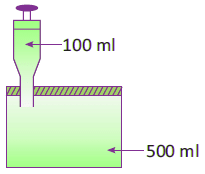
Q34: Sanjana had a glass jar of 500 ml capacity containing air which is connected to a pump. When she pushed the piston of the pump, 100 ml of air is pushed into the jar. What will be the final volume of the jar? (a) 600 ml (b) 500 ml (c) 400 ml (d) 550 ml
Solution:
Ans: (b) As air can be compressed and takes up the volume of container, its final volume in the jar will be 500 mL.
Q35: Select the correct pairing: Indian classical dance style - Origin (a) Bharatanatyam - Tamil Nadu (b) Kuchipudi - Maharashtra (c) Kathakali - Odisha (d) Odissi - Kerala
Solution:
Ans: (a)
Bharatanatyam is a classical dance that originated in Tamil Nadu, making option (a) the correct match.
Option (b) incorrectly states that Kuchipudi comes from Maharashtra, while it actually originates from Andhra Pradesh.
Option (c) misplaces Kathakali, which is from Kerala, not Odisha.
Option (d) incorrectly associates Odissi with Kerala, when it is actually from Odisha.
Q36: Which of the following layers of soil is abundant in humus? (a) Topsoil (b) Subsoil (c) Bedrock (d) C horizon
Solution:
Ans: (a)
Topsoil is the uppermost layer of soil and is known for its richness in humus, which is organic matter that provides nutrients to plants.
The Subsoil lies beneath the topsoil and contains less organic material.
Bedrock is the solid rock layer beneath the soil and does not contain humus.
The C horizon consists of weathered rock and minerals, but it is not rich in humus either.
Q37: Settling of heavy impurities at the bottom of a vessel is called: (a) Filtration (b) Condensation (c) Sedimentation (d) Distillation
Solution:
Ans: (c)
Sedimentation is the process where heavier particles settle down at the bottom of a liquid.
This occurs due to the force of gravity acting on the particles, allowing them to separate from the liquid.
In contrast, filtration involves passing a mixture through a filter to separate solids from liquids.
Condensation refers to the process of gas turning into liquid, while distillation is a method of separating components based on different boiling points.
Q38: Which of the following organizations is/are engaged in disaster management? (a) National Cadet Corps (NCC) (b) World Health Organization (WHO) (c) Red Cross Society (d) All of these
Solution:
Ans: (d)
Disaster management involves various organizations that help in planning and responding to emergencies.
The National Cadet Corps (NCC) contributes by training youth in disaster response.
The World Health Organization (WHO) plays a crucial role in health-related emergencies.
The Red Cross Society is well-known for its humanitarian efforts during disasters.
Therefore, the correct answer is All of these as all mentioned organizations are involved in disaster management.
Ans: (c) Crown is the visible part of a tooth which is present above the gum.
Q40: When we roll a ball on the ground, it travels a certain distance and eventually stops after a while. Which of the following forces is responsible for this? (a) Gravitational force (b) Frictional force (c) Muscular force (d) Electrical force
Solution:
Ans: (b)
The ball rolls due to an initial push, but it doesn't keep moving forever.
It eventually stops because of frictional force, which is the resistance between the ball and the ground.
Friction slows down the ball and brings it to a stop.
Other forces like gravitational or muscular forces do not directly cause the ball to stop rolling on the ground.
Q41: Read the given statements and select the correct option. Statement 1: Physical change does not affect the composition of matter. Statement 2: Chemical change results in the formation of a new substance with different properties. (a) Both statements 1 and 2 are true and statement 2 is the correct explanation of statement 1. (b) Both statements 1 and 2 are true but statement 2 is not the correct explanation of statement 1. (c) Statement 1 is true and statement 2 is false. (d) Both statements 1 and 2 are false.
Solution:
Ans: (b)
Statement 1 is correct because a physical change, like melting or boiling, does not change what the substance is made of.
Statement 2 is also correct as a chemical change, such as rusting or burning, creates a new substance with different properties.
However, statement 2 does not explain statement 1 because they describe different types of changes.
Thus, both statements are true, but the second does not clarify the first.
Q42: The angle at which Earth's axis is tilted is: (a) 25.3° (b) 23.5° (c) 22.5° (d) 25.5°
Solution:
Ans: (b)
Earth's axis is tilted at an angle of 23.5°. This tilt is crucial because it affects the seasons we experience.
The tilt causes different parts of the Earth to receive varying amounts of sunlight throughout the year, leading to changes in temperature and weather patterns.
Understanding this angle helps explain why we have summer and winter in different hemispheres at different times.
Other options like 25.3°, 22.5°, and 25.5° are incorrect and do not represent the actual tilt of the Earth's axis.
Q43: Select the accurate statement: (a) The solubility of solids in water typically declines as temperature rises. (b) The solubility of gases in water usually rises with an increase in temperature. (c) Many substances easily dissolve in water, making it known as a universal solvent. (d) None of these
Solution:
Ans: (c)
Many substances can dissolve in water, which is why it is often called a universal solvent.
As temperature increases, the solubility of most solids in water tends to decrease, while the solubility of gases generally decreases.
This means that while some things dissolve well in water, not all do, especially when it gets warmer.
Thus, option (c) is the correct statement regarding the solubility of substances in water.
Q44: Study the given experimental set up carefully. The conclusion drawn based on the experimental set up is that: (a) Air is necessary for burning (b) Air is not necessary for burning (c) Air exerts pressure (d) None of the above
Solution:
Ans: (a) Air is necessary for burning
Q45: Select the odd one out based on rabi and kharif crops. (a) Gram (b) Soybean (c) Groundnut (d) Maize
Solution:
Ans: (a)
Rabi crops are sown in winter and harvested in spring, while kharif crops are sown in the monsoon and harvested in autumn.
Among the options, gram is primarily a rabi crop, whereas soybean, groundnut, and maize are kharif crops.
This makes gram the odd one out as it does not belong to the kharif category.
Thus, the correct answer is (a) gram.
Achievers Section
Q46: Study the given flowchart. The label I and II represents : (a) l-carbon dioxide, II-oxygen (b) l-oxygen, II-respiration (c) I-respiration, II-carbon dioxide (d) l-respiration, II-oxygen
Solution:
Ans: (c) The label I is respiration and label II is carbon dioxide. During photosynthesis in plants, oxygen is released which is taken in by human beings and animals for respiration. They in turn release carbon dioxide needed for photosynthesis by plants.
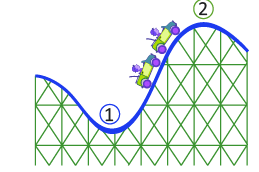
Q47: A roller coaster is shown in the figure, at points 1 and 2. At what point kinetic energy is maximum? (a) Point 1 (b) Point 2 (c) Both (d) None
Solution:
Ans: (a) Kinetic energy will be maximum at point 1 as the ride is in upward motion.
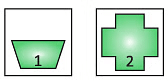
Q48: Shalu had two cardboards. She cut out different shapes from each of the cardboards as shown below. She glued cut-out pieces of cardboards by aligning sides 1 and 2 marked on them. She gives torchlight on the cardboards as shown here.
Which of the following is most likely the shadow formed on the screen? (a) (b) (c) (d)
Solution:
Ans: (a) Shadow in option (a) is most likely the shadow formed on the screen.
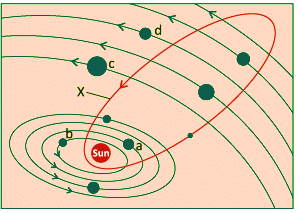
Q49: Choose the incorrect statement regarding the solar system. (a) The planet c is the largest in the solar system. (b) The planet b has no Moon. (c) The planets a and b are made up of rocks and iron. (d) The planets c and d are made up of gases.
Solution:
Ans: (a) Planet 'c' is Jupiter, which is the largest planet in our solar system.
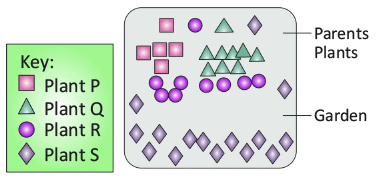
Q50: Raman planted four plants P, Q , R and S near the boundary of his garden. The diagram shows the distribution of these plants in the garden area after a certain time period. Which one of the plants is most likely to be Hiptage? (a) Plant P (b) Plant Q (c) Plant R (d) Plant S
FAQs on Science Olympiad Previous Year Questions - 3
1. What is the Science Olympiad for Class 5?
Ans. The Science Olympiad for Class 5 is a competitive exam that assesses students' knowledge and understanding of scientific concepts and principles. It encourages students to think critically and apply their knowledge in various scientific scenarios.
2. How can students prepare for the Science Olympiad?
Ans. Students can prepare for the Science Olympiad by studying their school science curriculum, practicing previous years' question papers, participating in science projects, and using reference books that focus on the topics covered in the Olympiad syllabus.
3. What topics are typically covered in the Class 5 Science Olympiad?
Ans. The Class 5 Science Olympiad usually covers topics such as plants, animals, the human body, basic physics concepts, environmental science, and simple machines. Students should review these subjects thoroughly to perform well in the exam.
4. What are the benefits of participating in the Science Olympiad?
Ans. Participating in the Science Olympiad helps students enhance their knowledge of science, improve problem-solving skills, boost confidence, and develop a competitive spirit. It also provides an opportunity for recognition and scholarships for outstanding performers.
5. When is the Science Olympiad exam usually conducted for Class 5?
Ans. The Science Olympiad exam for Class 5 is typically conducted annually, with specific dates varying by region and organizing body. Students should check with their schools or the official Science Olympiad website for the exact schedule and registration details.
practice quizzes, Summary, MCQs, Important questions, Free, Semester Notes, shortcuts and tricks, Science Olympiad Previous Year Questions - 3, Objective type Questions, ppt, Extra Questions, Exam, Science Olympiad Previous Year Questions - 3, mock tests for examination, past year papers, Sample Paper, Previous Year Questions with Solutions, video lectures, Viva Questions, study material, pdf , Science Olympiad Previous Year Questions - 3;

 (a) 11
 (a) 100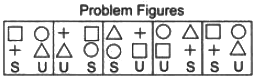
 (b)
(b)  (c)
(c)  (d)
(d) 
 (b)
(b)  (c)
(c)  (d)
(d) 
 (a) Food pipe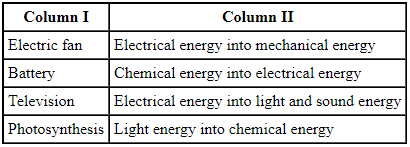
 (a) W and X are liquid layers.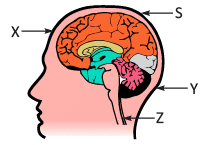
 (a) 600 ml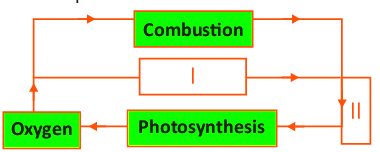
 (a) Point 1
  She gives torchlight on the cardboards as shown here.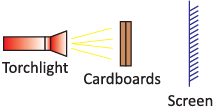
 (b)
(b)  (c)
(c)  (d)
(d) 
 Which one of the plants is most likely to be Hiptage?