Note: The questions provided in this document are similar to the questions that were asked in the actual Olympiad exam. So, we recommend you study these for your Olympiad preparation.
Thus, this option correctly shows that S is the mother of Q.
The other options do not correctly represent S as the mother of Q based on the given symbols.
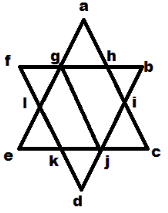
Q2: How many triangles are there in this picture?
(a) 10 (b) 9 (c) 7 (d) 5
Solution:
Ans: (a)
The triangles are given below:
agh, bhi, ijc, jdk, elk, fgl, bgj, aec, egj and bdf. So, there are total 10 triangles.
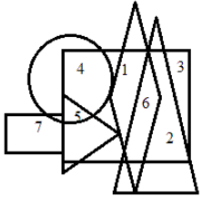
Q3: In the provided Venn diagram, the circle indicates boy children, the triangle indicates girl children, and the square represents twin children born in a day at a specific hospital. Which number corresponds to the twin girl children born in that hospital? (a) 8 (b) 4 (c) 9 (d) 5
Solution:
Ans: (b)
The Venn diagram shows different categories of children.
The circle is for boys, the triangle is for girls, and the square is for twins.
To find the twin girl children, we look for the number inside the triangle that is also in the square.
The number that represents the twin girl children is 4, which is indicated in the triangle and square intersection.
Q4: If square represents 'hall', circle represents 'water', diamond shows 'people', arrow represents 'educated' and triangle represents 'dirty', then which of the following represents 'people sitting in dirty hall'? (a) 7 (b) 4 (c) 6 (d) 3
Solution:
Ans: (c)People = diamond
dirty = triangle
hall = square
Number that is common for these 3 shapes is 6 which is represented by the red line.
Q5: How many symbols in the provided sequence are directly preceded by a number and directly followed by a letter? 5 8 # B F L ? 4 * M 7 9 G H 2 M 3 + 8 4 ? $ P Q 6 R 7 * H T (a) 2 (b) 3 (c) 4 (d) 5
Solution:
Ans: (b)
To find the answer, we need to look for symbols that have a number before them and a letter after them.
In the sequence, the symbols that meet this condition are: #, ?, and $.
Counting these, we find there are 3 such symbols.
Thus, the correct answer is 3.
Q6: A person starts moving towards south. After walking 20 m, he turns to his right and walks 25 m. Further, he turns to his left and walks 20 m again. Finally, he moves to his left and walks 25 m. How far is he now from the starting point? (a) 20 m (b) 40 m (c) 45 m (d) 90 m
Solution:
Ans: (b)
S = Start point, and E = End point
The person is 40 metres far from the starting point.
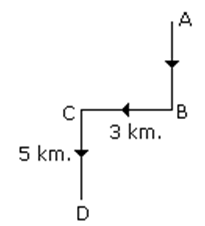
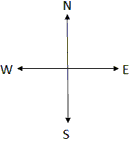
Q7: A man walks 5 km towards south and then turns to the right. After walking 3 km, he turns to the left and walks 5 km. In which direction is he now with respect to the starting point? (a) West (b) South (c) Northeast (d) Southwest
Solution:
Ans: (d)
Hence, D is in the southwest with respect to the starting point A.
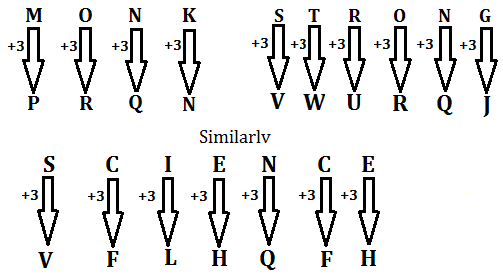
Q8: If MONK is written as PRQN, STRONG is written as VWURQJ, then how will SCIENCE be written in that code? (a) VFLHQFH (b) VFLHFQH (c) ESCNEIC (d) QSIHQCE
Solution:
Ans: (a)
Q9: In a specific coding system, if PHILOSOPHY is represented as SFLJRQRNKW, how is PSYCHOLOGY encoded in that same system? (a) SQBALNPMJW (b) SVBFKRORJB (c) SQBAKMOMJW (d) SBVFKPSKSC
Solution:
Ans: (c)
The code involves a pattern where each letter in the word is shifted by a certain number of positions in the alphabet.
For example, in PHILOSOPHY, each letter is transformed to create SFLJRQRNKW.
Applying the same shifting pattern to PSYCHOLOGY results in SQBAKMOMJW.
Thus, the correct encoded form of PSYCHOLOGY is SQBAKMOMJW.
Q10: A and B are siblings. E is the wife of F. D is the son of E. If B is the daughter of F, then how is B related to D? (a) Brother (b) Sister (c) Daughter-in-law (d) Cousin
Solution:
Ans: (b)
A and B are siblings.
E is the wife of F.
D is the son of E.
If B is the daughter of F, it means B is the daughter of E also.
So, B is the sister of D.
Science Section
Q11: A flask is filled with air and tightly stoppered at room temperature. The flask is then placed in melting ice. The flask stays the same size. In the flask, what happens to the pressure of the air and the speed of the molecules in the air? (a) Pressure decreases, Speed increases (b) Pressure increases, Speed increases (c) Pressure decreases, Speed decreases (d) Pressure increases, Speed decreases
Solution:
Ans: (c)
When the flask is placed in melting ice, the temperature of the air inside the flask drops.
As the temperature decreases, the molecules move slower, which means the speed decreases.
According to the gas laws, if the volume of the flask remains constant and the temperature decreases, the pressure inside the flask also decreases.
Thus, the correct answer is that the pressure decreases and the speed decreases.
Q12: Choose the correct option. Statement A- Veins carry blood from all arts of the body back to the heart. Statement B- The vascular tissue for the transport of water and nutrients in plant is called phloem. (a) Statement A is false and B is true (b) Statement A is true and B is false (c) Both the statements are true (d) Both the statements are false
Solution:
Ans: (b) Veins carry de-oxygenated blood from all the body parts back to the heart and phloem transport food and xylem transports water and minerals from the soil.
Q13: What causes the temperature of a liquid to decrease during the process of evaporation? (a) Air removes thermal energy through conduction. (b) Air removes thermal energy through radiation. (c) Each liquid particle acquires sufficient energy to escape the liquid state. (d) The average energy decreases because higher energy molecules escape into the air as vapor.
Solution:
Ans: (d)
The temperature of a liquid drops during evaporation because the higher energy molecules leave the liquid.
This process results in a decrease in average energy, as the remaining molecules have lower energy.
The escape of these high-energy molecules into the air as vapor is what primarily causes the cooling effect.
Thus, the correct explanation is that the average energy drops due to the loss of these energetic molecules.
Q14: Which of the following options accurately depicts the positions of the Sun (S), Moon (M), and Earth (E) during a full moon and a new moon? (a) MES (Full Moon), MSE (New Moon) (b) SEM (Full Moon), SME (New Moon) (c) SME (Full Moon), ESM (New Moon) (d) ESM (Full Moon), EMS (New Moon)
Solution:
Ans: (b)
The full moon occurs when the Earth is positioned between the Sun and the Moon, which is represented as SEM.
The new moon happens when the Moon is between the Earth and the Sun, shown as SME.
Thus, the correct representation for the full moon is SEM and for the new moon is SME.
Therefore, option (b) is the correct answer.
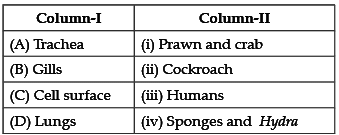
Q15: Match the columns and choose the correct option.
Ans: (d) Trachea is the respiratory organ in cockroach. Prawn and crab respire through gills. Sponges and Hydra respire through their body surface (skin). Lungs are the respiratory organs in humans.
Q16: Which of the following methods do plants utilize to expel water as vapor? (a) Photosynthesis (b) Respiration (c) Transpiration (d) Evaporation
Solution:
Ans: (c)
Transpiration is the process where plants release water vapor through tiny openings called stomata.
This process helps in cooling the plant and maintaining nutrient flow from roots to leaves.
While photosynthesis and respiration are vital for energy production, they do not primarily focus on water release.
Evaporation refers to the change of water from liquid to vapor, but it is not a process specific to plants.
Q17: Which of the following groups consists solely of non-metal elements? (a) Oxygen, Nitrogen, Magnesium (b) Phosphorus, Chlorine, Sulfur (c) Calcium, Sodium, Carbon (d) Neon, Aluminum, Boron
Solution:
Ans: (b)
The correct answer is (b) Phosphorus, Chlorine, Sulfur, as all these elements are classified as non-metals.
In contrast, option (a) includes Magnesium, which is a metal.
Option (c) contains Calcium and Sodium, both of which are metals.
Option (d) has Aluminum and Boron, where Aluminum is also a metal.
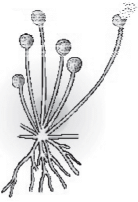
Q18: The diagram given below shows a type of asexual reproduction. Identify it. (a) Reproduction by roots (b) Grafting (c) Spore formation (d) Propagation by stem tuber
Solution:
Ans: (c) Spore formation is a method of asexual reproduction. Plants like ferns, moss, fungi reproduce by this method.
Q19: The statements given below refer to the advantages of vegetative propagation in plants. Choose the statement which does not match with vegetative propagation in plants. (a) Rapid, easier and cheaper method of reproduction. (b) Flower is the reproductive part in this method. (c) Good quality varieties can be preserved. (d) Used in horticulture to develop ornamental plants.
Solution:
Ans: (b) The reproduction in which only vegetative parts of a plant take part is known as vegetative propagation. The vegetative parts are stem, leaves and roots. Flowers are not involved in vegetative propagation.
Q20: Which of the following is an advantage of being a multicellular organism? (a) It allows the organism to be larger. (b) Cell differentiation occurs in it. (c) It allows the organism to change its shape. (d) Both (1) and (2)
Solution:
Ans: (d)
There are advantages to being multicellular rather than unicellular. These include allowing the organism to be larger, and cell differentiation (having different types of cells with different functions). Cellular differentiation is the process by which a less specialised cell becomes a more specialised cell type. Differentiation occurs many times during the development of a multicellular organism as the organism changes from a single zygote to a complex system of tissues and cell types.
Q21: What occurs to the speed of light when it transitions from air to water? (a) It decreases (b) It increases (c) It remains unchanged (d) It stops completely
Solution:
Ans: (a)
The speed of light is affected by the medium it travels through.
When light moves from air (a less dense medium) into water (a denser medium), it slows down.
This change in speed is due to the optical density of water being higher than that of air.
Thus, the correct answer is that the speed of light decreases when it enters water.
Q22: Which of the following materials will be attracted by a magnet? (a) Wood (b) Paper (c) Plastic (d) Iron
Solution:
Ans: (d)
Iron is a magnetic material, which means it can be attracted to a magnet.
Other materials like wood, paper, and plastic do not have magnetic properties and will not be attracted.
This property of iron is due to its atomic structure, which allows it to respond to magnetic fields.
In everyday life, you can see this when magnets stick to refrigerators, which are often made of iron.
Q23: Which of the following represents a chemical change? (a) Melting of ice (b) Dissolving sugar in water (c) Burning of paper (d) Freezing of water
Solution:
Ans: (c)
Chemical change involves a transformation that alters the substance's chemical structure.
In this case, burning of paper results in ash and smoke, indicating a new substance is formed.
On the other hand, melting ice and dissolving sugar are physical changes where the original substances remain unchanged.
Thus, the correct answer is the burning of paper, as it exemplifies a true chemical change.
Q24: Identify the correct statement regarding the use of fertilizers and pesticides in agriculture. (a) They improve the water retention capacity of soil. (b) They help to maintain soil fertility for long durations. (c) They help in providing the required nutrients to crops for better growth. (d) They are harmful to the environment.
Solution:
Ans: (c)
Fertilizers and pesticides are essential in agriculture as they provide the necessary nutrients that crops need to grow effectively.
While they can enhance crop yield, they do not necessarily improve water retention or maintain soil fertility over long periods.
It's important to use them wisely to avoid negative impacts on the environment.
Thus, the correct statement is that they help in providing the required nutrients to crops for better growth.
Q25: An object travels 40 meters in 5 seconds. What is the speed of the object? (a) 8 m/s (b) 150 m/s (c) 35 m/s (d) 45 m/s
Solution:
Ans: (a)
To find the speed of the object, we use the formula: speed = distance / time.
The object travels a distance of 40 meters in 5 seconds.
So, speed = 40 meters / 5 seconds = 8 m/s.
This means the object moves 8 meters every second.
Q26: What is the primary element found in biogas? (a) Oxygen (b) Nitrogen (c) Carbon dioxide (d) Methane
Solution:
Ans: (d)
The main component of biogas is methane, which is a type of gas produced during the breakdown of organic matter.
Biogas is generated through anaerobic digestion, where microorganisms decompose organic materials in the absence of oxygen.
While other gases like carbon dioxide are present, methane is the most significant because it is a valuable energy source.
Understanding the composition of biogas is important for its use in renewable energy applications.
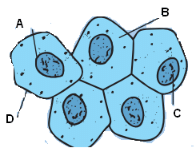
Q27: In human cheek cell, nucleus is separated from the cytoplasm by a membrane called the nuclear membrane. In the figure, which of the following parts represents the nuclear membrane? (a) D (b) B (c) A (d) C
Solution:
Ans: (c)
Q28: What is the chemical name for baking soda? (a) Sodium hydroxide (b) Sodium carbonate (c) Sodium bicarbonate (d) Potassium bicarbonate
Solution:
Ans: (c)
The chemical name for baking soda is sodium bicarbonate.
This compound is commonly used in baking as a leavening agent.
It helps dough rise by producing carbon dioxide gas when it reacts with acids.
Other options like sodium hydroxide and potassium bicarbonate are different compounds and not used as baking soda.
Q29: Which of the following gases contributes to global warming? (a) Nitrogen (b) Carbon dioxide (c) Oxygen (d) Methane
Solution:
Ans: (b)
Carbon dioxide is a major greenhouse gas that traps heat in the atmosphere, leading to the phenomenon known as global warming.
While other gases like methane also contribute to warming, carbon dioxide is the most significant due to its large volume in the atmosphere.
Understanding the role of carbon dioxide is crucial for addressing climate change and implementing effective environmental policies.
Reducing emissions of carbon dioxide can help mitigate the effects of global warming.
Q30: Which of the following accurately pairs a nutrient deficiency with its related disease? (a) Scurvy - Vitamin B1 (b) Pellagra - Vitamin B3 (c) Rickets - Vitamin C (d) Beriberi - Vitamin D
Solution:
Ans: (b)
Pellagra is caused by a deficiency of Vitamin B3, which is essential for energy metabolism and skin health.
Scurvy is linked to a lack of Vitamin C, not B1.
Rickets is due to insufficient Vitamin D, not C.
Beriberi results from a deficiency of Vitamin B1, not D.
Q31: Examine the provided flow chart and choose the option that accurately depicts I, II, and III. (a) Sweet, Neutral, Baking soda (b) Sour, Acidic, Calamine (c) Sour, Alkaline, Vinegar (d) Sweet, Alkaline, Calamine
Solution:
Ans: (b)
The flow chart categorizes substances based on their taste and pH level.
Option (b) indicates that the first item is Sour, which aligns with the Acidic nature of Calamine.
Other options do not correctly match the characteristics of the substances represented in the flow chart.
Thus, the correct representation of I, II, and III is Sour, Acidic, Calamine.
Q32: Examine the provided flow chart closely. X is utilized for surfacing roads. Determine the identities of X, Y, and Z. (a) Coal, coal tar, diesel (b) Coal, graphite, kerosene (c) Coal, coal tar, bitumen (d) CNG, coal tar, gasoline
Solution:
Ans: (c)
X represents the material used for paving, which is bitumen.
Y is coal tar, a byproduct of coal that is used in road construction.
Z is coal, which is the source material.
coal, coal tar, bitumen, making option (c) the right answer.
Q33: A science teacher has arranged test tubes with various substances. Identify the statement that is incorrect regarding the experimental setup. (a) Turmeric solution turns red in test tubes 1 and 3. (b) China rose indicator turns blue in test tubes 2 and 4. (c) Methyl orange turns yellow in test tubes 1 and 3. (d) Phenolphthalein remains colorless in test tubes 2 and 4.
Solution:
Ans: (b)
The China rose indicator is expected to turn green in acidic solutions, not blue.
In test tubes 2 and 4, the indicator should show a green color if the solution is acidic.
Other statements about turmeric, methyl orange, and phenolphthalein are correct based on their expected reactions with acids and bases.
Thus, option (b) is the incorrect statement regarding the experimental setup.
Q34: Which of the following acts as a producer in a food chain? (a) Grass (b) Lion (c) Rabbit (d) Eagle
Solution:
Ans: (a)
Producers are organisms that create their own food, primarily through the process of photosynthesis.
In this case, grass is a plant that uses sunlight to produce energy, making it a primary producer.
Other options like lion, rabbit, and eagle are consumers, as they rely on other organisms for food.
Thus, the correct answer is grass, as it is the only producer listed.
Q35: Which of the following is not considered a renewable energy source? (a) Wind (b) Solar (c) Coal (d) Hydropower
Solution:
Ans: (c)
Coal is a fossil fuel and is not renewable, meaning it cannot be replenished in a short time frame.
In contrast, wind, solar, and hydropower are all renewable sources, as they are naturally replenished.
Using coal contributes to environmental issues, while the other options are cleaner alternatives.
Understanding the difference between renewable and non-renewable sources is crucial for sustainable energy practices.
Q36: Which material is known to be the most effective conductor of electricity? (a) Copper (b) Rubber (c) Plastic (d) Glass
Solution:
Ans: (a)
Copper is widely recognized as the best conductor of electricity due to its high electrical conductivity.
It allows electric current to flow through it with minimal resistance, making it ideal for electrical wiring.
In contrast, materials like rubber, plastic, and glass are insulators, meaning they do not conduct electricity well.
This property of copper is why it is commonly used in electrical applications.
Q37: Which process leads to the rust formation on iron? (a) Combustion (b) Electrolysis (c) Oxidation (d) Reduction
Solution:
Ans: (c)
The process that causes rusting of iron is oxidation. This occurs when iron reacts with oxygen in the presence of moisture.
During oxidation, iron loses electrons and forms iron oxide, which is commonly known as rust.
This reaction is a type of corrosion that weakens the metal over time.
Preventing rust involves reducing exposure to moisture and oxygen, such as through painting or galvanizing the iron.
Q38: Which gas plays a significant role in global warming? (a) Nitrogen (b) Carbon dioxide (c) Oxygen (d) Methane
Solution:
Ans: (b)
Carbon dioxide is a major greenhouse gas that traps heat in the atmosphere.
It is released through activities like burning fossil fuels and deforestation.
While other gases like methane also contribute to warming, carbon dioxide is the most prevalent.
Reducing carbon dioxide emissions is crucial for combating climate change.
Q39: What is the primary element found in biogas? (a) Oxygen (b) Nitrogen (c) Carbon dioxide (d) Methane
Solution:
Ans: (d)
The main component of biogas is methane, which is a type of gas produced during the breakdown of organic matter.
Biogas is generated through anaerobic digestion, where microorganisms decompose organic materials in the absence of oxygen.
While carbon dioxide and other gases are present, methane is the most significant because it is the primary fuel source.
Understanding the composition of biogas is important for its use in energy production and waste management.
Q40: Which of the following is not a role of the digestive system? (a) Absorption (b) Respiration (c) Digestion (d) Ingestion
Solution:
Ans: (b)
The digestive system is primarily responsible for breaking down food, absorbing nutrients, and eliminating waste.
Absorption, digestion, and ingestion are all key functions of this system.
Respiration, however, is related to the process of breathing and gas exchange, not digestion.
Thus, the correct answer is (b) Respiration, as it does not pertain to the digestive system's functions.
Q41: What type of energy is contained in food? (a) Kinetic energy (b) Potential energy (c) Chemical energy (d) Thermal energy
Solution:
Ans: (c)
The energy stored in food is known as Chemical energy. This is the energy that is released when food is metabolized by our bodies.
Chemical energy is essential for all bodily functions, as it powers everything from movement to growth.
Unlike kinetic energy, which is the energy of motion, or potential energy, which is stored energy based on position, chemical energy is specifically related to the bonds between atoms in food molecules.
When we eat, our bodies convert this chemical energy into usable energy to fuel our activities.
Q42: Which of the following statements is true regarding acids? (a) Acids turn blue litmus paper red. (b) Acids are sweet in taste. (c) Acids feel slippery to touch. (d) Acids have a pH greater than 7.
Solution:
Ans: (a)
Acids are substances that can donate protons (H+) in a solution.
One of the key properties of acids is that they turn blue litmus paper red, indicating their acidic nature.
Unlike bases, acids typically have a sour taste and do not feel slippery.
Additionally, acids usually have a pH less than 7, not greater.
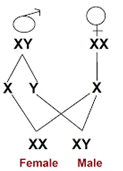
Q43: Refer to the diagram given below and choose the incorrect option regarding the information conveyed in the diagram.
(a) A sperms can have either an X chromosome or Y chromosome. (b) All female eggs contain only the X chromosome. (c) Sex chromosomes of the father determine the sex of an unborn baby. (d) Sex chromosomes of the mother determine the sex of an unborn baby.
Solution:
Ans: (d)
Sex chromosomes of the father determine the sex of an unborn baby. The belief that the mother is responsible for the sex of her baby is completely wrong and to blame her for this is totally unjustified.
Q44: Which of the following statements regarding the human circulatory system is accurate? (a) Veins transport oxygen-rich blood. (b) Arteries transport oxygen-poor blood. (c) Blood passes through the heart two times in a single complete cycle. (d) The heart sends blood to the lungs via the pulmonary artery.
Solution:
Ans: (c)
The human circulatory system is designed to circulate blood throughout the body.
In one complete cycle, blood flows through the heart twice, which is essential for oxygenation.
Arteries carry oxygenated blood away from the heart, while veins return deoxygenated blood.
The pulmonary artery is responsible for sending blood to the lungs, not the pulmonary vein.
Q45: Which of the following statements are true? 1. The sulphurous acid turns blue litmus paper red. 2. In general, metallic oxides are acidic in nature. 3. Phosphorus is a very reactive non-metal. (a) 1 and 3 (b) 2 and 3 (c) 1 and 2 (d) 1, 2 and 3
Solution:
Ans: (a)
1. The sulphurous acid turns blue litmus paper red. This statement is true.
2. In general, metallic oxides are acidic in nature. This statement is false as they are basic in nature.
3. Generally, non-metals do not react with water, although they may be very reactive in air. Such non-metals are stored in water. For example, phosphorus is a very reactive non-metal. It catches fire if exposed to air. To prevent the contact of phosphorus with atmospheric oxygen, it is stored in water.
Achievers Section
Q46: Refer to the flowchart given below and choose the incorrect statement regarding A, B and C.
(a) 'C' cells are found in the organs involved in involuntary movement. (b) 'A' cells carry oxygen to different tissues. (c) 'B' cells lack a nucleus. (d) 'A' cells contain a respiratory pigment.
Solution:
Ans: (c)
The correct identification of cells A, B and C is:
A - Red blood cells
B - Nerve cells
C - Smooth muscle cells
Nerve cells contain a nucleus present in the cyton of the nerve cell. RBCs lack a nucleus.
Q47: Manu was heating oil to fry potato chips. All of a sudden the cooking oil caught fire. What should Manu do in such a situation? (a) Pour water to extinguish fire. (b) Switch off the flame of the burner. (c) Put a lid on the frying pan to cut off contact between fuel and oxygen. (d) Pour cold oil in the frying pan. (a) Only a and b (b) Only b and c (c) Only c and d (d) Only a and d
Solution:
Ans: (b) Switch off the flame of the burner. Put a lid on the frying pan to cut off contact between fuel and oxygen and the flame will go off.
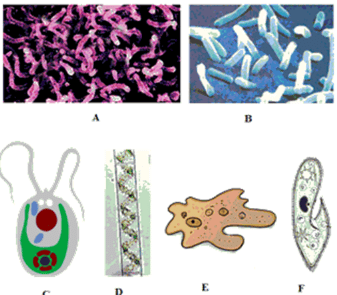
Q48: Which of the following pictures come under the category of bacteria? (a) A and B (b) D and C (c) E and F (d) B and E
Solution:
Ans: (a)
Pictures A and B come under the category of bacteria.
Q49: Identify the given organisms (P-S) and select the correct statement regarding them. (a) Cell wall is present in P whereas it is absent in Q, R, and S. (b) R is a eukaryotic organism, whereas P, Q, and S are prokaryotic. (c) Q is photosynthetic, whereas S is parasitic in nature. (d) P and R are considered as connecting links between living and non-living things.
Solution:
Ans: (c)
Q is photosynthetic, meaning it can produce its own food using sunlight, while S is parasitic, which means it relies on another organism for nourishment.
This distinction is important in understanding the roles these organisms play in their ecosystems.
Options (a), (b), and (d) do not accurately describe the relationships or characteristics of the organisms P, Q, R, and S.
Thus, option (c) is the correct statement regarding these organisms.
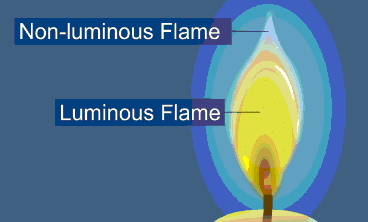
Q50: What is the basic difference between the two components of flame as shown in the figure? (a) Luminous flame undergoes incomplete combustion. (b) Non-luminous flame undergoes complete combustion. (c) Both the flames do not get excess oxygen as required. (d) Both the flames get enough carbon dioxide as required.
Solution:
Ans: (a)
A luminous flame is a bright yellow flame that gives off light. It undergoes incomplete combustion as it does not get the oxygen that it requires.
A non-luminous flame is colorless and is much hotter. It undergoes complete combustion as it draws much more oxygen and gets much hotter.
1. What topics are covered in the Class 8 Science Olympiad Model Test Paper - 3?
Ans. The Class 8 Science Olympiad Model Test Paper - 3 typically covers various topics from the Class 8 science curriculum, including physics, chemistry, biology, and environmental science. Specific areas may include concepts such as force and motion, chemical reactions, ecosystems, and the structure of living organisms.
2. How can I prepare effectively for the Science Olympiad?
Ans. To prepare effectively for the Science Olympiad, students should review their class notes, textbooks, and previous Olympiad papers. Practicing sample questions and taking mock tests can help. Additionally, focusing on understanding concepts rather than rote memorization is crucial. Joining study groups or seeking help from teachers can also enhance preparation.
3. What is the format of the Science Olympiad exam for Class 8?
Ans. The Science Olympiad exam for Class 8 usually consists of multiple-choice questions (MCQs) that test students' knowledge and understanding of scientific concepts. The paper may include questions from various topics, and students must choose the correct answer from the provided options within a set time limit.
4. Are there any recommended books for preparing for the Science Olympiad?
Ans. Yes, there are several recommended books for Science Olympiad preparation. Some popular choices include "Science Olympiad Explorer" and "Olympiad Success Science" series. Additionally, NCERT textbooks for Class 8 provide a solid foundation of concepts that can be beneficial for Olympiad preparation.
5. What are the benefits of participating in the Science Olympiad?
Ans. Participating in the Science Olympiad helps students enhance their scientific knowledge and analytical skills. It encourages critical thinking and problem-solving abilities. Additionally, it provides a competitive platform that can boost confidence and motivate students to excel in their studies and future academic pursuits.
Important questions, MCQs, pdf , ppt, mock tests for examination, Previous Year Questions with Solutions, Viva Questions, past year papers, video lectures, Free, Science Olympiad Model Test Paper - 3, Exam, Science Olympiad Model Test Paper - 3, study material, Science Olympiad Model Test Paper - 3, practice quizzes, Semester Notes, shortcuts and tricks, Sample Paper, Extra Questions, Objective type Questions, Summary;

 (a) 10
 (a) 7
(a) 7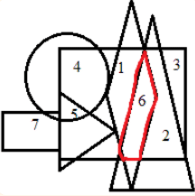 People = diamond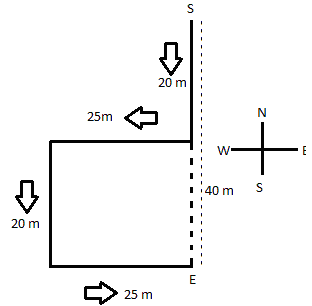
 (a) (A) - (ii), (B) - (iii), (C) - (iv), (D) - (i)
  (a) Reproduction by roots
  (a) D
(a) D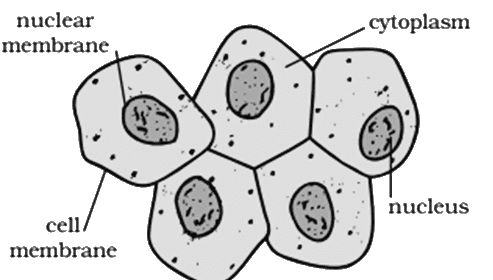
 (a) A sperms can have either an X chromosome or Y chromosome.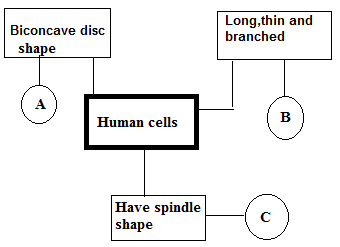
 (a) A and B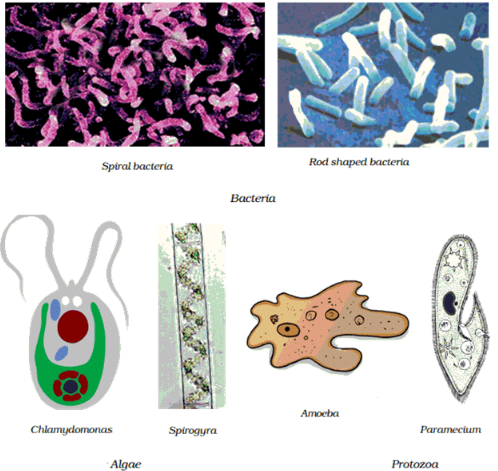
 (a) Luminous flame undergoes incomplete combustion.




