NCERT Summary: The End of Bipolarity


What was the Soviet System?
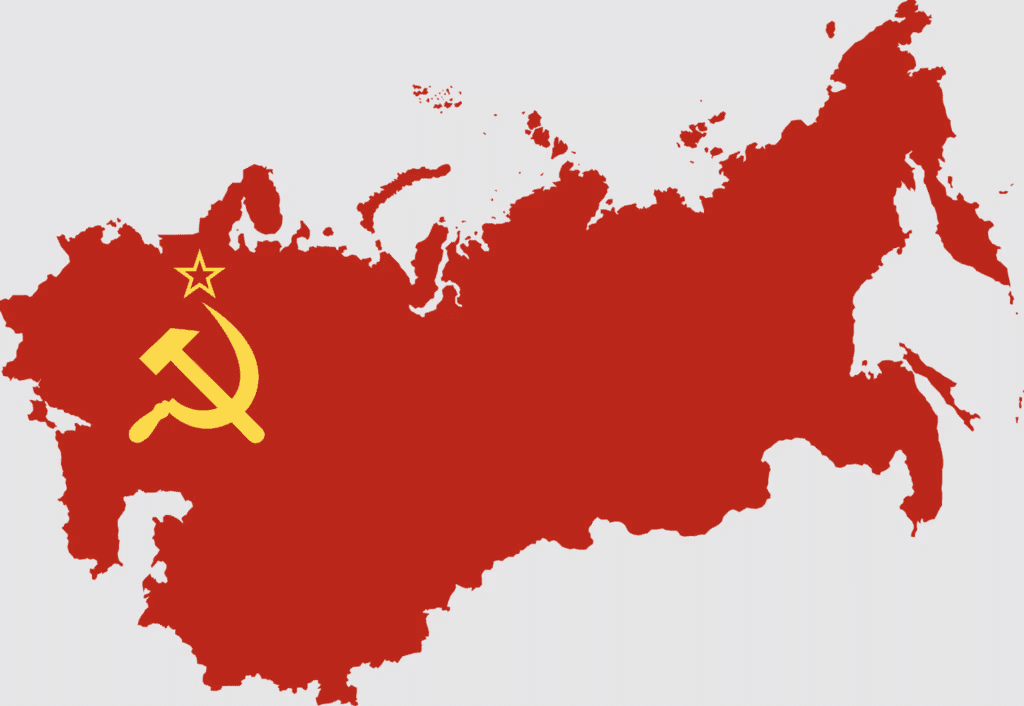
The Union of Soviet Socialist Republics (USSR) emerged after the socialist revolution in Russia in 1917. The revolution aimed to replace a capitalist order with a system based on socialist ideals and the objective of a more egalitarian society. Over the decades the Soviet system developed distinctive political, economic and social features that shaped its domestic life and foreign policy.
- Political structure: Power was concentrated in the hands of the Communist Party, which monopolised political authority; organised opposition parties were not permitted to function effectively.
- Economic system: The economy was centrally planned and state-directed. Production, investment and distribution were decided by planning agencies rather than market mechanisms.
- Second World / Socialist bloc: After the Second World War, countries in Eastern Europe liberated or occupied by the Soviet army came under Soviet political and military influence; this grouping was commonly called the Second World or the socialist bloc and was reinforced by institutions such as the Warsaw Pact.
- Welfare and social guarantees: The state provided subsidised services such as healthcare, education and childcare, and guaranteed employment as an official principle, minimising formal unemployment.
- Strengths and weaknesses: The USSR achieved considerable military and strategic strength and at times matched the United States in the arms race, but it lagged in consumer goods, some areas of high technology and modern infrastructure.
- Bureaucracy and authoritarianism: Over time the system became increasingly bureaucratic and authoritarian, with centralised decision-making, limited political freedoms and weak accountability.
- Economic condition by late 1970s-1980s: By the late 1970s the Soviet economy showed signs of stagnation and structural weakness that its institutional framework struggled to correct.
Gorbachev and the Disintegration
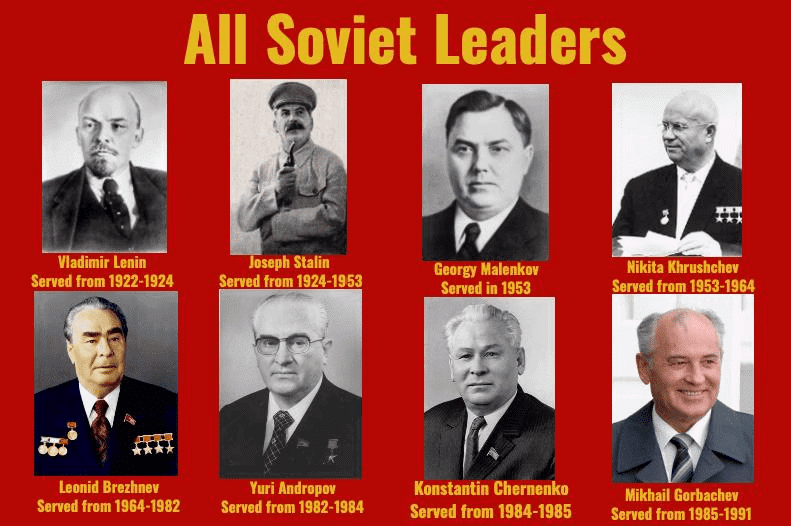
Mikhail Gorbachev became General Secretary of the Communist Party of the Soviet Union in March 1985. He introduced policies intended to reform and revitalise the Soviet state and economy and to normalise relations with the West.
- Reform agenda: Gorbachev launched perestroika (restructuring of the economy and administrative institutions) and glasnost (political openness and greater freedom of information). Perestroika aimed to improve economic efficiency and modernise institutions, while glasnost sought greater transparency and public discussion.
- Normalising external relations: He pursued diplomacy to reduce Cold War tensions, cut back on arms competition and ease confrontation with Western countries.
- Unintended consequences: Reforms loosened the Communist Party's tight control and opened political space. Gorbachev underestimated the depth of institutional defects and the strength of social and national aspirations within the union.
- Collapse of Soviet control in Eastern Europe: Popular movements for greater freedom in Eastern Europe grew stronger; Gorbachev chose not to use Soviet military force to preserve client regimes, and many communist governments collapsed in 1989-1990.
- Internal opposition and coup: Conservative elements within the Party opposed rapid change. In August 1991 hardline members attempted a coup to reverse reforms; the coup failed but substantially weakened Gorbachev's position and accelerated disintegration.
- Role of Yeltsin and republics: Boris Yeltsin emerged as a prominent opponent of the coup and later as President of the Russian Federation. By December 1991, leaders of Russia, Ukraine and Belarus declared that the USSR had ceased to exist and formed the Commonwealth of Independent States (CIS).
- End of the USSR: Following these developments many republics adopted capitalism and democracy as the basis of governance. Russia was recognised as the successor state to the USSR, inheriting the Soviet seat on the United Nations Security Council and taking on many international obligations.
Why did the Soviet Union disintegrate?
The disintegration of the USSR resulted from an interaction of political, economic and social factors accumulated over decades. No single cause explains the collapse; rather, a set of underlying weaknesses and immediate triggers combined to break central control.
- Institutional weaknesses: Political and economic institutions failed to adapt to changing needs and citizens' aspirations; central planning proved increasingly inflexible.
- Military expenditure: A large share of state resources was devoted to maintaining nuclear and conventional forces, diverting investment from consumer goods and infrastructure.
- Economic stagnation: Long-term planning problems and inefficiencies produced shortages, falling productivity and declining living standards, eroding public confidence in the system.
- One-party rule: Decades of single-party governance created bureaucratic inertia, corruption and alienation between the state and ordinary people.
- Lack of openness and excessive centralisation: Restrictive political norms and concentration of power over a vast, multi-ethnic territory intensified popular frustrations and regional demands.
- Slow and contested reforms: Gorbachev's measures were criticised from both sides: conservatives saw them as too rapid and destabilising, while reformers argued they were too limited and too slow to correct deep structural problems.
- Rise of nationalism: Growing national and regional movements within many Soviet republics demanded greater autonomy or outright independence, decisively weakening central authority.
Consequences of Disintegration
- End of Cold War confrontations: The collapse of the Soviet bloc brought an end to the bipolar confrontation between the United States and the USSR.
- Shift in power relations: Global power relations changed substantially; the United States emerged as the principal superpower and Western institutions and ideas gained greater influence.
- Economic ideas and institutions: The model of the capitalist market economy and international institutions such as the World Bank and the International Monetary Fund (IMF) became important advisers to many transition countries.
- Liberal democracy as norm: The notion of liberal democracy acquired greater international prestige as a preferred political model for many former socialist countries.
- Emergence of new states: The end of the Soviet bloc produced numerous independent states in Eastern Europe and Central Asia; many Baltic and East European states sought integration with Western institutions such as the European Union and NATO.
- Geopolitical reorientation: Newly independent states, especially in Central Asia, sought to balance relations with Russia, the West, China and other powers; geography and energy resources shaped their foreign policies.
Shock therapy in post-communist regimes
Shock therapy denotes a rapid programme of economic reforms aimed at moving quickly from a centrally planned economy to a market-oriented capitalist economy. The objective was to stabilise economies and create market incentives in a short period, but implementation differed by country.
- Core measures: Rapid price liberalisation, large-scale privatisation of state enterprises, fiscal austerity and removal of many state subsidies were the main measures.
- External influence: International financial institutions such as the World Bank and the IMF often advised, financed and conditioned these programmes.
- Examples and variation: Several Eastern European countries and the Russian Federation adopted rapid transition policies in the early 1990s; the intensity and sequencing varied-some countries pursued more gradual reforms while others implemented swift liberalisation policies.
- Disruption of old ties: Shock therapy also meant a break-up of existing trade and institutional ties that had linked countries within the Soviet bloc, producing short-term dislocation in trade and production.
Consequences of Shock Therapy
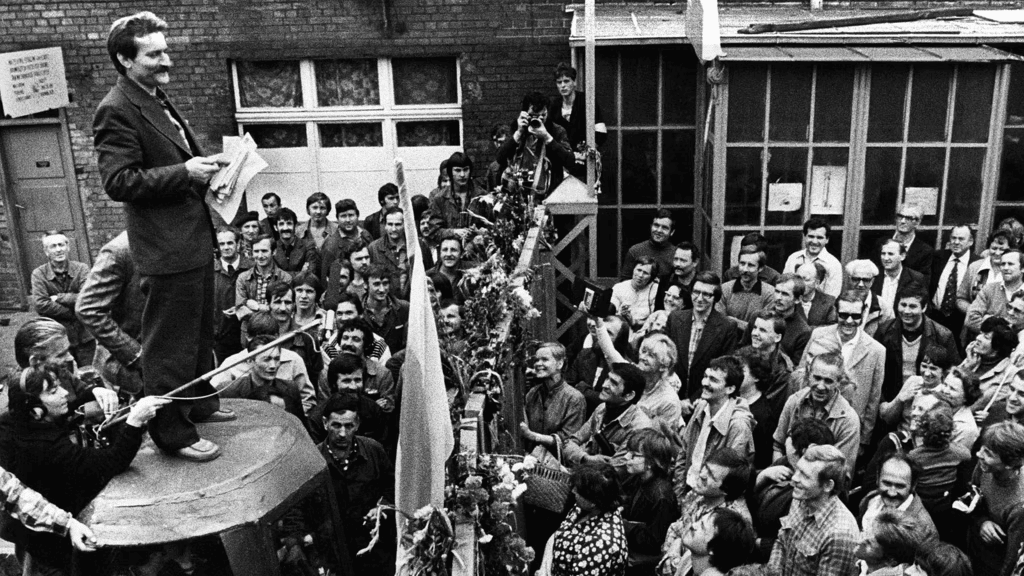
- Economic hardship: Rapid liberalisation often produced severe short-term disruption: currency depreciation, high inflation and loss of savings for many people.
- Welfare rollback: The dismantling of state welfare guarantees increased poverty and social insecurity for large sections of the population.
- Institution-building challenges: Quick economic transformation without careful institution-building led to weak governance, corruption and uneven enforcement of the rule of law.
- Long-term social effects: Immediate economic pain and rising inequality produced lasting political and social consequences, including public distrust of both new and old political elites.
Tensions and Conflicts
The breakup of the USSR and the contested transitions in parts of Eastern Europe and Central Asia produced multiple local and regional conflicts. These ranged from political instability to violent secessionist struggles and civil wars.
- Secessionist movements: Several republics and regions experienced violent secessionist movements; within the Russian Federation, areas such as Chechnya witnessed violent separatist conflicts.
- Civil wars and prolonged conflict: Some new states experienced prolonged civil wars; for example, Tajikistan suffered a civil war in the early 1990s that lasted several years (1992-1997), producing significant humanitarian and political consequences.
- Breakup in Eastern Europe: Both peaceful and violent separations occurred in former multi-national states: Czechoslovakia separated peacefully into the Czech Republic and Slovakia, while Yugoslavia disintegrated through a series of violent conflicts into successor states including Croatia, Slovenia and Bosnia and Herzegovina.
- External competition: Central Asia became an arena of external competition due to strategic location and energy resources, attracting interest from regional and extra-regional powers and commercial actors.
India and Post-Communist Countries
- Continuity of relations: India maintained friendly relations with many post-communist countries after the USSR's collapse.
- India-Russia ties: The relationship with Russia remains a key pillar of Indian foreign policy; both countries share an interest in a multipolar world order.
- Agreements and cooperation: Over 80 bilateral agreements have been signed between India and Russia under the Indo-Russian Strategic Partnership established in 2001, covering defence, energy, nuclear cooperation, trade and technology.
- Mutual benefits: India has benefited from Russian support on strategic issues, energy cooperation, access to Central Asian markets and technology transfers; Russia has found India to be an important market for defence equipment and strategic partnership.
Remember: EduRev Tips
- March 1985: Mikhail Gorbachev was elected General Secretary of the Communist Party of the Soviet Union and initiated a series of reforms.
- 1988: Large-scale independence movements began in the Baltic republics, with Lithuania taking an early lead; these movements later spread to Estonia and Latvia.
- October-November 1989: The Soviet leadership announced that Warsaw Pact members were free to decide their futures; the Berlin Wall fell in November 1989.
- February 1990: Gorbachev permitted multi-party politics by stripping the Soviet Communist Party of its monopoly over state institutions and opening the political system.
- March 1990: Lithuania was among the first Soviet republics to declare formal independence.
- June 1990: The Russian parliament asserted its sovereignty within the Soviet system.
- June 1991: Boris Yeltsin, having left the Communist Party, became President of the Russian Federation.
- August 1991: Hardline Communist Party members staged an abortive coup against Gorbachev; its failure further weakened central authority.
- September 1991: The Baltic republics-Estonia, Latvia and Lithuania-were admitted to the United Nations and later sought integration with Western security structures (NATO membership followed in 2004).
- December 1991: Russia, Belarus and Ukraine annulled the 1922 Treaty that had established the USSR and formed the Commonwealth of Independent States (CIS); Russia assumed the Soviet seat at the United Nations.
- 25 December 1991: Mikhail Gorbachev resigned as President of the Soviet Union, marking the formal end of the USSR.
Brief summary: The end of bipolarity resulted from long-term structural weaknesses within the Soviet system, the reform efforts of Gorbachev, rising national movements in the republics, and the changing international context. The collapse reshaped global politics, expanded the appeal of market economies and liberal democracies in the short term, and produced complex political, economic and security challenges across Eurasia that continue to have strategic consequences for countries such as India.
FAQs on NCERT Summary: The End of Bipolarity
| 1. What was the Soviet System and how did it function? |  |
| 2. What role did Mikhail Gorbachev play in the disintegration of the Soviet Union? | |
| 3. What were the main reasons for the disintegration of the Soviet Union? | |
| 4. What is shock therapy, and how was it implemented in post-communist regimes? | |
| 5. What were the consequences of shock therapy in post-communist countries? | |





