NCERT Summary: What Books and Burials Tell Us (Class 6)

Vedas: One of the Oldest Books in the World
One of the oldest books in the world is the Vedas. They were written about 3,000 years back and are the earliest literary source available.
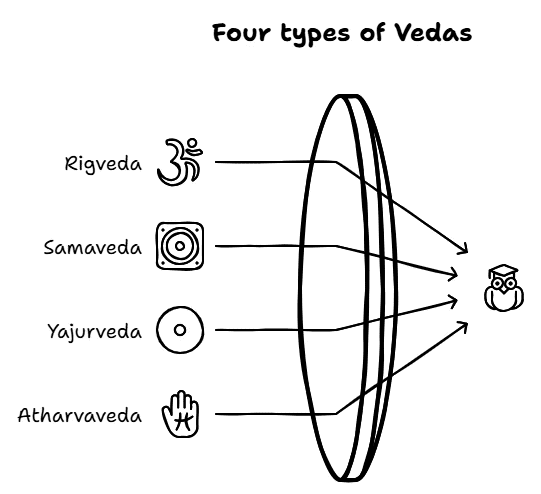
There are four types of Vedas:
- Rigveda
- Samaveda
- Yajurveda
- Atharvaveda
The Rigveda
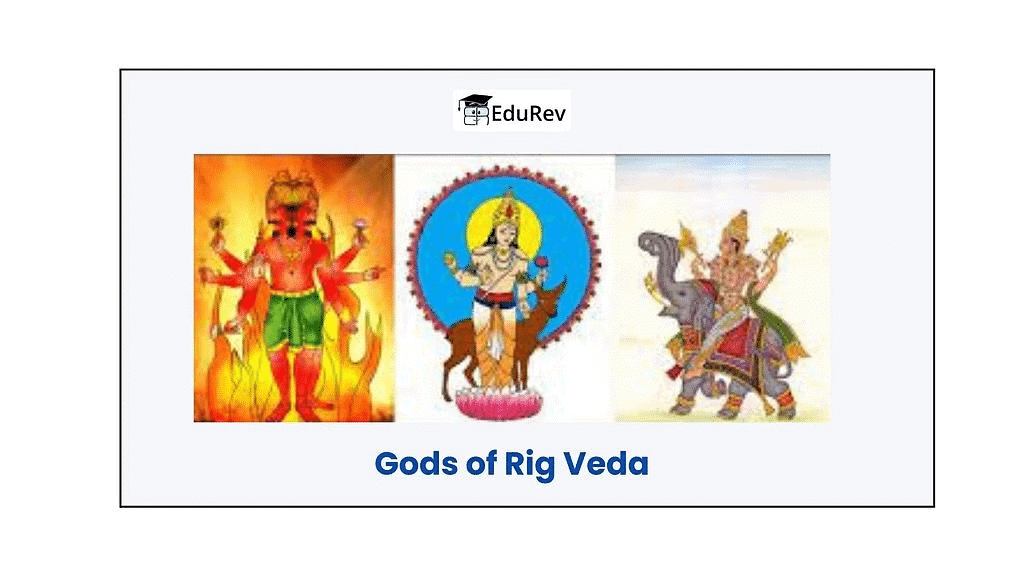
It is the oldest Veda and was composed about 3500 years ago. The Rigveda includes more than a thousand hymns, called sukta or "well-said". These hymns are in praise of various gods and goddesses. Three gods are especially important, which are:
- The Agni, the god of fire
- Indra, a warrior god
- Soma, a plant from which a special drink was prepared
Most of the hymns were composed, taught, and learned by men. A few hymns were composed by women. The Rigveda is in old or Vedic Sanskrit. The Rigveda was primarily recited and heard rather than read. It was written down several centuries after it was first composed and printed less than 200 years ago.
Language of Rigveda: Sanskrit
The language of the Rigveda is Vedic Sanskrit, which differs in some features from the classical Sanskrit that developed later.
- There are language families. Sanskrit belongs to the Indo-European family of languages.
- The Indo-European family includes South Asian languages such as Assamese, Gujarati, Hindi, Kashmiri, and Sindhi, and also many European and West Asian languages such as Persian, English, French, German, Greek, Italian, and Spanish.
How do Historians study the Rigveda
While studying the past, historians examined written sources. From the Rigveda they have drawn certain observations about society, geography, religion, and language.
- Some hymns of the Rigveda appear as dialogues between sages and rivers (for example, Vishvamitra and the rivers Beas and Sutlej). Rivers such as the Beas and the Sutlej were sometimes worshipped as goddesses. Historians study these dialogues to make inferences about the past.
- A manuscript on birch bark of the Rigveda was found in Kashmir. About 150 years ago it was used to prepare one of the earliest printed texts of the Rigveda, as well as an English translation. This manuscript is now preserved in a library in Pune, Maharashtra.
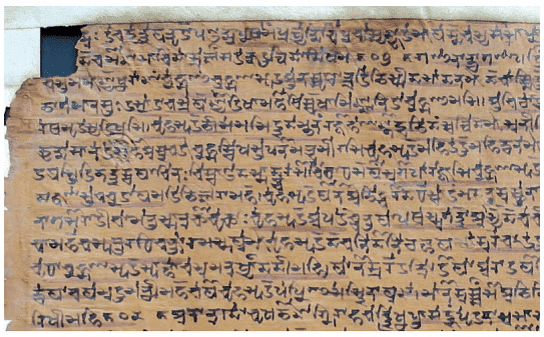 A Page from a Manuscript of the Rigveda
Cattle, Horses & Chariots
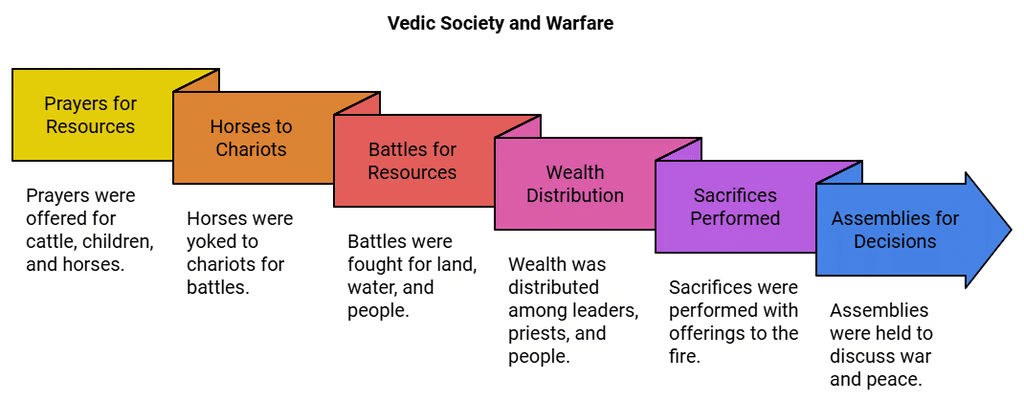
There are many prayers in the Rigveda for cattle, children (especially sons), and horses.
- Horses were yoked to chariots and chariots were used in battles. Battles were fought for land, water, cattle and to capture people.
- The wealth obtained in raids or wars was typically controlled by leaders; some of it was given to priests and some distributed among the people. Part of the wealth was used to perform yajnas (sacrifices) in which offerings such as ghee, grain and sometimes animals were offered to the fire.
- In the Vedic age there were no regular, standing armies as we understand them today. Instead there were assemblies where people met to discuss matters of war and peace and to choose leaders - often brave and skillful warriors.
Words to Describe People
People in the Rigvedic texts are described by occupation, language, place of origin, family, community and cultural practices.
- The priests: Two occupational groups are mentioned: the priests (often later called Brahmins), who performed rituals, and the leaders.
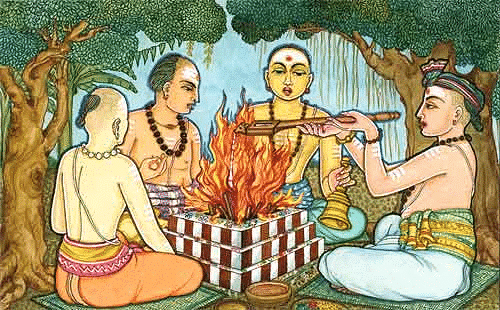 The Priests
- The rajas: Rajas in the Rigvedic context were leaders of communities. They did not necessarily have large capitals, palaces, regular armies, or systematic tax systems; succession was not always hereditary in the modern sense.
- 'jana' and 'vish': Ordinary people are called by words like 'jana' and 'vish'. The modern word Vaishya is derived from the older term vish.
- Aryas and Dasas: Those who composed the hymns often described themselves as Aryas and referred to others as Dasas or Dasyus. These terms probably indicated social and cultural differences: the opponents did not perform the same sacrifices and may have spoken different languages. In later usage the terms Dasa/Dasi came to be used for slaves, who were men and women captured in war and treated as the property of their owners.
Silent Sentinels - the story of the megaliths
Stone boulders used to mark burial sites are called megaliths. The practice of erecting megaliths began about 3000 years ago and was widespread in the Deccan, South India, the north-east and Kashmir.
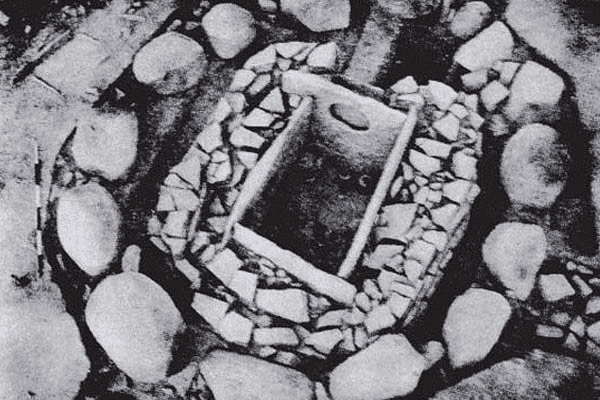
- Some megaliths are visible on the earth's surface; others are underground. In many cases a circle of stones or a single standing stone on the surface marks the burial below.
- Burials are often accompanied by characteristic pottery, commonly referred to as black and red ware, as well as tools and weapons of iron. Sometimes skeletons of horses, horse equipment, and ornaments of stone and gold are found.
- Different burials contain different objects. Some graves are rich in items such as gold, copper, conch shell and stone ornaments; others contain only pottery.
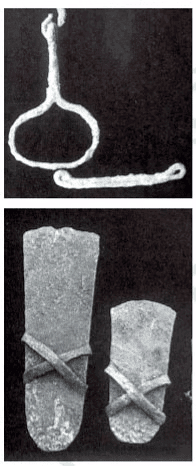 Iron Equipment found from Megalithic Burials
Finding out about social differences
Archaeologists assume that objects discovered with a skeleton probably belonged to the person who was buried, and use these finds to infer differences in status.
- At Brahmagiri a skeleton was found buried with 33 gold beads, 2 stone beads and one conch shell, while other skeletons had only a pot. Such differences point to variation in wealth and social status among those buried.
Were some burial spots meant for certain families?
- Some megaliths contain more than one skeleton. These multiple burials may indicate that members of the same family were buried in the same place at different times, often accessed through portholes.
- Stone circles or boulders placed on the surface probably served as signposts to locate the burial site so that people could return to the same place for rituals or remembrance.
A special burial at Inamgaon
- The site of Inamgaon on the river Ghod (a tributary of the Bhima) was occupied between about 3600-2700 years ago.
- At Inamgaon the dead were often buried laid out straight with the head towards the north; in some cases burials were within houses. Vessels containing food and water were placed with the dead.
Occupations and Material Evidence at Inamgaon
Items found at Inamgaon include:
- Grains: wheat, barley, rice, pulses, millets, peas and sesame.
- Animals: cattle, buffalo, goat, sheep, dog, horse, ass, pig, sambar, spotted deer, blackbuck, antelope, hare and mongoose.
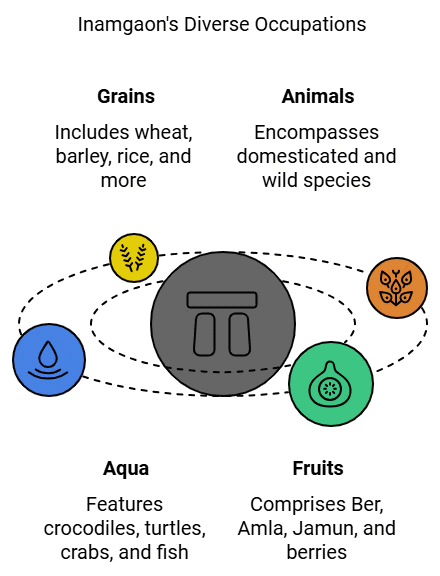
- Aquatic remains: crocodile, turtle, crab and fish.
- Fruits and plants: ber, amla, jamun, dates and a variety of berries.
- Many animal bones show cut marks indicating they were used as food; a wide range of domestic and wild species were consumed.
FAQs on NCERT Summary: What Books and Burials Tell Us (Class 6)
| 1. What is the Rigveda and why is it significant in history? |  |
| 2. How do historians study the Rigveda to understand ancient societies? | |
| 3. What role did cattle, horses, and chariots play in the society described in the Rigveda? | |
| 4. What do megaliths reveal about social differences in ancient societies? | |
| 5. What evidence suggests that certain burial spots were reserved for specific families in ancient sites like Inamgaon? | |