NCERT Summary: The Mughal Empire (Class 7)


Introduction to the Mughals
The Indian subcontinent, with its vast territory and many peoples and cultures, presented a major challenge to any medieval ruler. The Mughal Empire succeeded in building a long-lasting and expansive state, creating centralised administrative structures and leaving a legacy that shaped later rulers and institutions.
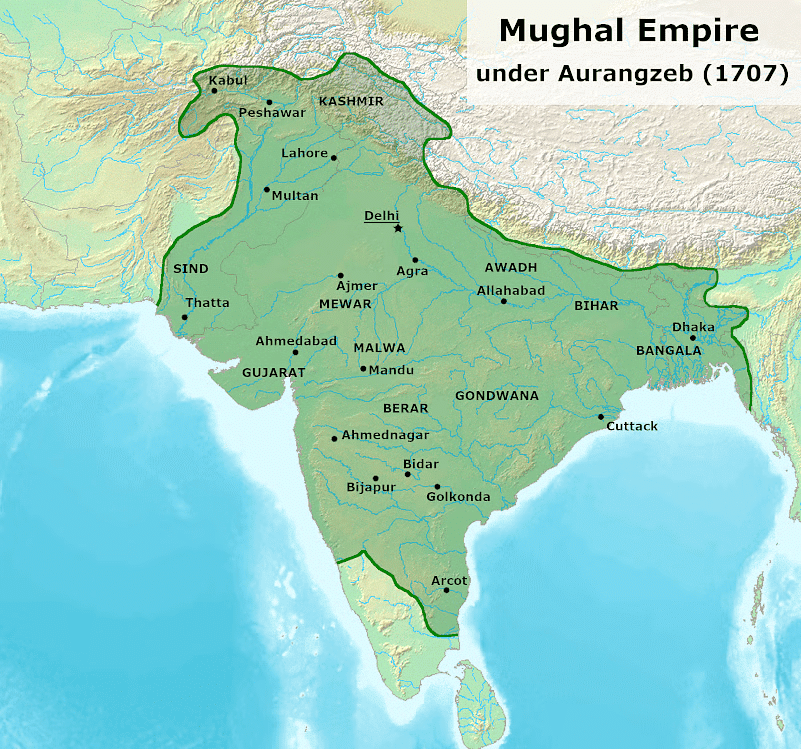
The Mughals established their principal seats of power at Agra and Delhi. By the seventeenth century their control extended over most of the subcontinent through military conquest, administration and revenue systems. Their ideas of governance, court culture and architecture continued to influence the region long after the political power of the dynasty diminished.
The continuing public use of Mughal monuments shows this legacy. For example, the Red Fort in Delhi - once an imperial residence and administrative centre - remains a national symbol; the Prime Minister of India addresses the nation from its ramparts on Independence Day.
Who were the Mughals?
The Mughals were a dynasty with mixed Central Asian and Persianate heritage. Their origins linked them to important ruling lineages of the Eurasian steppes.
 Mughal Lineage
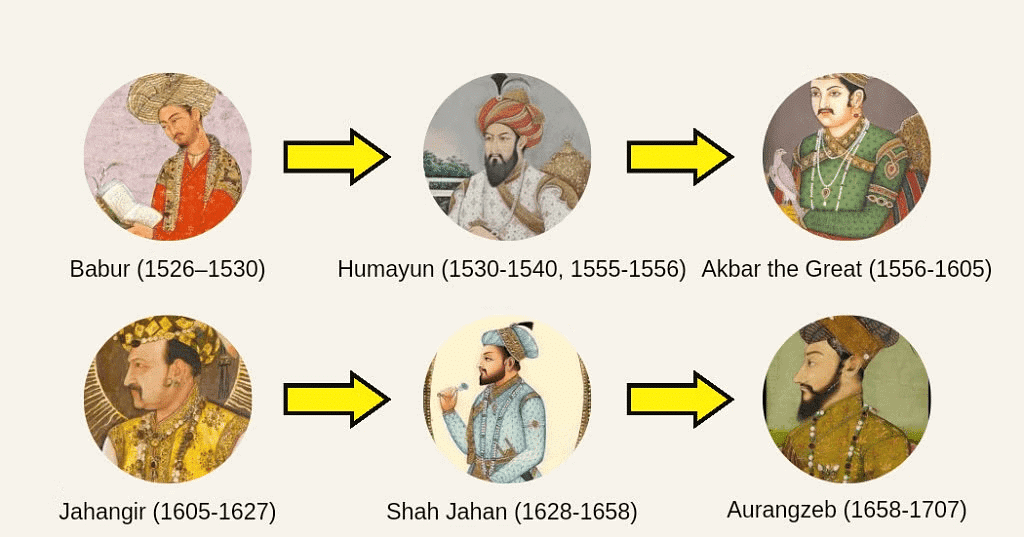
- Lineage: The Mughal ruling family claimed descent from the Turco-Mongol line of Genghis Khan (through maternal links) and the Timurid line of Timur (Tamerlane) on the paternal side. This combined heritage shaped their court culture and political ideology.
- Identity and reputation: The Mughals often preferred to emphasise their Timurid ancestry rather than the Mongol identity because Timur's achievements and association with Persianate culture were seen as more prestigious and civilised in the political language of the time.
- Timurid pride: The family highlighted Timur's conquest of Delhi in 1398 as part of their illustrious ancestry, which helped legitimate their rule when they established power in northern India.
Mughal Military Campaigns
The expansion of the Mughal Empire relied on decisive military campaigns by its early rulers, followed by consolidation through administration.
 Military Campaigns under Akbar and Aurangzeb
- Babur's early life and challenges: Babur became ruler of Farghana as a young teenager. Driven out by rival clans and the Uzbek advances, he captured Kabul in 1504 and used it as a base for later campaigns into India.
- Foundation of the Mughal Empire: In 1526 Babur defeated Ibrahim Lodi at the First Battle of Panipat, a pivotal victory that allowed him to capture Delhi and Agra and lay the foundation of the Mughal state in India.
- Continuity and contest: Early Mughal rule was not continuous. Humayun lost power to Afghan rulers like Sher Shah Suri, who defeated him in battles at Chausa (1539) and Kannauj/Kanauj (1540). The Mughals, however, re-established control later under Humayun and his successors.
Mughal Traditions of Succession
The Mughals followed Timurid political customs rather than strict primogeniture. Two competing systems are useful to understand:
- Primogeniture: a system in which the eldest son inherits the throne and principal estates intact.
- Mughal (coparcenary/Timurid) custom: all sons of the ruler had claims to the inheritance. This frequently led to rivalries and armed struggle among princes after the death or incapacity of an emperor.
This coparcenary practice produced repeated succession wars, which affected stability and could weaken central authority when princes fought for the throne. Several important conflicts in Mughal history, including those that accompanied changes of emperors, were rooted in these succession practices.
Mughal Relations with Other Rulers
The Mughals combined force with diplomacy. They often sought to incorporate regional rulers through honours, marriage and land grants rather than only by annexation.
- Military pressure and alliances: The Mughals waged campaigns against rulers who refused submission, yet many smaller or regional rulers chose alliance when faced with Mughal power.
- Mansabs and jagirs: The empire used administrative tools - grants of rank (mansabs) and revenue assignments (jagirs) - to integrate nobles and local chiefs into imperial service.
- Taxation and treatment of defeated rulers: Mughal revenues were based largely on taxes on agricultural produce collected from peasants. Defeated rulers such as the Sisodiya Rajputs of Mewar were sometimes reinstated to their lands as subordinate rulers or as jagirdars, showing a policy that mixed military subjugation with respect and accommodation.
Mansabdars and Jagirdars
The Mughal administrative and military system relied on a network of officials known as mansabdars, who were assigned ranks and payments, often through jagirs (revenue assignments).
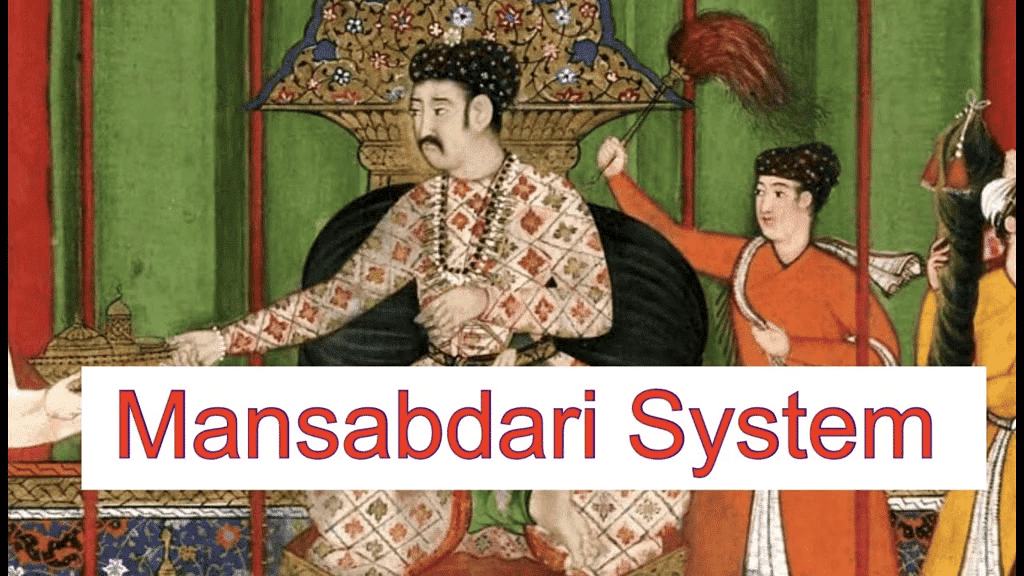
- Mansabdari system: A mansab was a rank determining an officer's status, salary and military obligations. Mansabdars provided soldiers and controlled officers under them according to their rank.
- Diversity of recruits: The imperial service included people from varied backgrounds - Turkic, Iranian, Afghan, Indian Muslim, Rajput and Maratha families - reflecting a flexible recruitment policy.
- Jagirs and revenue payments: Salaries were often paid through jagirs, where the right to collect revenue from a district was assigned to an officer. Theoretically a jagir's revenue matched the officer's pay; in practice shortfalls, delays and multiple assignments created administrative strain.
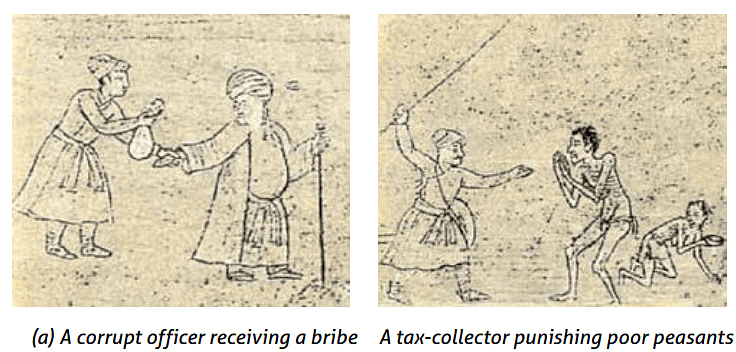
- Administrative problems: Many mansabdars did not directly administer jagirs and relied on deputies. Attempts by jagirdars to maximise revenue, combined with delays in reassignment, produced local abuses and sometimes peasant distress-factors that increased in the later Mughal period.
Zabt and Zamindars
- Sources of imperial revenue: The principal source of Mughal income was tax on agricultural produce, collected from peasants and administered by local elites.
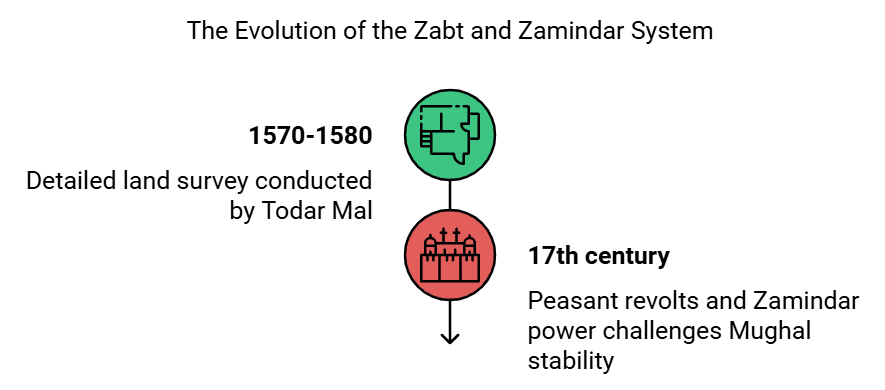
- Zabt system: The zabt was a system of land revenue assessment implemented in many parts of the empire. Under Emperor Akbar, his revenue minister Todar Mal carried out detailed measurements and assessments of land and crop yields (often dated c. 1570-1580) to set cash taxes. Where surveys were accurate, the system provided a predictable basis for revenue.
- Zamindars and local power: Zamindars were rural elites who collected taxes and often had considerable local influence. In some regions zamindars grew powerful and oppressive, provoking peasant unrest. Peasant revolts sometimes allied with rebellious zamindars, especially in the later seventeenth century when central control weakened.
A Closer Look: Akbar's Policies
Emperor Akbar (r. 1556-1605) introduced important policies in administration and religion that aimed at greater integration and stability.
- Religious discussion and Sulh-i kul: Akbar invited scholars, priests and thinkers of different faiths to the ibadat khana (house of worship/discussion) at Fatehpur Sikri. His policy of Sulh-i kul (universal peace) emphasised tolerance and non-discrimination in governance.
- Administrative reorganisation: Akbar divided the empire into provinces called subas, each under a governor called a subedar. He strengthened central institutions, regularised revenue collection and consolidated the mansabdari system.
- Records and legacy: Akbar's reign was recorded in the Akbarnama, written by Abul Fazl. His policies of religious tolerance and administrative reform influenced successive emperors and shaped Mughal statecraft.
The Mughal Empire in the 17th Century and After
- The Mughal state achieved notable military efficiency, administrative organisation and commercial prosperity in the seventeenth century.
- Contemporary travellers described the empire as extremely wealthy, but their accounts also noted considerable inequality between the elite and the peasantry.
- Records from the reign of Shah Jahan show that a relatively small number of top mansabdars received a large share of imperial disbursements: the top 445 mansabdars (around 5.6% of the total) reportedly received about 61.5% of the state's revenue as salaries.
- The heavy spending of the imperial elite on goods, salaries and court life supported crafts and trade but left limited funds available for investment by primary producers.
- As central authority declined in the late seventeenth and eighteenth centuries, regional officials and provincial commanders grew more independent and eventually formed new power centres and dynasties. By the eighteenth century, many provinces developed distinct political identities even while the Mughal emperor remained a titular figure in Delhi.
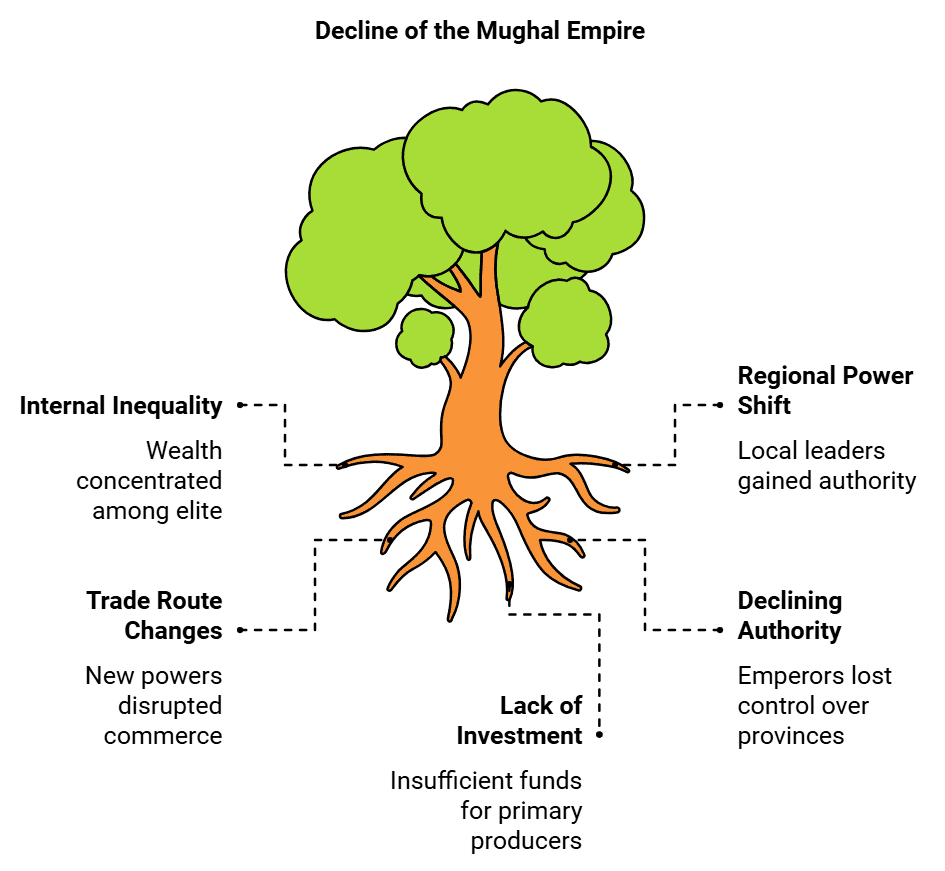
- Decline - broad causes: Recurrent succession struggles, administrative difficulties (including jagir mismanagement), heavy military expenditures, regional uprisings and the rise of new regional powers contributed to the gradual contraction of Mughal authority.
- External changes: Changing trade patterns and increasing European maritime influence in Indian Ocean trade also affected the economic foundations of Mughal power over time.
Important Dates
- 1227: Death of Genghis Khan.
- 1405: Death of Timur (Tamerlane).
- 1526-1530: Reign of Babur in India; he defeated Ibrahim Lodi at the First Battle of Panipat (1526) and established Mughal rule in Delhi and Agra.
- 1539: Sher Shah Suri defeated Humayun at Chausa.
- 1540: Sher Shah defeated Humayun again at Kannauj (Kanauj).
- 1555: Humayun recaptured Delhi.
- 1556: Akbar became emperor (as a young teenager) and began the consolidation of Mughal rule.
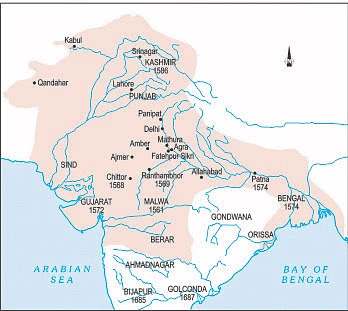
- 1568: Akbar's forces captured the Sisodiya stronghold of Chittor.
- 1569: Akbar seized Ranthambhore.
- 1605-1627: Reign of Jahangir.
- 1628-1658: Reign of Shah Jahan.
- 1632: Ahmadnagar (Deccan) brought under Mughal control during Shah Jahan's campaigns.
- 1658-1707: Reign of Aurangzeb.
- 1685: Annexation of Bijapur under Aurangzeb's Deccan campaigns.
- 1687: Annexation of Golconda.
- 1698: Aurangzeb's prolonged campaigns in the Deccan against the Marathas intensified during this period.
FAQs on NCERT Summary: The Mughal Empire (Class 7)
| 1. Who were the Mughals and what was their significance in Indian history? |  |
| 2. What were the key military campaigns undertaken by the Mughals? | |
| 3. How did the Mughal traditions of succession work? | |
| 4. What role did Mansabdars and Jagirdars play in the Mughal administration? | |
| 5. What were Akbar’s key policies that contributed to the Mughal Empire's success? | |