The Transition to Food Production: Neolithic– Chalcolithic, and Chalcolithic Villages - 1


The Neolithic Age and the Beginnings of Food Production
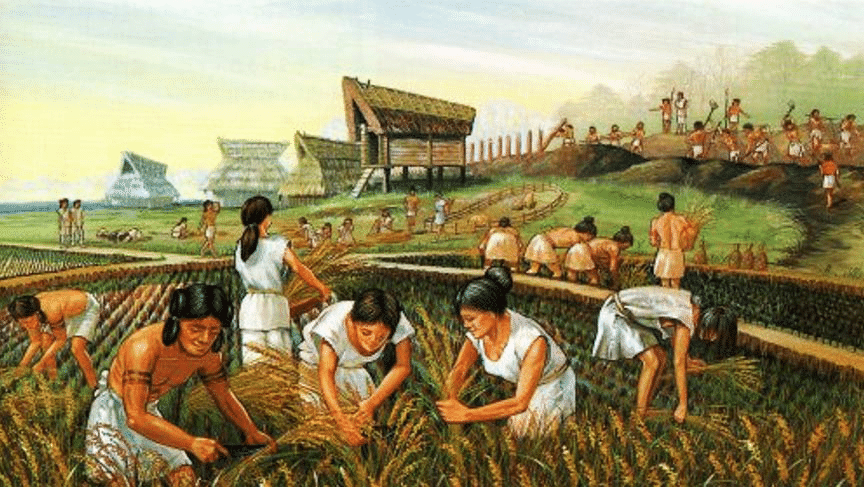
- Domestication Process: The domestication of animals and plants was the result of a long series of collective experiments involving many generations of people over hundreds or even thousands of years. It was a gradual process that required critical choices and changes in food procurement strategies.
- Early Stages: Archaeological evidence captures a late stage in the domestication of animals and plants, indicating that the process was already well underway at that time. However, many details about how this transition occurred remain unknown.
- Transition from Hunting-Gathering to Domestication: Despite missing details, it is possible to reconstruct various aspects of the transition from hunting-gathering to domestication in different parts of the world based on available evidence. This transition marked a significant achievement in human history and laid the foundation for agriculture and settled societies.
Centres of Agriculture
The process of domestication represented a fundamental change in how humans interacted with nature, marking a new phase in the relationship between people, plants, and animals.
- This process involved taking plants and animals from their natural environments and selectively breeding and raising them under human control for human benefit. It is important to distinguish between plant collection and plant domestication, as well as between animal keeping and animal domestication.
- When all harvested grain is consumed, it represents food collection; however, if some grain is set aside after harvesting and intentionally planted later, this indicates plant domestication. Similarly, capturing and keeping certain animal species is animal keeping, while animal breeding or domestication occurs when wild animals are taken from their natural habitats and raised under human control for profit.
- There was a gradual shift from hunting and gathering to animal rearing and agriculture. The transition from simple foraging to complex foraging, involving intensive exploitation of wild plants, laid the groundwork for plant domestication. This progressed to early agriculture and eventually to developed agriculture. Over time, these shifts linked to technological advances, increased food availability, population growth, larger settlements, and more complex social and political structures.
- A long period likely passed between the initial domestication of plants and animals in an area and the increased dependence on these resources for food. Societies can be distinguished based on the amount of food obtained through domestication. Food-producing societies are those meeting at least half their food needs for part of the year through domestication, where animals and plants are no longer bound to natural habitats.
- The Neolithic Age marks a major turning point in human history, characterised by advancements in stone tool technology and the move towards food production. People began making ground, pecked, and polished stone tools, reflecting this shift.
- Other notable developments during the Neolithic include pottery invention, increased sedentary life, formation of small self-sufficient village communities, and a division of labour based on sex. V. Gordon Childe coined the term "Neolithic Revolution" to emphasise the profound impact of these changes. However, this revolution was gradual, occurring multiple times in different regions with varying features and outcomes.
Why Domestication?
After thousands of years of hunting and gathering, what prompted certain groups to start domesticating plants and animals? One of the earliest attempts to answer this was made by V. Gordon Childe (1952), who suggested environmental changes at the end of the Pleistocene triggered food production.
- Childe argued that around 10,000 years ago, climate in parts of West Asia dried as summer rains shifted northward. This drying caused people, plants, and animals to concentrate near water sources like rivers and oases. Such enforced proximity fostered new dependent relationships between humans, plants, and animals, leading to domestication.
- However, Robert J. Braidwood (1960) challenged this theory, arguing that environmental changes alone were insufficient to explain the origins of agriculture, since similar changes during the Pleistocene did not lead to domestication. He proposed domestication occurred in specific nuclear zones rich in wild plants and animals with domestication potential. In these zones, domestication resulted naturally from human experimentation and deeper environmental understanding.
- Braidwood's theory lacked explanation of specific pressures or incentives driving domestication. Ethnographic evidence shows hunting-gathering communities with knowledge of agriculture who do not adopt it, implying strong motives are required for such a drastic lifestyle change.
- Lewis R. Binford (1968) further critiqued Braidwood for lacking archaeological testability, arguing specific factors shaped the beginning of agriculture. He suggested stable environments with balanced human-food populations do not motivate new strategies, as communities live below resource potential.
- Binford identified two types of demographic stress disrupting this balance: internal demographic stress (population increase within the community) and external demographic stress (immigration from outside).
Binford's View on Agriculture Origins
- Binford considered demographic stress key to agricultural origins, proposing that rising sea levels at the end of the Pleistocene forced coastal populations inland, disrupting the people-food balance.
- This disruption created the need for new strategies to increase food supplies.
- However, evidence for large-scale coastal-to-inland migration at this time is lacking.
- While internal demographic stress may have influenced some areas, claims of 'overpopulation' and 'food crisis' are debatable given small human communities and abundant resources then.
Kent Flannery's Perspective
- In 1969, Kent Flannery shifted focus from seeking a single event triggering food production to studying food production itself.
- He highlighted the adaptive advantages of domestication over foraging and hunting, distinguishing between two food procurement systems: negative and positive feedback.
- Negative Feedback Systems: Balanced exploitation of various food resources within an area, discouraging change.
- Positive Feedback Systems: Resource productivity increases due to human interference and exploitation.
- For example, when wheat or barley was cultivated outside its wild habitats, the plants responded to human selection with increased grain size and yield, encouraging further domestication
- Genetic changes from cross-fertilisation boosted maize productivity, encouraging further domestication.
- Flannery's hypothesis explains why agriculture eventually became advantageous but does not clarify why initial domestication experiments began.
Environmental Change and Early Agriculture
- Recent studies suggest environmental changes, especially the onset of a milder, warmer, and wetter Holocene climate, played a crucial role in early agriculture development.
- The extinction of big game in Europe was not significant in early agricultural regions like West Asia, where gazelles, wild cattle, onagers, deer, and wild goats remained important meat sources. The changing climate likely expanded habitats of wild cereals, aiding the agricultural shift.
- Origins of Domestication: Domestication was probably a slow, gradual process varying by region. Limited evidence means we may never fully understand specific motivations or social-political influences behind it.
- Different Factors in Different Regions: Rather than a single cause, domestication developed differently across ecological zones and resource availabilities in various early centres worldwide.
Identifying Domestication and Food Production in Archaeology

Domestication of Animals
- Domestication results in specific form changes in animals.
- Early domesticated animals are usually smaller than wild relatives.
- Size can increase with improved feeding and breeding.
- Other changes include:
- Shortening of the face relative to the skull.
- Alterations in dental structure, such as smaller teeth and possible loss of some teeth.
- Reduction in horn size.
- Changes in hair length and colouration.
- Domesticated cattle show weak muscle ridges and less defined joint facets, while draught animals may show strengthened muscles.
Early Stages of Domestication
- These morphological changes take long to manifest-thousands of years for horses and shorter periods for cattle, goats, and sheep.
- Scientists analyse animal bones and teeth from archaeological sites to differentiate wild from domesticated animals based on these traits.
- The presence of wild or transitional forms at sites aids the identification of domesticated varieties.
Other Indicators of Domestication
- Animals found outside their natural habitats, such as mountain goats on plains, indicate domestication.
- Differences in age and sex ratios in faunal assemblages help identify domesticated species, which typically differ from wild populations.
Domestication of Plants
- Domesticated plants undergo morphological changes, such as grain size differences in domesticated wheat and barley.
- Wild varieties have brittle ears and fragile spikes; domesticated varieties have strong ears that do not shatter during threshing.
- Root crops like potatoes and yams are less identifiable archaeologically due to lack of hard parts and asexual reproduction, resulting in less genetic change.
Evidence of Plant and Animal Domestication
Direct Evidence
- Grains and Seeds: Carbonized grains or seeds from archaeological sites provide direct evidence of plant domestication. Carbonization occurs when these materials contact fire.
- Impressions: Grain or husk impressions on clay or pottery fragments also indicate domestication.
Indirect Evidence
- Art Remains: Depictions of people capturing or tending animals, harvesting grain, or processing food suggest domestication but are not conclusive; hunting and wild plant collection may also appear similar.
- Artefacts and Tools: Grinding stones and sickles may indicate plant domestication but could have been used on wild plants or grains.
- Natural Science Data: Analysis of pollen, molluscs, insect remains, and other environmental data infer changes in land use and indirectly suggest agriculture.
- Food-Producing Status: Determining a community's food-producing status is complex and subjective. Some sites have clear evidence of domestication; others lack sufficient proof.
- Neolithic Sites in India: Many are termed 'Neolithic' mainly because of ground and polished stone tools without definitive domestication evidence.
Study of Ancient Plant Remains
Studying ancient plant remains, called palaeobotany or archaeobotany, examines botanical remnants from historical sites. These remain types are macro-botanical and micro-botanical.
Macro-Botanical Remains
- Seeds and grains preserved by desiccation, waterlogging, or charring.
- Manual collection during excavation can damage or miss fragments; the flotation technique is more effective.
Flotation Technique
- Dried carbonized plant material with soil is poured into a liquid (usually water).
- Inorganic soil particles sink; carbonized seeds float for easy collection.
- Seeds are analysed microscopically to identify plant types and domestication status.
Micro-Botanical Remains
- Phytoliths (tiny silica particles) and plant parenchyma (specialized plant cells) help distinguish wild versus domesticated plants.
- Their recovery informs the types of plants used.
Palynology
- The study of pollen and spores aids in analysing ancient vegetation.
- Pollen can survive millennia due to a tough outer shell.
- Pollen grain analysis identifies plant species and reveals climatic or land-use changes.
Advanced Techniques
- Accelerator mass spectrometric (AMS) dating of squash seeds and maize cobs and DNA studies to analyse plant genotypes are mainly used in Western research.
- These determine links between domesticated and wild species and pinpoint wild progenitor regions.
The Transition to Food Production in the Indian Subcontinent
The Neolithic age is commonly associated with food production, pottery, and settled life, but the Indian subcontinent presents a more complex picture. Some Neolithic traits begin in the Mesolithic phase, for example, pottery and animal domestication at some Mesolithic sites. Conversely, some Neolithic sites lack pottery.
- Sedentism (settled living) is complex: some Mesolithic hunter-gatherers were sedentary, while some food producers were less so. Sedentary and nomadic lifestyles represent a spectrum rather than opposites.
- The shift to domestication did not end hunting and gathering. Many pastoral and agricultural communities also hunted and foraged, while some communities continued hunting-gathering exclusively.
- Ecological diversity-climate, soil, and domesticable plants and animals-led to diverse adaptations among early pastoralists and agriculturists.
- This chapter focuses on food production beginnings rather than the Neolithic per se, since food production is its defining feature. The subcontinent's early food-producing settlements show different regional profiles and trajectories.
- In the northern Vindhyan fringes, food-producing Neolithic cultures evolved from Mesolithic precursors, while in the northwest, the earliest settlements appear directly as Neolithic agriculturists and pastoralists without a Mesolithic phase.
- Many Neolithic-Chalcolithic cultures show Neolithic elements alongside metal use, mainly copper. Some regions, such as Rajasthan, currently lack clear Neolithic or Neolithic-Chalcolithic evidence; their earliest sedentary communities appear fully developed in the Chalcolithic.
- The complex cultural history is divided into three overlapping food-producing phases:
- Phase I-c. 7000-3000 BCE
- Phase II-c. 3000-2000 BCE
- Phase III-c. 2000-1000 BCE onwards
- The first two phases are discussed here; Phase III will be covered in Chapter 5. For long cultural sequences, only earliest phases are discussed here; later ones appear in Chapter 5.
- Early food-producing geographical zones are examined with respect to chronology, general features, and specific traits, within their cultural contexts.
The Earliest Village Settlements in the Indian Subcontinent, c. 7000-3000 BCE
The North-West
- Sites in Baluchistan illustrate the transition from a semi-nomadic pastoral lifestyle to settled agriculture. The most ancient and well-documented example is Mehrgarh, located in the Bolan valley of the northern Kachi plain, near where the river emerges from hills through the Bolan pass. This valley historically linked the Indus plains with north Baluchistan's mountainous regions, facilitating movement of people and animals from early times.
- Excavations at Mehrgarh revealed ancient settlements over ~200 hectares on a low mound and plain, with seven occupational levels documenting continuous habitation with cultural continuity and change over millennia. The first six levels (Periods I to VI) are most relevant here.
- Periods I and II at Mehrgarh are Neolithic despite some copper presence. Remains from Period I (subdivided into IA and IB) lie in an 11-metre-thick deposit by the Bolan river's northern bank. Dating is challenging, with most radiocarbon dates between 6000 and 5500 BP (~5000 BCE calibrated), though some vary.
- Radiocarbon dates for Period IA range mostly from 5800 to 5530 BP, with earlier dates such as 9385 ± 120 BP (Period IA), 7115 ± 120 BP (Period IIB), and 6500 ± 80 BP (Period III) supporting a coherent neolithic chronology from the 8th to 6th millennia BCE.
Houses and Structures
- Period I: Houses made of handmade mud-bricks with small rectangular rooms; some structures may have been granaries.
- Period IA: A 2 × 1.8 m room with reed impressions on the floor and a grinding stone.
- Bricks: Walls built with standard-sized bricks having rounded ends and finger impressions on the top surface.
Tools and Artifacts
- Stone Tools: Thousands of microliths based on blades and some ground neolithic handaxes (celts). Some blades were hafted into wooden handles with bitumen, possibly sickles for grain harvesting.
- Grinding Stones: Indicate food processing.
- Other Stone Objects: Vessels, perforated discs, spatulae with criss-cross designs.
- Bone Tools: Needles and awls.
- Figurines: Handmade clay female figurine.
- Pottery: Mostly aceramic in period I; first pottery appears in Period IB.
Burials and Grave Goods
- Burials: Bodies buried in oval pits in a flexed position, often covered with red ochre; young goats sometimes placed by feet.
- Grave Goods: Bitumen-lined baskets, food offerings, ornaments like stone/shell bead necklaces, bone pendants, anklets; one burial had a copper bead.
- Exotic Items: Turquoise and lapis lazuli beads indicating long-distance exchange; lapis lazuli possibly from Chagai hills or Afghanistan; turquoise from eastern Iran or Central Asia. Marine shells from Makran coast (~500 km away) also found.
Period I: Burials and Grave Goods
- A graveyard with 150 burials covering >220 m² was discovered.
- Burials were more elaborate than earlier phases.
- Some graves had niches cut into pit sides where bodies and goods were placed, then sealed by mud-brick walls.
- Copper beads appeared in some graves.
- Double and secondary burials (bones reburied after exposure) found.
- The reasons for these burial changes remain unclear.
Period II: Settlement Expansion and Craft Activities
Period II A (c. 6000-4500 BCE)
- Mehrgarh expanded with mud-brick structures subdivided into small compartments, some likely used for storage, confirmed by barley seed finds on floors.
- Stone and bone tool types from Period I persisted.
- Two microlithic sickles hafted onto bitumen matrix discovered.
- Microwear studies indicate tools were used for processing animal products: butchery, cooking, hide processing, and bone artifact making.
- Handmade pottery appeared early in Period II; wheel-made pottery emerged in Period IIC.
- Copper items (ring, bead, small ingot), ivory tusk, red ochre pieces, grinding stones, and small unbaked clay male torso figurine found.
- Two flexed burials with bodies covered in red ochre but no grave goods were identified.
Period II B
- Timeframe: c. 6000-4500 BCE.
- Settlement growth continued.
- Multiple mud-brick structures with small cell-like compartments, possibly for storage and residence.
- Storage indicated by double rows of small rooms with central passage, barley seeds found inside.
- Stone and bone tools from Period I persisted; two bitumen-hafted microlith sickles found.
- Microwear analysis links tools to animal product processing.
- Early Period II had handmade pottery; wheel-made pottery began in Period IIC.
- Finds include copper ring, bead, ingot; ivory tusk; red ochre; grinding stones; and clay male torso figurine.
- Burials included two flexed skeletons covered with red ochre, lacking grave goods.
Period II C
- Time Frame: Second half of the 5th millennium BCE.
- Increase in craft activities, notably large-scale wheel-made pottery production with painted decorations.
- Pottery manufacturing area with three oven bases atop six metres of pottery debris discovered.
- Bead making was significant: strung necklaces and bracelets made of tiny steatite beads; semi-precious stone beads (lapis lazuli, turquoise, agate); terracotta and shell beads also found. Stone micro-drills may have engraved shells.
- Terracotta humped bulls were found.
- Terracotta crucibles with copper traces suggest early metallurgy.
Period III: Storage, Burial Practices, and Subsistence Activities
Storage Complexes and Burial Practices
- Storage complexes resembled earlier compartments.
- A cemetery with about 99 burials showed notable changes: previous niches made from cigar-shaped bricks disappeared.
- Some skeletons had heads placed on bricks, indicating altered burial customs.
- Collective burial included two wheel-made painted pots unique among burials.
- Another burial contained a copper or bronze object resembling a segmented seal fragment near the skull.
- Ornaments mostly consisted of steatite micro-beads; others included pendants of lapis lazuli, carnelian, turquoise, chrysoprase, agate, terracotta, and seashells.
Transition in Subsistence Activities
- Periods I-III offer the earliest detailed evidence of subsistence transitions from hunting and gathering to animal domestication and agriculture.
- Excavations yielded thousands of plant specimens, including charred grains, seeds, and grain impressions on mud-brick; barley was the key crop.
- Period I's main barley type was six-row naked barley (Hordeum vulgare nudum); also present were hulled six-row barley (Hordeum vulgare vulgare) and wild/domesticated hulled two-row barley (Hordeum vulgare spontaneum and Hordeum vulgare distichum).
- Presence of wild, transitional, and domesticated barley indicates north Baluchistan was within wild barley's natural habitat and Mehrgarh was part of its domestication zone.
Agriculture and Domestication in Mehrgarh
Early Agriculture: Mehrgarh, Period I
- Barley and Wheat: Grains of domesticated hulled barley (Hordeum vulgare) and wheat types including einkorn (Triticum monococcum), emmer (Triticum dicoccum), and naked wheat (Triticum durum) found.
- Domestication: Although wild wheat is not clearly evidenced, active domestication of wheat cereals occurred.
- Other Crops: Seeds of ber (Zizyphus jujube) and dates (Phoenix dactylifera) present.
Mehrgarh, Period II
- Continuity and Diversification: Continued Period I crops with the introduction of new cereal varieties.
- New Wheat Varieties: Triticum aestivum compactum and Triticum aestivum sphaerococcum.
- New Barley Variety: Hordeum hexastichum.
- Introduction of Oats: Avena species introduced.
- Shift: Wheat gained importance over barley.
Mehrgarh, Period III
- Continuity: Continued earlier crop cultivation.
- New Crop Additions: Additional wheat and barley varieties, oats cultivated.
- Crop Dominance Shift: Wheat became dominant.
- Cultivation Practices: Likely relied on winter rains; possible use of mud or stone embankments (similar to gabarbands) to channel water.
- Harvesting: Stone sickles made by hafting microliths to wooden handles with bitumen probably used for harvesting grain.
Transition to Animal Domestication
- Period I: Predominantly bones of wild animals (gazelle, blackbuck, sambar, chital, nilgai, goat, onager, water buffalo, cattle, pig, possibly elephant).
- Early Domestication: Evidence of domesticated goats; decrease in sizes of sheep and cattle indicating early domestication.
Period II:
- Greater Domestication: Increased bones of domesticated cattle, goats, sheep; cattle became dominant domesticated animal.
- Period III: Cattle remained dominant; sheep and goat bones increased. Hunting activity also resurged, as wild animal bones rose.
Dental Health and Diet: Study by J. R. Lukacs (1985)
- Dental Caries: Low early on, possibly due to high fluoride in drinking water.
- Coarse Diet: Teeth exhibit evidence of biting coarse foods and tooth probing.
Period III Decline: Dental health deteriorated, possibly linked to refined food consumption changes.
Period IV
- Settlement Growth and Architecture: Further expansion with larger rooms divided by wider walls; doors with wooden lintels showing advanced construction.
- Unique Room: A low (1.10 m) door led to a room filled with stone tools, grinding stones, pestles, and animal bones, indicating a busy domestic space.
- Pottery and Decoration: Polychrome wares with intricate snake patterns, storage jars, basins with ridges, fine goblets, and beautifully painted vessels.
- Figurines: Emergence of a new terracotta female figurine style with tubular bodies, pinched noses, and joined legs.
Period V
- Pottery Continuity: Pottery designs showed stability between Periods IV and V.
Period VI
- New Pottery Styles: Introduction of red ware decorated with pipal leaf motifs and well-fired grey ware.
- Increased Interaction: Similar pottery styles across Baluchistan suggest rising cultural exchange.
- Pottery Kiln: Large kiln discovered, highlighting production importance.
- Terracotta Figurines: Female figurines with elaborate hairstyles, heavy breasts, and joined legs-possibly associated with cultic practices.
- Unexplored Sites: Large mounds in the Kachi plain possibly represent contemporaneous sites to much of Mehrgarh.
Kile Gul Mohammad
Early Settlement and Transition (Period I)
- Initially, Kile Gul Mohammad inhabitants were likely nomadic pastoralists, transitioning by Period I end to mud or wattle-and-daub houses (interwoven rods/twigs plastered with mud).
- Artefacts included microliths and blades of chert, jasper, chalcedony; few ground tools and bone points.
Pottery Developments (KGM II and KGM III)
- KGM II introduced handmade and basket-marked pottery. KGM III saw widespread wheel-made pottery, including fine black-on-red ware with geometric designs.
- Remains of mud-brick houses, some with stone foundations, were found. Copper objects first appear in Period III.
Kile Gul Mohammad IV and Damb Sadaat I
- KGM IV was contemporary with Damb Sadaat I; both yielded similar cultural remains.
- Kechi Beg Ware: Thin, well-fired buff pottery with geometric black or red painted designs; typical shapes were deep vases, bowls, jars.
Damb Sadaat Period II (c. 3000 BCE)
- Multi-room mud-brick houses with limestone foundations; hearths resembling modern tandoors for cooking.
- Pottery types include Quetta ware (buff with black designs: jars, bowls, pedestaled jars) and Faiz Mohammad Grey Ware (shallow plates, deep bowls with geometric/naturalistic designs).
- Terracotta cattle and female figurines, small house models, rattles, seals found, along with copper/bronze blades, bone spatulas, alabaster vessels.
Excavations in the Kalat Plateau
- Anjira and Siah Damb, excavated by Beatrice de Cardi, show five occupation phases. The earliest phase is contemporaneous with Kile Gul Mohammad Period II.
- Period I: Semi-nomadic settlements lacking structural remains. Pottery includes fine wheel-made buff ware, chert blades.
- Period II: Mud structures on stone foundations; pottery includes red-slipped and burnished grey wares.
- Period III: Houses constructed with roughly cut square stone blocks; introduction of Togau ware, red pottery with black ibex, bird, goat designs; emergence of Zari ware with white and black painted motifs.
- Period IV: Stone dressing for square block houses; pottery akin to Nal culture.
- Period V: Correlates with Damb Sadaat III, indicating cultural continuity.
Early Settlements and Developments in Mundigak
Mundigak, on a now-dry tributary of the Arghandab river, SE Afghanistan, excavated by J. M. Casal in the 1950s-60s, shows several periods with Period I dating c. 4000-3500 BCE. Early settlers were probably semi-nomadic; no structures found in early Period I.
Period I:
- Phase 4: Small oblong cells with pressed earth walls.
- Phase 5: Larger houses with square/oblong sun-dried brick rooms.
- Pottery: Mainly wheel-made throughout Period I.
- Tools and Ornaments: Bone awls, alabaster vases, stone blades, beads made of stone, lapis lazuli, frit.
- Copper Objects: Needle and small bent blade.
- Figurines: Terracotta humped bull figurine.
Period II: Domesticated cattle, sheep, goats, and crops like club wheat and ber present.
Early Village Sites in Baluchistan
Explorations along the plains of the Gomal, Zhob, Anambar, and Thal rivers in Baluchistan's Zhob-Loralai region uncovered several early village sites-Sur Jangal, Dabar Kot, and Rana Ghundai in the Anambar valley. Irrigation was likely practiced.
Sur Jangal:
- Early occupation contemporaneous with Kile Gul Mohammad IV.
- Small mud houses; heavy focus on cattle rearing, evidenced by numerous cattle bones.
- Pottery featured painted motifs of humped and humpless cattle.
- Terracotta objects included small house models and goggle-eyed female figurines, presumably cult objects known as 'Zhob mother goddess' figurines.
Rana Ghundai:
- Excavated initially in the 1930s and revisited in the 1950s; five occupational levels identified.
- Period I: c. 4500-4300 BCE, semi-nomadic community with living surfaces and hearths but no substantial structures; pottery mainly handmade and plain; domesticated animal bones and microlithics present.
- Period II: Wheel-made pottery with friezes depicting stylized humped bulls and blackbuck; common pottery forms include bowls/cups with wide shoulders.
- Period III: Changes in painted pottery style observed.
FAQs on The Transition to Food Production: Neolithic– Chalcolithic, and Chalcolithic Villages - 1
| 1. What is the significance of domestication in the Neolithic Age? |  |
| 2. How can archaeologists identify evidence of plant and animal domestication? | |
| 3. What was the transition to food production like in the Indian Subcontinent? | |
| 4. What are some of the earliest village settlements discovered in the Indian Subcontinent? | |
| 5. What were the key developments in early settlements like Mundigak during the Neolithic–Chalcolithic period? | |




