Chapter Notes: Yoga as Preventive Measure for Lifestyle Disease - 2

Asanas to Prevent Bronchial Asthma
Urdhvahastottanasana
- Urdhvahastasana, also known as upward salute or upward hands pose, involves standing upright with interlocked fingers and stretching the hands high while keeping the feet flat on the floor.
- Health Benefits: Back Pain Relief: Stretches back muscles, aiding in back pain relief. Spinal Health: Improves spinal alignment and curvature. Weight Loss: Helps slim the waist and reduce hip fat. Asthma Control: Expands the chest, increasing lung capacity and alleviating asthma. Constipation Relief: Promotes proper movement in the digestive tract, relieving constipation. Abdominal Fat Reduction: Targets fat reduction in the abdominal sides. Nerve Health: Enhances nerve efficiency through full-body stretching. Leg Strengthening: Benefits toes, feet, ankles, knees, and buttocks. Sciatica: Can alleviate sciatica pain when practiced under expert guidance.
- Contraindications: Pregnancy: Should be avoided during pregnancy. Varicose Veins: Individuals with varicose veins should seek expert guidance. Headache: Not recommended during headaches. Insomnia: Consult a yoga therapist before practicing during insomnia.
Uttanmandukasana
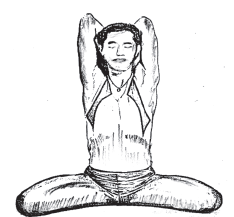
- Technique: Assume the Mandukasana position, holding the head in the elbows, and then transition to Uttanmandukasana by spreading the knees while keeping the toes together.
- Benefits: Diaphragmatic movement improvement, posture enhancement, back and lumbar pain relief, increased elasticity in the thigh joint and shoulder.
- Precautions: Individuals with arthritis, hernia, chronic back issues, elbow and shoulder pain, and spinal deformities should avoid this asana.
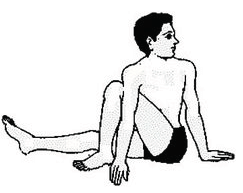
Vakrasana
- Vakrasana, or Twisted Pose, involves a seated position where the spine is twisted, engaging the lower back, middle back, hips, and neck.
- Technique: Start in Dandasana, bring the left knee close to the chest, place the left foot outside the right knee, and twist the upper body to the left, using the right elbow for support.
- Benefits: Improves spinal flexibility, aids digestion, and stretches the hips and shoulders.
- Contraindications: Individuals with severe back issues, hernia, or recent abdominal surgery should avoid this asana.
Anulom-Vilom
Anulom-Vilom, also known as Nadi Shodhana or Alternate Nostril Breathing, is a fundamental pranayama practice in yoga. This technique involves inhaling and exhaling through alternate nostrils, promoting balance and harmony within the body and mind.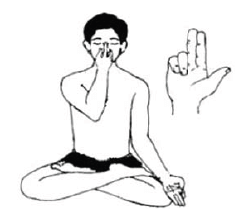
Steps to Perform Anulom-Vilom:
- Find a Comfortable Position: Sit in a comfortable meditation posture with your back straight and shoulders relaxed. Close your eyes gently.
- Prepare Your Hand: Place your right hand in Jnana Mudra (thumb and index finger touching) on your knee.
- Begin with the Right Nostril: Use your right thumb to close your right nostril. Inhale deeply and slowly through your left nostril for a count of 5.
- Switch Nostril: Close your left nostril with your ring finger, releasing your right nostril. Exhale through your right nostril for a count of 10.
- Continue the Cycle: Inhale through your right nostril for a count of 5. Close your right nostril and exhale through your left nostril for a count of 10.
- Repeat: Continue this pattern for 5 rounds or for 3 to 5 minutes, ensuring your breath is slow, deep, and silent.
Benefits of Anulom-Vilom:
- Calms the Mind: This practice helps to steady the mind, improve focus, and enhance concentration.
- Balances Hemispheres: Anulom-Vilom balances the left and right hemispheres of the brain, promoting overall mental harmony.
- Strengthens Immunity: Regular practice strengthens the immune system, enhancing the body's ability to fight infections.
- Manages Hypertension: Anulom-Vilom is beneficial for managing hypertension by promoting relaxation and reducing stress.
- Increases Oxygen Supply: This practice ensures adequate oxygen supply to every cell in the body, supporting optimal functioning.
- Detoxifies the Body: Anulom-Vilom helps remove waste products like carbon dioxide and other toxic gases from the bloodstream, promoting detoxification.
Asanas to Prevent Hypertension
Hypertension, or high blood pressure, is a common health issue that can lead to serious problems like heart disease and stroke. Fortunately, certain yoga poses, or asanas, can help prevent and manage hypertension by promoting relaxation, improving circulation, and reducing stress. In this guide, we will explore various yoga poses that are beneficial for preventing hypertension, along with their benefits and precautions.
Tadasana (Mountain Pose)
- Tadasana, also known as Mountain Pose, is a foundational yoga posture that promotes good posture, balance, and body awareness.
- Benefits: Improves posture, strengthens the legs, and promotes a sense of stability.
Katicakrasana (Waist Rotating Pose)
- Benefits: Improves spinal flexibility, massages the abdominal organs, and helps relieve tension in the waist area.
Uttanapadasana (Raised Leg Pose)
Uttanapadasana, also known as the Raised Leg Pose, is a beneficial yoga asana that offers various health advantages. The name comes from the Sanskrit words "Uttana," meaning raised or upward, and "Pada," meaning feet or legs. This pose involves raising the legs while lying on the back in a supine position.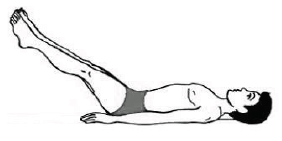
Technique:
- Lie down on your back with your legs together and your arms by your sides, palms resting on the ground.
- Slowly raise both legs together at a 30-degree angle.
- Gradually increase the angle to 45 degrees, then to 60 degrees, holding each position for a few seconds.
- To return, lower your legs to 45 or 30 degrees before bringing them back to the ground.
Benefits:
- Helps with diabetes, constipation, indigestion, and nervous weakness.
- Balances the navel center (Nabhimanipurachakra).
- Strengthens abdominal muscles.
- Improves breathing and lung capacity.
Contraindications:
- Avoid if you have injuries in the neck, back, pelvis, or leg muscles.
- Pregnant women should not perform this asana.
- Individuals with severe spondylitis, cardiac issues, or abnormal blood pressure should refrain from practicing Uttanapadasana.
- If you have undergone hernia-repair surgery, wait at least two weeks before attempting this asana.
- Avoid if you have a migraine.
Ardha-Halasana (Half Plow Pose)
Ardha Halasana, also known as Half Plow Pose, is a preparatory yoga asana that offers various benefits for the body. The name "Ardha Halasana" comes from the Sanskrit words "Ardha," meaning half, and "Hala," meaning plough. In this pose, the body resembles half the shape of an Indian plough.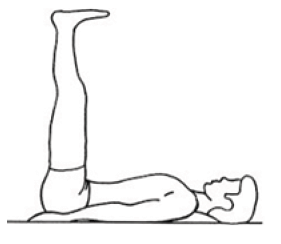
Technique:
- Start by lying flat on your back with your hands straight by the sides of your thighs, palms resting on the ground.
- Slowly raise your legs together without bending your knees, using your hands for support, until you stop at a 30° angle.
- After a few seconds, raise your legs further towards your head up to a 60° angle and hold the position.
- Gradually bring your legs up to a 90° angle and maintain the position for 15-30 seconds.
Breathing Awareness:
- Inhale while lying in the starting position.
- Retain your breath while assuming the final position.
- Breathe slowly and deeply in the final position.
- Retain your breath while returning to the starting position.
Benefits:
- Ardha Halasana is the preparatory asana for Halasana.
- It improves digestion and appetite.
- Enhances blood circulation.
- Strengthens thigh and calf muscles.
- Aids in reducing abdominal fat and weight loss.
- Stimulates abdominal organs.
Contraindications:
- Individuals with cardiac problems, back pain, or high blood pressure should avoid this practice.
- Pregnant women should not practice Ardha Halasana, as it exerts pressure on the lower abdomen and tightens the pelvic area.
- Those experiencing acute lower back pain should exercise caution during this practice.
- Individuals recovering from stomach infections or surgeries in the abdominal area should seek proper guidance and precautions.
Sarala Matyasana (Easy Fish Pose)
Sarala Matyasana, or Easy Fish Pose, is a gentle yoga asana that involves lying flat on the back with the head supported by the hands. The neck, upper back, and shoulders are lifted off the ground while the hands are relaxed at the sides of the body. This pose is beneficial for various reasons.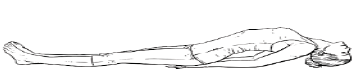
Benefits:
- Improves the digestive system and helps alleviate issues like irritable bowel syndrome and other abdominal-related problems.
- Contraindications: Individuals with cervical spondylitis and frozen shoulder should avoid practicing this asana.
Gomukhasana (Cow Face Pose)
Gomukhasana, also known as Cow Face Pose, is a seated yoga posture that offers various benefits for the body and mind. The name "Gomukhasana" comes from the Sanskrit words "Gomukha," meaning cow's face, and "asana," meaning pose. In this posture, the body resembles the face of a cow, with the arms and legs positioned in a specific way.Benefits:
- Stretches the hips, thighs, and shoulders.
- Improves flexibility and posture.
- Calms the mind and reduces stress.
Uttan Mandukasana (Extended Frog Pose)
Uttan Mandukasana, also known as Extended Frog Pose, is a yoga asana that involves lying on the stomach and lifting the chest while keeping the legs bent. The name "Uttan Mandukasana" comes from the Sanskrit words "Uttan," meaning extended, and "Manduka," meaning frog. In this pose, the body resembles an extended frog, with the chest lifted and the legs bent.Benefits:
- Strengthens the back, shoulders, and arms.
- Improves posture and spinal flexibility.
- Stimulates the abdominal organs and aids digestion.
Vakrasana (Twisted Pose)
Vakrasana, also known as Twisted Pose, is a seated yoga posture that involves twisting the torso to one side while keeping the legs extended. The name "Vakrasana" comes from the Sanskrit word "Vakra," meaning twisted, and "asana," meaning pose. In this asana, the body undergoes a gentle twist, which helps in stretching and strengthening various muscle groups.Benefits:
- Improves spinal flexibility and mobility.
- Stretches the back, shoulders, and abdominal muscles.
- Aids digestion and stimulates the digestive organs.
- Helps relieve tension and stress.
Bhujangasana (Cobra Pose)
Bhujangasana, commonly known as Cobra Pose, is a yoga asana that involves lying on the stomach and lifting the chest off the ground while keeping the lower body grounded. The name "Bhujangasana" comes from the Sanskrit words "Bhujanga," meaning cobra or snake, and "asana," meaning pose. In this posture, the body resembles a cobra with its hood raised, and it offers various benefits for the body and mind.Benefits:
- Strengthens the spine and improves spinal flexibility.
- Stretches the chest, shoulders, and abdominal muscles.
- Stimulates the digestive organs and aids digestion.
- Helps relieve stress and fatigue.
Makarasana (Crocodile Pose)
Makarasana, also known as Crocodile Pose, is a restorative yoga asana that involves lying on the stomach with the arms and legs positioned in a way that resembles a crocodile resting. The name "Makarasana" comes from the Sanskrit words "Makara," meaning crocodile, and "asana," meaning pose. In this posture, the body takes on the shape of a crocodile, and it offers various benefits for relaxation and rejuvenation.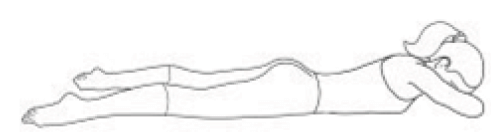
Benefits:
- Promotes relaxation and reduces stress.
- Relieves tension in the back, shoulders, and neck.
- Improves blood circulation and aids in recovery.
- Helps alleviate fatigue and revitalizes the body.
Shavasana
Shavasana, or Corpse Pose, is a restorative yoga posture that can be beneficial for individuals with hypertension. To practice it:- Lie flat on your back with your legs extended and arms relaxed by your sides, palms facing up.
- Close your eyes and take slow, deep breaths, allowing your body to relax completely.
- Focus on releasing tension from each part of your body, starting from your toes and moving up to your head.
- Stay in this position for 5 to 15 minutes, maintaining a calm and relaxed state.
Shavasana helps reduce stress, lower blood pressure, and promote overall relaxation, making it a beneficial practice for individuals with hypertension.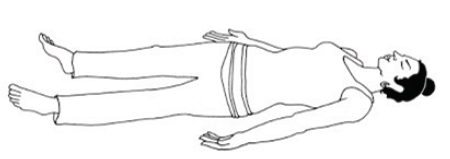
Nadi Shodhana Pranayama
Nadi Shodhana Pranayama, also known as Alternate Nostril Breathing, is a breathing technique that can be beneficial for individuals with hypertension. To practice it:
- Sit in a comfortable position with your spine straight and shoulders relaxed.
- Close your right nostril with your right thumb and inhale deeply through your left nostril.
- Close your left nostril with your right ring finger and exhale through your right nostril.
- Inhale through your right nostril, then close it and exhale through your left nostril.
- Continue this pattern for several minutes, focusing on your breath and maintaining a steady rhythm.
Nadi Shodhana Pranayama helps calm the mind, balance the nervous system, and reduce stress, making it a beneficial practice for individuals with hypertension.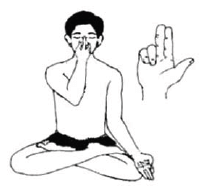
Sheetali Pranayama
Sheetali Pranayama, or Cooling Breath, is a pranayama technique that can help lower body temperature and promote relaxation. To practice it:- Sit in a comfortable position with your spine straight and shoulders relaxed.
- Stick out your tongue and curl the sides to form a tube. Inhale deeply through this tube, allowing the cool air to enter your body.
- Close your mouth and exhale slowly through your nostrils.
- Repeat this process for several minutes, focusing on the cooling sensation and calming your mind.
Sheetali Pranayama is beneficial for reducing excess heat in the body, calming the mind, and promoting a sense of tranquility. It can be especially helpful in hot weather or during stressful situations.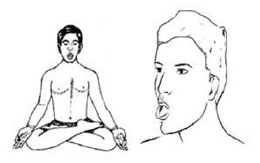
Asanas to Prevent Back Pain and Arthritis
Tadasana (Mountain Pose)
- Description: Stand tall with your feet together, arms by your sides. Inhale and raise your arms overhead, interlocking your fingers. Stand on your toes, stretching your body upward.
- Benefits: Strengthens the back, improves posture, and stretches the spine.
Urdhva Hastottanasana (Upward Stretch Pose)
- Description: Similar to Tadasana, but with a focus on stretching the arms and upper body.
- Benefits: Stretches the entire body, improves flexibility, and energizes the mind.
Ardha-Chakrasana (Half Wheel Pose)
- Description: Stand straight, clasp your hands together, and raise them above your shoulders. Bend your upper body backward along with your arms. Hold the position for as long as comfortable, then return to standing.
- Benefits: Strengthens back and abdominal muscles, tones abdominal organs, relieves back issues, and prepares for the full wheel pose.
- Precautions: Avoid if you have neck, hip, or spinal injuries, high blood pressure, or if pregnant.
Ustrasana (Camel Pose)
- Description: Kneel on the floor, place your hands on your lower back, and arch your back while pushing your hips forward. Optionally, reach for your heels with your hands.
- Benefits: Stretches the front of the body, improves spinal flexibility, and relieves back pain.
Vakrasana (Twisted Pose)
- Description: Sit with your legs extended, bend your right knee and place your foot on the left thigh. Twist your torso to the right, using your left arm to hold the right knee.
- Benefits: Improves spinal flexibility, aids digestion, and relieves back pain.
Sarala Matsyendrasana (Simple Spinal Twist)
- Description: Sit with your legs extended, bend your right knee and place your foot on the left thigh. Twist your torso to the right, holding your right knee with your left arm.
- Benefits: Enhances spinal flexibility, aids digestion, and relieves tension in the back.
Bhujangasana (Cobra Pose)
- Description: Lie on your stomach, place your hands under your shoulders, and lift your chest off the ground while keeping your pelvis down.
- Benefits: Strengthens the spine, opens the chest, and stretches the abdominal muscles.
Gomukhasana (Cow Face Pose)
- Description: Sit with your legs crossed, left knee on top of the right. Reach your left arm overhead and bend it to grab your right hand behind your back.
- Benefits: Stretches the shoulders, hips, and thighs, and improves circulation.
Bhadrasana (Gracious Pose)
- Description: Sit with your legs stretched forward, bend your knees, and bring your feet close to your body with toes pointing outward. Place your hands on your knees, pressing them down.
- Benefits: Loosens joints, relieves spinal tension, helps with sciatic and menstrual disorders, prevents arthritis, and improves posture and concentration.
- Precautions: Consult a yoga expert if you have serious arthritis.
Makarasana (Crocodile Pose)
- Description: Lie on your stomach with hands folded under your head, legs stretched out, and toes pointing outward. Relax and breathe normally.
- Benefits: Provides deep relaxation to shoulders and spine, reduces waist pain, aids in slipped discs, and offers relief for arthritis patients.
- Precautions: Pregnant individuals in their second or third trimester should avoid this pose.