NCERT Solutions: The Cap-seller and the Monkeys


Let us speak
Page No. 57
A: Answer the following questions.Q1: Do you have a cap? What is its colour?
Ans: yes, red.
Q2: Why do you think the monkeys threw the caps in the basket?
Ans: The monkeys copied the man. When he threw his cap, they did the same.
B: What is the first sound of the words in each row? Ans: The first letter sound is of the words C.
 Ans: The first letter sound is of the word M.
 Ans: The first letter sound is of the word B.
Let us write
Page No. 57 to 62
A: Circle the words that start with the same sound in each row.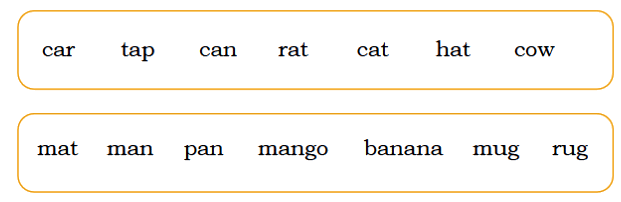
Ans: 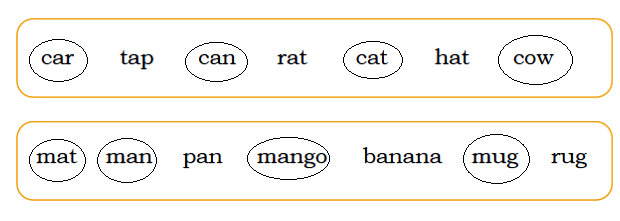
B: Write the numbers (1-4) next to the pictures according to the story.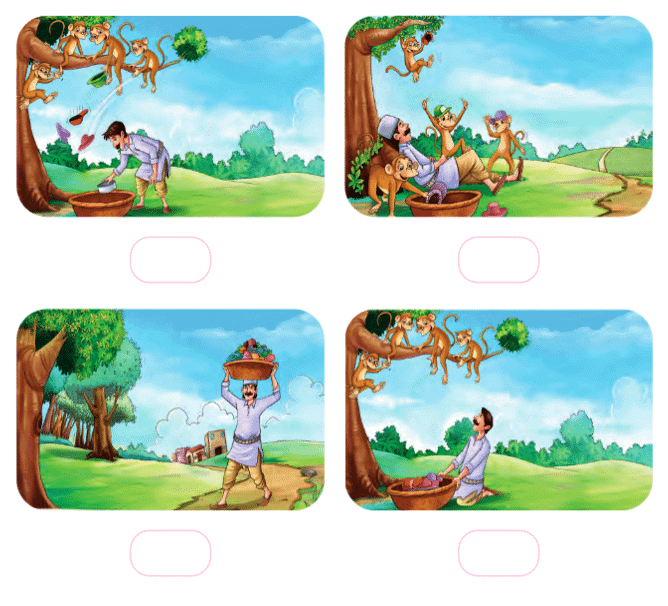
Ans: 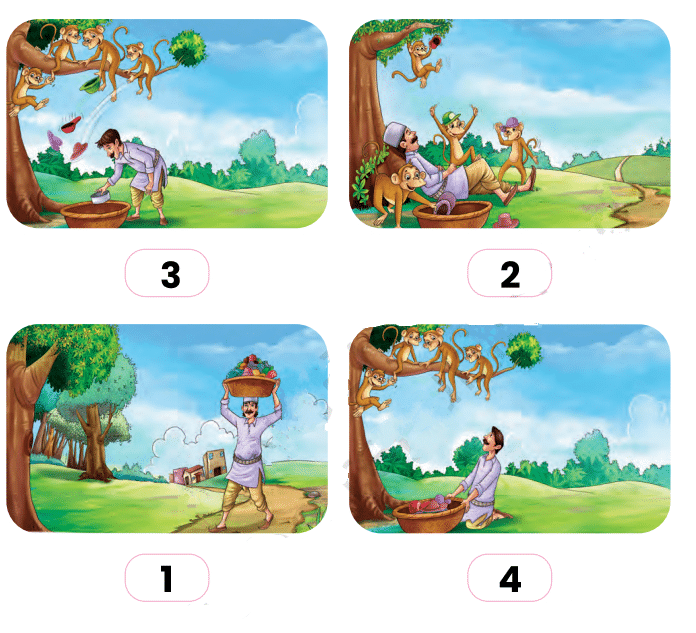
C: Let's colour and write.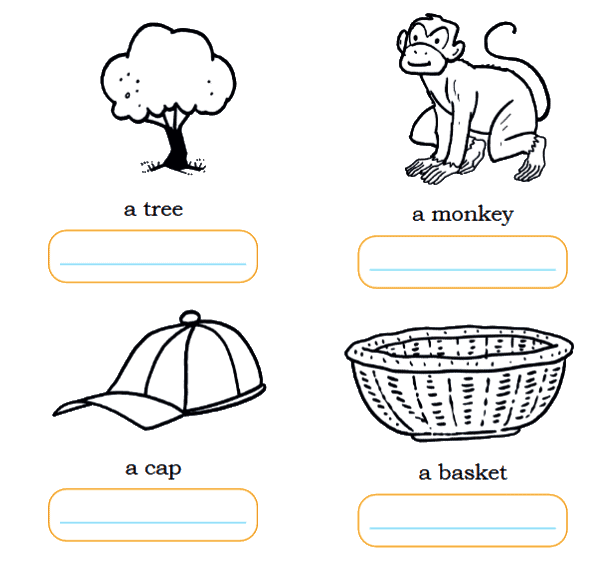
Ans: 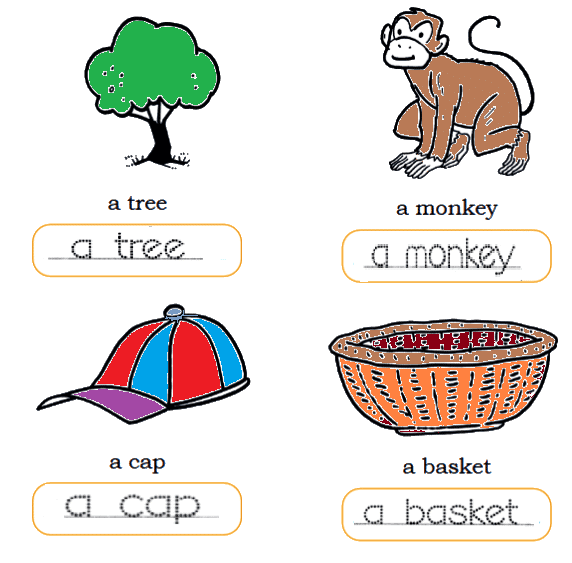
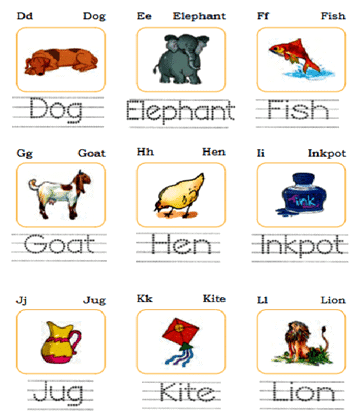
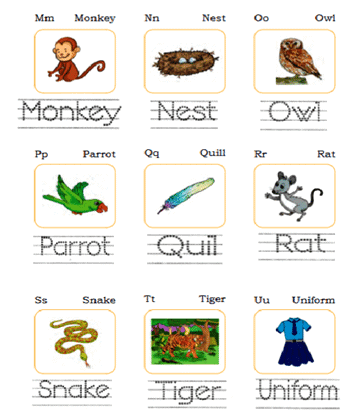
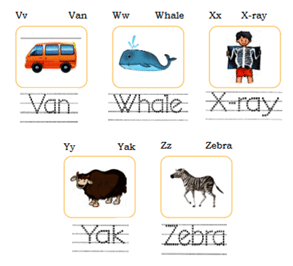
D: Cats, rats, ants and more! Write their names.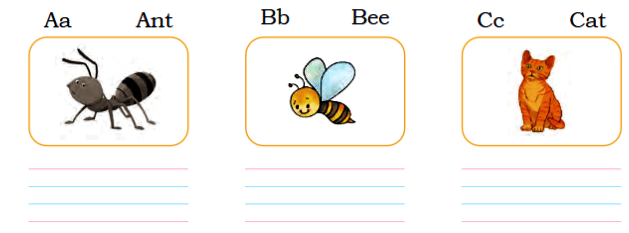
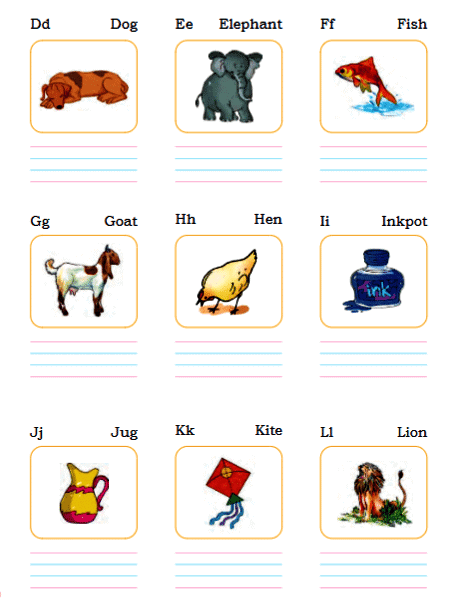
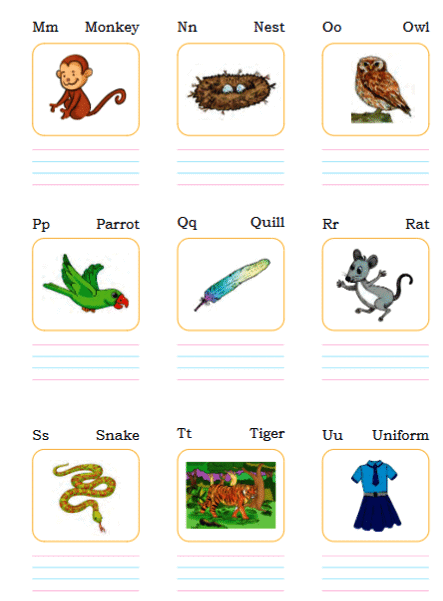
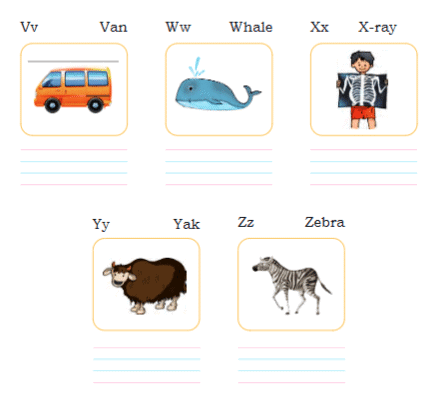
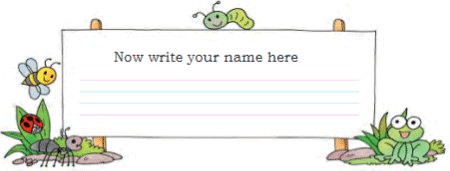
Ans: Trace on their names.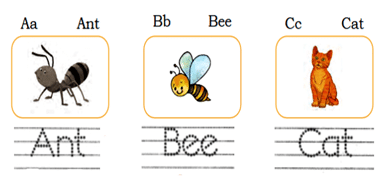
Let us sing
Page No. 63
Butterfles
Butterfles, butterfles,Up, up, up.
Butterfles, butterfles,
Down, down, down.
Butterfles, butterfles,
In, in, in.
Butterfles, butterfles,
Out, out, out.
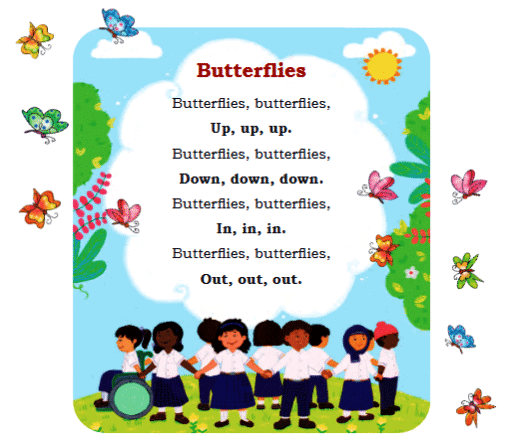
Would you like to replace butterflies with anything else? Try.
Ans: Sing the poem aloud.
Let us speak
Page No. 64 & 65
A: Answer the questions.
Teacher: Look up! What do you see on the tree?
Child: I see _____________ on the tree.
Teacher: Look down! What do you see on the ground?
Child: I see ____________________ on the ground.
Teacher: Look up! What do you see in the sky?
Child: I see _____________ in the sky.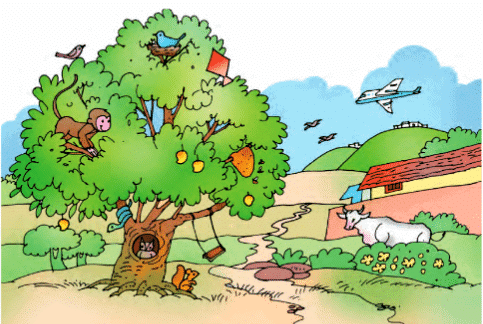
Ans: Teacher: Look up! What do you see on the tree?
Child: I see a monkey, a kite, a beehive, two birds, a nest, bees, and mangoes on the tree.
Teacher: Look down! What do you see on the ground?
Child: I see a rabbit, a squirrel, a stream, a cow and a house on the ground.
Teacher: Look up! What do you see in the sky?
Child: I see two birds and an aeroplane are in the sky.
B. Say and Clap
Say aloud each line of both the poems, clapping for every word. For example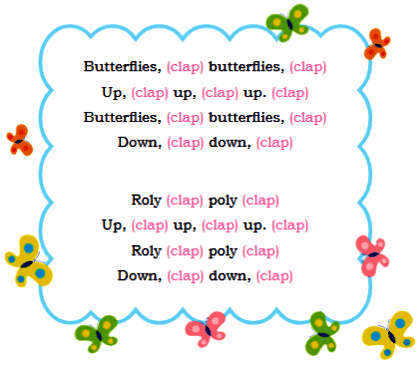
Ans: Read aloud and clap after every word.
Let us write
Page No. 66 & 67
A: Encircle the words that have 'p' in them.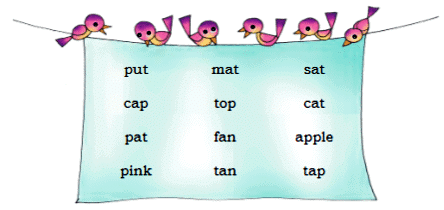
Ans: 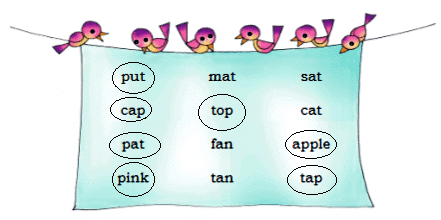
B: Encircle the matching letters in each row.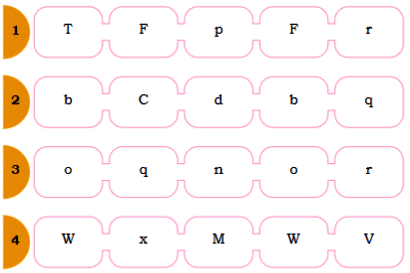
Ans: 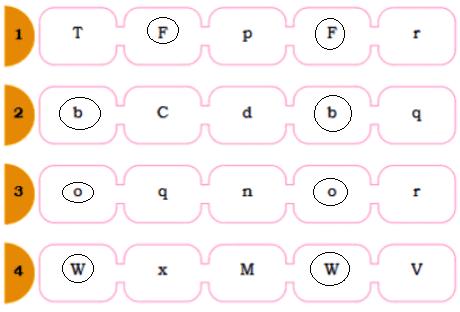
C: Match the words with the same initial syllable.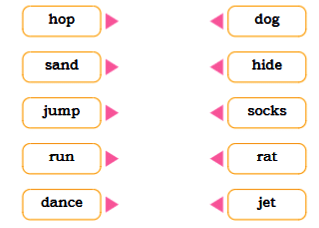
Ans: 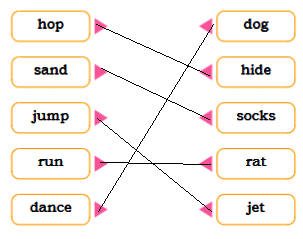
Let us speak
Page No. 76
Listen and RepeatSome words have two syllables. Notice the words below:
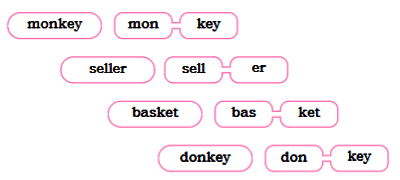
Ans: Read the words aloud.
Let us Read
Page No. 68
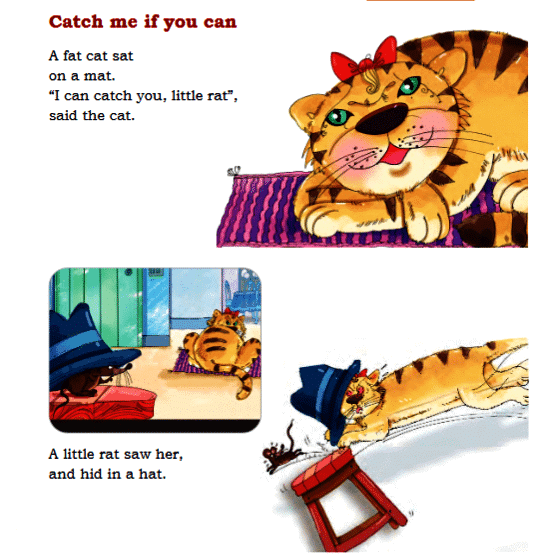
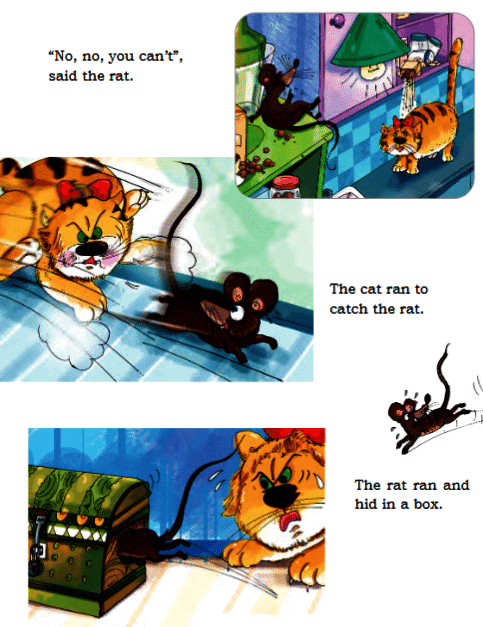
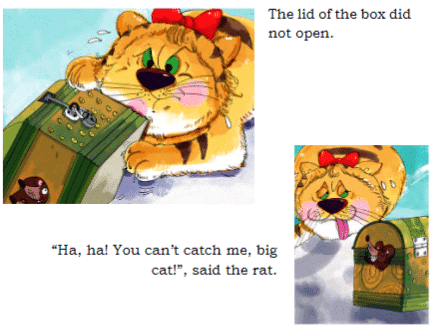
Ans: Read the poem aloud.
Read the mouse reach its house
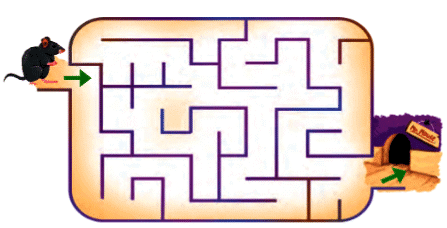
Ans: 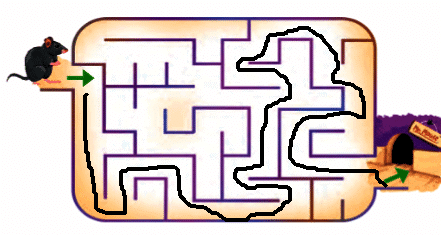
Let us listen
Page No. 71
A: Close your eyes and listen to the words said by your teacher.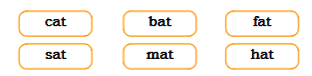
Q1: What is the first sound in each of these words?
Ans: The first sound in 'cat' is C, in 'bať' is B, in 'fat' is F, in 'sat' is S, in 'mat' is M and in 'hat 'is H.
Q2: What is common in all these words?
Ans: All these words have last two letters 'at'.
B: Let us make words by adding one letter to 'at' as shown. The first has been done for you.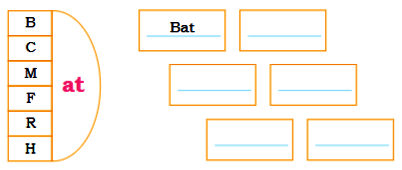
Ans: 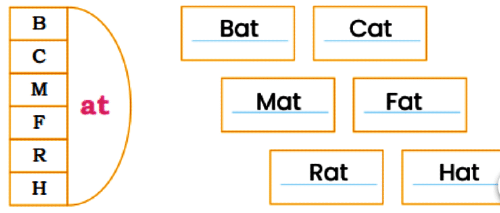
C: Listen and do the actions that your teacher says:
- Catch the ball.
- Throw the ball.
- Hide under a table.
- Open your pencil box or bag.
- Close your pencil box or bag.
- Say hurray!!
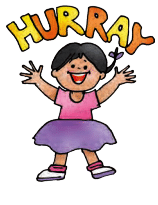
Ans: Do the action given for each situation.
D: Now listen to the following words. Do you know what they mean? Ask your teacher.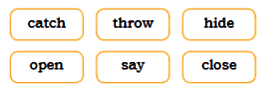
Ans: Catch - hold something with hand.
Throw - move something away in the air from your hand.
Hide - keep something at a place where no one can see it.
Open - not surrounded by anything.
Say - speak something to somebody by using words.
Close - put something into a position so that it covers an opening.
Let us do
Page No. 72
What shall we make? A cat and a rat?Look at the mask of a cat from the last page of your book.
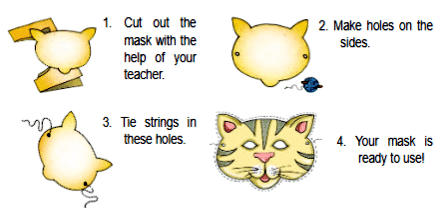
- Now, think about the steps for making a mask of a rat. Tell your friends how to make a mask of a rat.
Are your masks ready? Enact the story.
Ans: Follow the instructions to make a cat.
Let us explore
Look at the insects, flowers, birds, animals, and trees around your home. Draw some of these and tell your friends more about them.
- Observe insects, flowers, birds, animals, and trees near your home.
- Draw some of them on paper.
- Share your drawings with friends and tell them what you noticed.
Do it yourself
Let us do
Page No. 74
A: Help these animals find their homes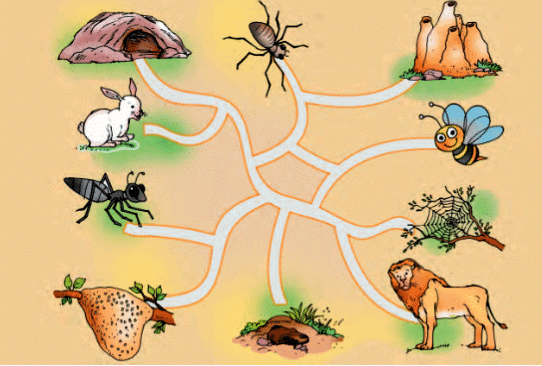
Ans: 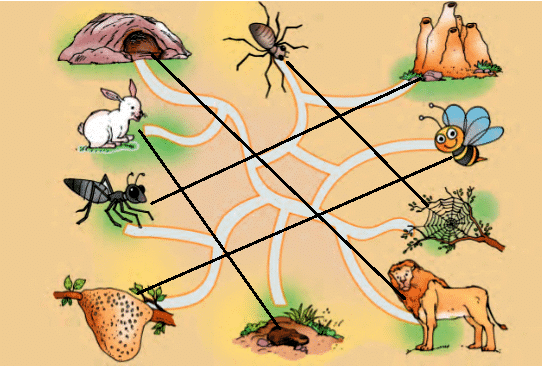
B: Ask anyone in your family to tell you a story about animals. Try to share the story in English in the class. Listen to the stories shared by your friends in class.
Ans: Do it yourself.
C: In small groups, choose any story that you heard or shared in the class. Draw pictures for the story. Present the story in class.
Ans: Do it yourself.
FAQs on NCERT Solutions: The Cap-seller and the Monkeys
| 1. What is the main theme of "The Cap-seller and the Monkeys"? |  |
| 2. How does the cap-seller manage to retrieve his caps from the monkeys? | |
| 3. What lesson can be learned from the story of "The Cap-seller and the Monkeys"? | |
| 4. Who are the main characters in "The Cap-seller and the Monkeys"? | |
| 5. What literary devices are used in "The Cap-seller and the Monkeys"? | |