CBSE Class 10 > Class 10 Notes > English Grammar Advanced > Learning Poster: Reading Comprehension (Unseen Passages)
Learning Poster: Reading Comprehension (Unseen Passages)

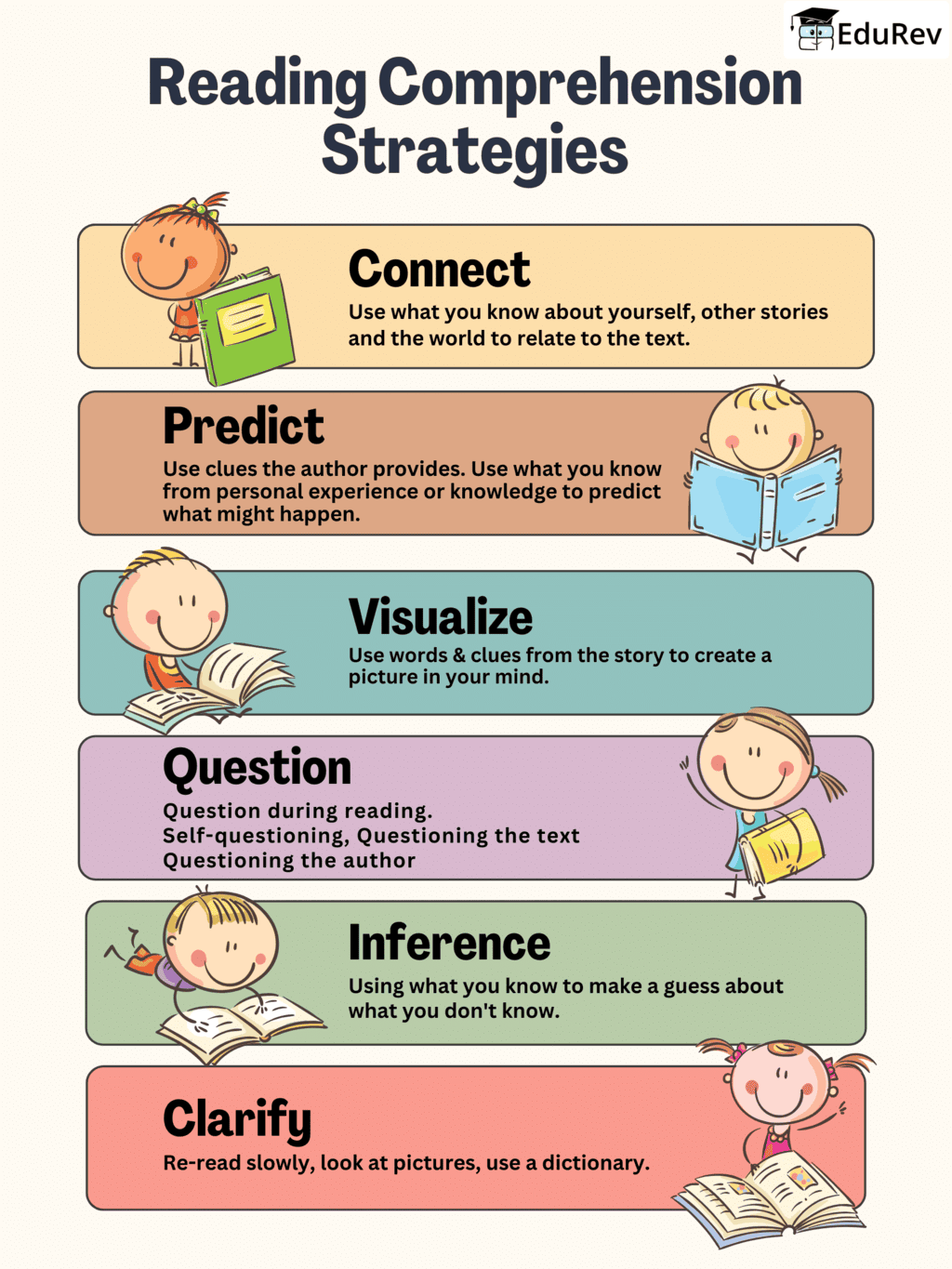
The document Learning Poster: Reading Comprehension (Unseen Passages) is a part of the Class 10 Course English Grammar Advanced.
All you need of Class 10 at this link: Class 10
FAQs on Learning Poster: Reading Comprehension (Unseen Passages)
| 1. What are unseen passages in reading comprehension? |  |
Ans. Unseen passages are texts that students have not encountered before and are used to assess their reading comprehension skills. These passages can vary in length and content, and they typically include questions that require the reader to interpret, analyze, and understand the information presented.
| 2. How can I improve my reading comprehension skills for unseen passages? | |
Ans. To improve reading comprehension skills, practice regular reading of diverse materials, take notes while reading, summarize passages in your own words, and answer comprehension questions. Additionally, familiarize yourself with common question types and strategies for identifying main ideas, themes, and supporting details.
| 3. What types of questions are commonly asked about unseen passages? | |
Ans. Common types of questions include multiple-choice questions, true/false questions, short answer questions, and inference-based questions. These questions may focus on the main idea, specific details, vocabulary in context, and the author's purpose or tone.
| 4. How much time should I allocate for reading unseen passages during an exam? | |
Ans. It is generally recommended to spend about 5-10 minutes reading the passage and understanding its content before answering the questions. After reading, allocate additional time to carefully consider each question and formulate your answers, ensuring you manage your time effectively to complete all sections of the exam.
| 5. Are there any specific strategies for tackling difficult unseen passages? | |
Ans. Yes, when faced with difficult passages, first skim the text to get a general idea, then read it more closely while underlining key phrases and making notes. Look for context clues to help with understanding complex vocabulary and be sure to read questions carefully to identify what is being asked before locating the relevant information in the passage.
About this Document

2.7K Views

4.86/5 Rating

Apr 26, 2026 Last updated
Related Exams
Document Description: Learning Poster: Reading Comprehension (Unseen Passages) for Class 10 2026 is part of English Grammar Advanced preparation. The notes and questions for Learning Poster: Reading Comprehension (Unseen Passages) have been prepared according to the Class 10 exam syllabus. Information about Learning Poster: Reading Comprehension (Unseen Passages) covers topics like and Learning Poster: Reading Comprehension (Unseen Passages) Example, for Class 10 2026 Exam. Find important definitions, questions, notes, meanings, examples, exercises and tests below for Learning Poster: Reading Comprehension (Unseen Passages).
Introduction of Learning Poster: Reading Comprehension (Unseen Passages) in English is available as part of our English Grammar Advanced for Class 10 & Learning Poster: Reading Comprehension (Unseen Passages) in Hindi for English Grammar Advanced course. Download more important topics related with notes, lectures and mock test series for Class 10 Exam by signing up for free. Class 10: Learning Poster: Reading Comprehension (Unseen Passages)
Description
Learning Poster: Reading Comprehension (Unseen Passages) of English Grammar Advanced covers all the important topics, helping you prepare for the Class 10 exam on EduRev.
Information about Learning Poster: Reading Comprehension (Unseen Passages)
In this doc you can find the meaning of Learning Poster: Reading Comprehension (Unseen Passages) defined & explained in the simplest way possible. Besides explaining types of Learning Poster: Reading Comprehension (Unseen Passages) theory, EduRev gives you an ample number of questions to practice Learning Poster: Reading Comprehension (Unseen Passages) tests, examples and also practice Class 10 tests



Related Searches
pdf , mock tests for examination, video lectures, Summary, shortcuts and tricks, practice quizzes, past year papers, MCQs, Extra Questions, Exam, ppt, study material, Previous Year Questions with Solutions, Important questions, Semester Notes, Learning Poster: Reading Comprehension (Unseen Passages), Sample Paper, Learning Poster: Reading Comprehension (Unseen Passages), Viva Questions, Free, Objective type Questions, Learning Poster: Reading Comprehension (Unseen Passages);