Practice Questions: Syllogism

Introduction
Syllogism is a core logical reasoning topic tested in all major bank exams including IBPS PO, SBI Clerk, RBI Assistant and other competitive exams. These questions evaluate your ability to analyze given statements and draw valid conclusions using logical deduction.
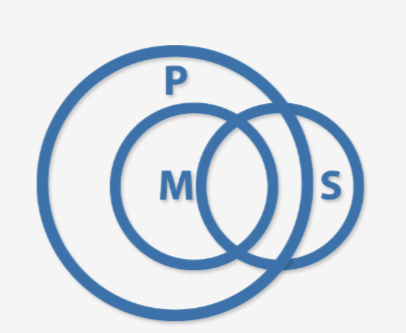
Here are 10 carefully designed practice questions with detailed explanations to help you master syllogism problems efficiently.
Practice Questions
Question 1:
Statements:
- All mobiles are gadgets
- Some gadgets are expensive
Conclusions:
I. Some mobiles are expensive
II. All expensive things are gadgets
Answer Choices:
(a) Only I follows
(b) Only II follows
(c) Both I and II follow
(d) Neither I nor II follows
Ans: (d)
Explanation:
From "All mobiles are gadgets" we know mobiles form a subset of gadgets. From "Some gadgets are expensive" we only know there is an overlap between gadgets and expensive things. That overlap may or may not include mobiles. Therefore Conclusion I cannot be guaranteed and does not follow.
Conclusion II ("All expensive things are gadgets") would require a statement that every expensive thing belongs to gadgets. The given statements do not provide this universal claim, so Conclusion II is also invalid.
Question 2:
Statements:
- No tigers are lions
- All lions are animals
Conclusions:
I. Some animals are not tigers
II. No tigers are animals
Ans: (a)
Explanation:
All lions are animals, and no tigers are lions. The lions (which are animals) are therefore animals that are not tigers. This gives at least one group of animals that are not tigers, so Conclusion I follows.
Conclusion II ("No tigers are animals") contradicts the possibility that tigers may belong to the broader class 'animals'. The statements only exclude tigers from being lions, they do not exclude tigers from being animals. Hence Conclusion II does not follow.
Question 3:
Statements:
- Some teachers are professors
- All professors are educated
Conclusions:
I. Some teachers are educated
II. All educated persons are professors
Ans: (a)
Explanation:
Since some teachers are professors and every professor is educated, those teachers who are professors must be educated. Therefore Conclusion I follows.
Conclusion II ("All educated persons are professors") reverses the given relation. The statements do not say that every educated person is a professor, so this universal claim is not supported and does not follow.
Question 4:
Statements:
- All pens are stationery
- Some stationery is paper
Conclusions:
I. Some pens are paper
II. All paper is stationery
Ans: (d)
Explanation:
"All pens are stationery" places pens entirely inside the stationery class. "Some stationery is paper" indicates only a partial overlap between stationery and paper. There is no information that links pens to that particular overlapping portion, so Conclusion I does not follow.
Conclusion II ("All paper is stationery") attempts to reverse the particular statement "Some stationery is paper." A particular overlap cannot justify a universal claim about all paper; therefore Conclusion II does not follow.
Question 5:
Statements:
- Some cities are metros
- All metros are crowded
Conclusions:
I. Some cities are crowded
II. All crowded places are metros
Ans: (a)
Explanation:
From "Some cities are metros" we know there exist cities that are metros. Since all metros are crowded, those cities that are metros must be crowded. Hence Conclusion I follows.
Conclusion II ("All crowded places are metros") is a reversal of "All metros are crowded" and is not justified by the statements. There may be crowded places that are not metros, so Conclusion II does not follow.
Question 6:
Statements:
- No circles are squares
- All squares are shapes
Conclusions:
I. Some shapes are not circles
II. No circles are shapes
Ans: (a)
Explanation:
All squares are shapes and no circles are squares. Therefore the square class (which is a subset of shapes) contains members that are not circles. This ensures that some shapes are not circles, so Conclusion I follows.
Conclusion II ("No circles are shapes") is contrary to the given information. The statements only exclude circles from being squares; they do not exclude circles from being shapes. Thus Conclusion II does not follow.
Question 7:
Statements:
- All doctors are professionals
- Some professionals are graduates
Conclusions:
I. Some doctors are graduates
II. All graduates are professionals
Ans: (d)
Explanation:
"All doctors are professionals" places doctors inside professionals. "Some professionals are graduates" gives a partial overlap between professionals and graduates, but it does not state that this overlapping part includes doctors. Therefore Conclusion I cannot be guaranteed and does not follow.
Conclusion II ("All graduates are professionals") is the reverse of the particular statement and asserts a universal relation that is not given. The statements do not support this, so Conclusion II does not follow.
Question 8:
Statements:
- Some apples are fruits
- All fruits are healthy
Conclusions:
I. Some apples are healthy
II. All healthy things are fruits
Ans: (a)
Explanation:
Some apples being fruits and all fruits being healthy means those apples which are fruits are healthy. Thus Conclusion I follows.
Conclusion II ("All healthy things are fruits") is too strong - the statements only say fruits are healthy, not that healthy things must be fruits. Therefore Conclusion II does not follow.
Question 9:
Statements:
- No politicians are honest
- Some honest people are rich
Conclusions:
I. Some rich people are not politicians
II. No rich people are politicians
Ans: (a)
Explanation:
Since no politicians are honest and some honest people are rich, those honest rich people cannot be politicians. Hence there exist some rich people who are not politicians, so Conclusion I follows.
Conclusion II ("No rich people are politicians") makes a universal claim about all rich people. The information only identifies some rich people who are honest (and thus not politicians); it does not rule out the possibility of other rich people being politicians. Therefore Conclusion II does not follow.
Question 10:
Statements:
- All students are learners
- Some learners are curious
Conclusions:
I. Some students are curious
II. All curious persons are learners
Ans: (d)
Explanation:
"All students are learners" makes students a subset of learners. "Some learners are curious" indicates a partial overlap between learners and curious persons, but there is no information that this overlapping part includes students. Therefore Conclusion I cannot be guaranteed and does not follow.
Conclusion II ("All curious persons are learners") is not supported. The statements only tell us that some learners are curious, not that every curious person is a learner. Hence Conclusion II does not follow.
Key Strategies for Solving Syllogism
- Draw Venn diagrams for visual representation
- Identify statement types: Universal (All/No) vs Particular (Some)
- Check for immediate connections between terms
- Avoid assumptions beyond given information
- Watch for reversed logic in conclusions
- Practice daily with different patterns
FAQs on Practice Questions: Syllogism
| 1. How do I identify the middle term in a syllogism question for IBPS PO? |  |
| 2. What's the difference between valid and invalid conclusions in syllogism problems? | |
| 3. Why do I keep getting syllogism questions wrong even after reading the statements? | |
| 4. Can a particular conclusion follow from two universal premises in syllogism? | |
| 5. How do I quickly spot immediate inferences in syllogism practice problems? | |