Chapter Notes: Strange Islands


The Oak Island Mystery
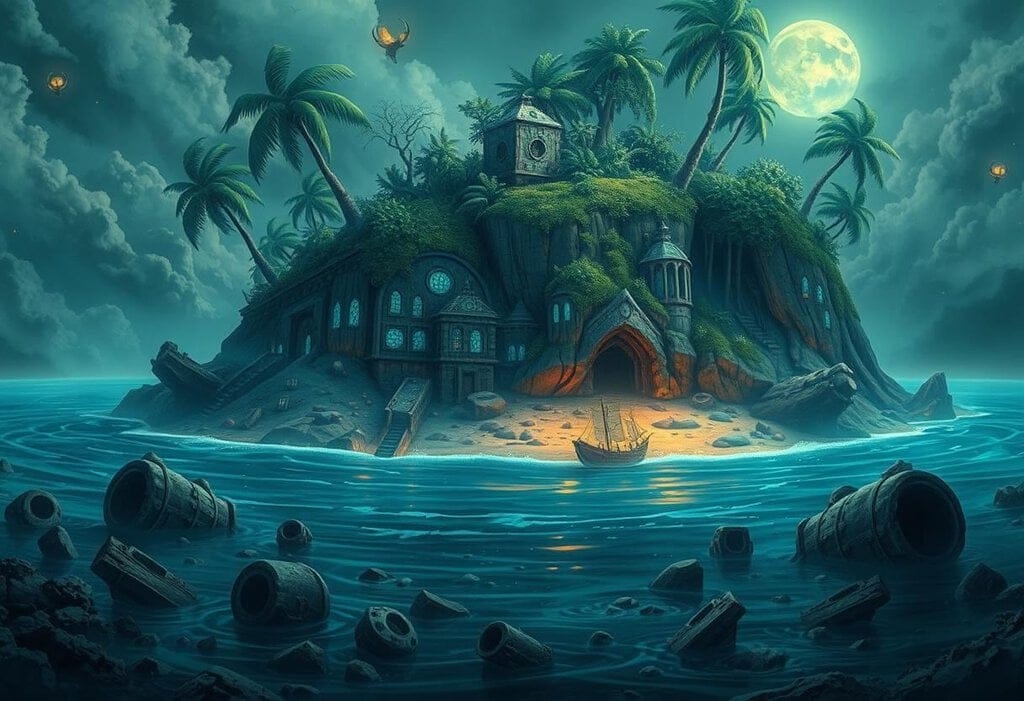 Mystical treasure island
Oak Island, nestled off the coast of Nova Scotia, Canada, is a place steeped in mystery and allure, drawing treasure hunters like moths to a flame for nearly four centuries. The legend began with a whispered tale from a dying sailor, who claimed that the infamous pirate Captain Kidd had buried a vast hoard of treasure on the island. This story, passed down through generations, has captivated the world, fueling dreams of untold riches. In 1799, Daniel McGinnis, a young man scouting the island for a farm, stumbled upon a peculiar patch of earth that seemed out of place.
With two companions, he began to dig, uncovering a layer of stones just below the surface. As they ventured deeper, they found wooden platforms and tool marks, hinting at something deliberately hidden. But at nine meters, an eerie fear gripped them, halting their efforts. In 1909, the Old Gold Salvage Group arrived, digging an impressive 34 meters into the earth, yet they found nothing. In 1969, Triton Alliance purchased most of the island and excavated to 72 meters, sending a camera into the depths.
They claimed to have captured images of tools and wooden chests, but the footage was too murky to confirm, and soon after, the hole collapsed, abandoning the project. Strange tales swirl around Oak Island, from claims that the treasure includes lost plays by William Shakespeare to a chilling curse declaring that seven men must die before the treasure is revealed-six have already perished in the quest. In 2006, brothers Marty and Rick Lagina bought half the island, driven by childhood fascination. Their efforts have unearthed a coin and a sword, tantalizing finds, but nothing compared to the fabled hoard. The cost of their endeavor far outweighs their discoveries, leaving the island's secrets as elusive as ever.
Diggin' up the Past
In a lively magazine article crafted for young readers, the Lagina brothers, Marty and Ricky, are celebrated as Michigan's treasure-hunting heroes, chasing the legendary loot of Captain Kidd on Oak Island. Known as successful businessmen, these brothers have been hooked on the island's mysteries since boyhood, when tales of buried treasure first sparked their imaginations. Their passion led them to purchase the island, a bold testament to their dedication.
The article paints Oak Island as a perilous place, where six treasure hunters have lost their lives, yet the Laginas remain undeterred. With a team of experts, they've uncovered astonishing finds: a mysterious Spanish coin, a strange metal cross, and even a Roman sword. Written in a playful, pirate-inspired tone, the article hails the brothers as unstoppable, suggesting that the famous Oak Island treasure is within their reach, just a matter of time before they strike gold. Their story is one of adventure and determination, inspiring readers to root for their success.
Strange Islands
 Mystical Islands
Not all islands are sun-soaked paradises; some are downright peculiar, each with its own strange tale to tell. Skorpios, a Greek island, boasts sandy beaches, lush forests, and a helicopter landing pad, a legacy of its former owner, the wealthy Aristotle Onassis, who planted over 200 types of trees. Once a hotspot for glamorous celebrity parties, it dwindled to just five residents by 2011, but a luxury resort built in 2018 promises to revive its allure.
Okunoshima, Japan's "Rabbit Island," is home to thousands of tame rabbits, hopping freely across the landscape. Once a grim site for chemical weapons testing, complete with a poison gas museum, it's now a haven for these furry inhabitants, delighting visitors with carrots in hand. Brazil's Snake Island, or Ilha da Queimada Grande, is a forbidding place teeming with deadly golden lancehead vipers, so dangerous that it's illegal to set foot there.
Once home to a lighthouse until 1920, it's now uninhabited, though poachers brave the risks to capture the snakes. Mexico's Island of the Dolls, nestled in the Xochimilco canals, is a haunting spectacle, adorned with hundreds of dolls and doll parts collected over 50 years by Don Julian Santana Barrera, who began with a single floating doll. Each island, from the luxurious to the eerie, offers a unique glimpse into the world's odd corners.
Treasure Island: Meeting Ben Gunn
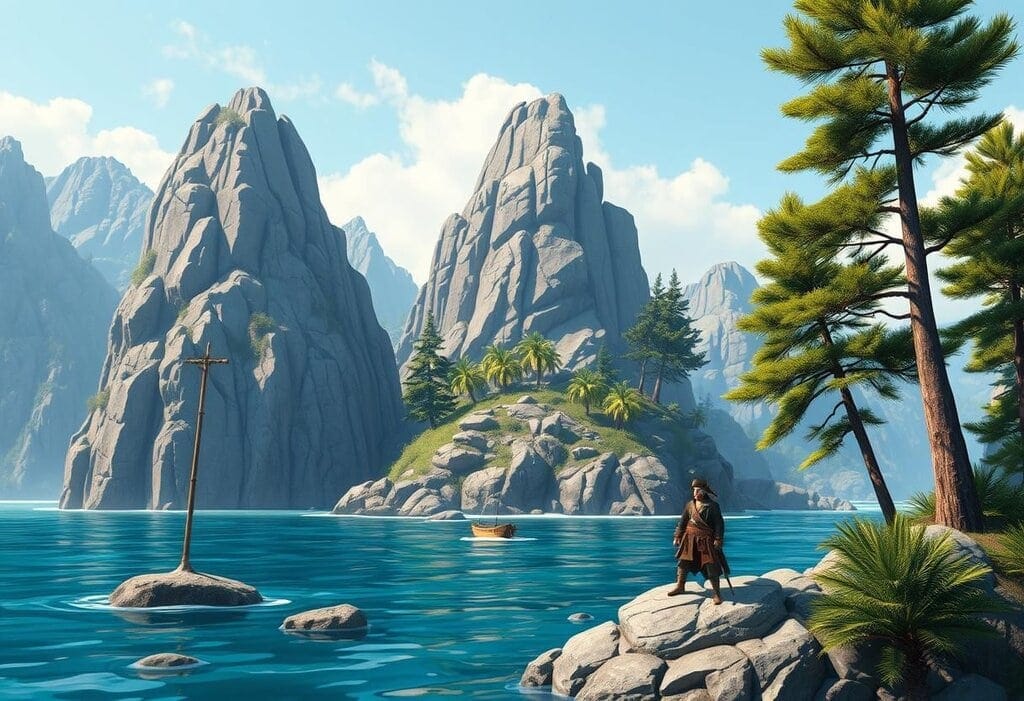 Pirate's Haven
In Robert Louis Stevenson's "Treasure Island", published in 1882, young Jim Hawkins embarks on a thrilling quest for buried treasure, sailing with a crew of weathered pirates. The island they seek is a striking, somber place, cloaked in grey woods interspersed with streaks of yellow sand and towering pine trees, some standing alone, others in clusters. The landscape is dotted with strangely shaped hills, their rocky spires rising above the vegetation.
The tallest, known as the Spy-glass, looms three or four hundred feet high, its steep sides abruptly flattening at the top, like a pedestal awaiting a statue. On this island, Jim encounters Ben Gunn, a marooned pirate with a voice rough as a rusty lock. Ben's sun-scorched skin, blackened lips, and startling fair eyes paint a vivid picture of his three years of isolation. Marooned as punishment by his crew, he was left with only a musket, spade, and pick-axe after failing to find Captain Flint's treasure.
Ben reveals he was part of Flint's crew when the treasure was buried, a secret that cost him dearly. His shipmates, frustrated after twelve days of fruitless searching, abandoned him, mocking his belief in the treasure's existence. Despite his hardships, Ben's trust in Jim sparks a bond, setting the stage for their shared adventure on the enigmatic island.
Treasure Island: The Play
In a dramatic adaptation of Robert Louis Stevenson's "Treasure Island", the encounter between young Jim Hawkins and the marooned pirate Ben Gunn comes alive on stage, set in an overgrown corner of the eerie island. As Jim hacks through dense trees and bushes, the sound of his footsteps and snapping branches fills the air. Startled by a colorful bird's cry, he mutters about the island's unsettling strangeness, confessing his longing to escape.
A rustling in the undergrowth reveals Ben, his eyes glinting from the shadows, prompting Jim to call out, his voice echoing across the island. Both scream in alarm, their cries scattering birds and animals in a cacophony of wings and scurrying feet. Jim introduces himself boldly, while Ben, with a rough, trembling voice, reveals his identity as Benjamin Gunn, a human, not a beast, chuckling at Jim's cheeky question. Distant musket fire sparks Ben's fear that his old crew, perhaps even Captain Flint, has returned.
Jim explains it's Long John Silver's men, and Ben, shaken, admits he's been marooned for three long years, abandoned by his mates after failing to find Flint's treasure. He recounts how he sailed with Flint when the treasure was buried, but a later expedition ended in betrayal, leaving him with only a musket, spade, and pickaxe to survive. As louder musket fire interrupts, Ben vows not to leave without the treasure, while Jim, anxious, yearns to flee the perilous island.
Singing Sand
In "The Lost Island of Tamarind" by Nadia Aguiar, siblings Maya, Simon, and baby Penny find themselves on a mysterious island, searching for their missing parents, Mami and Papi. Accompanied by a boy named Helix, they stand on a beach where the jungle behind them and the pitch-black sea before them create a sense of isolation. A cool breeze heightens their loneliness, and Simon softly wishes for their mother, a sentiment Maya shares as her heart aches.
A strange, beautiful sound emerges from the darkness-a high, singing chime, like thousands of delicate crystal bells. Mesmerized, the children realize the sand is shifting, its particles rubbing together to produce the musical sound. Maya recalls her father's stories of "singing sand," a memory that brings tears to her eyes. Helix returns from the sea, lifting their spirits, and they gather by a fire. Penny sleeps, and Simon, lulled by the sand's song, yawns and nestles into the sand.
As the breeze fades, the jungle's muggy breath settles over the beach, silencing the sand into moonlit hillocks. Helix invites Maya to explore the tide pools, assuring her they'll stay close to her siblings. She agrees, and they walk to the shore, where moonlight glimmers in the pools, setting the stage for a magical discovery.
Helix
The tide pools along Tamarind's beach captivate Maya, each reflecting the moon's glow. Kneeling by one, she watches the moon's reflection recede as a bright light rises from the shallows, shattering the moon's image into jagged pieces. A sea creature, casting a radiant glow, moves beneath the rippling water, its form unclear until the surface stills. Maya's heart skips as she sees a tiny, perfect octopus, glowing brighter than the moon, identical to one her parents once collected.
Dozens of similar creatures illuminate tide pools along the beach, their tentacles shining vividly. Maya wonders if this island is the source of her parents' strange, glowing specimens, questioning whether their arrival here was fated. Could their parents have sought Tamarind for the Red Coral Project? Later, Helix delivers a sobering warning, telling Maya that no help awaits them in Port Town, urging her to forget her past life and adapt to Tamarind.
Her earlier trust in him crumbles, replaced by anger and defiance. She insists they'll find their parents, challenging Helix's authority and questioning his own presence on the island. Hurt and frustrated, Maya climbs down the rocks, scraping her knees, and resolves to ignore Helix. Lying beside Penny and Simon, she gazes at the constellations, memories of her mother soothing her as she drifts into a troubled sleep. Half-awake, she glimpses Helix studying their logbook by the firelight, an intrusion that stirs her, but sleep pulls her under before she can act.
FAQs on Chapter Notes: Strange Islands
| 1. What are some of the most famous strange islands around the world? |  |
| 2. What is the Lost Island of Tamarind, and why is it considered unique? | |
| 3. How did Kidd's treasure become a part of the lore surrounding strange islands? | |
| 4. Are there any real-life treasure hunts linked to strange islands? | |
| 5. What are some common characteristics of strange islands? | |