UGC NET Exam  >  UGC NET Notes  >  Crash Course Education  >  Contribution of Indian School of Philosophy

Contribution of Indian School of Philosophy

Indian Schools of Philosophy

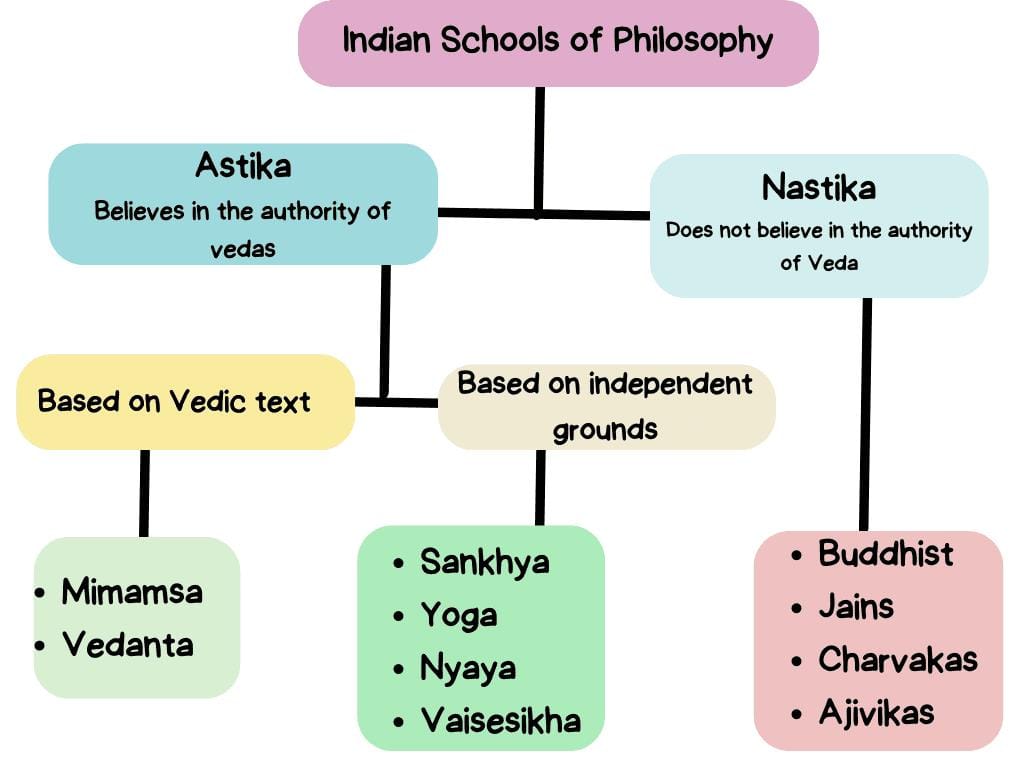
To understand education better, we can look at various Indian schools of philosophy, including Sankhya, Yoga, Vedanta, Buddhism, Jainism, Dayananda Darshan, and Islamic Philosophy.Indian Schools of Philosophy
Sankhya

  • Sankhya is one of the oldest and most important schools of Indian philosophy. The term 'Sankhya' comes from the Sanskrit word meaning 'number' and signifies the school's focus on the number and nature of the universe's fundamental constituents.
  • The term also implies 'perfect knowledge,' indicating that Sankhya is a system of complete understanding.
  • Traditionally attributed to Sage Kapila, Sankhya is one of the six Orthodox schools of Hindu philosophy and classical Indian thought.
  • Along with Yoga, Sankhya forms the basis of Indian philosophy, with Sankhya representing the theoretical aspect and Yoga focusing on practical application.
  • Sankhya denies the existence of Ishvara (God) or any external influence, positing that the universe consists of two realities: Purusha (Consciousness) and Prakriti (Matter).

Metaphysics of Sankhya

  • Sankhya is a dualistic and realist philosophy, recognizing Prakriti (Matter) and Purusha (Self-spirit) as two ultimate realities.
  • It is pluralistic regarding the self, teaching that Purusha is not a single entity but many.

Purusha

  • Purusha, in Sankhya philosophy, refers to the transcendental self or pure consciousness. It is characterized as absolute, independent, free, imperceptible, and unknowable through sensory experience or mental cognition.
  • Purusha is beyond any form of explanation or description and is not subject to production or causation.

Prakriti

  • Prakriti is the primordial cause of the manifest material universe, encompassing everything except Purusha. It accounts for all physical phenomena, including mind and matter.
  • Prakriti is composed of three fundamental qualities:
  • Sattva: Represents qualities of purity, lightness, illumination, and joy.
  • Rajas: Signifies dynamism, activity, excitation, and sometimes discomfort or pain.
  • Tamas: Denotes heaviness, obstruction, and inertia.

Sankhya Philosophy and Causation

  • Sankhya philosophy provides a comprehensive framework for understanding all levels of manifestation, from the subtlest to the grossest forms.
  • The term Sankhya is derived from Samyag Alchyate, meaning "that which explains the whole."
  • According to Sankhya, creation involves the union of two entities: nature and God. This reflects the principle that two elements are necessary for a phenomenon to occur, much like the need for two hands to clap.
  • Causation plays a vital role in Indian philosophy, with concepts developed based on causal relationships.
  • There are two significant perspectives on the Theory of Causation in Indian philosophy:
  • Satkaryavada: This theory posits that the effect (Karya) is real and exists in the cause (Karana) in a potential form before its actual manifestation.
  • Asatkaryavada: Also known as Arambhavada, this theory suggests that the effect is a new creation, signifying a new beginning. For example, when milk transforms into curd, it represents a new phenomenon.
  • Both Sankhya and Vedanta support Satkaryavada, but their interpretations of this concept differ.

MULTIPLE CHOICE QUESTION
Try yourself: Who is traditionally attributed as the originator of Sankhya philosophy?
A

Dayananda

B

Mahavira

C

Buddha

D

Sage Kapila

Concept of Evolution in Sankhya Philosophy

  • In Sankhya philosophy, evolution is based on the interaction between Prakriti (nature) and Purusha (consciousness).
  • Prakriti remains unmanifested when the three Gunas (qualities) are balanced.
  • When Prakriti comes into contact with Purusha, this balance is disturbed, triggering evolution and the manifestation of the world from unmanifest Prakriti.
  • This process is likened to the movement of iron towards a magnet.
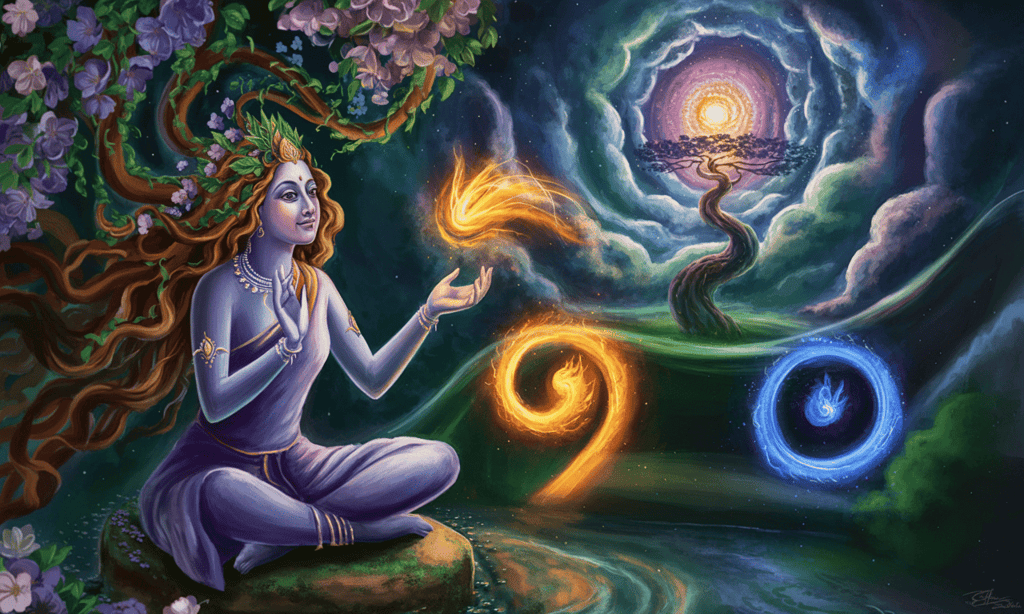
  • Some evolutions of Prakriti lead to further evolutions and are called evoluents, such as the intellect, which gives rise to the ego-sense or ahamkara.Cosmic Dynamics
    Cosmic Dynamics
  • Other evolutes, like the five elements, do not cause further evolution.
  • An evoluent is a principle that acts as the material cause for the evolution of another principle.
  • The intellect, known as Mahat or the great one, is the first evolute of Prakriti.
  • It leads to the evolution of self-consciousness, and subsequent evolution from self-consciousness is influenced by the dominance of the Gunas.
  • The dominance of sattva (purity) results in the evolution of the five organs of perception, five organs of action, and the mind.
  • The dominance of tamas (darkness) triggers the evolution of the five subtle elements: sound, touch, sight, taste, and smell, which are themselves evoluents leading to the creation of the five gross elements: space, air, fire, water, and earth.
  • Rajas (passion) is the cause of action in these evolutions.
  • Purusha is pure consciousness, eternal, unchanging, and not a product of evolution nor the cause of any evolute.
  • Evolution in Sankhya is considered purposeful, primarily for the enjoyment and liberation of Purusha.

Historical Development of Sankhya

Sankhya is believed to have developed into a unified philosophical system in the early centuries, although there is limited evidence of the existence of the Sankhya school before this period. However, the concepts that were later incorporated into the classical Samkhya text, the Sankhya Karika, can be traced back to earlier Hindu scriptures such as the Vedas, Upanishads, and the Bhagavad Gita.Cosmic WisdomCosmic Wisdom
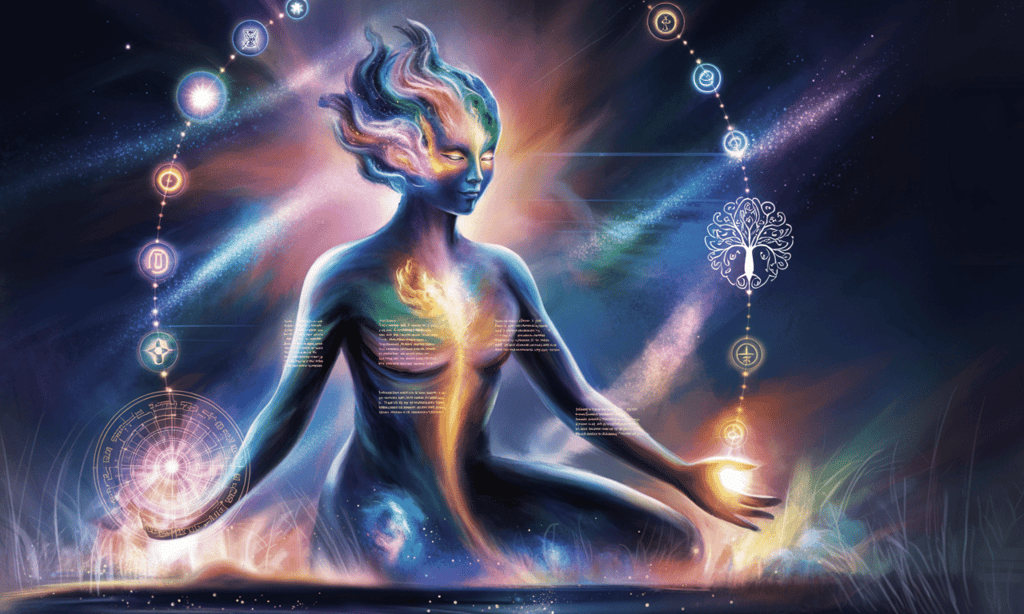
The Purusha Sukta hymn may have also influenced Sankhya thought. This hymn presents a fundamental idea of Purusha as a cosmic being from whom all manifestations arise. Additionally, the Sankhya concept of Buddhi or Mahat bears similarity to the notion of Hiranyagarbha, which is found in both the Rig Veda and the Shvetashvatara Upanishad.

Educational Implications of Sankhya Philosophy

Sankhya philosophy views action (karma) as inherent in its cause, suggesting that human potential is already present within individuals. Therefore, the role of education is to fully manifest and develop this inherent potential.

According to Sankhya, true education involves understanding the fundamental difference between Prakriti (Matter) and Purusha (Spirit). While both are considered fundamental elements, Sankhya emphasizes their distinction.Empowered LearningEmpowered Learning

The philosophy of Sankhya is highly relevant to contemporary education. Modern education is often seen as a process of development, which aligns with Sankhya's idea that development is the unfolding of pre-existing potential. This perspective does not require modification to fit today's educational context.

Sankhya's psychological views resonate with modern learning theories. For instance, just as knowledge in the Sankhya system leads to the modification of Buddhi (intellect), modern education aims at modifying behavior. Similarly, the formation of intellectual structure in modern education parallels the concept of cognition as a function of Buddhi in Sankhya.

Furthermore, Sankhya's theory on generalization, which involves observing elements and not observing non-elements, reflects the modern understanding of concept formation. This highlights the relevance of Sankhya philosophy in contemporary educational practices.

MULTIPLE CHOICE QUESTION
Try yourself: What triggers evolution in Sankhya philosophy?
A

Contact between Prakriti and Purusha

B

Balance of the three Gunas

C

The dominance of rajas

D

Presence of the intellect

Fundamentals of Education

Sankhya Philosophy and Education: 

1. Body and Inner Self: According to Sankhya philosophy, the human body consists of senses (Gyanendriya) and organs of action (Karmendriya). The inner self (Antahkaran) is a harmonious combination of the mind (Man), ego (Ahankar), and intellect (Buddhi). The soul (Purusha) enlightens these three components. Education should focus on developing these fundamental aspects. 

2. Purpose of Life: The ultimate goal of life, according to Sankhya, is Mukti or liberation of the soul. This liberation involves distinguishing between Prakriti (matter) and Purusha (spirit) and freeing oneself from the miseries of life. Inner LiberationInner Liberation

3. Education and End: The basic purpose of education is to achieve this end. The practice of Yoga is essential for realizing this purpose, with moral conduct being the first requirement for Yoga practice.

Feedom from Misery: Education aims to free individuals from the threefold miseries: 

(a) Adhyatmik: Miseries related to the soul, mind, and body. 

(b) Adhibhautik: Miseries related to the external world. 

(c) Dam Peakop: Miseries due to divine disorder.Mindful HarmonyMindful Harmony                                                                                                                                                                                                                                                                                                                                                                                                                                                                                                                                                                                                                                                                                                                                                                                                                      
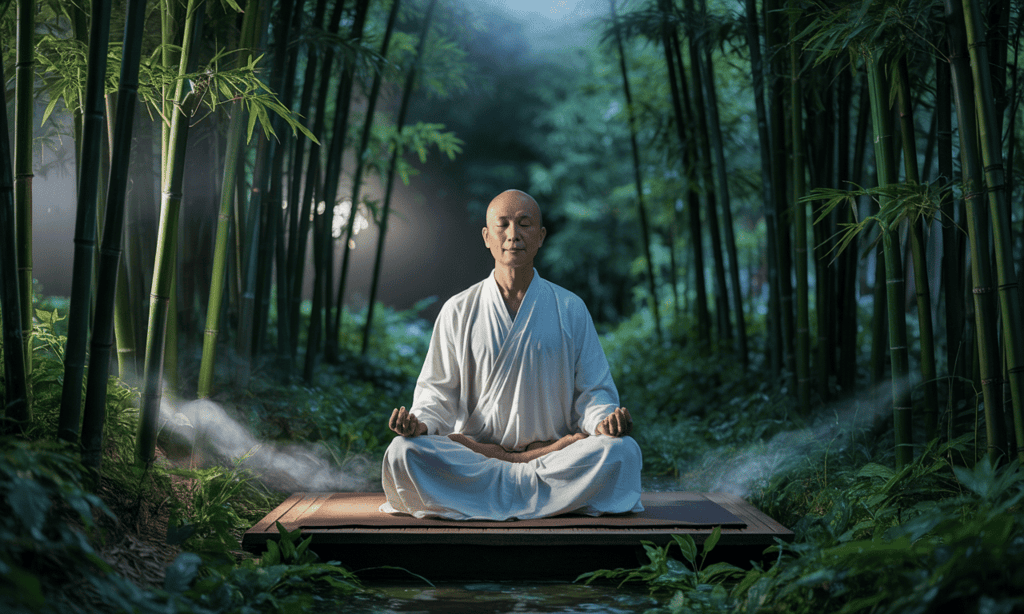
Religious and Moral Education

Religious Education:

  • Importance: Religious education is not expected to hold significant importance in an education system based on Sankhya philosophy.

Moral Education:

  • Central Role: Moral education, which involves teaching ethical values, will play a central role in any educational system grounded in Sankhya philosophy.

  Yoga according to Patanjali  

  • Founder: Patanjali is recognized as the founder of the Yoga System.

  • Meaning of Yoga: The term "Yoga" literally means "Union," referring to the spiritual union of the individual soul with the universal soul, as understood in Vedanta.

  • Patanjali's Perspective: According to Patanjali, Yoga does not signify union but rather spiritual effort to attain perfection. This is achieved through:

  • Control of Body, Senses, and Mind: Mastering the body, senses, and mind is essential in the practice of Yoga.

  • Discrimination between Purusha and Prakriti: Right discrimination between Purusha (the spirit) and Prakriti (nature or matter) is a fundamental aspect of Patanjali's Yoga.

MULTIPLE CHOICE QUESTION
Try yourself: What is the ultimate goal of life according to Sankhya philosophy?
A

Union with the universal soul

B

Control of the mind

C

Moral education

D

Mukti or liberation

Patanjali's Theory of Pramana

According to Patanjali, Sankhya and Yoga are aligned systems of thought, and their theory of knowledge is similar. Patanjali accepts only three independent sources of valid knowledge: perception, inference, and verbal testimony. Other sources like comparison, postulation, and non-cognition are included under these three and not recognized as separate sources.Cognitive PerceptionCognitive Perception

Perception

Perception, in the context of cognition, refers to the immediate recognition of an object through one of the senses. When an object, such as a table, comes within the range of our vision, it creates a specific impression on our sense organs, which is then analyzed and synthesized by our mind. According to the Sankhya philosophy, the process of perceiving an object occurs when there is a reflection of the self in the intellect, which has been altered to resemble the object being perceived.

There are two types of perception according to Sankhya: (i) Nirvikalpaka, or indeterminate perception, and (ii) Sanikalpaka, or determinate perception.

(i) Nirvikalpaka perception occurs at the initial moment of contact between a sense and its object. It precedes any mental analysis or synthesis of sensory data.

(ii) Sanikalpaka perception, on the other hand, is the result of the mind's analysis, synthesis, and interpretation of sensory information.

Inference in Sankhya Philosophy

Inference, according to Sankhya philosophy, is the process of gaining knowledge about an unknown term in a relation based on the known term that is invariably related to it. This involves perceiving one thing and using the universal relation between the two to understand what is not perceived. The knowledge of this relation, known as Vyapti, comes from repeated observations of their concomitance.Philosophical InsightsPhilosophical Insights

Sankhya further divides inference into two kinds: 'Vita' and 'Avita'.

  • 'Vita' is based on universal affirmative propositions.
  • 'Avita' is based on a universal negative proposition.

Vita is further subdivided into:

  • Purvavat: This type of inference is based on the observed uniformity of concomitance between two things. It involves inferring the presence of a property in the subject based on its observed relationship with another property.
  • Samanyatdrasta: This type of inference does not rely on any observation of concomitance between the middle and major terms. It involves making a general inference without specific observational evidence of the relationship between the terms.

Verbal Testimony (Sabda)

Verbal testimony, known as Sabda, refers to the verbal statements and testimony about objects based on knowledge conveyed through words. It is considered valid when it comes from a trustworthy person (apta) who knows the truth and communicates it accurately. While Sabda literally means sound (dhwani) , epistemologically, it signifies meaningful sound or word. This concept is crucial because a significant portion of our knowledge about the objects in the world comes from words.

Verbal Testimony (Sabda)

Eight Fold Path of Yoga

Yoga's primary purpose is to gain mastery over the body, senses, and mind. It advocates for nothing less than perfection and helps in overcoming sensual attachments and passions. According to the Yoga System, there is an eight-fold path of discipline known as "Ashtanga Yoga." These are:

VOWS

  • Varna: This is seen as abstention and includes the five vows of Jainism: Ahimsa (non-violence), Satya (truth), Asteya (non-stealing), Brahmacharya (celibacy), and Aparigraha (non-possessiveness).

Niyama

  • Niyama: This is considered self-culture and involves both external and internal purification.

Asana

Asana: This refers to steady and comfortable postures. Various postures provide physical assistance for meditation.

Pranayama

  • Pranayama: This involves the control of breath, including the regulation of inhalation and exhalation. It is crucial for mental concentration.

Pratyahara

  • Pratyahara: This is the control of the senses, often described as the process of introversion.

Dharana

  • Dharana: This involves fixing the mind on the object of meditation, making the mind steadfast.

Dhyana

  • Dhyana: This is meditation, characterized by uninterrupted contemplation.

Samadhi

  • Samadhi: This is deep concentration where the mind is fully absorbed in the object of meditation.

Samadhi is of two kinds: Supra-conscious and Ekagra : In Ekagra, the consciousness of the meditation object persists, while in Nirudha, the consciousness of the object is transcended.

Patanjali's Concept of Chitta and Chitta-Vrtti

Chitta refers to the internal organs in the Sankhya system, which include Buddhi (intellect), Ego (ahamkara), and Manas (mind). Antahkarana and Chitta are considered the same, with Chitta being the first evolution of Prakriti (nature) . Chitta is predominantly Sattva (purity, knowledge) and is regarded as unconscious but reflects Purusha (the individual spirit or consciousness) . Vrtti means modification, and when Chitta relates to an object, it takes on the form of that object. Chitta is seen as the physical medium for the manifestation of the spirit.

Inner AwarenessInner AwarenessAccording to Patanjali, Yoga is the cessation of the modifications of Chitta, which can only be achieved through meditation.

  • There are five kinds of modifications of Chitta:

  • Right Cognition: This includes perception, inference, and verbal testimony. It refers to accurate knowledge gained through direct experience, logical reasoning, or credible sources.

  • Wrong Cognition: This refers to incorrect or false knowledge, where one perceives something wrongly or draws an erroneous conclusion.

  • Verbal Cognition: Also known as imagination, this involves creating mental images or concepts that are not based on direct perception or reality.

  • Absence of Cognition: This is represented by the term "Nidra," which signifies a state where there is a lack of cognitive awareness or perception.

  • Memory: Known as "Smriti," this involves the recollection of past experiences and information stored in the mind. It requires underlying impressions and knowledge.

According to Patanjali, the main sufferings of life include:

  • Ignorance (Avidya): The lack of true knowledge and understanding, leading to confusion and misperception of reality.

  • Egoism (Asmita): The false identification of the self with the body, mind, or emotions, causing a sense of separation and individuality.

  • Attachment (Raga): The clinging to pleasurable experiences, objects, or relationships, resulting in dependency and suffering when these are lost.

  • Aversion (Dvesha): The repulsion of unpleasant experiences, objects, or situations, leading to fear and avoidance, which can create anxiety and distress.

  • Clinging to Life (Abhinivesha): The instinctive fear of death and clinging to life, which can cause anxiety and prevent acceptance of mortality.

  • Instinctive Fear of Death: The deep-rooted fear of death and the unknown, which can create existential anxiety and distress.

Yoga in Education

Education in Yoga is considered a vital social necessity because it aims at the highest evolution of the human self. The ultimate goal of all education, both formal and informal, is to achieve a state of bliss or union with the transcendental self, often referred to as God. However, this process of self-discipline requires the well-being of the human body and moral readiness, making Yoga an essential aspect of education.Mindful YogaMindful Yoga

The purpose of education according to Yoga is the holistic development of human personality and to free individuals from physical, mental, and supernatural sufferings. This means that education should encompass the physical, mental, intellectual, and spiritual growth of students. It also aims at the moral preparation of pupils, spiritual attainment, and the development of a scientific mindset along with logical and intellectual abilities. The goal is to create a society of individuals with the noblest thoughts and actions.

In this educational framework, the teacher plays a crucial role not just as a theoretical guide but also as a demonstrator of knowledge, willpower, and action. The method of education emphasizes a discriminative approach to knowledge acquisition through concentration. The discipline of both body and mind is central to this educational process, and modern educators must recognize its importance in any form of education.

MULTIPLE CHOICE QUESTION
Try yourself: What are the two types of perception according to Sankhya?
A

Vita and Avita

B

Right and Wrong Cognition

C

Purvavat and Samanyatdrasta

D

Nirvikalpaka and Sanikalpaka

Methods of Education

Cittavarthiniyodha ( Concentration / meditation ) includes right cognition, wrong cognition, imagination, and memory.

  • Concentration is regarded as the most essential method.
  • The method also involves the development of a scientific attitude.
  • Yoga encompasses both the scientific and programmatic approaches to knowledge acquisition.
  • The system advocates for a discriminative method in acquiring knowledge.
  • The law of association holds significant importance in education within Yoga.Mindful Learning
    Mindful Learning

Role of a Teacher

  • Teachers are given great importance in the system.
  • A teacher should be not only a theoretician but also a demonstrator, providing practical demonstrations to students.
  • The teacher possesses the power of knowledge, power of will, and power of action.

Role of a Student

  • A student must surrender to their teacher for complete guidance and healing.
  • Without the teacher's guidance, the student cannot achieve anything.Education Excellence
    Education Excellence

Curriculum

  • The system advocates for psycho-physical training of children.
  • It provides literature that instills interest in moral living among students.
  • The curriculum includes specific sciences such as medicine, clinical psychology, and social sciences.
  • Yoga supports subjects related to human physiology, human nature, and the laws of nature.
  • The curriculum is designed to be appropriate for the evolution of individuals and society.
  • A highly evolved society can foster a divine culture.Holistic Well-being
    Holistic Well-being

Discipline

  • Education and discipline are considered identical in this context.
  • Discipline is the means, and Yoga is the aim.
  • Individuals must discipline themselves both physically and intellectually.
  • Disciplining the body and mind is central to the educational process.
  • The inclusion of Yoga and Yogic values in the education system is deemed necessary, not only in India but in the modern globalizing world.

MULTIPLE CHOICE QUESTION
Try yourself: What is regarded as the most essential method in education according to the text?
A

Learning

B

Concentration

C

Imagination

D

Memory

The document Contribution of Indian School of Philosophy is a part of the UGC NET Course Crash Course for UGC NET Education.
All you need of UGC NET at this link: UGC NET

FAQs on Contribution of Indian School of Philosophy

1. What are the main Indian schools of philosophy?
Ans. The main Indian schools of philosophy include six orthodox (āstika) schools: Nyaya (logic), Vaisheshika (atomism), Samkhya (enumeration), Yoga (discipline), Mimamsa (ritualistic interpretation), and Vedanta (end of the Vedas). Additionally, there are several heterodox (nāstika) schools such as Buddhism, Jainism, and Charvaka, which present alternative views on metaphysics, ethics, and epistemology.
2. How do the Indian schools of philosophy differ from Western philosophies?
Ans. Indian schools of philosophy often emphasize a holistic approach to understanding reality, focusing on the interconnectedness of all beings and the importance of spiritual realization. In contrast, Western philosophies have traditionally focused on analytical reasoning, individualism, and empirical evidence. Moreover, Indian philosophies often integrate metaphysical, ethical, and epistemological inquiries more seamlessly than their Western counterparts.
3. What is the significance of the Vedas in Indian philosophy?
Ans. The Vedas are considered the foundational texts of Indian philosophy, providing the earliest philosophical concepts and frameworks. They cover various topics, including cosmology, ethics, and rituals. The philosophical interpretations of the Vedas have shaped the development of various schools and continue to influence contemporary thought, serving as a basis for understanding concepts like Dharma (duty) and Moksha (liberation).
4. How does the concept of Dharma influence Indian philosophy?
Ans. Dharma, which refers to duty, righteousness, and moral law, is a crucial concept in Indian philosophy. It guides individual behavior and societal norms, influencing ethical frameworks across various schools. Each school interprets Dharma differently, impacting their views on personal conduct, social responsibilities, and the ultimate goal of life, which is often liberation (Moksha).
5. What role does meditation play in Indian philosophical traditions?
Ans. Meditation is central to many Indian philosophical traditions, particularly in the schools of Yoga and Vedanta. It is seen as a means of attaining higher states of consciousness, self-realization, and understanding the nature of reality. Through practices such as meditation, individuals can cultivate inner peace, insight, and ultimately achieve liberation (Moksha) from the cycle of birth and rebirth (Samsara).
Explore Courses for UGC NET exam
Get EduRev Notes directly in your Google search
Related Searches
Semester Notes, Contribution of Indian School of Philosophy, Previous Year Questions with Solutions, Summary, MCQs, Viva Questions, Contribution of Indian School of Philosophy, Exam, shortcuts and tricks, Contribution of Indian School of Philosophy, Extra Questions, study material, Free, pdf , video lectures, Sample Paper, past year papers, Objective type Questions, mock tests for examination, practice quizzes, ppt, Important questions;